
Stone Floor Polishing in Chester: Bring Back the Shine Without Replacing Your Floor
Stone floor polishing in Chester that restores shine without a full replacement. Skilled local techs, careful prep work. Call to schedule your service.
Google Reviews
Scroll to read all 9 reviews →
“Great work and even better customer service. Very professional, easy to work with, and you can tell they take pride in what they do. Definitely recommend Precision Floor & Surface Restoration if you need your floors or countertops brought back to life.”★★★★★
“Absolutely amazing work! From start to finish, everything was handled professionally and with great attention to detail. They took the time to make sure everything was done right, and the results speak for themselves. The floors and surfaces came out looking incredible, and you can tell they genuinely take pride in their work. I couldn’t be happier with the finished product and would definitely recommend them to anyone looking for quality work and great service. Five stars all the way! ⭐⭐⭐⭐⭐”★★★★★
“Precision Floor & Surface Restoration exceeded my expectations! Professional, punctual, and detail-oriented from start to finish. My floors look amazing, and the quality of work was outstanding. Highly recommend to anyone looking for top-notch floor and surface restoration services.”★★★★★
“Removed stains that previous cleaning services could not. Made the impossible - possible!”★★★★★
“Great quality work! Very professional with communication!!”★★★★★
“Clean and very professional. Highly recommend”★★★★★
“I highly recommend his floor cleaning services! He’s reliable, professional, and does an excellent job. My floors looked amazing, and I couldn’t be happier with the results.”★★★★★ ★★★★★
Signs Your Stone Floor Needs Polishing, Not Just Cleaning
Cleaning and polishing solve two different problems. Cleaning lifts dirt off the surface. Polishing fixes what's happened to the stone itself. Mixing the two up is the main reason folks call us after months of mopping with no results.
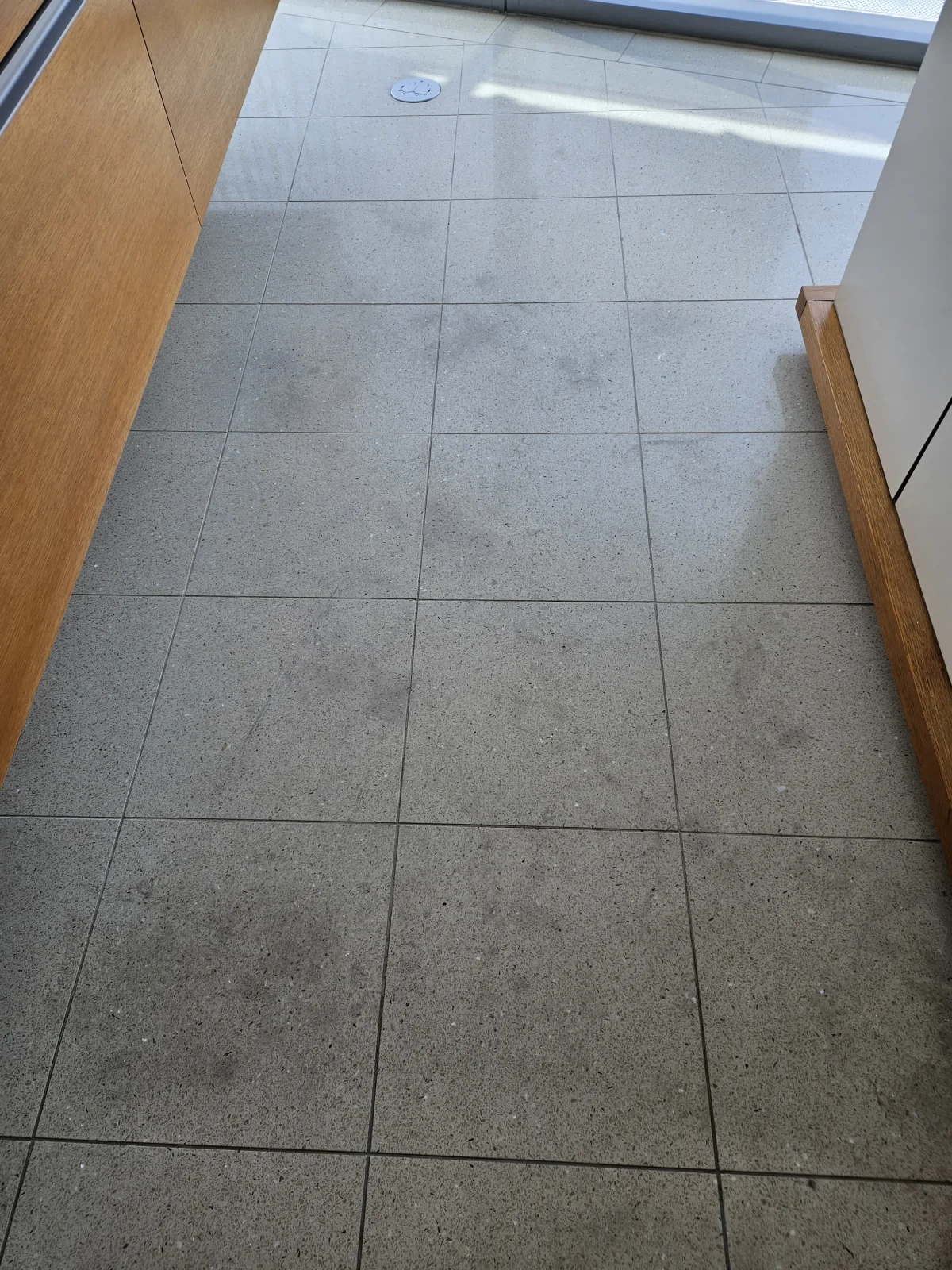
Wondering which one you need? Look at the floor in direct light. Morning sun works. If you see dull patches shaped like foot traffic paths, that's wear, not dirt. Etching looks different. It shows up as light gray rings or cloudy spots, usually near a kitchen sink or entryway where acidic spills happen. Marble and travertine etch easily because they're softer stones. A splash of orange juice, vinegar, or even some cleaning products can leave a mark that no amount of scrubbing removes.
Here's what tells us a floor needs polishing instead of cleaning:
- Dull or hazy spots that stay after mopping
- Scratches you can feel with a fingernail, not just see
- Loss of reflection in high-traffic areas like hallways or entries
- Rough texture where the floor used to feel smooth and cool
- Water spots or ring marks that darken instead of wipe away
Chester has a good number of homes with marble or travertine entries from the 80s and 90s. Those original floors are hitting the age where honing and polishing bring back what years of foot traffic wore down.
We check this with a simple water test on-site. Watching how the water beads or spreads tells us a lot about the surface. If your mop bucket routine stopped working a while back, that's usually the tell. The stone isn't dirty anymore. It's just tired.
Honing vs. Polishing: Picking the Right Fix for Marble, Travertine, and Terrazzo
Here's where a lot of homeowners get confused, and we don't blame them. Honing and polishing look similar on the surface, but they solve two different problems. Honing is a light grinding process. It levels out scratches, dullness, and shallow etching by removing a thin layer of stone. Polishing comes after honing, or on its own if the stone just needs shine brought back. It refines the surface until it reflects light again.
Marble etches easily. Lemon juice, vinegar, even a splash of wine left too long will eat into the calcium carbonate and leave a dull gray ring. That's not a stain you can scrub out. It's chemical damage sitting in the stone itself. Etching usually needs honing first, then polishing to restore the shine.
Travertine is different. It's porous, full of natural pits, and often filled with resin or grout during manufacturing. Over time that fill wears out or pops loose. So travertine restoration often means refilling those holes before polishing starts.
Terrazzo brings its own quirks too. It's a composite, chips of marble or quartz set in cement or resin. Grind it wrong and you expose the aggregate unevenly, leaving a blotchy look instead of that smooth, speckled finish it's known for.
Not sure which one applies? Ask yourself if the damage is texture or shine. Rough, scratchy, or etched patches usually mean honing first. If the stone feels smooth but looks flat and lifeless, polishing alone often does the job.
- Marble floor polishing for etching, dullness, and worn traffic paths
- Travertine floor polishing for pitting, fill loss, and surface wear
- Terrazzo floor polishing for restoring an even, reflective finish across the aggregate
Guessing wrong here can turn a manageable fix into a bigger repair. We've seen it happen more than once.
When Your Floor Doesn't Need Full Polishing
Not every dull floor needs the full treatment. Sometimes a good deep clean and a coat of sealer does the job, and we'll tell you that straight up if that's what we see in your photos.
Here's the thing about stone. Marble, travertine, and terrazzo wear different than tile or wood. A little surface haze from foot traffic isn't the same problem as deep etching from spilled wine or lemon juice sitting overnight. If your floor just looks flat and tired but you can't feel any rough spots or pitting when you run your hand across it, that's usually a cleaning and sealing situation, not a polishing job. We see this a lot with kitchen floors that just need the grease film lifted off.
Grout lines gone dark? That's often embedded soil, not damaged stone. A grout cleaning and sealing pass can bring back most of the look without touching the stone itself.
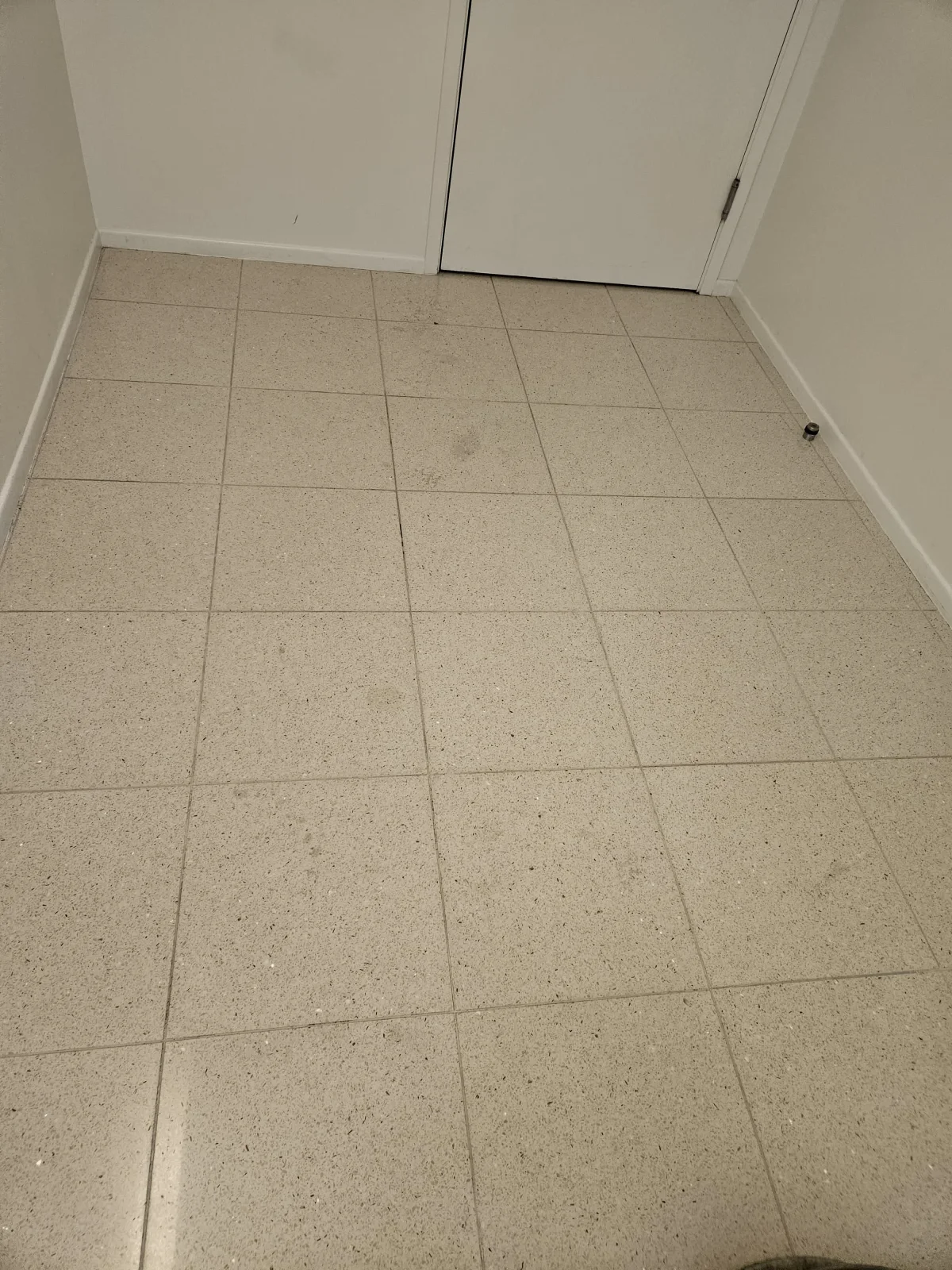
How do you tell the difference? Ask yourself if the dullness is even across the whole floor or if it's isolated to specific spots near sinks, entryways, or where plants used to sit. Even, general dullness points to wear and calls for polishing. Isolated dull or etched patches usually mean localized damage. That still might need spot honing rather than a whole-floor job.
We'd rather tell you it's a simple cleaning than talk you into something bigger. That's not how we build a reputation around here. If you send us a few clear photos, we can usually tell within a few minutes whether you're looking at a cleaning, a sealing, or an actual polish. No drive-out charge for that first look, no pressure either way.
What Happens During a Stone Polishing Visit
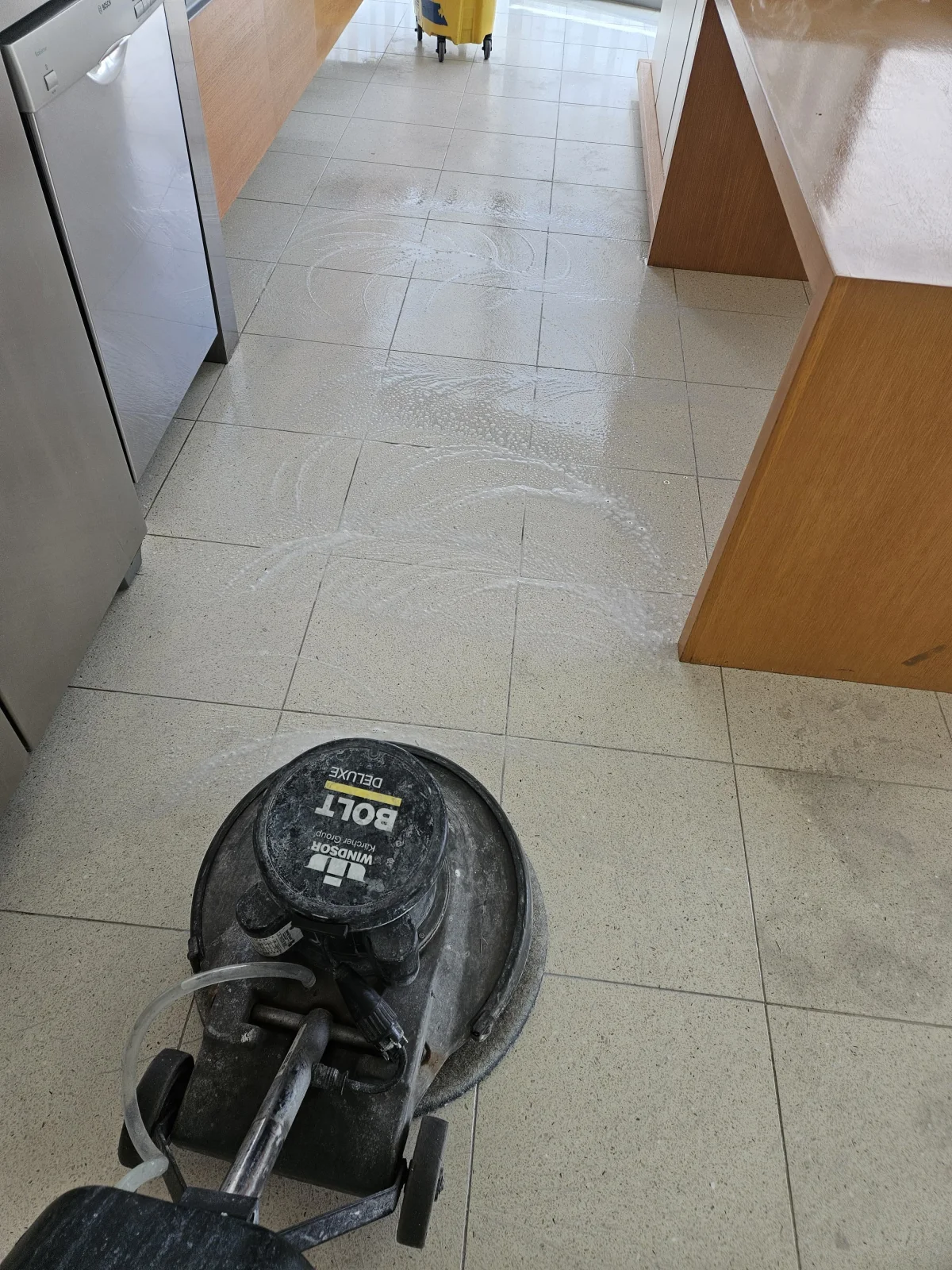
You send us a photo of the floor, we tell you what we see. That's usually how it starts. No driveway meetings required unless the job needs an in-person look. Once we're on site, the first thing we do is test the stone. Marble, travertine, and terrazzo all behave differently under pressure, and guessing wrong here causes real damage.
Here's the general order of things on a stone polishing visit:
- We inspect the surface for etching, dullness, and worn traffic patterns near entryways.
- We test a small hidden area to confirm the right grit and compound for that stone.
- We clear embedded soil and old sealer buildup before any polishing starts.
- We run the diamond pads in stages, working from coarse to fine.
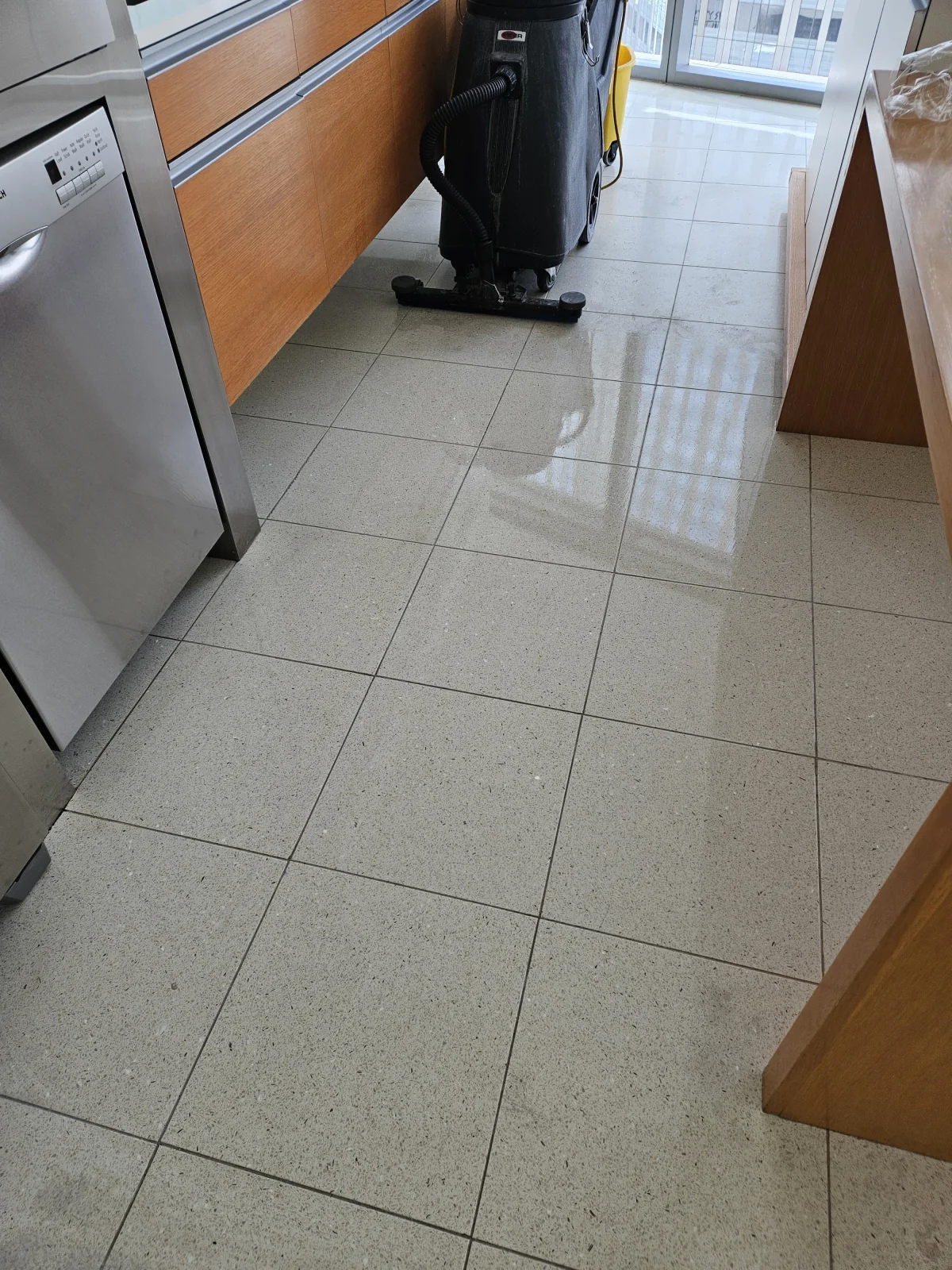
- We buff the surface to bring back the natural shine.
- We seal the stone if it needs it. Most natural stone floors do.
Older homes around Chester with original travertine entryways often show a chalky ring right where shoes hit the floor first. That's soil grinding into the pores, not just surface dust. So we spend extra time on that zone before we ever touch a buffer. Skip that step, and you just polish dirt into the stone. We see this every week on jobs that someone else tried to shortcut.
Most visits run a few hours depending on square footage and how much correction the stone needs.
We don't rush the compound stages, and we don't guess on sealant. A floor that looks shiny for two weeks and then dulls out fast usually means someone skipped a step, or used the wrong product for that stone type. We'd rather take the extra time and get it right the first time.
Questions to Ask Before You Hire a Stone Polishing Company
Not every company that says they "polish stone" knows stone. Big difference between someone who runs a buffer and someone who understands why your marble etched in the first place. Before you hand over your countertop or your entryway floor, ask a few pointed questions. It'll save you money and heartache.
Start here: is the technician certified to work on stone, masonry, and ceramic tile specifically? Our team is IICRC certified in exactly that, and it matters because marble, travertine, and terrazzo don't all react the same way to acid, heat, or abrasive pads. Someone trained only in wood floors can do real damage on a limestone hearth.
- Are you licensed and insured for work inside my home?
- Can you tell me what caused the damage before you start grinding on it?
- Do you offer a free quote through photos, or do I have to schedule a paid visit first?
- What happens if the results aren't right, is there a guarantee?
That third question matters more than people think. We do free quotes over text or phone when someone can send us clear photos and a little context. No driveway inspection needed most of the time. If the job's complicated enough that we do need to come look in person, that visit runs between $75 and $125, and it gets applied straight to the job if you hire us. So it's never wasted money.
Ask about the guarantee too.
Every job we do comes with a satisfaction guarantee, so you're not stuck if the shine doesn't hold or something feels off. A company that won't answer these questions clearly, or gets vague about certification, is telling you something. Listen to that.
Measured steps.
A considered result.
- Share the surface
Send a full view and a close-up of the concern.
- Confirm the material
Identify what it is before choosing a method.
- Set the scope
Separate cleaning, finish work, and repair needs.
- Refine with care
Use a process compatible with the existing surface.
- Review the finish
Inspect the result and discuss ongoing care.
Clarity before
the visit.
How do I schedule a stone floor polishing visit in Chester?
You can start by sending us a few clear photos of your floor. We look at the wear patterns and tell you what we see before any visit is even booked. This saves you time and tells us whether you need a full polish, spot honing, or just a cleaning. If the photos show a job that needs an in-person look, we'll set up a visit. There's no drive-out charge just to get that first opinion.
What happens when you arrive to polish my stone floor?
We start by testing the stone before touching a single tile. Marble, travertine, and terrazzo each react differently to grinding pressure, so we confirm the right grit and compound on a hidden spot first. Then we clear old sealer and embedded soil, run diamond pads from coarse to fine, and buff the surface until it reflects light again. Sealing comes last if the stone needs it. The whole process follows this order every time, no shortcuts.
Why do so many Chester homes need marble or travertine restoration?
A lot of Chester homes built in the 80s and 90s have original marble or travertine entries that are just now showing their age. Decades of foot traffic wear down the shine, and the stone starts looking dull even after regular mopping. This isn't a sign of dirty floors. It's normal wear that honing and polishing were made to fix, and it's one of the most common calls we get from this area.
How do I know if I need honing before polishing?
Run your hand across the floor and feel for rough or scratchy patches. If you feel texture changes, not just dullness, you likely need honing first. Honing is a light grinding step that levels out scratches and shallow etching before polishing brings back the shine. If the stone feels smooth but just looks flat, you can usually skip straight to polishing. Guessing wrong here can turn an easy fix into a bigger repair job.
Can my dark grout lines be fixed without polishing the whole floor?
Often yes, especially if the dullness sits only in the grout and not across the whole stone surface. Dark grout usually means embedded soil, not stone damage. A grout cleaning and sealing pass can restore most of the look without touching the marble or travertine itself. If the dullness spreads evenly across the whole floor instead, that points to actual stone wear and calls for polishing instead.