
Terrazzo Floor Polishing in Chester: Restore the Shine Without Replacing the Floor
Terrazzo floor polishing in Chester that restores natural shine without a costly replacement. Careful, detailed work. Call today to schedule a visit.
Google Reviews
Scroll to read all 9 reviews →
“Great work and even better customer service. Very professional, easy to work with, and you can tell they take pride in what they do. Definitely recommend Precision Floor & Surface Restoration if you need your floors or countertops brought back to life.”★★★★★
“Absolutely amazing work! From start to finish, everything was handled professionally and with great attention to detail. They took the time to make sure everything was done right, and the results speak for themselves. The floors and surfaces came out looking incredible, and you can tell they genuinely take pride in their work. I couldn’t be happier with the finished product and would definitely recommend them to anyone looking for quality work and great service. Five stars all the way! ⭐⭐⭐⭐⭐”★★★★★
“Precision Floor & Surface Restoration exceeded my expectations! Professional, punctual, and detail-oriented from start to finish. My floors look amazing, and the quality of work was outstanding. Highly recommend to anyone looking for top-notch floor and surface restoration services.”★★★★★
“Removed stains that previous cleaning services could not. Made the impossible - possible!”★★★★★
“Great quality work! Very professional with communication!!”★★★★★
“Clean and very professional. Highly recommend”★★★★★
“I highly recommend his floor cleaning services! He’s reliable, professional, and does an excellent job. My floors looked amazing, and I couldn’t be happier with the results.”★★★★★ ★★★★★
Signs Your Terrazzo Floor Has Lost Its Shine
Terrazzo doesn't just wake up dull one day. It happens slow, and most homeowners don't notice until a guest points it out or the light hits it wrong in the afternoon.
Here's what we look for when we walk into a home in Chester with older terrazzo, especially in the mid-century houses near the historic district that still have their original floors:
- Cloudy or hazy patches, usually near entryways or under rugs, where foot traffic and grit have worn down the surface over years
- Dull gray film that won't wipe off, even right after mopping
- Rough spots you can feel with your bare feet, not just see
- Faded chips or aggregate that used to sparkle and now look flat
- Dark stains that seem to sit under the surface instead of on top of it
That last one is a big. Terrazzo is porous underneath its sealed top layer. Once sealant wears thin, spills soak in instead of wiping off. We see this every single week, usually in kitchens or laundry rooms where water sits on the floor longer than folks realize.
So how do you tell normal dirt from actual wear? Grab a damp cloth and rub a small section. If the haze lifts, you've probably just got a cleaning issue. If it doesn't budge, that's the polish breaking down, not the dirt sitting on top.
, homeowners think their terrazzo needs to be replaced. It doesn't. The chips and cement base underneath are usually fine. What's gone is the top layer of shine, and that's fixable without ripping anything out.
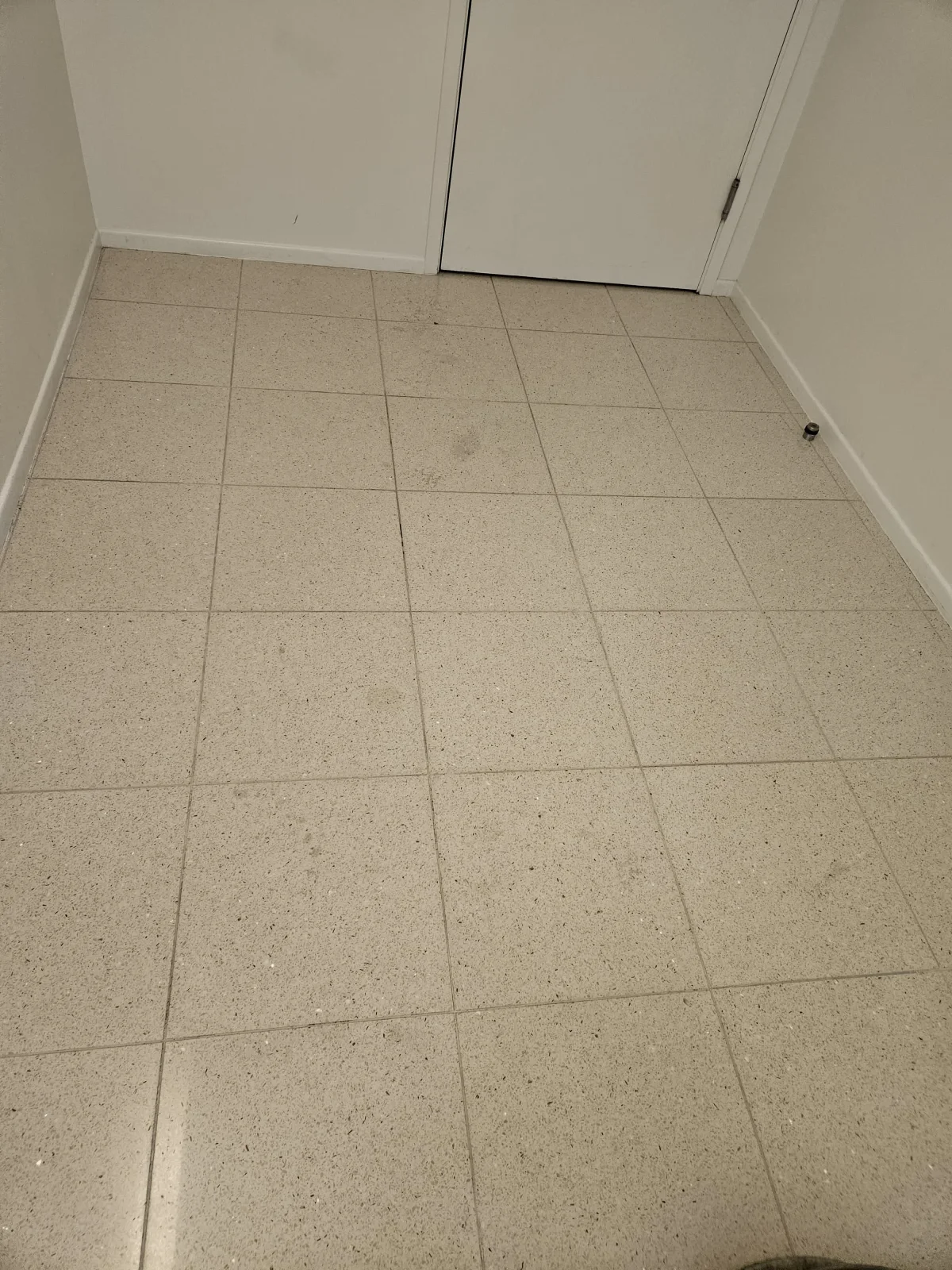
Restoration vs. Replacement for Worn Terrazzo
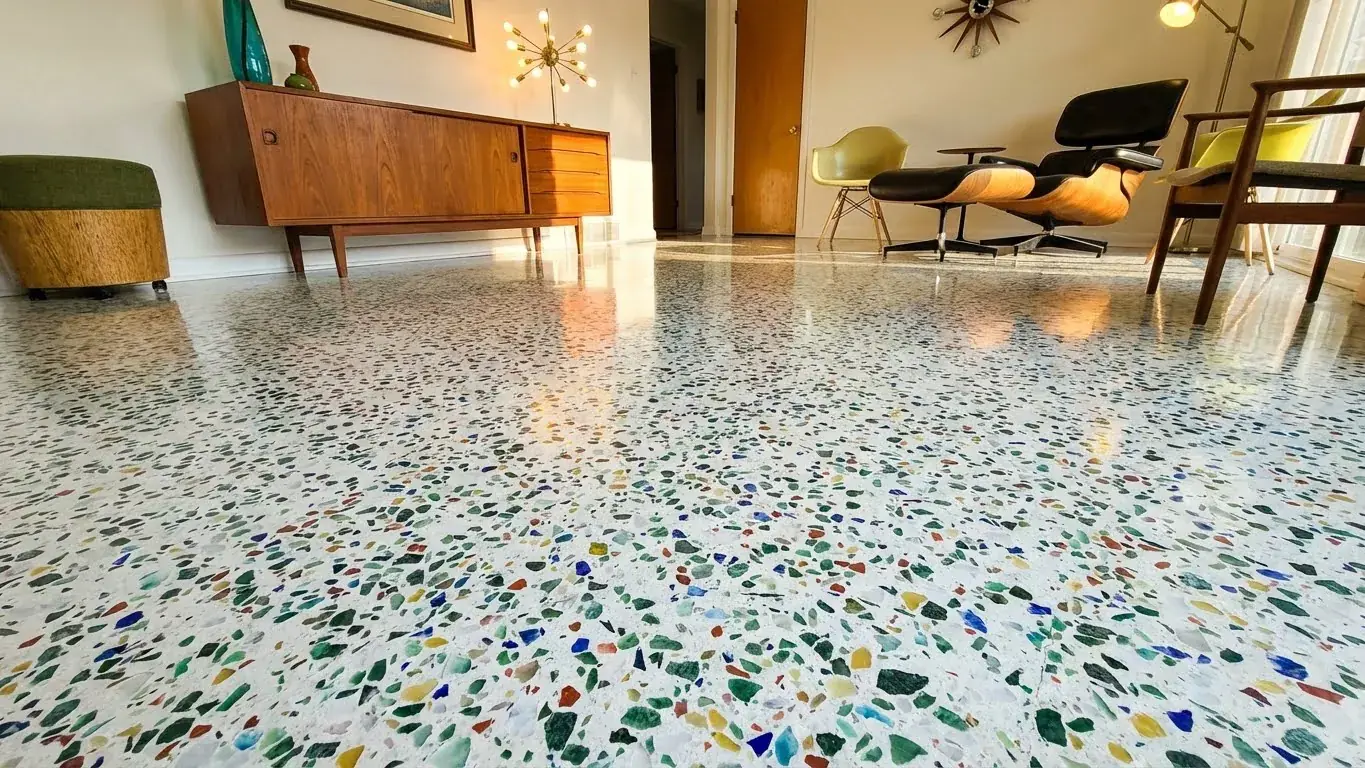
Terrazzo lasts decades. That's the whole point of the material, chips of marble or granite set in cement or epoxy, ground flat and sealed smooth. So when a floor looks dull, scratched, or stained, ripping it out is almost never the right call.
Here's the thing homeowners in Chester don't always know: terrazzo damage is almost always surface-level. The wear you're seeing sits in the top layer of sealer and polish, not in the stone itself. Grit tracked in from gravel driveways, sand from yard work, even everyday foot traffic, all of it slowly scuffs the finish and dulls the shine. That's a polishing problem. It's not a structural one.
We get calls where someone's already gotten a quote for a full tear-out and replacement., once we look at photos, the terrazzo underneath is completely sound. Replacement means demo, new material, new install, and a much bigger bill. Restoration means grinding down the damaged surface layer, honing it back to level, then polishing and sealing it to bring the shine back. Same floor, fraction of the disruption.
There are real reasons replacement though, and we'll tell you straight if that's your situation. Deep structural cracking that goes through the cement base, sections where the terrazzo has separated from the subfloor, or older floors with extensive missing chips across large areas, those need more than polishing can fix. That's rare.
- Surface dullness and light scratching: restoration fixes this every time
- Etching from acidic cleaners or spills: usually correctable through honing and repolishing
- Hairline surface cracks: often repairable without touching the base layer
- Deep structural cracks or subfloor separation: worth a closer look before deciding
Not sure which category your floor falls into? Send us a photo. We can usually tell you over text whether you're looking at a polishing job or something bigger, no drive-out needed.
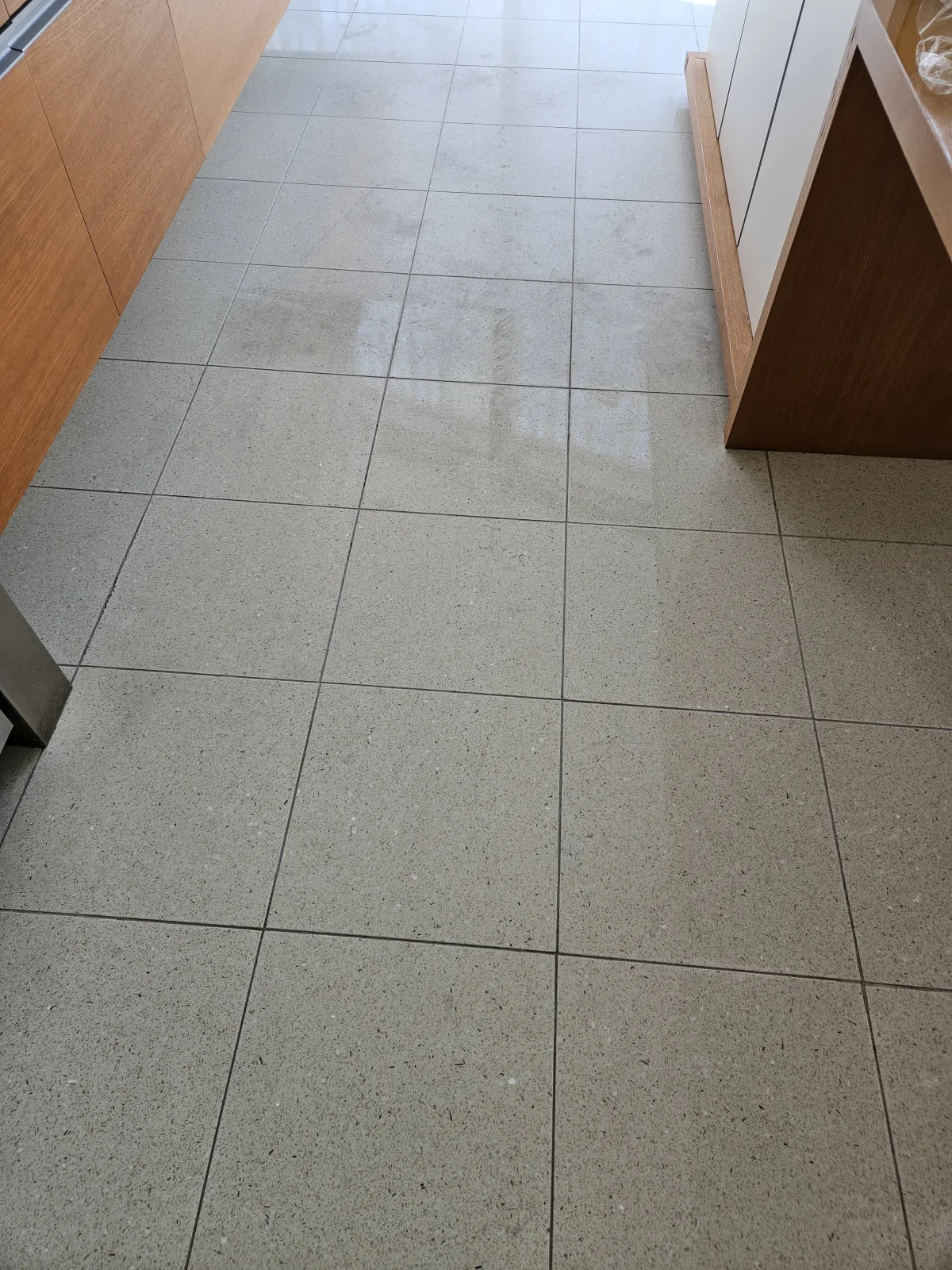
When Terrazzo Doesn't Need Professional Polishing Yet
Not every dull terrazzo floor needs a specialist. Some just need a good cleaning.
Here's how you tell the difference. If your terrazzo looks hazy or flat but the surface still feels smooth under your hand, no rough spots, no dull scratches you can catch with a fingernail, that's usually just built-up soap film or dirt sitting in the epoxy or cement matrix. A basic mop with a neutral pH cleaner, then a rinse, often brings the shine right back. We tell people this on the phone all the time, even though it costs us the job that day. If a damp mop and some elbow grease clears it up, you don't need us yet.
Same goes for light traffic patterns near an entryway or hallway. If you're just seeing faint dulling in a walking path but the rest of the floor still has its shine, that's wear you can manage with routine care for a while longer. Buy yourself some time with a good walk-off mat at the door and regular sweeping so grit doesn't get ground into the surface.
Now, if you're noticing dull spots that won't lift no matter how much you scrub, or the terrazzo feels gritty even right after cleaning, that's a different story. That's usually the aggregate itself losing its polish, not surface dirt. And if water sits on top instead of beading, the sealer's worn through.
Ask yourself this. Does the dullness come back within a day of mopping? If yes, you're dealing with wear in the stone, not grime on top. That's the point where cleaning alone stops working and it's time to call someone who does this for a living.
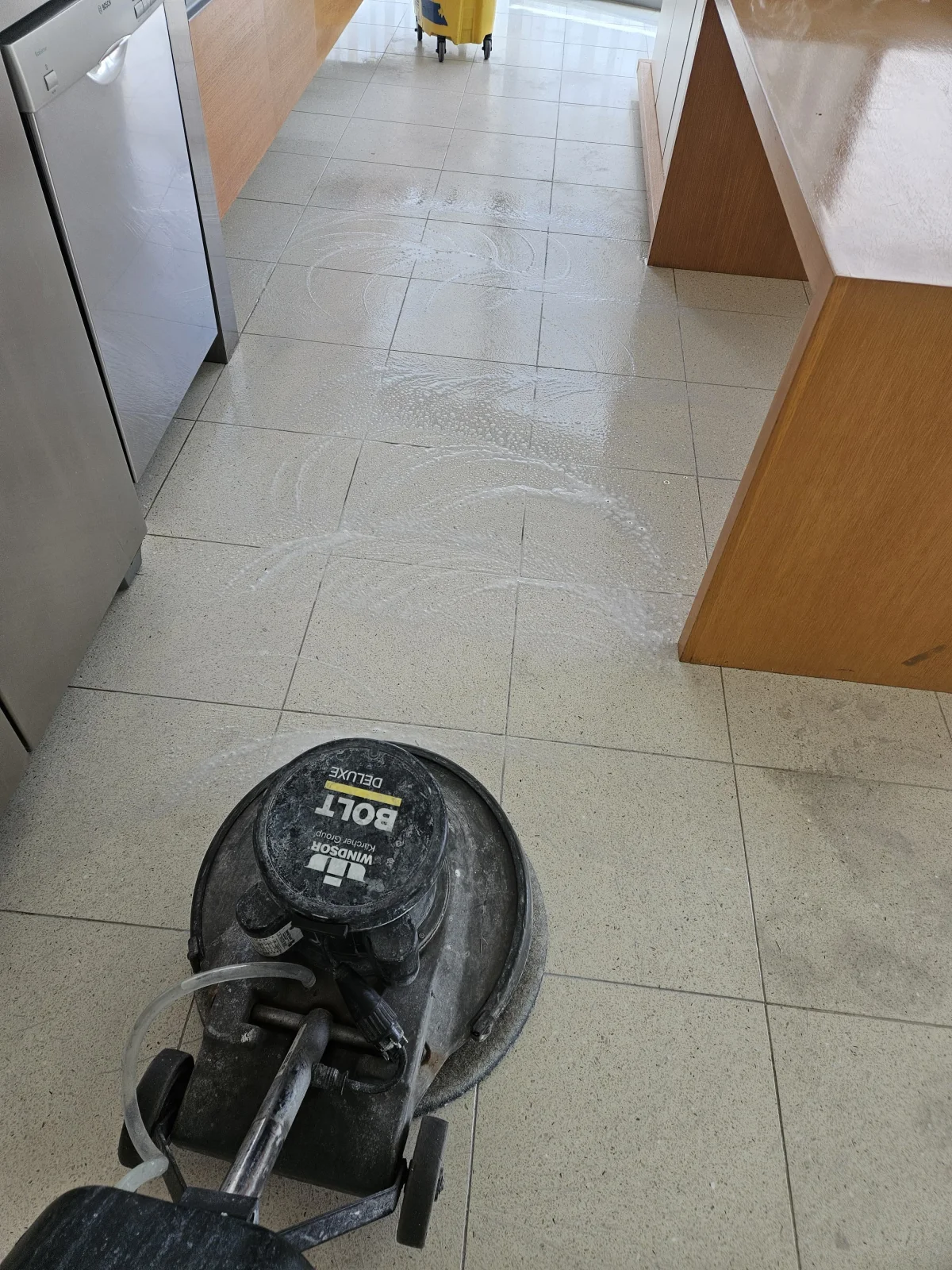
What to Expect During a Terrazzo Polishing Visit
First thing we do is walk the floor with you. No two terrazzo jobs look the same, some Chester homes have that classic 1960s poured terrazzo in the entryway, others have thin-set tile terrazzo in a sunroom addition. We check for cracks, loose chips, and how deep the wear pattern goes before we touch anything.
Then we test a small section first. This tells us how the stone responds and how much correction it needs. Skip this step and you're guessing, we don't guess on someone's floor.
From there, our team runs through a few stages. Each one matters.
- Dry sweep and vacuum to pull grit off the surface before any wet work starts
- Diamond honing pads, working through grits to level scratches and open up the stone
- A cream or powder polish compound that brings out the natural shine in the marble and glass chips
- A sealer application once the surface is clean and fully dry
Dust control matters here. Terrazzo polishing kicks up fine stone dust, so we run wet methods and containment where we can, especially in occupied homes with furniture nearby.
Most residential terrazzo jobs take one full day, sometimes two if there's heavy pitting or old wax buildup that has to come off first. That old wax is a common issue, we see it a lot in older Chester homes where someone kept applying floor wax over the years instead of polishing. It traps dirt underneath and has to be stripped before real polishing can start.
We walk you through the floor again at the end, wet and dry, so you can see the actual finish before we call it done.
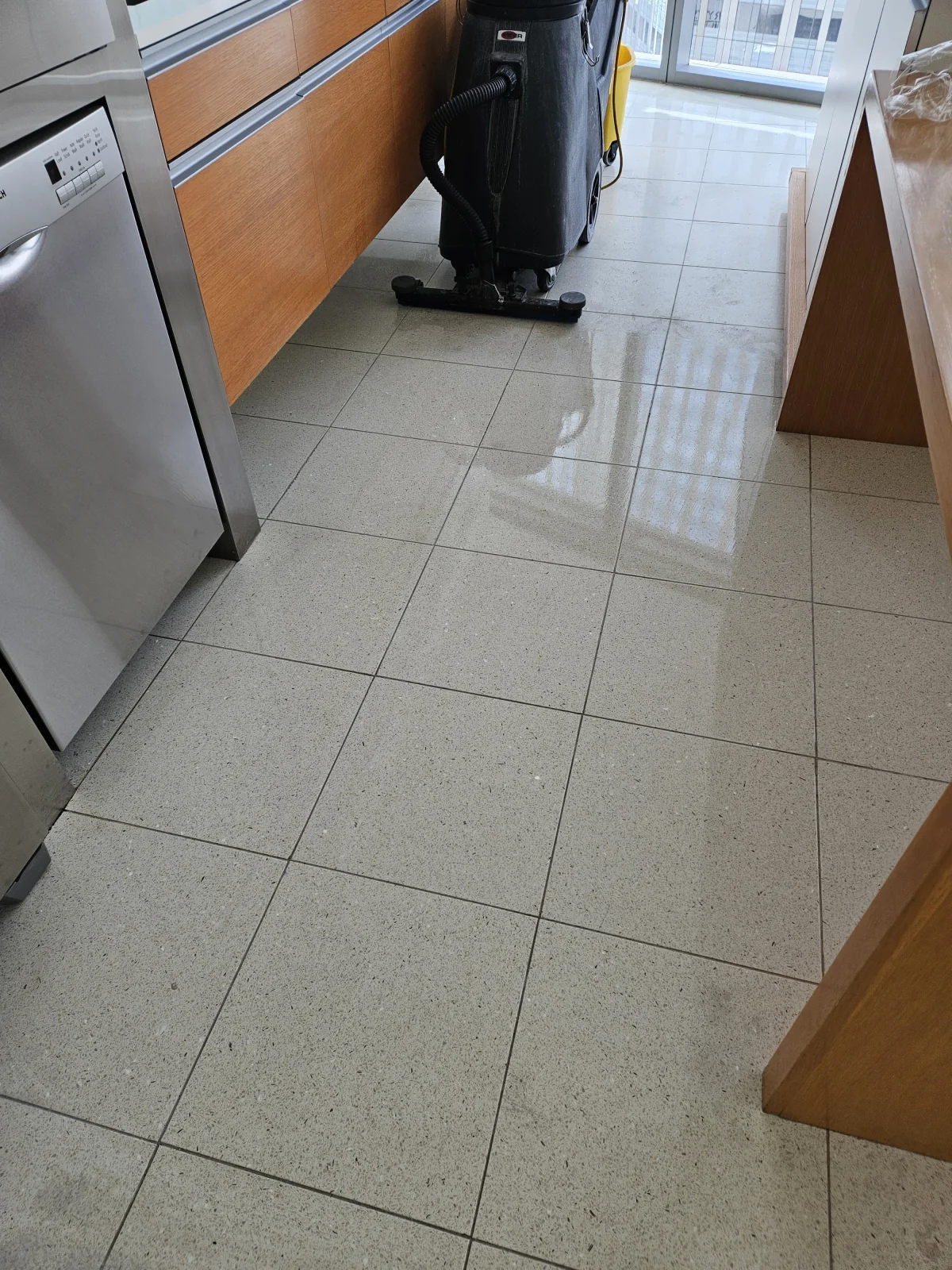
Protecting Terrazzo Floors After Polishing in Chester
Here's the truth. A fresh terrazzo polish looks incredible on day one, but what you do in the next few weeks decides how long that shine lasts.
Terrazzo is porous under that glossy surface, even after honing and polishing. Chester's humid summers push moisture into homes and businesses all season long, and that moisture carries minerals and grime that settle right into the tiny pits in the aggregate. We see this every single week with older Chester homes near the county's original brick and slab foundations, where terrazzo floors were poured decades ago and never properly sealed since.
So what protects the finish? A few habits matter more than any product you buy at the store.
- Sweep or dust mop weekly, grit is what scratches polished terrazzo, not water
- Use a pH neutral cleaner only, anything acidic will start etching the surface again
- Wipe up spills fast, especially wine, coffee, and citrus juice
- Put walk off mats at entry points, they catch the sand and dirt before it hits the floor
- Avoid vinegar and bleach based cleaners entirely, they're two of the worst offenders for terrazzo
Resealing is the other half of the equation. Depending on foot traffic and how the space gets used, most terrazzo floors need a fresh sealer every one to three years. Skip it too long, and the surface starts absorbing stains again, undoing the work we just did.
Measured steps.
A considered result.
- Share the surface
Send a full view and a close-up of the concern.
- Confirm the material
Identify what it is before choosing a method.
- Set the scope
Separate cleaning, finish work, and repair needs.
- Refine with care
Use a process compatible with the existing surface.
- Review the finish
Inspect the result and discuss ongoing care.
Clarity before
the visit.
How long does terrazzo floor polishing take?
Most terrazzo polishing jobs in Chester take one to two days, depending on the size of the area and how deep the wear goes. A single entryway or hallway often wraps up in a few hours. Larger areas, like a full living room or a whole ground floor in one of Chester's older mid-century homes, take longer because of the honing stages. We'll walk your floor first and give you a real timeline before we start, not a guess.
What should I expect when you arrive to polish my terrazzo?
We start by walking the floor with you and checking for cracks, loose chips, and how deep the wear pattern runs. Then we test a small section before touching the rest, so we know exactly how the stone will respond. After that, we dry sweep, hone with diamond pads, apply a polish compound, and seal the surface. You'll see each stage happen in front of you, and we'll flag anything unexpected before moving forward.
Why does my terrazzo floor get dull faster in Chester's older homes?
Older terrazzo in Chester's mid-century homes tends to dull faster because the original sealer is thinner and has had decades to wear down. Grit tracked in from gravel driveways and yard work grinds into the surface over time, especially near entryways. Kitchens and laundry rooms also see more standing water, which soaks into worn sealer and causes those dark under-surface stains we mentioned. Regular sweeping and a walk-off mat slow this down a lot.
Can terrazzo floors be restored instead of replaced?
Yes, most dull or scratched terrazzo floors can be restored instead of torn out. The wear almost always sits in the top sealer layer, not in the stone or cement base underneath. Restoration means grinding the damaged surface, honing it level, then polishing and sealing it back to shine. Replacement only makes sense for deep structural cracking or sections where the terrazzo has actually separated from the subfloor, and that's rare.
How do I know if my terrazzo just needs cleaning instead of polishing?
Rub a damp cloth over the dull spot and see if the haze lifts. If it does, you likely just need a mop with a neutral pH cleaner, not a professional visit. If the dullness comes right back within a day, or the floor feels gritty even after cleaning, that's the polish breaking down, not dirt sitting on top. That's when it's time to call someone who works on terrazzo for a living.