
Marble Contractor in Chester
Full-service marble contractor serving Chester, from installation to restoration. Precision Floor and Surface comes to you. Call to schedule your estimate.
Google Reviews
Scroll to read all 9 reviews →
“Great work and even better customer service. Very professional, easy to work with, and you can tell they take pride in what they do. Definitely recommend Precision Floor & Surface Restoration if you need your floors or countertops brought back to life.”★★★★★
“Absolutely amazing work! From start to finish, everything was handled professionally and with great attention to detail. They took the time to make sure everything was done right, and the results speak for themselves. The floors and surfaces came out looking incredible, and you can tell they genuinely take pride in their work. I couldn’t be happier with the finished product and would definitely recommend them to anyone looking for quality work and great service. Five stars all the way! ⭐⭐⭐⭐⭐”★★★★★
“Precision Floor & Surface Restoration exceeded my expectations! Professional, punctual, and detail-oriented from start to finish. My floors look amazing, and the quality of work was outstanding. Highly recommend to anyone looking for top-notch floor and surface restoration services.”★★★★★
“Removed stains that previous cleaning services could not. Made the impossible - possible!”★★★★★
“Great quality work! Very professional with communication!!”★★★★★
“Clean and very professional. Highly recommend”★★★★★
“I highly recommend his floor cleaning services! He’s reliable, professional, and does an excellent job. My floors looked amazing, and I couldn’t be happier with the results.”★★★★★ ★★★★★
Marble Floor Polishing for Dull or Etched Floors
Marble looks great until it doesn't. The first clue is usually etching, those dull gray spots where acid hit the stone. Wine, orange juice, even a splash of vinegar from a cleaner. Marble is calcium carbonate, so acid bites straight into it. It is not dirt. You cannot scrub it out.
We see this a lot in older Chester homes near Widener University, where original marble entryways and fireplace surrounds have picked up years of wear. The shine goes first. Then the etching shows up under good light.
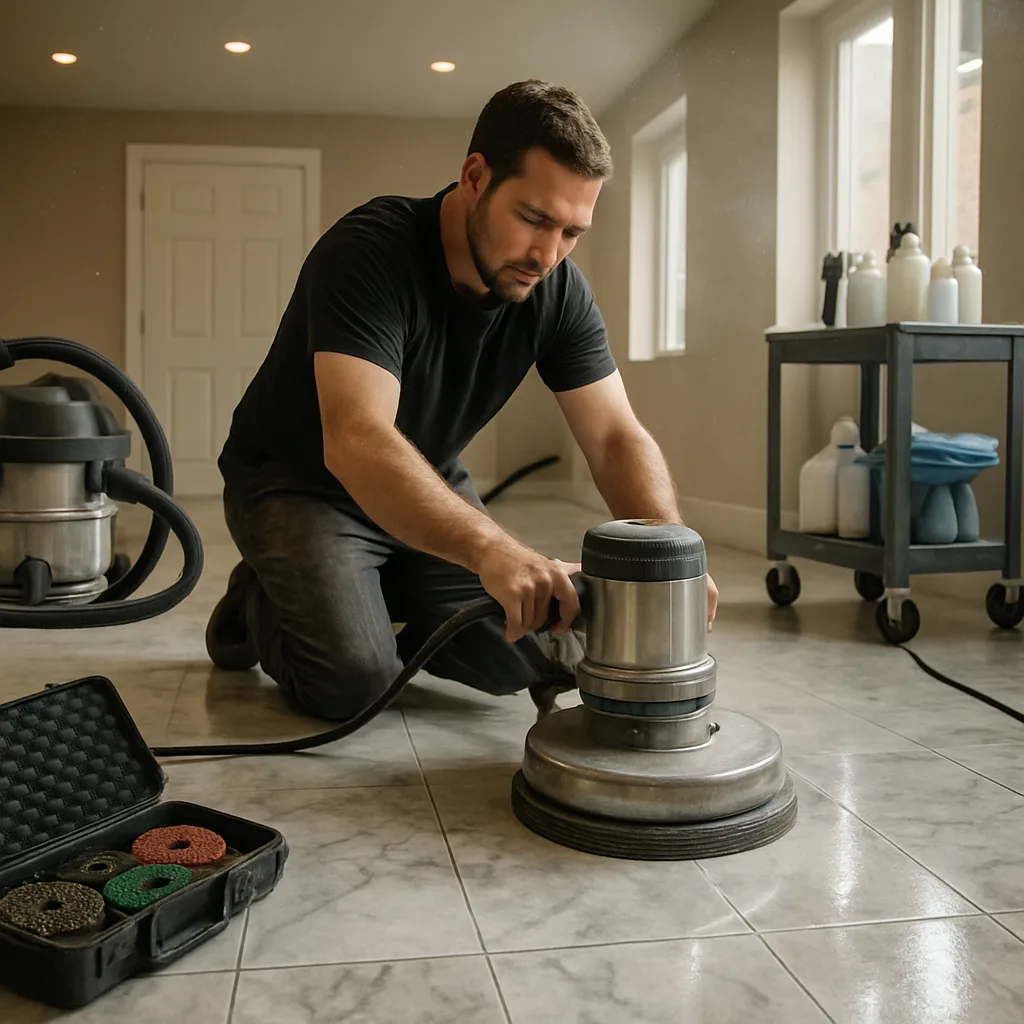
Here's what marble floor polishing does:
- Grinds down the etched layer with diamond abrasives, not chemicals
- Brings back the flat, reflective surface the stone had at first
- Seals the marble to slow future etching
- Levels out wear near doorways and busy spots
I've had homeowners tell me they were ready to tear out a marble floor and cover it with tile. That's usually a mistake. Polishing brings back most floors that look far worse than they are.
Text us a photo and we'll tell you whether polishing will fix it. This is one of our most requested services in Chester, and it is rarely as bad as it looks in person.

Stone Floor Polishing for Multiple Stone Types
Not all stone floors behave the same, and that's the whole point here. Marble reacts to acid different than travertine does. Terrazzo has its own quirks too, since it's a blend of stone chips set in cement or resin. Polish one type like another, and you can do damage instead of fixing it.
We work on stone floors all over Chester homes, and this is the service we get called about most. Dull spots, foot traffic paths, cloudy patches near the kitchen sink, they're all signs the surface has lost its polish layer.
Here's what we look at before touching a floor:
- Stone type and how porous it is
- Depth of scratching or dullness
- Whether the finish is honed or polished
- Any prior sealing or coating on the surface
Each stone gets a different grit sequence and a different compound. That's not a sales pitch. It's just how the chemistry works. Get this step wrong, and you can etch the stone worse than it started. Our stone floor polishing page breaks it down stone by stone, if you want to see how your floor gets handled.
Natural Stone Floor Restoration for Damaged or Worn Floors
Some floors need more than a polish. Deep scratches, cracked tiles, pitting, years of foot traffic wearing through the seal, that's a restoration job, not a cleaning job. We see this a lot in older Chester homes near the historic district, where original stone floors have soaked up decades of moisture and grit.
Natural stone is porous. Water gets in. Minerals shift. The surface starts to pit or flake. Left alone, small problems turn into permanent damage. Grinding down damaged stone kicks up fine dust, and OSHA's hazard alert on marble slab handling covers the safety risks.
Restoration usually involves a few steps:
- Grinding down damaged layers to reach solid stone
- Filling cracks and chips with matched material
- Honing the surface flat and even
- Polishing to bring back shine and depth
And this is where a lot of homeowners get surprised, floors they thought needed replacing come back looking almost new.
We're IICRC-certified in natural stone restoration, so this isn't guesswork. If you're not sure whether your floor needs a simple polish or a full restoration, text us a photo. We'll tell you straight, no pressure, no upsell. That quick look usually tells us more than a phone call ever could.
Travertine Floor Polishing for Patios and Entryways
Travertine looks great on Chester patios and entryways until the pits start filling with grime. That's just how the stone is made. It has natural holes that trap dirt, pollen, and pool chemicals over time. And once those holes clog up, sweeping does not fix it.
We see this a lot in older homes near Chester Heights, where travertine entryways have been down for decades without real care. The surface looks dull, almost gray, even after a good mopping. That gray color is not dirt on top. It's soil packed deep into the stone's pores.
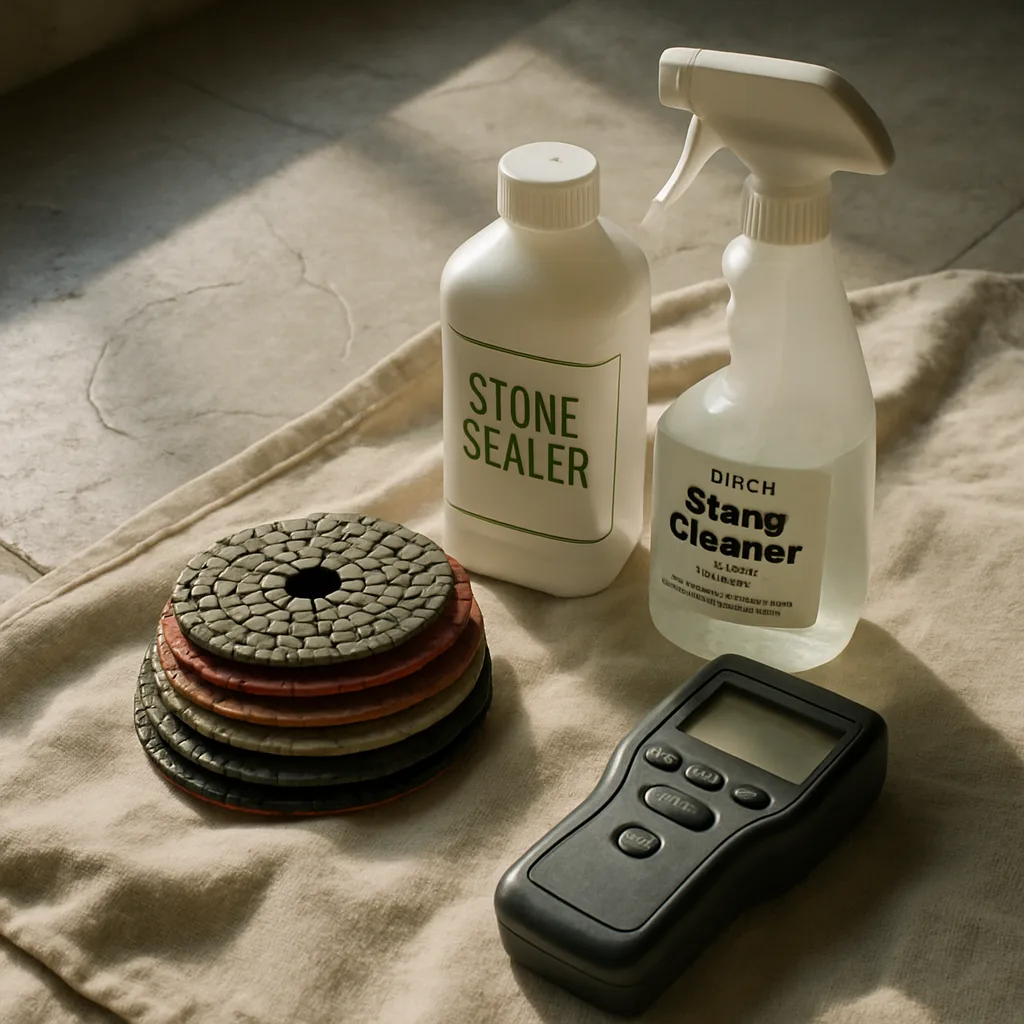
Travertine floor polishing pulls that embedded grime out and brings back the honed or polished look the stone had at first. For outdoor patios, we also look at:
- Rain and humidity staining around edges
- Slippery buildup near pool decks
- Uneven wear patterns from foot traffic and furniture
I've worked on travertine that homeowners were ready to tear out, sure it was ruined. Most of the time it wasn't. Restoration gets it looking right again without the cost or mess of replacement.
Curious what your patio needs? Text us a few photos and we'll tell you straight.
Terrazzo Floor Polishing for Older Buildings
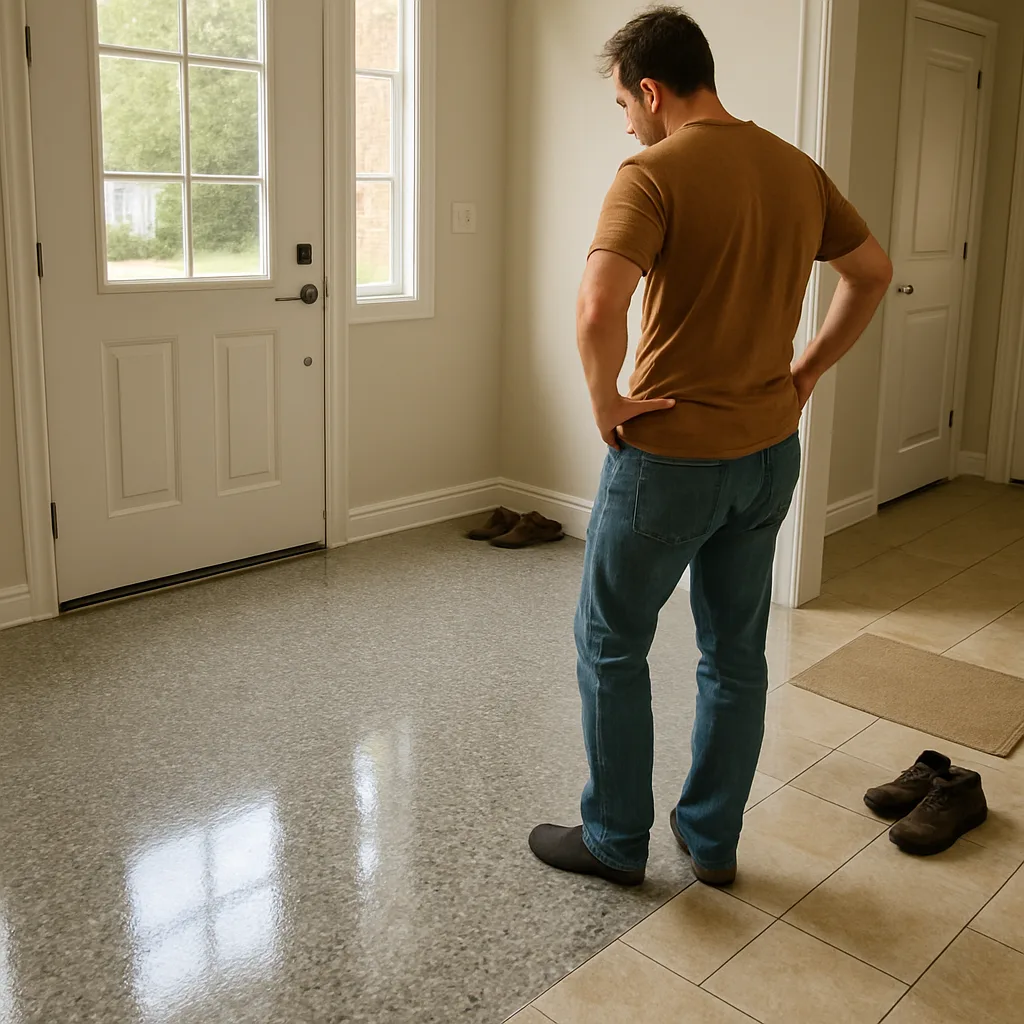
Chester has plenty of older buildings with terrazzo floors poured decades ago, and most owners do not realize what they're standing on. Terrazzo is a mix of marble or stone chips set in cement or epoxy, then ground flat and sealed. It's tough. It is not indestructible.
Over the years, foot traffic wears down the sealer. Grit gets ground into the surface. The chips start to look dull instead of glassy, and the whole floor takes on a gray, tired look even after mopping. That's not dirt anymore. That's the surface itself losing its shine.
Old terrazzo also brings its own headaches. Cement-based terrazzo from older Chester properties can develop hairline cracks as the building settles. Some floors have old wax buildup layered on top from years of well-meaning maintenance, which traps dirt underneath and makes the floor look worse.
Our polishing process strips that buildup, regrinds the surface if needed, and brings back the original shine without replacing a single chip.
I've walked into buildings where the owner assumed the terrazzo was beyond saving. It almost never is.
If you manage or own an older building here, text us a few photos. We'll tell you what it'll take. Terrazzo Floor Polishing
Measured steps.
A considered result.
- Share the surface
Send a full view and a close-up of the concern.
- Confirm the material
Identify what it is before choosing a method.
- Set the scope
Separate cleaning, finish work, and repair needs.
- Refine with care
Use a process compatible with the existing surface.
- Review the finish
Inspect the result and discuss ongoing care.
Clarity before
the visit.
Do you work on marble floors all over Chester, including older homes?
Yes, we cover all of Chester, from newer homes to older properties near Widener University and the historic district. Older homes often have original marble or stone floors that need special care. We look at the age and condition of the stone before we start. Text us a photo of your floor, and we'll tell you what area you're in and how soon we can take a look.
Why do older Chester homes have so many marble floor problems?
Older Chester homes near the historic district often have original stone floors that soaked up decades of moisture, grit, and wax buildup. That mix leads to pitting, dullness, and hairline cracks as the building settles over time. It's not poor upkeep, it's just what happens to porous stone over decades. A restoration job usually brings these floors back further than owners expect.
How do I know if my floor needs polishing or full restoration?
If the surface just looks dull or has light etching, polishing usually fixes it. If you see deep scratches, cracked tiles, or pitting, you're likely looking at a restoration job instead. The easiest way to know is to send us a photo. We'll tell you straight which service fits, no guessing on your end.
Does marble get treated the same as travertine or terrazzo?
No, each stone type needs its own process. Marble, travertine, and terrazzo react differently to grinding compounds and grit sequences because of how porous they are. Treating one like another can cause more damage instead of fixing the problem. We check the stone type first, then choose the right method for that specific surface.
When should I call a marble contractor instead of cleaning it myself?
Call a contractor once you see etching, dull gray spots, or scratches that scrubbing won't remove. Regular cleaning can't fix acid damage or worn sealer, since the problem sits below the surface. Trying to sand or scrub it yourself can make the etching worse. A quick photo sent our way tells us fast whether it's a simple fix or needs more work.