
Restore the Shine: Travertine Floor Polishing in Chester Homes
Travertine floor polishing in Chester homes, done on-site by pros who know natural stone. Book your restoration and bring back the shine today.
Google Reviews
Scroll to read all 9 reviews →
“Great work and even better customer service. Very professional, easy to work with, and you can tell they take pride in what they do. Definitely recommend Precision Floor & Surface Restoration if you need your floors or countertops brought back to life.”★★★★★
“Absolutely amazing work! From start to finish, everything was handled professionally and with great attention to detail. They took the time to make sure everything was done right, and the results speak for themselves. The floors and surfaces came out looking incredible, and you can tell they genuinely take pride in their work. I couldn’t be happier with the finished product and would definitely recommend them to anyone looking for quality work and great service. Five stars all the way! ⭐⭐⭐⭐⭐”★★★★★
“Precision Floor & Surface Restoration exceeded my expectations! Professional, punctual, and detail-oriented from start to finish. My floors look amazing, and the quality of work was outstanding. Highly recommend to anyone looking for top-notch floor and surface restoration services.”★★★★★
“Removed stains that previous cleaning services could not. Made the impossible - possible!”★★★★★
“Great quality work! Very professional with communication!!”★★★★★
“Clean and very professional. Highly recommend”★★★★★
“I highly recommend his floor cleaning services! He’s reliable, professional, and does an excellent job. My floors looked amazing, and I couldn’t be happier with the results.”★★★★★ ★★★★★
Dull, Etched, and Pitted Travertine: Reading the Warning Signs
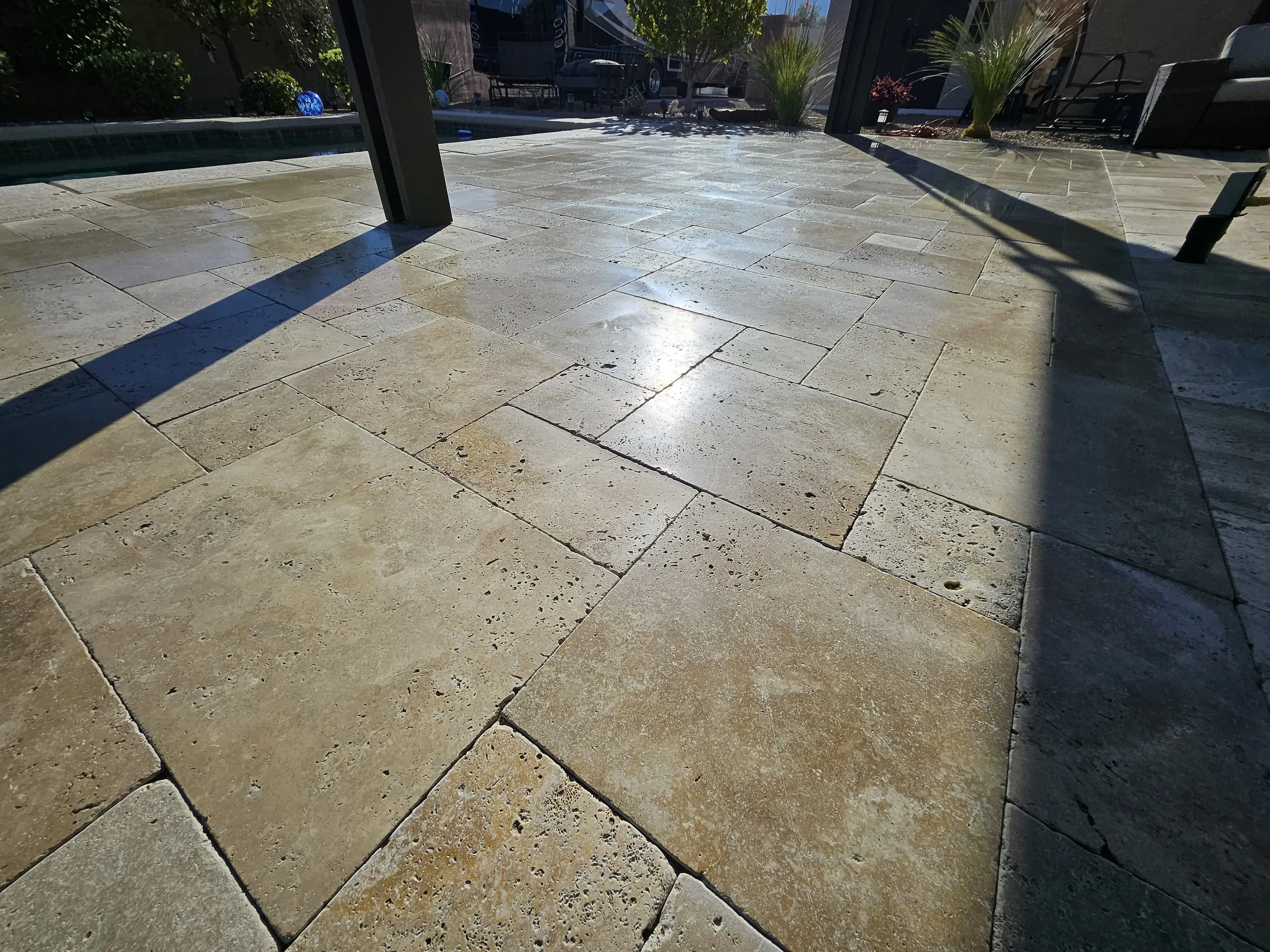
Travertine is a soft stone. It scratches easier than granite, and it reacts to acid the second something spills on it. That's why the warning signs show up fast, sometimes within days of a spill nobody noticed.
Etching is the big one. You'll see a dull, cloudy ring where wine, orange juice, or even a splash of vinegar-based cleaner sat too long. It's not a stain sitting on top, it's the acid eating into the stone's surface. Run your hand over it and you can usually feel a slight dip or rough patch where the shine used to be.
Pitting is different. Those are the tiny holes and pockmarks you see scattered across older travertine floors, especially in entryways and kitchens where grit gets tracked in constantly. Sand and dirt act like sandpaper under foot traffic, grinding out the softer mineral pockets that are naturally part of the stone., a homeowner calls us thinking their floor is "just old" when really it's years of unsealed grit doing quiet damage.
Then there's plain dullness. No etching, no pits, just a floor that used to have a mirror-like shine and now looks flat and gray no matter how much you mop it. That's usually the sealer wearing thin, or worse, gone completely.
Here's what to check before you call anyone:
- Cloudy or ring-shaped marks near sinks, stoves, or bar carts
- Small craters or rough spots you can feel with bare feet
- A floor that looks dusty even right after cleaning
- Grout lines that seem to be sinking lower than the surrounding stone
Honing Versus Polishing: How to Decide What Your Floor Needs
Here's the question we get all the time: "Do I need honing or polishing?" Good question. Most homeowners don't know there's a difference, and that's fine, you're not supposed to know this stuff. We are.
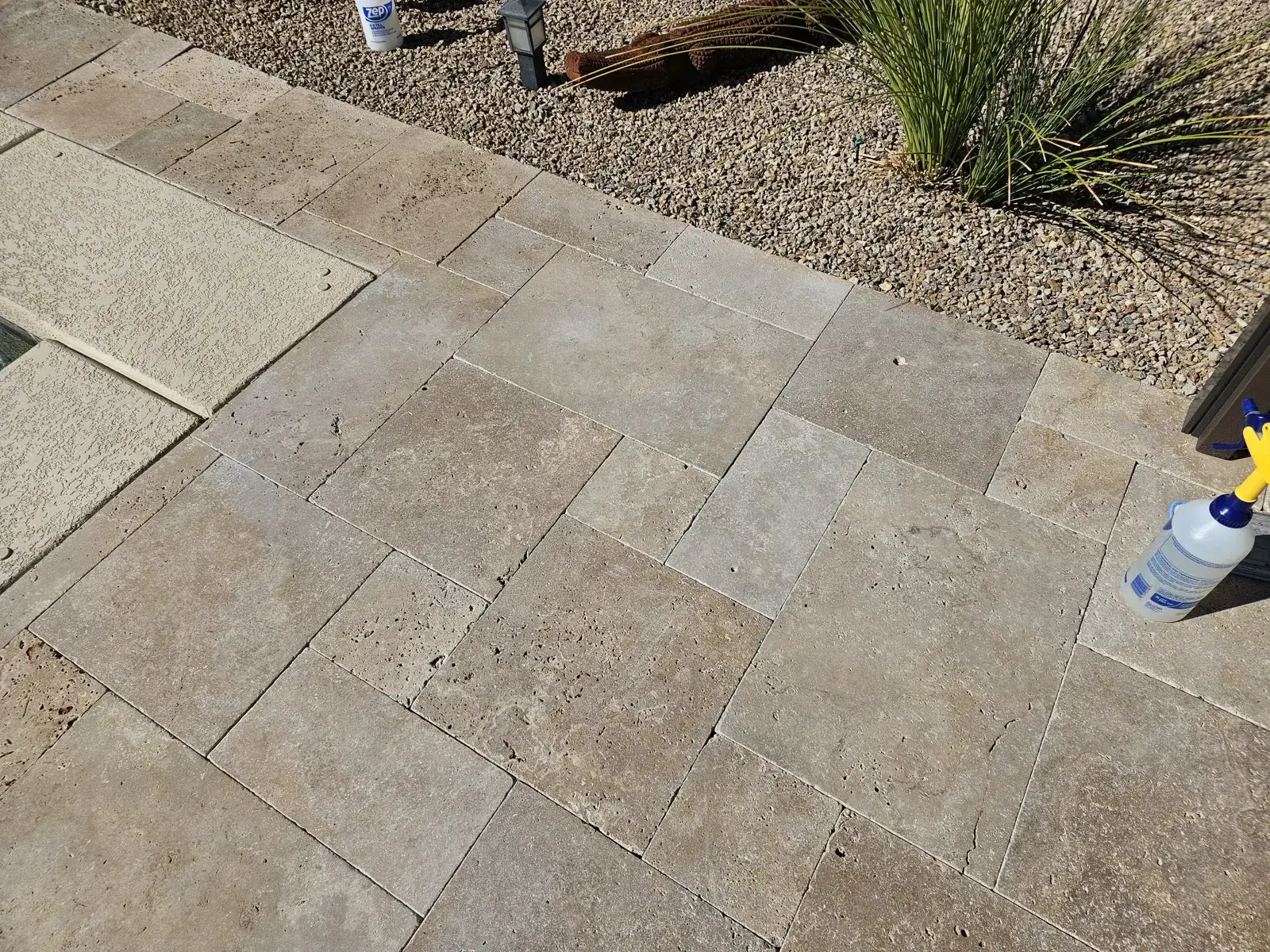
Polishing brings back shine. It works on travertine that's dull but the surface itself is still smooth, no deep scratches, no etching, no pitting. If your floor just looks tired and flat, polishing alone often gets it looking sharp again.
Honing is different. Honing levels out the stone's surface first, it removes scratches, etch marks, and uneven wear before any shine gets applied. Think of it as sanding wood before you stain it. Skip this step on a damaged floor and you're just polishing over problems, they'll still be there, just shinier.
So how do you tell which one your floor needs? Run your hand across it. Feel ridges, rough patches, or dips? That's honing territory. Is it smooth but cloudy or dull looking? Polishing should do the trick.
We see this a lot in older Chester homes near the Ashton area, travertine entryways installed decades ago that caught years of grit tracked in from gravel driveways. That grit acts like sandpaper over time, and by the time someone calls us, the surface has real wear, not just dullness. Those jobs almost always need honing first.
Not sure which category your floor falls into? Send us a photo. We're IICRC certified in stone care, and, most of the time we can tell just by looking at close-up shots whether you're dealing with a honing job or a straightforward polish. Saves you a guessing game, and saves us a wasted trip out to look at something we could've assessed from your phone -
When Travertine Floors Don't Need Polishing Yet
Not every dull travertine floor needs our truck in the driveway. Sometimes it just needs a good cleaning, and that's a different job with a different price tag.
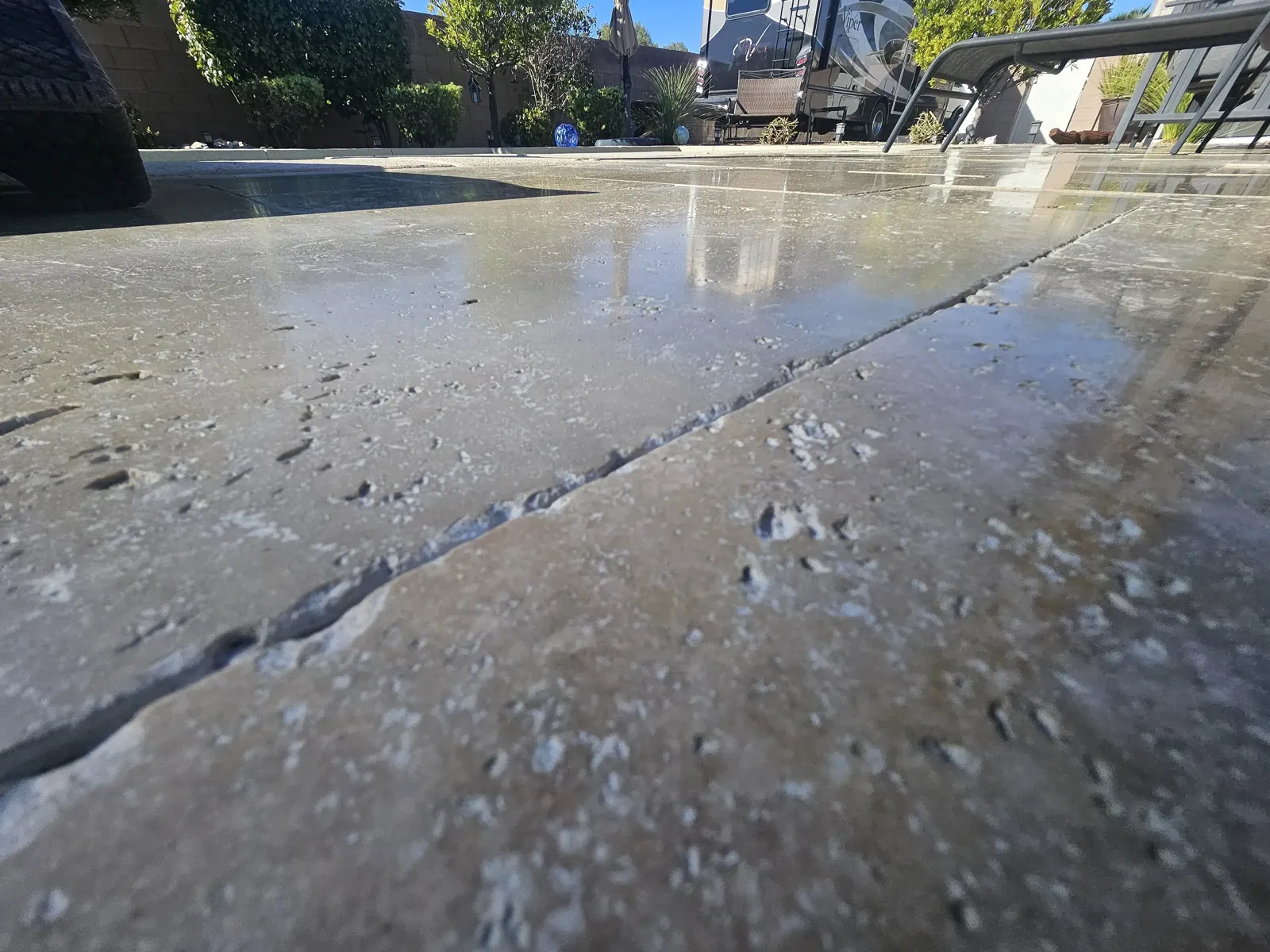
Travertine is naturally full of tiny pits and holes, filled at the factory with a resin or cement filler. Over time, dust and grime settle into the pores around that filler, and the floor looks foggy even though the stone itself is fine. If you run a damp microfiber mop over the floor and the shine comes right back, you're looking at surface soil, not worn stone. That's a cleaning problem. Grout cleaning and a routine floor cleaning and polishing pass can bring that shine back without touching the honing step at all.
Here's a quick gut check we walk homeowners through on the phone. Do you see actual dull, matte patches shaped like foot traffic paths, or worn spots right in front of the sink and stove? That's wear, and that's a real polishing job. But if the whole floor looks evenly hazy, top to bottom, same in the hallway as the kitchen, that's usually just buildup sitting on top of the sealer.
New travertine installs, or floors resealed within the last year or two, almost never need polishing yet. The sealer's doing its job. Give it a deep clean instead and save the restoration step for when traffic earns it.
So before you assume the worst, send us a photo. We'd rather tell you "just clean it" and be honest about it than book a job your floor doesn't need yet. That's not how we build repeat customers around Chester and Chesterfield.
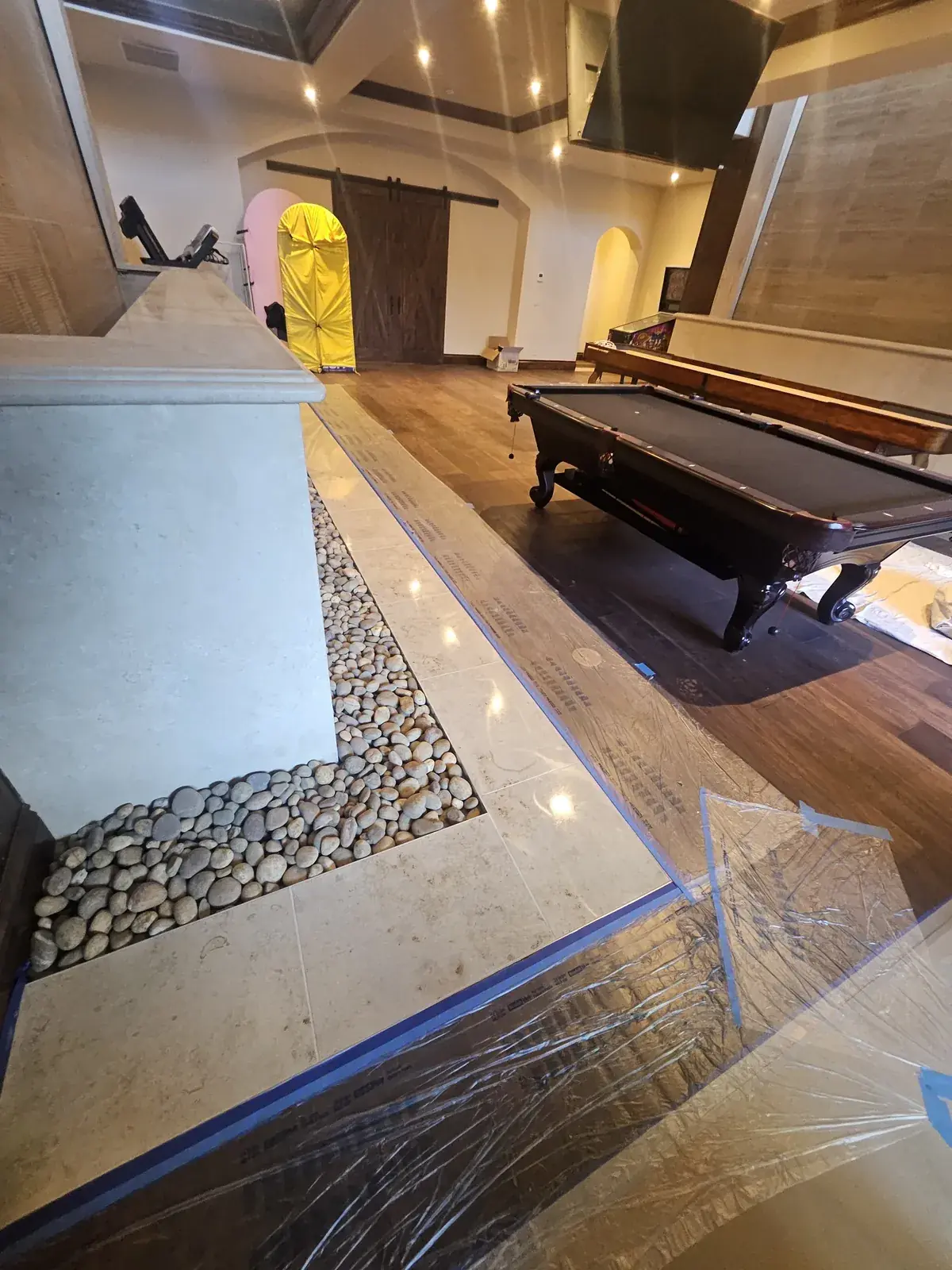
Inside a Professional Travertine Polishing Visit in Chester
So what happens when we show up? Travertine's full of tiny natural holes, called pits, and most homeowners don't realize those pits fill up with soil over the years. That gray, dull look you're seeing isn't just surface dirt. It's ground-in grime sitting inside the stone itself.
We start every job the same way, no shortcuts.
- Walk the floor and check for cracks, deep etching, or missing filler in the holes
- Test a small hidden area with our polishing process before touching the whole room
- Strip old wax or sealant buildup, this stuff traps moisture underneath and causes cloudy spots
- Hone the surface if there's scratching or dullness that goes deeper than the top layer
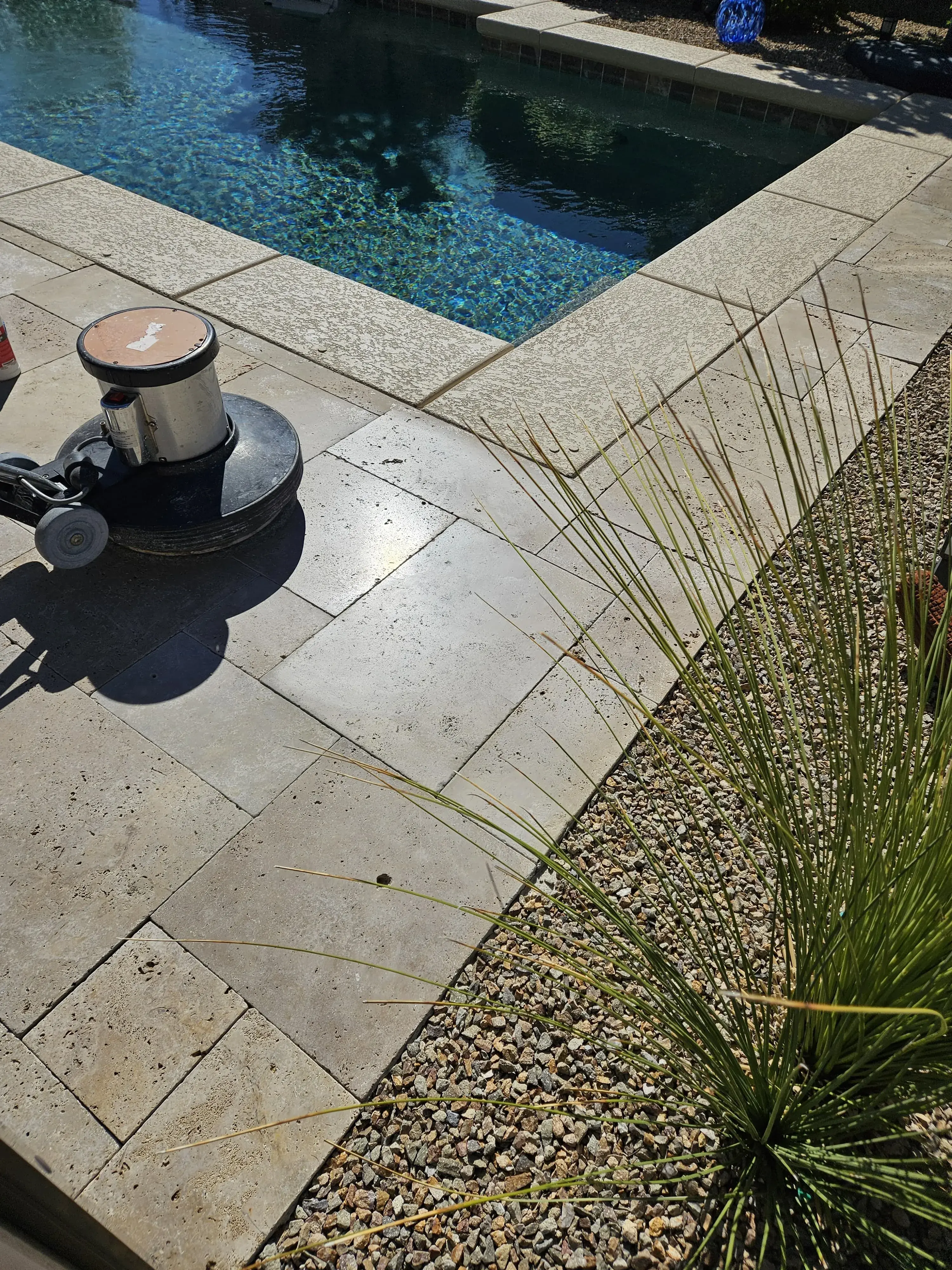
- Run the polishing compound and buff it in with the right equipment for stone, not wood
- Reseal the travertine so it resists staining and holds its shine longer
Chester sits close enough to the James River that humidity swings hard between seasons, and that moisture works its way into unsealed travertine grout lines over time. We see it a lot in older homes with entryway or sunroom travertine that never got resealed after the last polish. That's when the pitting gets worse and staining sets in fast.
How Travertine Polishing Pricing Works
Travertine pricing isn't one size fits all, and, anyone who quotes you a flat number sight unseen is guessing. The trade generally prices this work by square footage, but the number that footage lands on depends on a few things. How deep is the etching? Is the travertine filled or unfilled, honed or polished originally? Are we correcting years of ammonia-based cleaner damage, or just a floor that's been maintained well? Each of those changes the labor time, and labor time is what drives the cost.
Filled travertine, the kind with those little resin-filled pits, usually takes less time to restore than unfilled stone with open pores that have packed in years of grime. So does that mean unfilled floors always cost more? Not always, but they often do. Grinding stages matter too. A floor that just needs a light buff and seal is a different job than one that needs multiple grinding passes to pull out deep scratches or acid etching from a spilled bottle of wine that sat too long.
Before you hire anyone for stone floor polishing or natural stone floor restoration, ask what's included. Does the quote cover sealing? Is grout cleaning part of it if your travertine has tile joints? Some companies price the polish and charge extra for everything else, which stacks up fast.
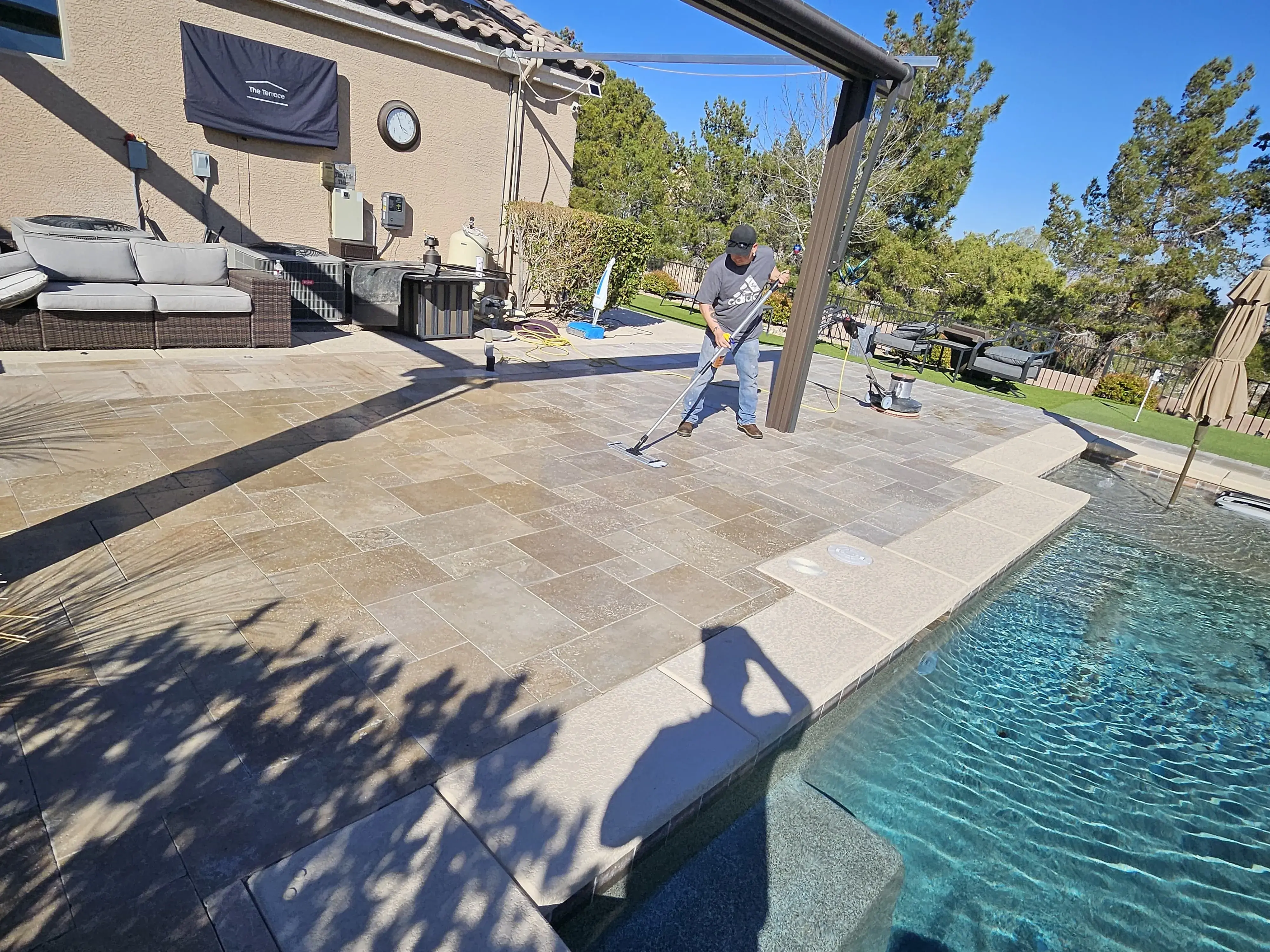
We keep our process simple. Text us a few photos of the floor and we'll walk you through pricing over the phone, no driving out required for a basic estimate. If we do need to come look in person, that visit runs between $75 and $125, and that fee gets applied straight to the job once you move forward. Nobody likes surprise numbers. We'd rather tell you what's driving the cost before we ever pick up a buffer.
Measured steps.
A considered result.
- Share the surface
Send a full view and a close-up of the concern.
- Confirm the material
Identify what it is before choosing a method.
- Set the scope
Separate cleaning, finish work, and repair needs.
- Refine with care
Use a process compatible with the existing surface.
- Review the finish
Inspect the result and discuss ongoing care.
Clarity before
the visit.
Do you need to see my travertine floor before you schedule the job?
Yes, and it saves you time and money. A few close-up photos of the dull or etched spots let us tell right away if you need honing, polishing, or just a deep clean. We're IICRC certified in stone care, so most of the time we can spot the difference from your phone pictures alone. That means no wasted trip for a job your floor doesn't actually need. Just send us clear shots of the worst areas, especially near sinks, stoves, or entryways, and we'll walk you through next steps over the phone.
What happens during a travertine floor polishing visit?
We start by walking the whole floor to check for cracks, deep etching, or missing filler in the natural stone pits. Next we test our process on a small hidden spot before touching the rest of the room. Old wax or sealant gets stripped off, since that buildup traps moisture and causes cloudy patches. If the surface has real wear, we hone it first, then run the polishing compound with stone-specific equipment. We finish by resealing the travertine so it resists stains and holds its shine longer.
Why do older travertine floors in Chester get pitted and dull?
It's usually years of grit tracked in from gravel driveways acting like sandpaper under foot traffic. We see this a lot in older Chester homes near the Ashton area, where entryway travertine was installed decades ago and never got a fresh seal. That grit grinds out the softer mineral pockets in the stone over time, leaving small craters and pits. If your floor feels rough underfoot near your front door, that grinding action is likely the cause, not just age alone.
How do I know if my travertine floor needs honing or just polishing?
Run your hand across the surface first. If you feel ridges, dips, or rough patches, your floor needs honing before any polishing happens. If it's smooth to the touch but just looks cloudy or flat, polishing alone should bring the shine back. Skipping honing on a damaged floor just adds shine over existing scratches and etch marks, they'll still be there underneath. A quick photo of the worst spot usually tells us which category your floor falls into.
Does Chester's humidity cause problems for travertine floors?
Yes, moisture swings between seasons near the James River work their way into unsealed travertine grout lines over time. This is common in older homes with entryway or sunroom travertine, where humidity gets trapped under a worn or missing sealer. That trapped moisture leads to cloudy spots and can loosen grout over the years. Resealing your floor after polishing helps block that moisture from causing the same problem again next season.