
Hardwood Floor Polishing Service in Chester: Restore Shine Without Sanding
Hardwood Floor Polishing Service in Chester that restores shine without sanding. Precision Floor and Surface comes to your home. Call to schedule your service.
Google Reviews
Scroll to read all 9 reviews →
“Great work and even better customer service. Very professional, easy to work with, and you can tell they take pride in what they do. Definitely recommend Precision Floor & Surface Restoration if you need your floors or countertops brought back to life.”★★★★★
“Absolutely amazing work! From start to finish, everything was handled professionally and with great attention to detail. They took the time to make sure everything was done right, and the results speak for themselves. The floors and surfaces came out looking incredible, and you can tell they genuinely take pride in their work. I couldn’t be happier with the finished product and would definitely recommend them to anyone looking for quality work and great service. Five stars all the way! ⭐⭐⭐⭐⭐”★★★★★
“Precision Floor & Surface Restoration exceeded my expectations! Professional, punctual, and detail-oriented from start to finish. My floors look amazing, and the quality of work was outstanding. Highly recommend to anyone looking for top-notch floor and surface restoration services.”★★★★★
“Removed stains that previous cleaning services could not. Made the impossible - possible!”★★★★★
“Great quality work! Very professional with communication!!”★★★★★
“Clean and very professional. Highly recommend”★★★★★
“I highly recommend his floor cleaning services! He’s reliable, professional, and does an excellent job. My floors looked amazing, and I couldn’t be happier with the results.”★★★★★ ★★★★★
Dull, Scratched, or Cloudy Floors: Signs You Need Polishing
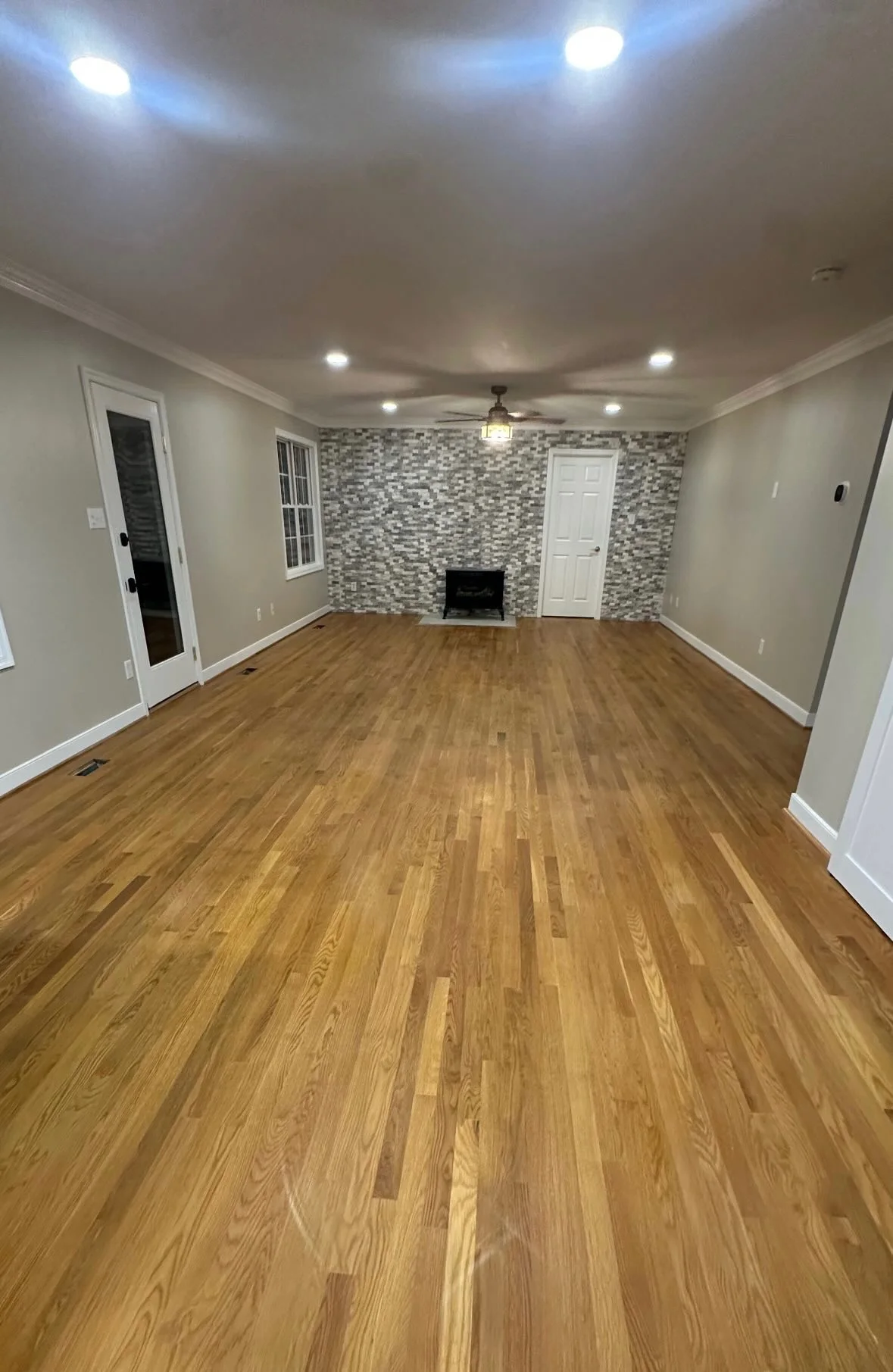
Look down at your floor right now. See a gray, hazy film across the finish instead of a clear shine? That's usually not dirt. It's the wear layer breaking down, and mopping won't fix it.
We see this often in older Chester homes built in the 70s and 80s, where the original oak strip flooring has taken decades of foot traffic without a proper refresh. The polyurethane coating on top gets scuffed by shoes, pet nails, and furniture legs. Over time those micro scratches scatter light instead of reflecting it, so the floor looks dull even right after you clean it.
Here's what tells us a floor needs polishing instead of just cleaning:
- A cloudy or foggy look under lamp light, even on a freshly swept floor
- Fine scratch patterns you can feel with a fingernail but can't see individually
- Worn traffic paths near doorways, hallways, and in front of the kitchen sink
- A finish that looks patchy or uneven, shinier in some spots than others
- Water spots or white marks that don't wipe away with a damp cloth
Polishing vs. Refinishing: How to Tell Which You Need
Here's the question we get more than any other. Someone calls, the floor looks dull, and they ask if it needs to be sanded down and refinished. Usually, it doesn't.
Polishing works on the surface. It brings back shine, pulls out light scratches, and clears away the haze that builds up from years of foot traffic and cleaning products. Refinishing means sanding through the top layer of wood and putting down a whole new finish. That's a bigger job, more mess, more time out of your house.
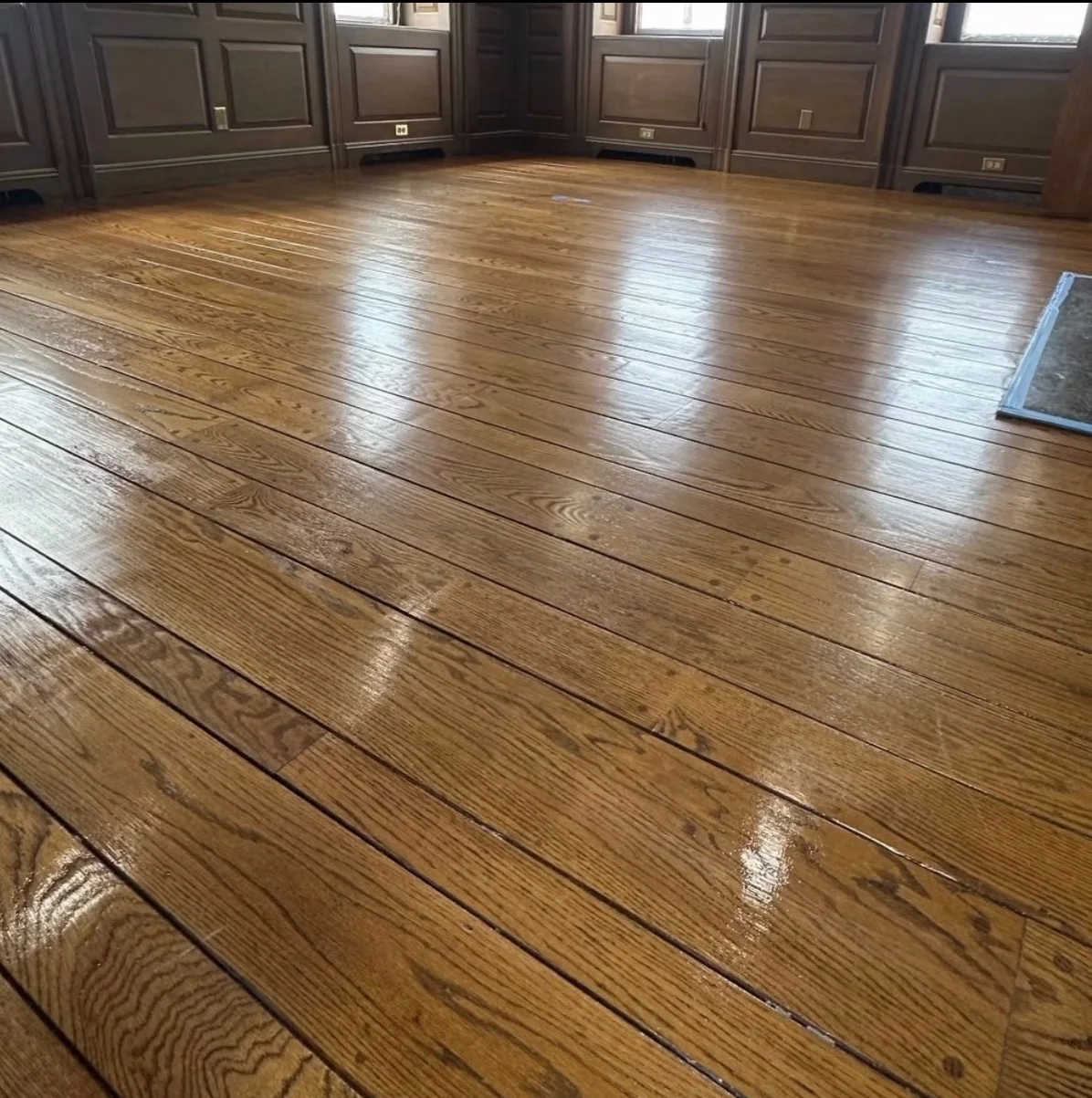
So how do you tell which one you've got? Grab a flashlight and look at the floor at a low angle, right where the light hits it sideways.
- Dull, cloudy, or scratched but the wood underneath looks intact - that's polishing.
- Gray or black discoloration soaked into the wood grain - that's usually water damage, and it may need more than polish.
- Deep gouges you can catch a fingernail on, or bare wood showing through the finish - that points toward sanding.
- Finish peeling or flaking off in sheets - polishing won't fix that.
We see a lot of older homes near Chester with original red oak floors that have gone through decades of Virginia humidity swings. That wood expands and contracts every summer and winter, and the finish takes the hit long before the wood itself is damaged. In those houses, polishing brings the floor right back, no sanding needed.
Not sure which category yours falls into? Text us a photo. That's the fastest way to know, and it costs you nothing to find out before you commit to anything bigger than it needs to be.
When Polishing Won't Solve the Problem
Look, polishing brings back shine and pulls out surface scratches, but it can't fix everything. If your floor has deep gouges that go past the finish and into the actual wood, polishing just won't touch that. You need a repair or a refinish first.
Water damage is the big one we see around Chester. Homes near the Appomattox River and older properties with crawl space foundations have humidity swings that warp boards over time. If your floor has cupping, where the edges of each board sit higher than the middle, that's moisture getting into the wood from underneath. Polishing a cupped floor just makes uneven boards shinier; it won't flatten them out.
Black or dark staining is another red flag. That usually means water sat on the wood long enough to soak in and start breaking it down. That stain has already reached the wood fibers, not just the finish. No buffing pulls that out.
And then there's structural stuff. Soft spots when you walk across a room. Boards that rock or feel loose underfoot. That's not a shine problem, it's a subfloor problem.
So how do you know which one you've got? Ask yourself if the damage feels smooth to the touch or if you can catch a fingernail on it. Surface wear and dullness respond well to polishing. Deep gouges, warping, and water stains don't.
We'd rather tell you straight than have you pay for something that won't fix your actual issue. That's the whole reason we ask for photos before we quote anything, so we can spot which category your floor falls into before you spend a dime.
What Happens During a Hardwood Floor Polishing Visit
The call starts the same way: someone's hardwood looks dull, maybe scuffed near the front entry, and they want to know if it can be fixed without a full refinish. Good news - it usually can.
Before we touch a single board, we walk the floor. We're checking for the wood species, the finish type, and how deep the wear goes. Polyurethane finishes react differently than older wax finishes, and Chester has a mix of both, especially in the older homes near the historic district where original hardwood is common under decades of built-up wax.
Once what we're working with, the process generally follows these steps:
- Clear the room and do a dry sweep to pull up loose grit that scratches during buffing.
- Run a Wood Floor Deep Cleaning pass to lift embedded soil out of the grain.
- Buff the surface with the right pad and compound for that finish.
- Spot-check for haze, streaking, or spots where the finish didn't take evenly.
- Apply a light recoat if the floor needs it, which we'll flag before we start.
Most homes take a few hours per room, not days. That's the whole point of polishing over sanding; we're not stripping the floor down to bare wood.
You'll want to keep pets and kids off the floor while the cleaning solution and buffing compound do their work. It's not a fume situation, just a "let it finish" situation. And if you're on a slab foundation, which a lot of Chester homes are, we pay extra attention to moisture readings before we start. Humidity swings can trap dampness under a fresh finish, and that's how you get cloudy spots six months later.
Why Chester's Older Homes Are Strong Candidates for No-Sand Polishing
Chester has a lot of homes built in the 1950s through the 1970s, back when solid red oak strip flooring was standard, not the engineered stuff you see in newer builds. That's good news. Solid oak has enough wood above the tongue and groove to handle years of foot traffic, spills, and dry winter heat without losing its structure. When we walk into an older Chester home, the floor underneath the dullness is still solid. It just needs the right process, not a rebuild.
Here's the thing about older hardwood. Decades of wax buildup, old polish layers, and fine grit ground in from shoes create a cloudy film on top of the wood. It looks like the floor is failing. It's usually not. And that film is exactly what no-sand polishing is built to remove, buffing and resealing the surface without stripping wood down to raw grain.
Central Virginia's humidity swings matter here too. Summers push moisture into the wood, winters dry it back out, and that constant push and pull is part of why older Chester floors show wear patterns near exterior doors and under windows. Sanding those floors repeatedly over the years thins the boards, and sanding again isn't always an option once they've been refinished a few times already.
So before assuming a floor needs full refinishing, it's worth checking whether the wood itself is sound. Deep grooves, water stains soaked into the grain, or soft spots underfoot mean sanding might be the right call. But surface dullness, minor scuffing, or a hazy finish on original oak - that's a textbook case for polishing instead of tearing into the wood.
Does Your Floor Need Shine or New Protection?
A polish and a new polyurethane coat do different jobs. If traffic has worn the protective finish, read about recoating worn hardwood finishes. If a cloudy film returns after cleaning, causes of cloudy hardwood floors can help explain why adding more polish may not solve it.
Measured steps.
A considered result.
- Share the surface
Send a full view and a close-up of the concern.
- Confirm the material
Identify what it is before choosing a method.
- Set the scope
Separate cleaning, finish work, and repair needs.
- Refine with care
Use a process compatible with the existing surface.
- Review the finish
Inspect the result and discuss ongoing care.
Clarity before
the visit.
How do I know if my Chester home needs polishing or a full refinish?
Grab a flashlight and check your floor at a low angle. If it looks dull or scratched but the wood underneath is solid, polishing will bring back the shine. Deep gouges, bare wood showing through, or finish peeling in sheets mean you need sanding instead. Many older Chester homes with original oak strip flooring only need polishing, since the wear is on the finish, not the wood. If you're unsure, send us a photo before booking anything bigger than you need.
How long does a hardwood floor polishing visit take?
Most rooms take a few hours, not days. We sweep the room, run a deep cleaning pass, buff with the right pad for your finish, and check for haze or uneven spots before we finish. That's the whole benefit of polishing over sanding. Your floor never gets stripped to bare wood, so you get your rooms back the same day instead of waiting on a multi-day refinishing job.
Can polishing fix water damage or cupped floorboards?
No, polishing only fixes surface wear, not structural or moisture problems. Homes near the Appomattox River and older Chester properties with crawl space foundations often see boards cup, where edges sit higher than the middle from moisture underneath. Polishing a cupped floor just makes the unevenness shinier. Dark staining means water soaked into the wood fibers already, so buffing won't pull it out. We check for these signs before quoting any polishing work.
Why do older Chester homes need floor polishing so often?
Virginia's humidity swings take a real toll on original hardwood. Wood expands and contracts every summer and winter, and the polyurethane or wax finish wears out long before the actual boards do. That's common in Chester homes built in the 70s and 80s, and in older properties near the historic district with original hardwood under years of built-up wax. Polishing restores that finish without needing to sand down the wood underneath it.
Do I need to leave the house during a polishing service?
No, but you'll want to keep pets and kids off the floor while we work. The buffing compound and cleaning solution need time to set, so it's more of a wait-it-out situation than a fume concern. If your home sits on a slab foundation, common across Chester, we also check moisture readings first. That step keeps dampness from getting trapped under the new finish and causing cloudy spots later.
What causes a hardwood floor to look cloudy even after cleaning?
A cloudy or hazy look almost always means the finish is breaking down, not that the floor is dirty. Micro scratches from shoes, pet nails, and furniture scatter light instead of reflecting it, so the shine disappears even right after mopping. This shows up a lot in older Chester homes where the original finish has taken decades of foot traffic. A polishing visit clears that haze and brings the reflective shine back without sanding.
Talk With Us About Your Wood Floor
Tell us what looks worn, which products have been used, and what you want to improve. Photos are helpful, but you can call first.