
Practical surface guide
Cloudy Hardwood Floors: Find the Cause Before Adding Another Cleaner
More cleaning product is not automatically the solution to a cloudy floor. When residue or polish buildup is already present, another application can make the appearance worse.
Google Reviews
Scroll to read all 9 reviews →
“Great work and even better customer service. Very professional, easy to work with, and you can tell they take pride in what they do. Definitely recommend Precision Floor & Surface Restoration if you need your floors or countertops brought back to life.”★★★★★
“Absolutely amazing work! From start to finish, everything was handled professionally and with great attention to detail. They took the time to make sure everything was done right, and the results speak for themselves. The floors and surfaces came out looking incredible, and you can tell they genuinely take pride in their work. I couldn’t be happier with the finished product and would definitely recommend them to anyone looking for quality work and great service. Five stars all the way! ⭐⭐⭐⭐⭐”★★★★★
“Precision Floor & Surface Restoration exceeded my expectations! Professional, punctual, and detail-oriented from start to finish. My floors look amazing, and the quality of work was outstanding. Highly recommend to anyone looking for top-notch floor and surface restoration services.”★★★★★
“Removed stains that previous cleaning services could not. Made the impossible - possible!”★★★★★
“Great quality work! Very professional with communication!!”★★★★★
“Clean and very professional. Highly recommend”★★★★★
“I highly recommend his floor cleaning services! He’s reliable, professional, and does an excellent job. My floors looked amazing, and I couldn’t be happier with the results.”★★★★★ ★★★★★
Your Hardwood Floor Should Not Look Cloudier Every Time You Clean It
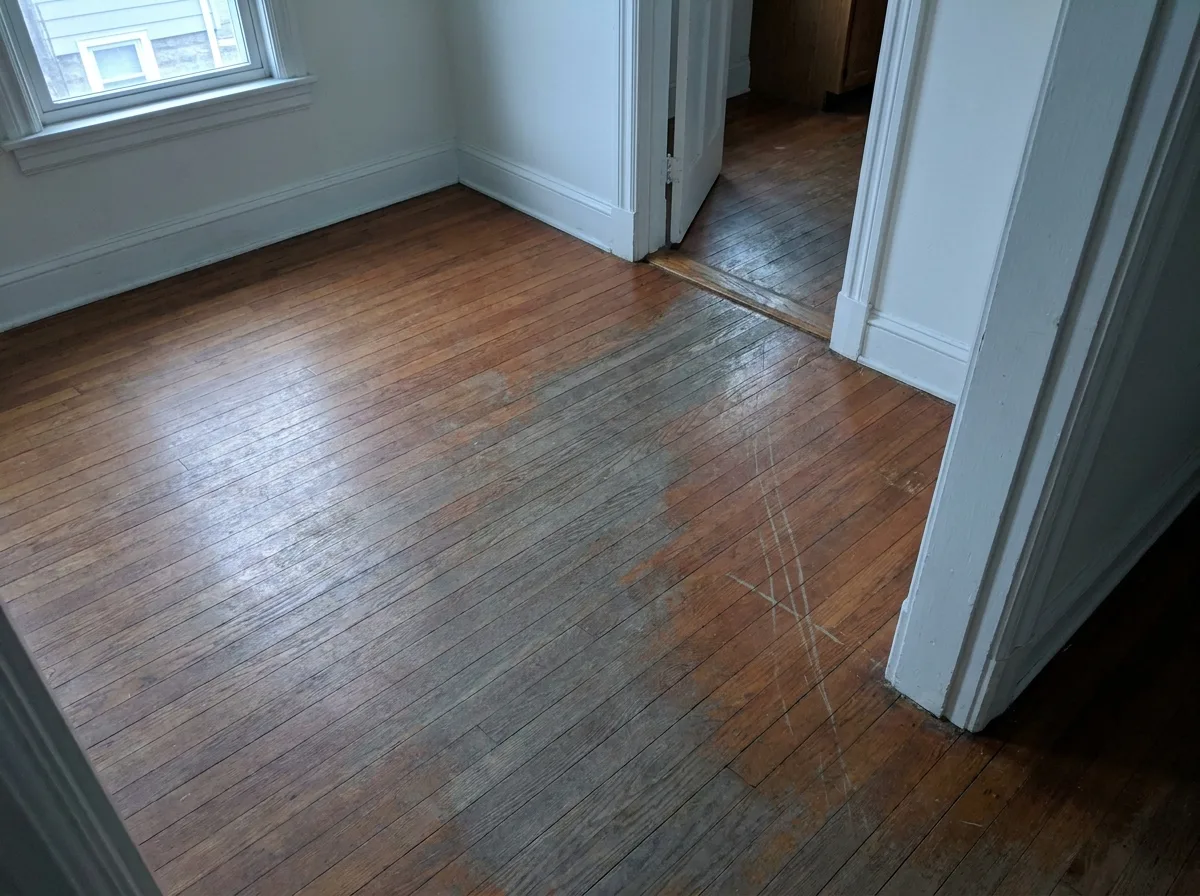
The familiar cycle is simple: the floor looks temporarily wet or shiny while it is being cleaned, then a cloudy film returns as it dries. Mopping again may move the haze or leave a different streak pattern without actually removing the cause.
That pattern is a reason to pause. The floor may be carrying residue, accumulated polish, embedded soil, or an aging finish that scatters light unevenly.
Product Residue Often Creates the Film You Keep Seeing
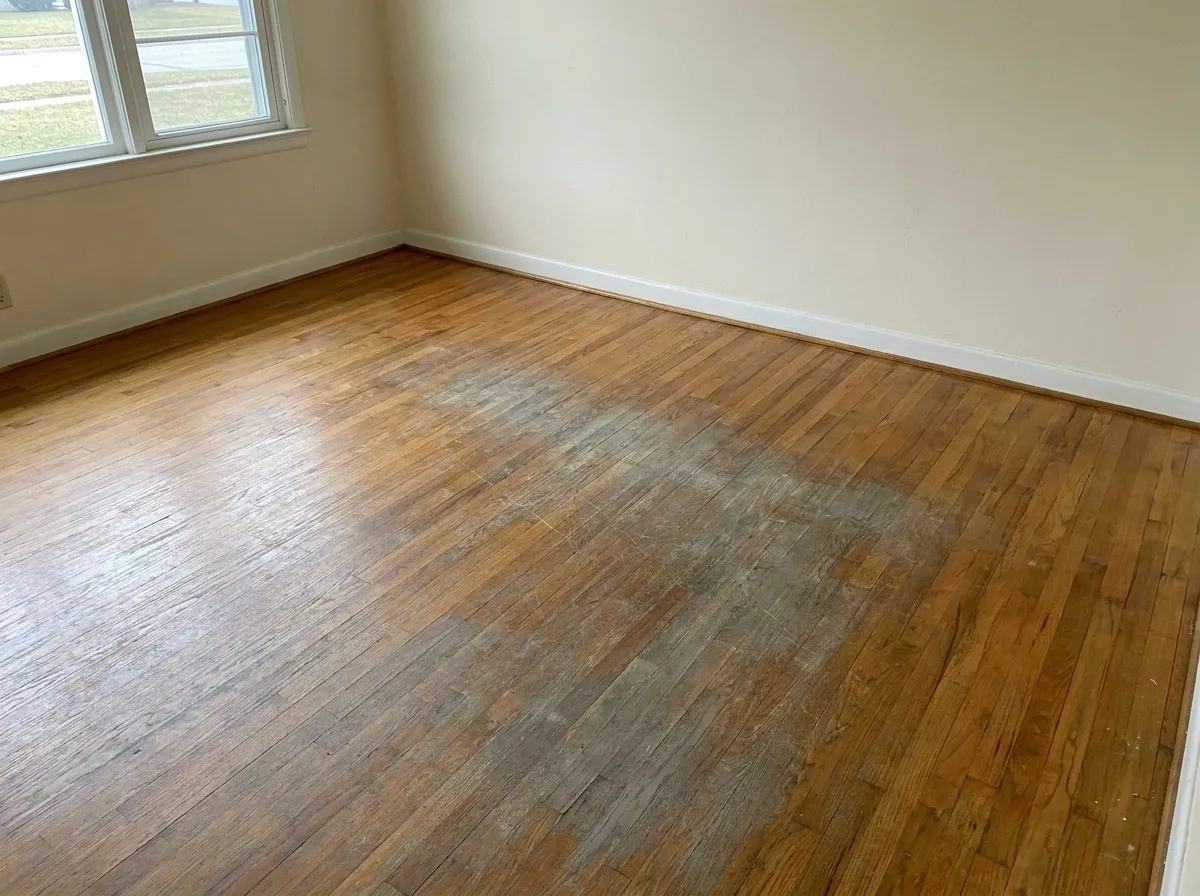
Repeated applications of cleaner, polish, or shine-restoring products can leave layers on top of the existing finish. Each new application may soften or redistribute the previous layer instead of lifting it away.
Too Much Cleaner Can Leave Material Behind
More solution does not always mean more cleaning. An overly strong mixture or repeated application can leave material after the water evaporates.
Floor Polish Can Create Uneven Shine
Patchy gloss, application lines, footprints, and traffic areas that look different from the perimeter can point to an uneven product film rather than a uniform polyurethane finish.
Mop & Glo and Similar Products Can Accumulate Over Time
Andrew regularly asks about Mop & Glo because homeowners often use it to bring shine back. Over time, products of this kind can leave a film that looks dull or cloudy. Adding another coat does not genuinely restore the protective finish beneath it.
Cloudiness Can Also Mean the Finish Is Wearing Out
Not every hazy hardwood floor is covered in residue. An aging or damaged coating can reflect light unevenly, especially where traffic, repeated moisture, and abrasion have thinned the finish.
The Sheen Is Uneven Across the Room
Compare protected perimeter areas with the walkways through the room. A clear traffic pattern can indicate coating wear even when the floor is clean.
The Floor Looks Gray or Bare in Specific Areas
Grayness, visible fibers, or a change in wood color may mean the protective coat has thinned or worn through. Cleaning cannot replace missing finish.
Light Scratches Cover the Existing Finish
A field of fine scratches in the topcoat may point toward a recoat assessment, provided the stain and wood remain intact and the surface is free of incompatible contamination.
Stop Layering More Shine Over an Unidentified Problem
Adding polish over soil, residue, or a failing coating can make later correction more difficult. It may trap contamination, create patchy gloss, or leave a new layer that must be removed before the actual finish can be assessed.
The next action is not to hunt for a stronger bottle. Stop applying products, record what has already been used, and let the surface be evaluated.
Professional Diagnosis Separates Buildup From Finish Damage
We review what products have been used, examine where the cloudiness appears, compare high-traffic and protected areas, and determine whether contamination is sitting on the finish. We also look for raw wood, stain loss, and scratches that show whether the protective coat has worn through.
Once the cause is clear, we can explain which treatment will help and what it will leave unchanged.
The Correct Fix Depends on the Cause
Professional Cleaning for Embedded Soil
If ordinary or bonded soil is dulling a healthy coating, begin with professional hardwood floor cleaning.
Wax and Product Buildup Removal for Layered Residue
If multiple products have formed a cloudy film, the surface may need professional wax and polish removal.
Screen and Recoat for Worn Protective Finish
If the floor is clean and compatible but the polyurethane is worn, a screen and recoat may renew protection.
Full Refinishing for Damage Into the Wood
Deep gouges, widespread raw wood, major stain loss, and structural damage sit outside Precision Floor’s maintenance scope and may require a traditional refinishing or repair specialist.
Cloudy Hardwood Floor Diagnosis in Richmond, Chesterfield, and Midlothian
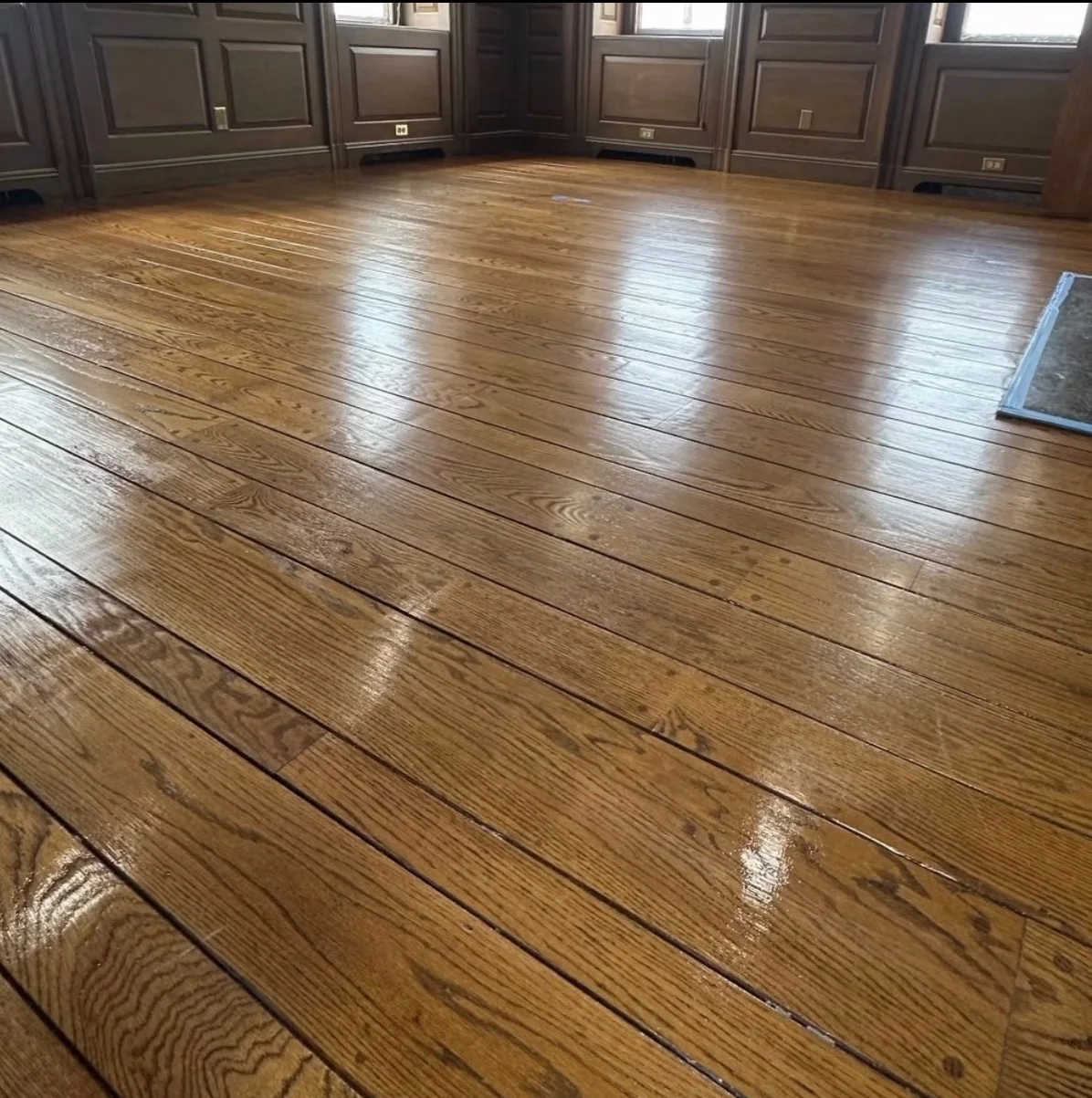
Precision Floor & Surface Restoration evaluates cloudy and hazy hardwood floors throughout the Richmond area. Andrew’s process begins with the coating and product history so the treatment addresses what is actually causing the haze.
Identify the Cause Before You Put Anything Else on the Floor
A cloudy floor is a symptom. Text photos and a list of the products used so we can help determine whether the surface needs cleaning, buildup removal, recoating, or a more extensive repair.
Measured steps.
A considered result.
- Share the surface
Send a full view and a close-up of the concern.
- Confirm the material
Identify what it is before choosing a method.
- Set the scope
Separate cleaning, finish work, and repair needs.
- Refine with care
Use a process compatible with the existing surface.
- Review the finish
Inspect the result and discuss ongoing care.
Clarity before
the visit.
Why do my hardwood floors look cloudy after mopping?
Cleaner residue, layered polish, embedded soil, or a worn protective finish can all create haze after the floor dries. The location and product history help separate those causes.
How do you remove haze from hardwood floors?
The method depends on the cause. Ordinary soil may respond to professional cleaning, layered wax or polish needs buildup removal, and a worn coating may require a screen and recoat.
Should I add more floor polish to cover cloudy spots?
No. Adding shine product over an unidentified film can create another layer and make later correction more difficult. Diagnose the surface first.
Talk With Us About Your Wood Floor
Tell us what looks worn, which products have been used, and what you want to improve. Photos are helpful, but you can call first.