
Hardwood Floor Wax Removal in Richmond, VA for Cloudy, Sticky, or Filmy Floors
Years of wax, polish, or shine-restoring products can cover the original finish with a cloudy or uneven film that routine cleaning no longer removes.
Google Reviews
Scroll to read all 9 reviews →
“Great work and even better customer service. Very professional, easy to work with, and you can tell they take pride in what they do. Definitely recommend Precision Floor & Surface Restoration if you need your floors or countertops brought back to life.”★★★★★
“Absolutely amazing work! From start to finish, everything was handled professionally and with great attention to detail. They took the time to make sure everything was done right, and the results speak for themselves. The floors and surfaces came out looking incredible, and you can tell they genuinely take pride in their work. I couldn’t be happier with the finished product and would definitely recommend them to anyone looking for quality work and great service. Five stars all the way! ⭐⭐⭐⭐⭐”★★★★★
“Precision Floor & Surface Restoration exceeded my expectations! Professional, punctual, and detail-oriented from start to finish. My floors look amazing, and the quality of work was outstanding. Highly recommend to anyone looking for top-notch floor and surface restoration services.”★★★★★
“Removed stains that previous cleaning services could not. Made the impossible - possible!”★★★★★
“Great quality work! Very professional with communication!!”★★★★★
“Clean and very professional. Highly recommend”★★★★★
“I highly recommend his floor cleaning services! He’s reliable, professional, and does an excellent job. My floors looked amazing, and I couldn’t be happier with the results.”★★★★★ ★★★★★
Cloudy, Sticky, or Patchy Floors Often Point to Product Buildup
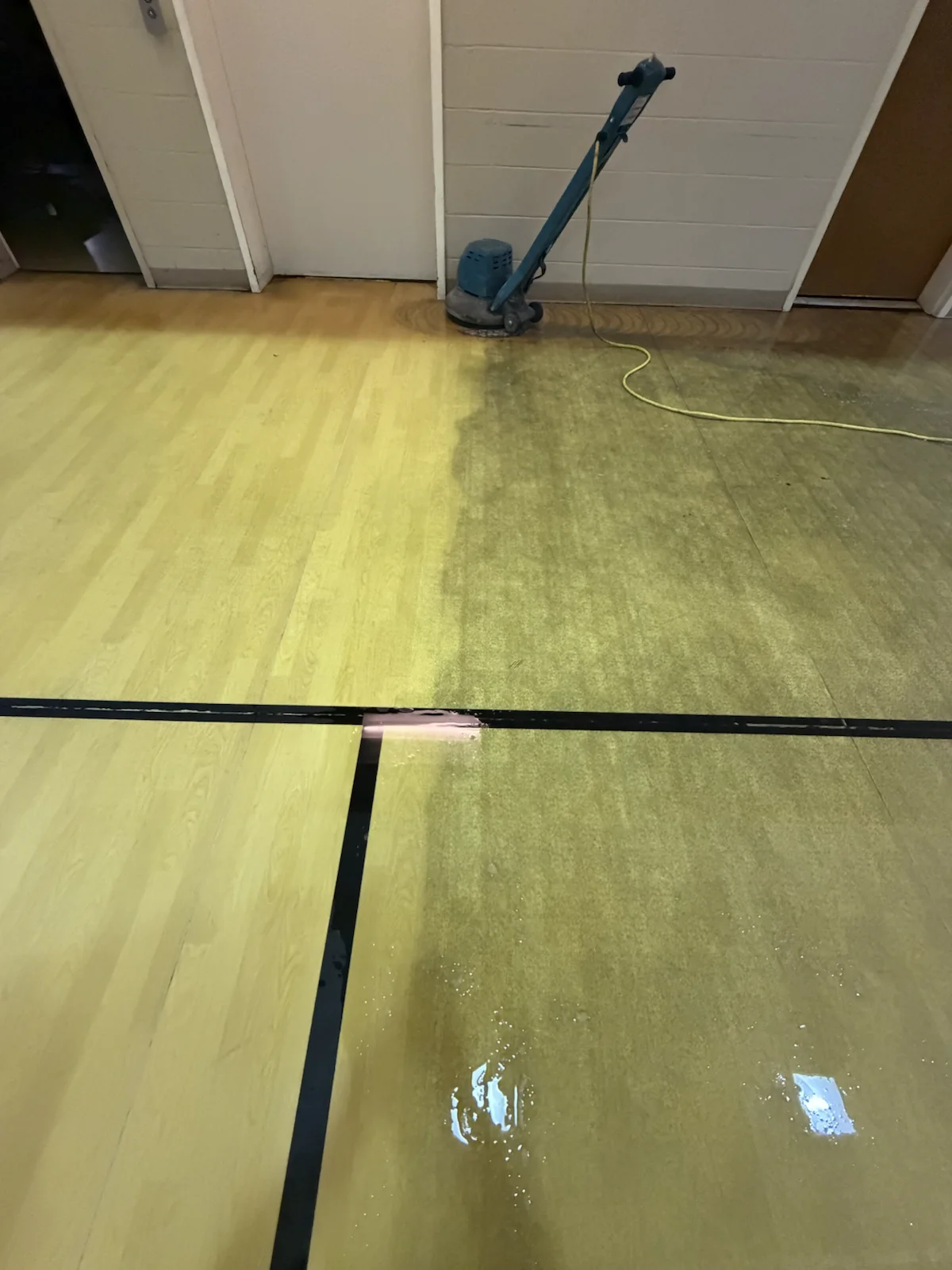
Wax buildup on hardwood floors does not always look like a thick visible coating. It may appear as haze, tackiness, footprints, uneven shine, or a floor that seems dirty again immediately after cleaning.
The Floor Looks Better Wet Than It Does Dry
Moisture can temporarily hide a film by changing how the surface reflects light. As the floor dries, the cloudy layer becomes visible again.
Footprints and Smudges Appear Easily
A residue-coated surface can show skin oils, socks, and soil more readily. The same tackiness that catches marks can attract more grit.
Some Areas Look Shinier Than Others
Uneven application and traffic wear create different layer thicknesses across the room. Protected corners may hold more product while busy walkways look smeared or dull.
Mopping Makes the Haze Move but Never Disappear
If the film changes shape without going away, routine cleaning may be redistributing softened residue rather than removing it.
Routine Cleaning Cannot Always Cut Through Years of Product Layers
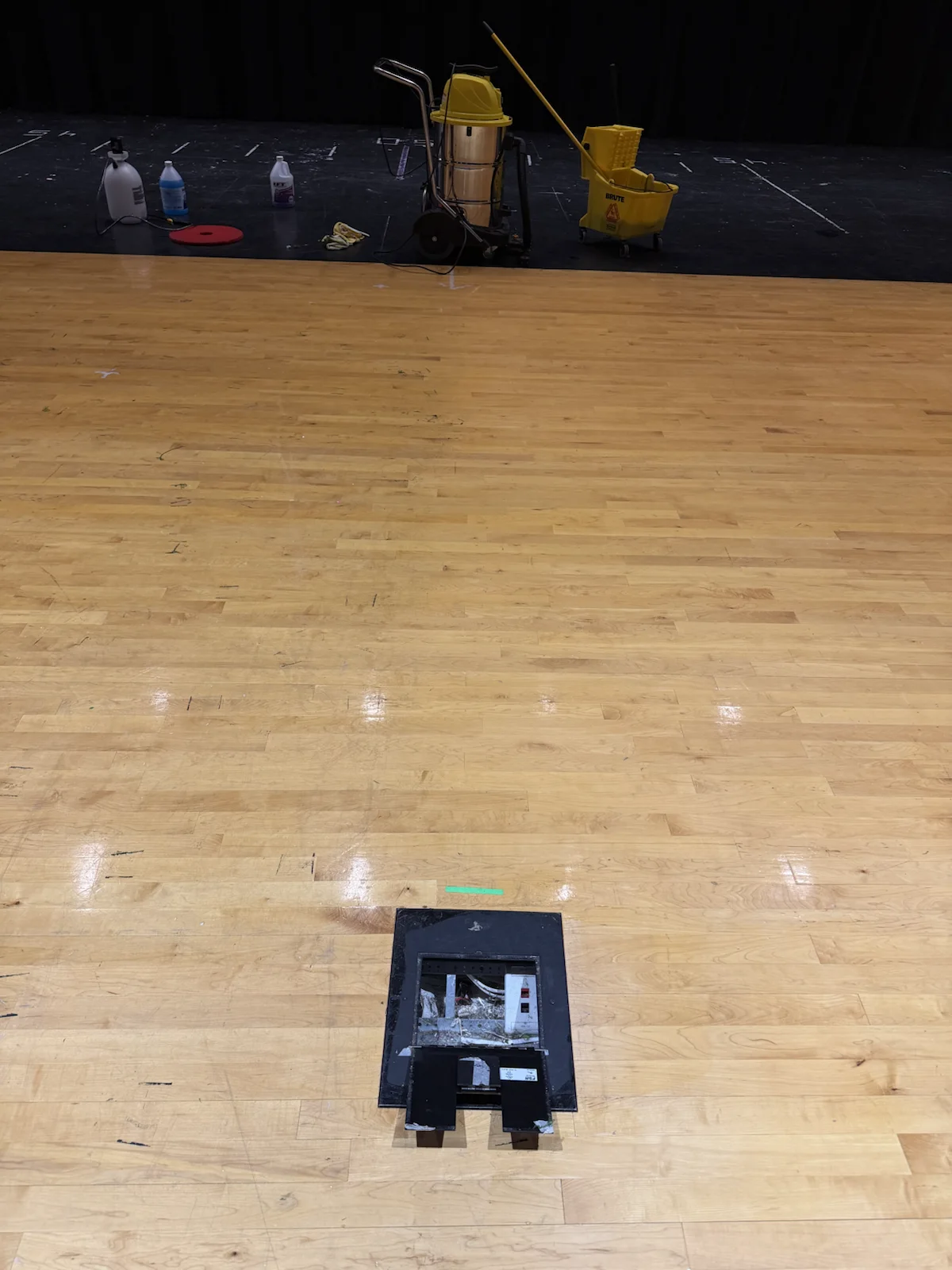
Ordinary cleaning is designed to remove soil. It is not automatically designed to strip accumulated layers of wax or polymer-style floor polish. A stronger dose of the same cleaner can add residue or affect the underlying finish without solving the buildup.
This is the line between professional hardwood floor cleaning and wax removal. Cleaning addresses contamination that can be released from the finish. Buildup removal must break down and extract material that has become a separate layer on top.
Wax and Polish Must Be Removed Before the Floor Can Be Recoated Correctly
A new polyurethane coat should not simply be applied over unknown wax or polish. Those layers can interfere with abrasion and prevent the new finish from bonding to a suitable surface.
When a floor is otherwise a good candidate for screening and recoating, product removal may be the preparation step that makes an honest adhesion assessment possible.
We Adjust the Removal Process to the Floor and the Severity of the Buildup
Andrew does not use one aggressive process on every floor. He changes the cleaning concentration and mechanical method according to the coating, contamination, and response of the test area.
We Identify What Has Been Applied to the Floor
We ask about cleaners, polishes, waxes, shine restorers, frequency of use, and how long the floor has been maintained that way. Product names and photos of the bottles are useful.
We Select the Cleaning Chemistry Based on the Contamination
The solution and dilution should reflect the type and severity of buildup. A mild residue and years of layered product do not call for the same concentration.
We Use Controlled Agitation or Extraction When Appropriate
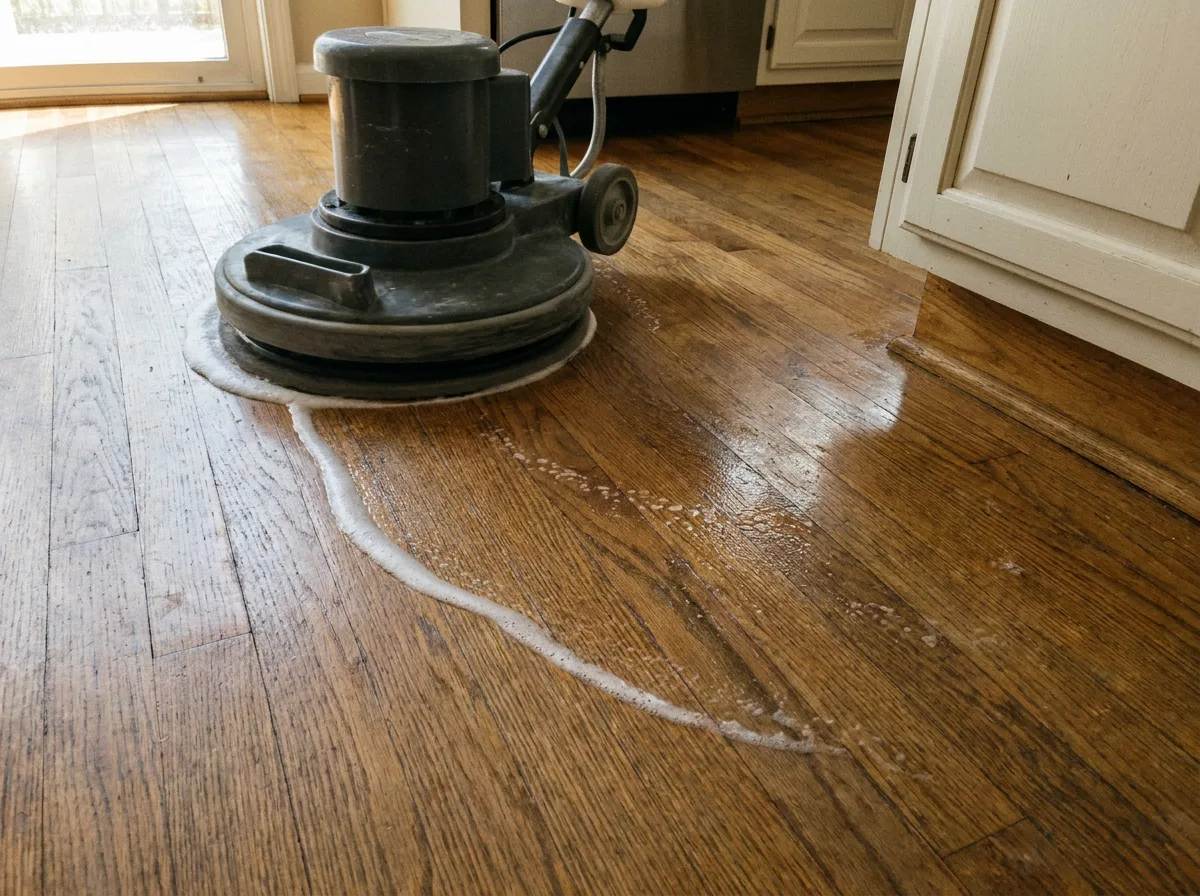
Depending on the floor and buildup, Andrew may use machine agitation with appropriate brushes or heated extraction to help release and collect the softened material. The floor is tested and monitored rather than subjected to a one-size-fits-all strip.
We Reassess the Finish After the Buildup Is Removed
Removing the film reveals the condition that was hidden underneath. Only then can we say whether the original finish remains serviceable or needs a maintenance coat.
Buildup Removal May Reveal That the Original Finish Can Still Be Saved
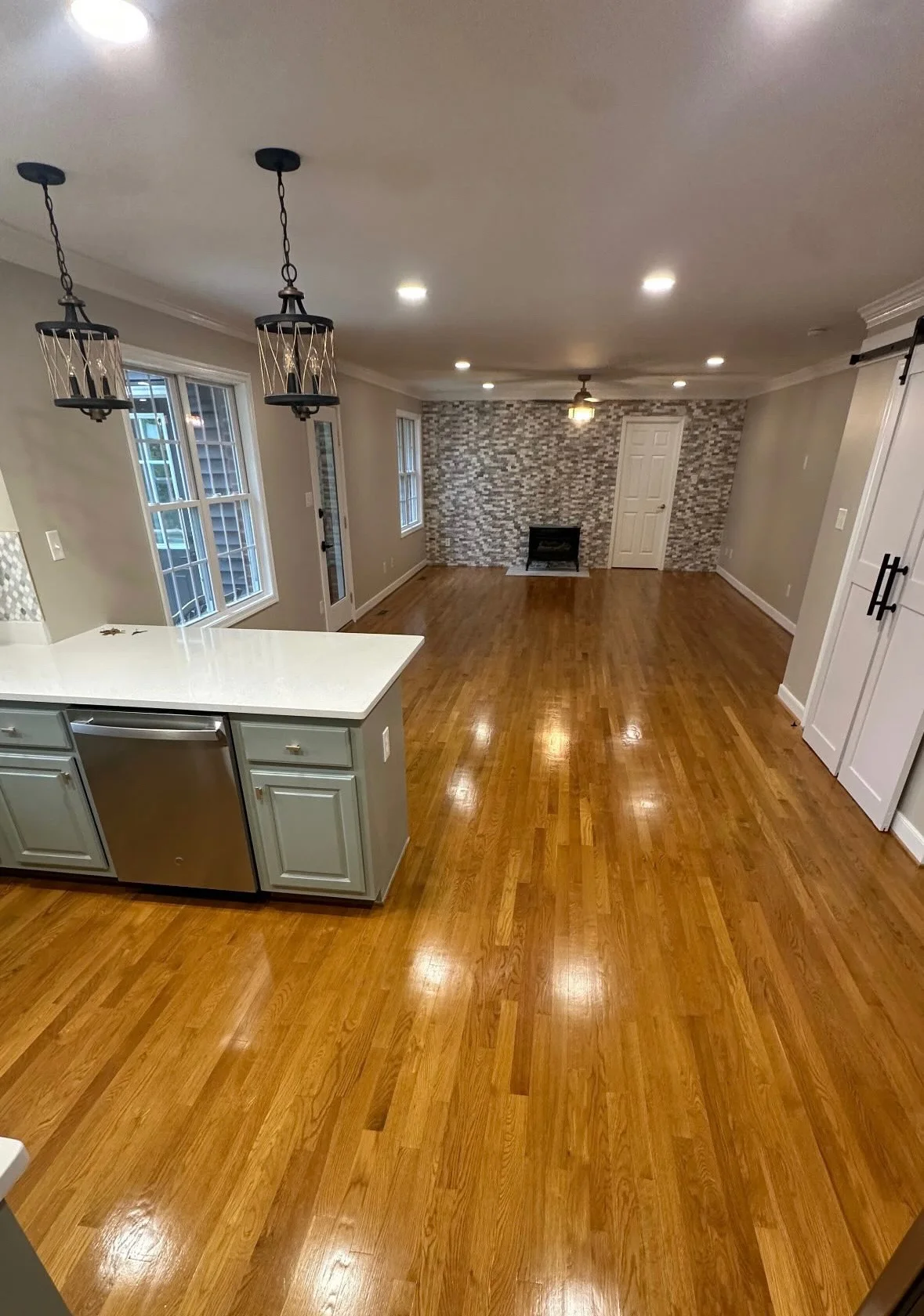
A floor that looks permanently dull may be covered by material sitting on top of the original polyurethane. When that is the main cause, controlled removal can uncover a cleaner, more even finish without sanding the wood.
The result depends on what the buildup was hiding. We do not promise the finish will be intact until the contamination is removed and the floor can be inspected directly.
Some Floors Need a Screen and Recoat After Buildup Removal
Removing contamination does not replace a worn protective coat. If the revealed finish is thin, scratched, or losing protection, but the stain and wood remain suitable, the next step may be a screen and recoat.
If raw wood, deep damage, or broad stain loss appears, the floor may instead fall outside the maintenance scope. The purpose of reassessment is to make that boundary clear before more work is sold.
We Help You Avoid Recreating the Same Film
- Use a cleaner compatible with the floor’s actual finish.
- Avoid repeatedly layering products sold primarily to add shine.
- Follow the recommended dilution rather than assuming more product means more cleaning.
- Remove loose grit before damp cleaning so it is not dragged across the coating.
- Contact us when the surface begins changing appearance instead of covering the change with another layer.
Andrew commonly recommends a finish-compatible product such as Squeaky Clean after the floor has been assessed. The exact aftercare recommendation should match the coating applied or preserved on the job.
Wax and Floor-Polish Removal Across the Richmond Area
We provide hardwood floor wax and floor-polish removal in Richmond, Chesterfield, and Midlothian. The service is based on the product history and floor condition, not generic city filler.
Remove the Buildup Before It Causes Another Failed Cleaning Attempt
Stop adding new layers over the problem. Send photos and the names of products used. We will help determine what may be on the floor, remove suitable buildup safely, and identify whether the existing finish can be preserved.
Measured steps.
A considered result.
- Share the surface
Send a full view and a close-up of the concern.
- Confirm the material
Identify what it is before choosing a method.
- Set the scope
Separate cleaning, finish work, and repair needs.
- Refine with care
Use a process compatible with the existing surface.
- Review the finish
Inspect the result and discuss ongoing care.
Clarity before
the visit.
How can I tell if my hardwood floors have wax or polish buildup?
Cloudiness after drying, a sticky feel, easy footprints, patchy shine, and haze that moves during mopping are useful clues. Product history and a controlled test area are safer than guessing from one symptom.
Can routine hardwood cleaner remove years of wax buildup?
Not necessarily. Routine cleaner is intended for soil, while accumulated wax or polymer-style polish can form a separate layer that needs compatible chemistry, agitation, and extraction.
Can you apply polyurethane immediately after wax removal?
The floor must first be reassessed. The buildup needs to be removed, the underlying coating must be suitable, and the surface must be prepared so the new finish can bond.
How do I strip Mop & Glo from hardwood floors?
The safe method depends on the existing finish, the number of layers, and how the surface responds to a test area. Avoid using an aggressive generic stripper without identifying the coating underneath.
Talk With Us About Your Wood Floor
Tell us what looks worn, which products have been used, and what you want to improve. Photos are helpful, but you can call first.