
Hardwood Floor Screen and Recoat in Richmond, VA
Dull traffic lanes or light scratches do not always mean you need to sand the floor. Andrew checks the existing finish, deals with buildup, and determines whether a fresh protective coat can preserve the wood and color you already have.
Watch the 88-second explanation
What does screen and recoat actually do?
Screening prepares the existing finish. Recoating adds a compatible protective coat. See how the process renews the surface while keeping the existing wood and stain color.
Google Reviews
Scroll to read all 9 reviews →
“Great work and even better customer service. Very professional, easy to work with, and you can tell they take pride in what they do. Definitely recommend Precision Floor & Surface Restoration if you need your floors or countertops brought back to life.”★★★★★
“Absolutely amazing work! From start to finish, everything was handled professionally and with great attention to detail. They took the time to make sure everything was done right, and the results speak for themselves. The floors and surfaces came out looking incredible, and you can tell they genuinely take pride in their work. I couldn’t be happier with the finished product and would definitely recommend them to anyone looking for quality work and great service. Five stars all the way! ⭐⭐⭐⭐⭐”★★★★★
“Precision Floor & Surface Restoration exceeded my expectations! Professional, punctual, and detail-oriented from start to finish. My floors look amazing, and the quality of work was outstanding. Highly recommend to anyone looking for top-notch floor and surface restoration services.”★★★★★
“Removed stains that previous cleaning services could not. Made the impossible - possible!”★★★★★
“Great quality work! Very professional with communication!!”★★★★★
“Clean and very professional. Highly recommend”★★★★★
“I highly recommend his floor cleaning services! He’s reliable, professional, and does an excellent job. My floors looked amazing, and I couldn’t be happier with the results.”★★★★★ ★★★★★
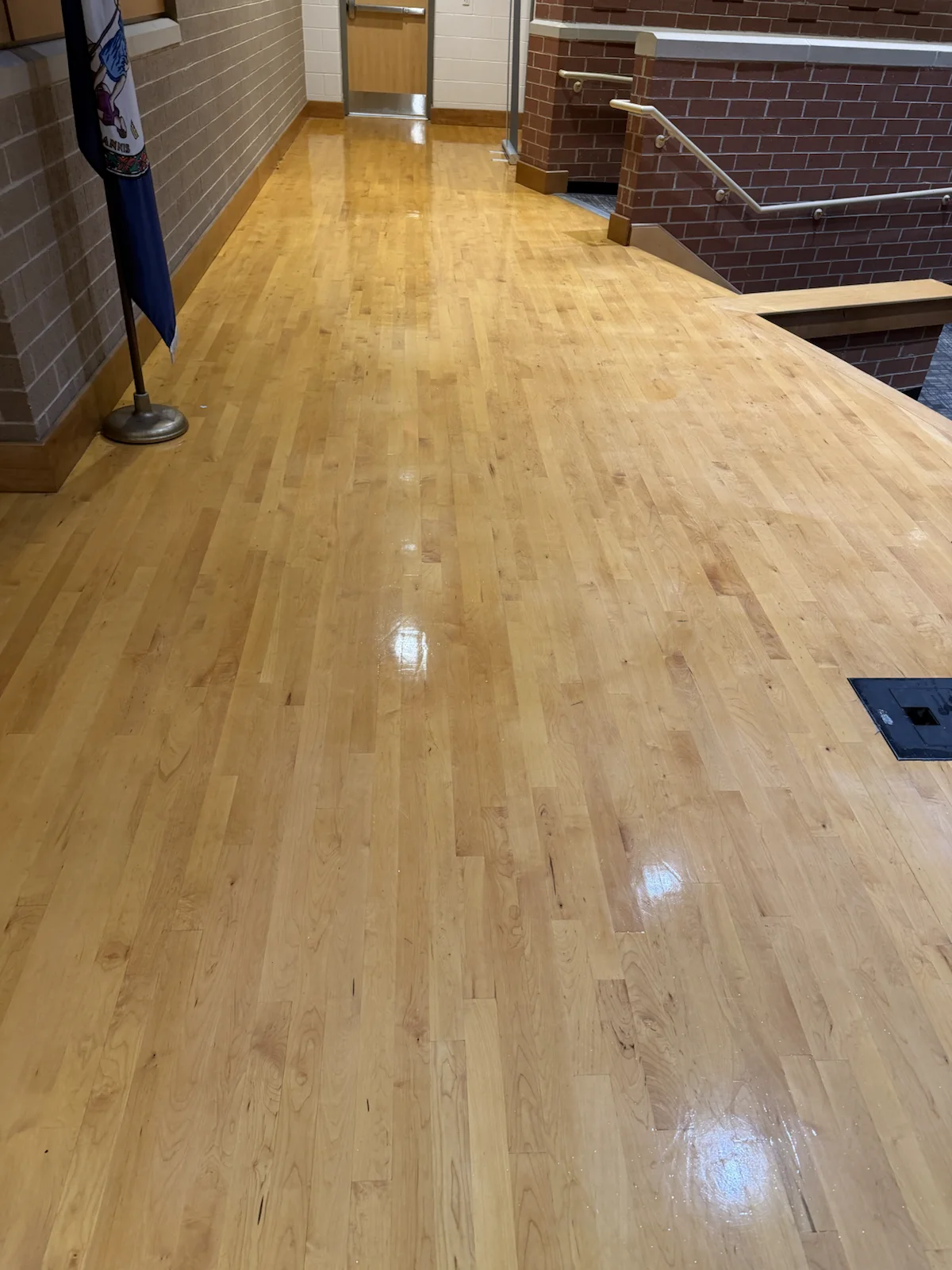
See Our Wood-Floor Work
See the floor machine at work and the finished appearance in a residential room. Andrew assesses your floor separately to determine the preparation, color work, and coating it needs.
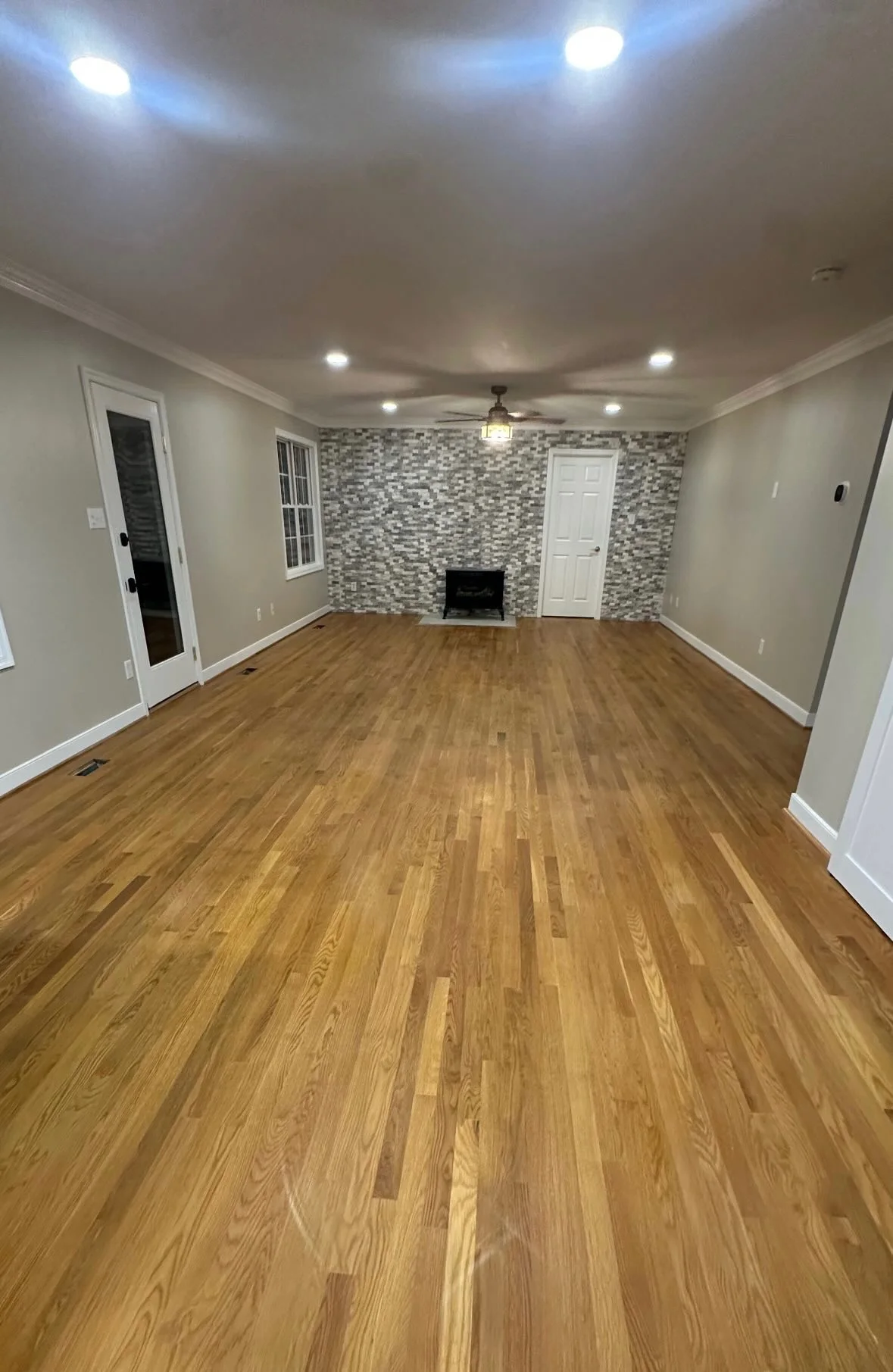
Your Floor May Need a Recoat Before It Looks Severely Damaged
Wood-floor protection usually wears first in the places people use most: entrances, kitchens, halls, and the paths between rooms. If those areas are losing sheen while the color remains acceptable, the floor may be approaching the right maintenance window.
Traffic Lanes Are Losing Their Sheen
Compare busy walkways with the floor beneath furniture or near the perimeter. A flatter appearance in the traffic lanes can show that the topcoat is wearing even though the stain remains intact.
Light Surface Scratches Are Becoming More Visible
Fine scratches confined to the coating are different from gouges that cut through the stain or expose wood fibers. A maintenance coat can improve the first condition; it cannot erase the second.
Before deciding on a recoat, use our guide to scratches in hardwood floors to understand why scratch depth matters.
The Floor Looks Tired but the Color Is Still Acceptable
If you want to keep the present color, preserving it may be preferable to removing the entire finish system. Waiting until raw wood appears can turn that maintenance opportunity into a larger traditional refinishing project.
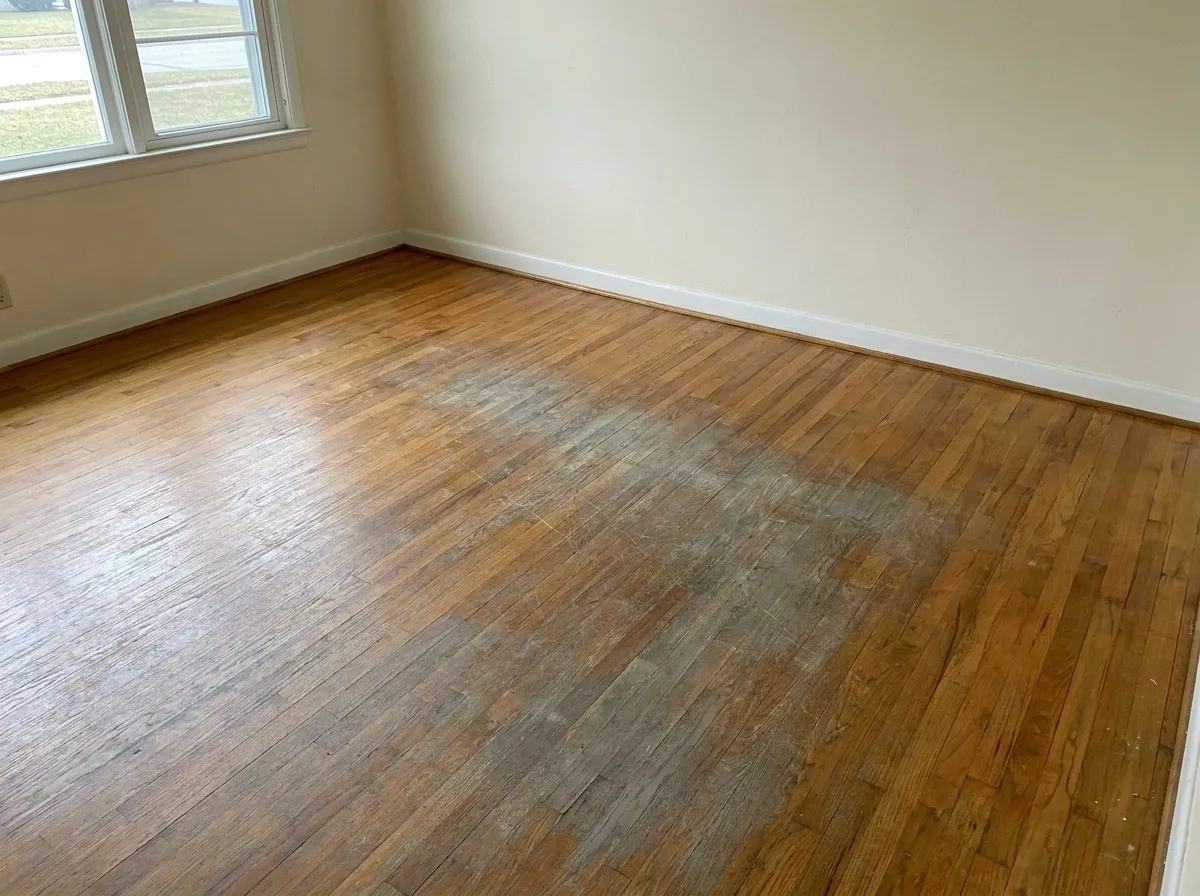
A New Protective Coat Can Renew the Floor Without Removing the Existing Stain
A screen and recoat cleans and lightly abrades the existing polyurethane so a compatible new finish can bond. The process does not intentionally sand the floor down to bare wood or remove the stain across the room.
Homeowners may also encounter the terms wood floor recoating, buff and coat, sandless hardwood floor refinishing, or no-sand hardwood restoration. The useful question is not the label. It is whether the coating, contamination level, stain, and wood condition make the floor suitable for a maintenance coat.
We Confirm That Your Floor Can Accept a New Coat
A recoat should not be sold automatically. We review what has been used on the floor, inspect for contamination and exposed wear, and decide whether the existing finish can provide a sound base for another coat.
The Existing Stain Must Still Be Worth Preserving
A clear recoat retains the current color. Andrew also offers color correction and stain changes on suitable floors, but those need their own assessment. The existing finish and the result you want determine what is possible without full sanding.
Deep Raw-Wood Damage Requires a Different Process
Extensive exposed wood, deep gouges, gray water damage, loose boards, and cupping sit outside the normal limits of a screen and recoat.
Wax and Polish Contamination Must Be Addressed First
A new coating cannot be expected to bond correctly through unknown product layers. Buildup must be identified and removed before recoating is considered.
If your floor is engineered, our guide to recoating engineered hardwood floors explains which finish and condition checks matter.
Wax or Polish Buildup Must Come Off Before the New Finish Goes Down
Cloudy product layers are more than an appearance issue. Wax, polish, and shine-restoring products can leave a barrier between the existing polyurethane and the new coat. Light abrasion over that contamination does not create a trustworthy bond.
If the floor looks cloudy, sticky, or patchy, or products such as Mop & Glo have been used for years, the first step may be wax removal before hardwood recoating. Once the film is removed, we can see whether the finish beneath it is still suitable for recoating.
We Prepare the Existing Finish So the New Coat Can Bond
We Clean Away Soil and Surface Contamination
The floor must be clean before abrasion. We review previous product use and remove the soil that could otherwise be driven across the coating.
We Lightly Abrade the Finish Without Removing the Stain
Andrew selects fine abrasion for the floor in front of him. Depending on the coating and wear, that may involve a maroon pad, fine mesh abrasive, or Bona Diamond abrasives. The objective is to create a suitable bonding surface, not to perform full sanding.
We Remove Dust and Inspect the Floor Again
After abrasion, dust is removed and the floor is checked again. A clean prepared surface gives the new coating the best opportunity to bond evenly.
Color Correction Before Recoating
Smaller worn areas may sometimes be color matched before the maintenance coat is applied. This is corrective work, not a promise that every aged stain or worn spot will become invisible. Andrew also assesses stain changes separately from clear recoating. Our guide to no-sanding color options explains what to discuss before choosing a finish.
We Apply a New Protective Finish
The new polyurethane renews protection, brings the sheen into better balance, and adds useful service life when the existing floor qualified for the process.
Choose a Finish That Matches How Your Home Is Used
Matte and satin are the most common selections among Andrew’s customers. The choice should reflect the desired appearance, children, pets, traffic, and how readily the homeowner wants light to reveal small changes in the floor.
Matte Helps Keep the Appearance Subtle
Matte offers a lower-reflection appearance for homeowners who do not want the floor to look glossy.
Satin Adds Noticeable Sheen Without Looking Glossy
Satin provides a middle-ground reflection that many homeowners prefer when they want the grain to read clearly without a high-gloss look.
A Finish With a Separate Hardener Can Be Better for Demanding Use
Some professional polyurethane systems use a separately mixed hardener. Once cured, that two-component coating can provide greater durability for demanding use than a comparable single-component product. We discuss the finish system in plain language rather than making the customer decode “1K” and “2K.”
Compare matte and satin hardwood floor finishes before choosing how much reflection you want in the room.
A Screen and Recoat Will Not Correct Every Kind of Damage
A screen and recoat will not flatten cupped boards, remove deep gouges, replace missing wood, completely change the stain color, or make extensive raw wood disappear. It also should not be installed over incompatible contamination.
When those limits are present, we will say so. Color correction and stain changes are assessed separately; a clear maintenance coat alone cannot provide them. Use our recoating vs. refinishing comparison to see why full sanding may be the more honest recommendation.
Sandless Hardwood Floor Refinishing for Richmond-Area Homes
Precision Floor & Surface Restoration evaluates floors throughout Richmond, Chesterfield, and Midlothian. Many of the local floors Andrew sees are stained red or white oak, and that stain can make species identification less obvious than homeowners expect.
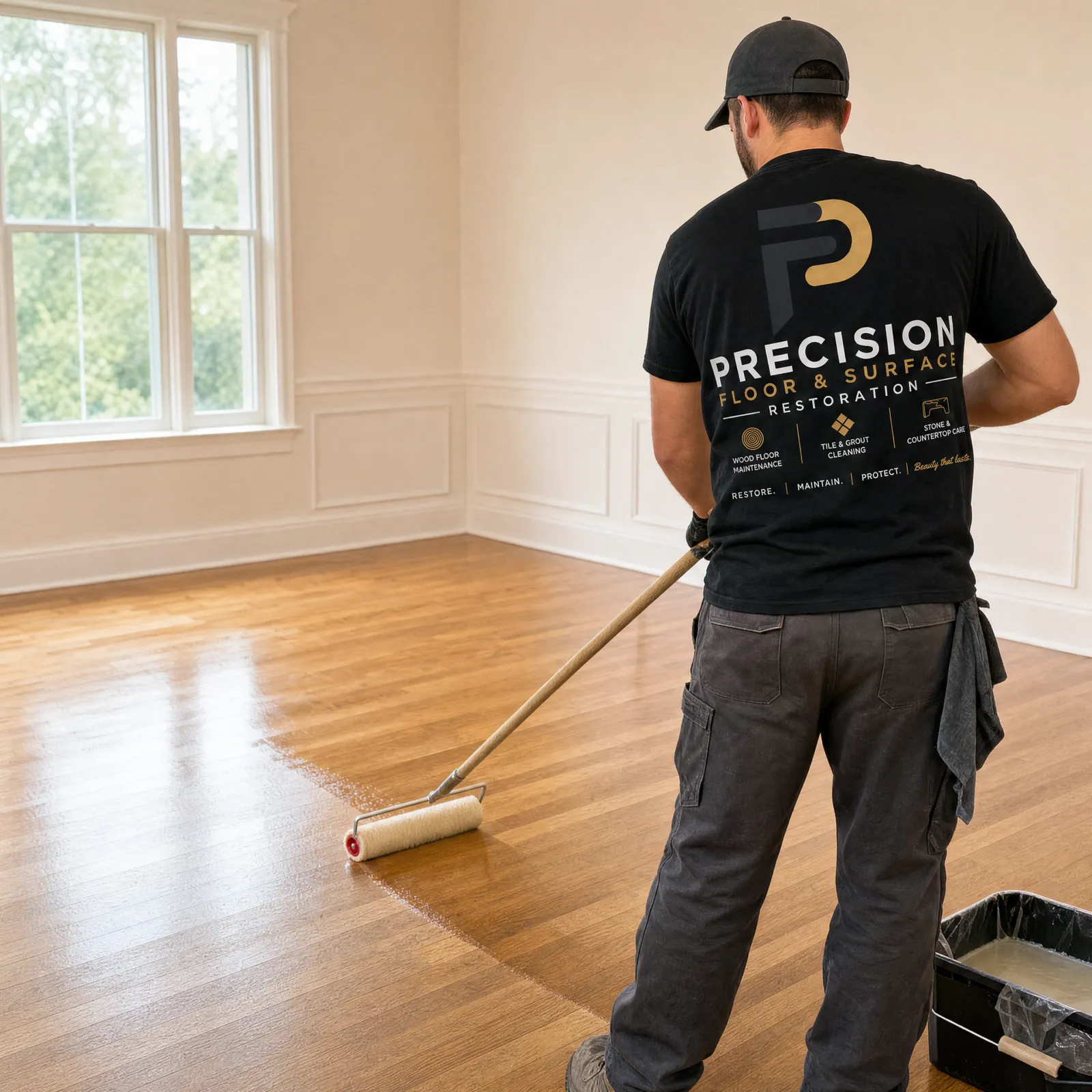
Protect the Existing Floor Before Wear Reaches the Wood
Your floor does not have to be completely ruined before you restore its protection. Call to discuss the rooms, wear, and result you want. You can also text a full-room photo and a close-up of the problem. Andrew can explain what needs checking before a quote.
What Affects the Cost and Time Away From the Floor?
The size of the area is only part of the quote. Andrew also checks whether old polish needs removing, whether worn areas need color correction, and which finish suits the way you use the room. Those steps affect the preparation and the price.
Before work begins, ask when you can walk on the floor, move furniture back, and replace rugs. Those are different milestones, and they depend on the selected coating and conditions in the home. We confirm them for your project rather than promising every floor will be ready at the same time.
Measured steps.
A considered result.
- Share the surface
Send a full view and a close-up of the concern.
- Confirm the material
Identify what it is before choosing a method.
- Set the scope
Separate cleaning, finish work, and repair needs.
- Refine with care
Use a process compatible with the existing surface.
- Review the finish
Inspect the result and discuss ongoing care.
Clarity before
the visit.
What is a screen and recoat for hardwood floors?
It is a maintenance process that cleans and lightly abrades a compatible existing finish before a new protective coat is applied. It preserves the current stain rather than sanding the floor to bare wood.
Can engineered hardwood floors be screened and recoated?
Some engineered floors can accept a maintenance coat, but the wear layer, factory finish, previous products, and adhesion must be evaluated first. It should not be assumed that every engineered floor is compatible.
Will a screen and recoat remove deep scratches?
No. It can improve light wear in the protective finish, but scratches and gouges that extend through the stain or into the wood require a different process.
Can you recoat a floor that has Mop & Glo or polish buildup?
Not directly. The buildup must be removed and the underlying finish reassessed before a new coating is considered.
Talk With Us About Your Wood Floor
Tell us what looks worn, which products have been used, and what you want to improve. Photos are helpful, but you can call first.