
Practical surface guide
Can You Screen and Recoat Engineered Hardwood Floors?
Yes, some engineered hardwood floors can accept a screen and recoat when the existing finish is compatible and the wear has not gone too far. The floor’s construction alone does not establish whether another coat will bond.
Google Reviews
Scroll to read all 9 reviews →
“Great work and even better customer service. Very professional, easy to work with, and you can tell they take pride in what they do. Definitely recommend Precision Floor & Surface Restoration if you need your floors or countertops brought back to life.”★★★★★
“Absolutely amazing work! From start to finish, everything was handled professionally and with great attention to detail. They took the time to make sure everything was done right, and the results speak for themselves. The floors and surfaces came out looking incredible, and you can tell they genuinely take pride in their work. I couldn’t be happier with the finished product and would definitely recommend them to anyone looking for quality work and great service. Five stars all the way! ⭐⭐⭐⭐⭐”★★★★★
“Precision Floor & Surface Restoration exceeded my expectations! Professional, punctual, and detail-oriented from start to finish. My floors look amazing, and the quality of work was outstanding. Highly recommend to anyone looking for top-notch floor and surface restoration services.”★★★★★
“Removed stains that previous cleaning services could not. Made the impossible - possible!”★★★★★
“Great quality work! Very professional with communication!!”★★★★★
“Clean and very professional. Highly recommend”★★★★★
“I highly recommend his floor cleaning services! He’s reliable, professional, and does an excellent job. My floors looked amazing, and I couldn’t be happier with the results.”★★★★★ ★★★★★
What Recoating Does to an Engineered Wood Floor
A screen and recoat prepares the existing protective finish for another compatible coat. It uses light abrasion of the coating rather than sanding the floor down to bare wood. Homeowners also call it a buff and recoat or buff and coat.
Engineered hardwood has a real wood surface over supporting layers. That wood surface and the clear coating above it do different jobs. A maintenance recoat renews protection over a suitable surface; it does not replace missing wood, flatten deep damage, or remove the existing stain across the room.
If you like the current color but the walkways look duller than protected areas, an assessment can establish whether there is still a maintenance opportunity. A new coat cannot make every worn floor look newly installed.
Our hardwood screen and recoat service explains the assessment and preparation for floors that qualify.
Can a Floor That Cannot Be Sanded Still Be Recoated?
Homeowners sometimes hear that their engineered floor cannot be sanded again and assume replacement is the only choice. A maintenance coat is a different process. The National Wood Flooring Association’s refinishing guidance (see Sources) distinguishes light abrasion and recoating from a full resand.
Remaining wood thickness matters when evaluating sanding. For recoating, the existing finish, contamination, adhesion and extent of wear must also be checked. A thin wear layer does not make a damaged floor suitable for another coat, and a thicker layer does not make an incompatible finish safe to coat over.
Bring the flooring brand, product name, installation paperwork or a spare board if you have them. Our technician may be able to inspect an accessible board edge at a floor vent. You do not need to cut into a board or scrape away the finish to identify it.
What We Check on Factory-Finished Floors
Which Finish Is Already on the Floor?
Factory-finished engineered boards can have coatings that need a specific preparation system. Do not assume a standard screen-and-coat process works simply because the surface looks like polyurethane. The flooring manufacturer’s instructions and the proposed coating system need to agree.
Will the New Finish Bond?
A representative test area may be needed to assess adhesion and appearance after preparation. That check is especially useful when the coating or cleaning history is unknown. Passing a visual inspection alone is not an adhesion test.
Does the Surface Have Texture?
Hand-scraped, distressed or wire-brushed boards can have raised areas and recesses that respond differently to abrasion. A process that removes color at the high points is unsuitable. Bona’s Recoat System technical guidance (see Sources) describes compatibility checks for prefinished coatings, including aluminum oxide, and precautions for textured floors. It is system-specific guidance, not permission to use the same method on every floor.
How Previous Cleaners and Polish Affect Recoating
Dullness With the Color Still Intact
Light scratches in the finish and reduced sheen can point toward a maintenance coat. We still need to separate actual finish wear from soil or residue. A floor that looks dull may only need cleaning.
A Cloudy or Sticky Film
Tell us about cleaners, wax, Mop & Glo, and other products used to restore shine. If maintenance products have left a film, wax and polish buildup removal may be needed before the underlying finish can be assessed. Removing a surface film does not guarantee that the floor will then qualify for a recoat.
Pale Patches, Deep Cuts or Exposed Wood
Color loss and damage below the coating need a separate assessment. Our technician evaluates limited color matching on suitable floors, but a clear finish alone will not replace missing stain. Widespread wear-through, peeling coatings, loose boards or moisture damage can move the job outside the scope of recoating.
When Damage Goes Beyond the Protective Finish
Our hardwood scratch guide helps distinguish marks in the coating from damage in the wood.
The useful outcome is renewed protection while keeping an acceptable existing color and surface. Screening is not intended to sand out deep scratches, change the wood’s texture, repair delamination, or correct cupping. Laminate and vinyl flooring are different materials and should not be treated as engineered hardwood.
Our comparison of screen and recoat versus full refinishing explains why damage below the coating calls for a different approach. If a full resand is needed, an engineered floor’s remaining wear layer and manufacturer guidance must be checked before that option is offered. Precision does not provide traditional sanding to bare wood.
What to Send Us for an Engineered-Floor Assessment
Start with a full-room photograph, a close-up of the most worn area, and the names of products used on the floor. Include the flooring brand or a photograph of the packaging if you have it. Tell us whether you want to retain the color, improve the sheen, or address a specific damaged spot.
Photos help start the conversation. Our technician may still need to assess the finish in person and test the proposed preparation. For a Richmond-area floor, request a screen and recoat assessment to find out whether the existing finish can accept another coat.
Once suitability is established, our guide to planning a screen and recoat explains work time and access to your rooms.
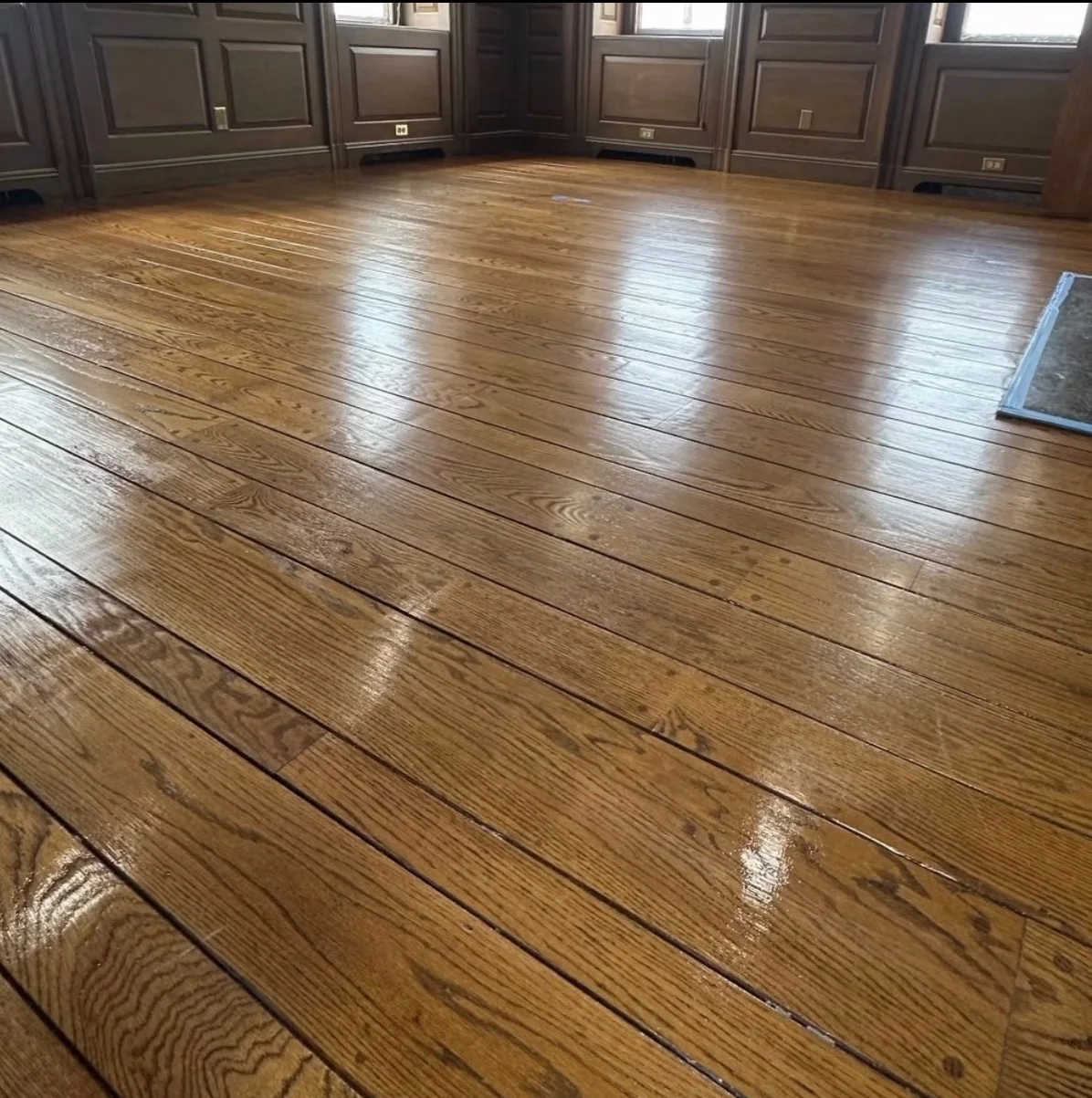
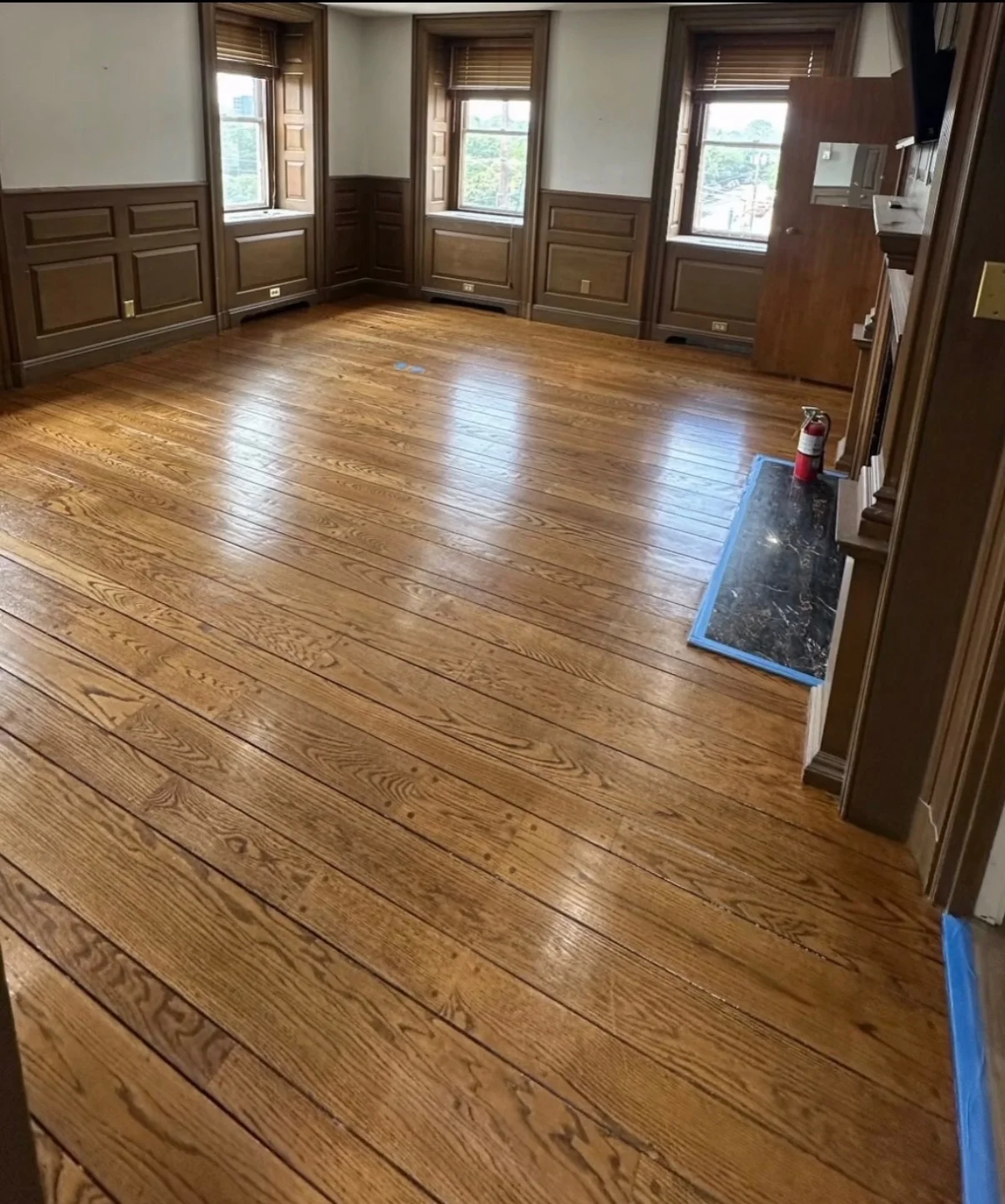
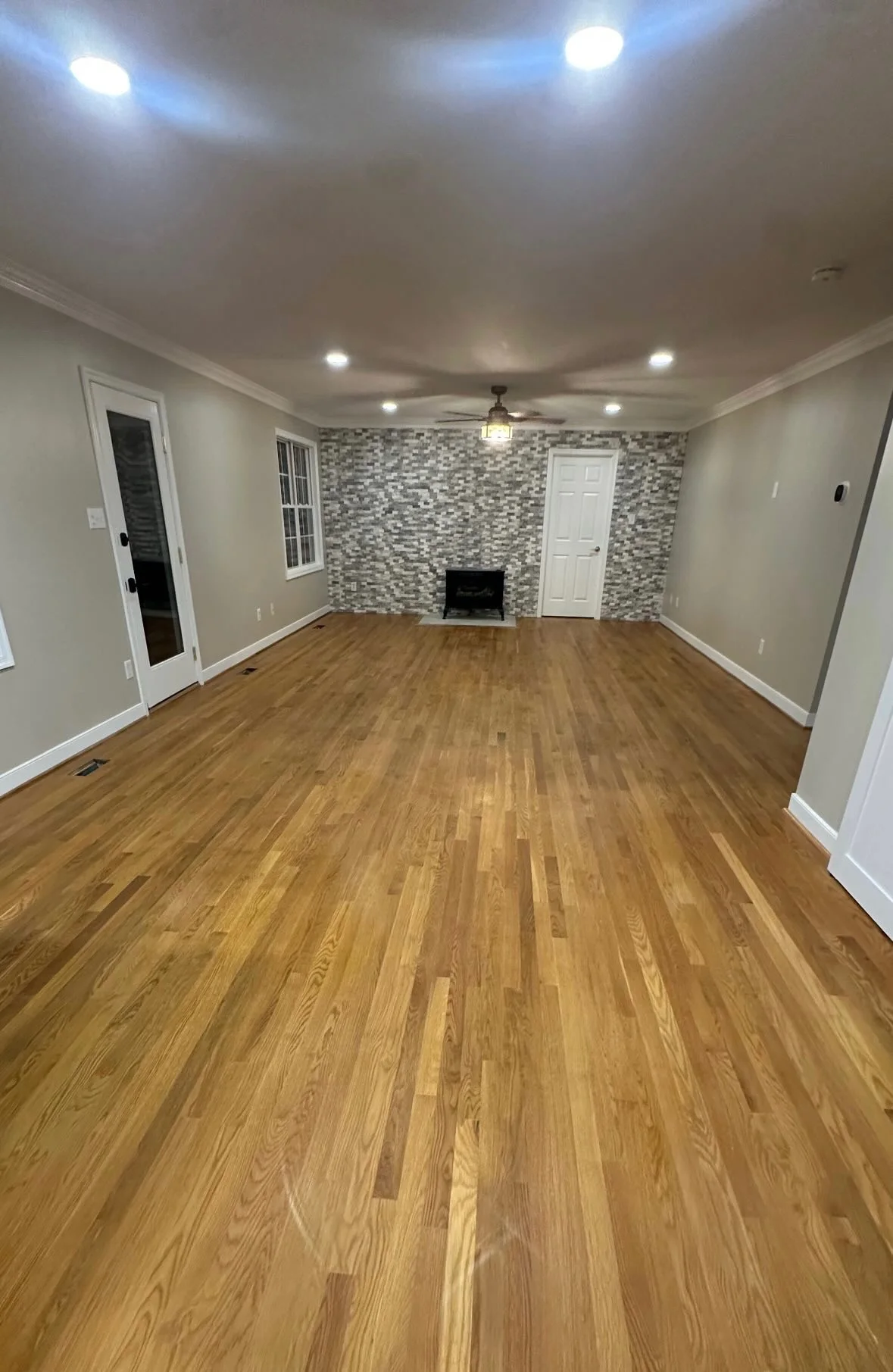
For Chester, Chesterfield, Midlothian and Richmond-area homes, include your city or ZIP code and any access restrictions. The project photos on this page show Precision’s actual floor-care work; the pictured floor construction is not being identified as engineered.
Measured steps.
A considered result.
- Share the surface
Send a full view and a close-up of the concern.
- Confirm the material
Identify what it is before choosing a method.
- Set the scope
Separate cleaning, finish work, and repair needs.
- Refine with care
Use a process compatible with the existing surface.
- Review the finish
Inspect the result and discuss ongoing care.
Talk With Us About Your Wood Floor
Tell us what looks worn, which products have been used, and what you want to improve. Photos are helpful, but you can call first.