
Practical surface guide
Hardwood Floor Scratch Repair: Can You Avoid Full Sanding?
A scratch does not automatically mean the whole floor needs sanding. Start by finding out whether the mark is on the surface, in the protective finish or in the wood. This guide helps Richmond-area homeowners understand the next step.
Google Reviews
Scroll to read all 9 reviews →
“Great work and even better customer service. Very professional, easy to work with, and you can tell they take pride in what they do. Definitely recommend Precision Floor & Surface Restoration if you need your floors or countertops brought back to life.”★★★★★
“Absolutely amazing work! From start to finish, everything was handled professionally and with great attention to detail. They took the time to make sure everything was done right, and the results speak for themselves. The floors and surfaces came out looking incredible, and you can tell they genuinely take pride in their work. I couldn’t be happier with the finished product and would definitely recommend them to anyone looking for quality work and great service. Five stars all the way! ⭐⭐⭐⭐⭐”★★★★★
“Precision Floor & Surface Restoration exceeded my expectations! Professional, punctual, and detail-oriented from start to finish. My floors look amazing, and the quality of work was outstanding. Highly recommend to anyone looking for top-notch floor and surface restoration services.”★★★★★
“Removed stains that previous cleaning services could not. Made the impossible - possible!”★★★★★
“Great quality work! Very professional with communication!!”★★★★★
“Clean and very professional. Highly recommend”★★★★★
“I highly recommend his floor cleaning services! He’s reliable, professional, and does an excellent job. My floors looked amazing, and I couldn’t be happier with the results.”★★★★★ ★★★★★
Is the Scratch in the Finish or the Wood?
The depth of the damage matters more than how long the mark is. A scuff can sit on top of the finish. A fine scratch can interrupt the coating's reflection. A deeper gouge can cut through the stain and into the wood. Those conditions can look similar in a phone photo, but cleaning or recoating will not correct all three.
Look at the area in daylight from more than one angle. Note whether the color has changed, wood fibers are visible or part of a board is missing. Do not scrape, sand or wet the area to test it. Photos help us discuss the likely options; they cannot confirm finish compatibility or scratch depth on their own.
Richmond's Fan includes turn-of-the-twentieth-century townhouse development, documented by Virginia DHR (see Sources). In an older home, share what you know about previous sanding and refinishing. Neither the neighborhood nor the age of the house tells us how much usable wood or which coating remains.
Can Buffing or Recoating Improve These Scratches?
Light marks confined to a suitable finish may become less noticeable with the appropriate surface treatment. A new coat adds protection, but it follows the surface underneath. It does not level a deep groove or replace wood that has been removed.
If the scratches are limited to the finish, a hardwood floor screen and recoat may be an option after we assess the coating and any product buildup.
Buffing can mean different things in a floor-care conversation. Ask whether the proposed work improves the existing surface or prepares it for another protective coat. Our wood floor buffing service explains why improving surface appearance and adding a new protective coat are different jobs.
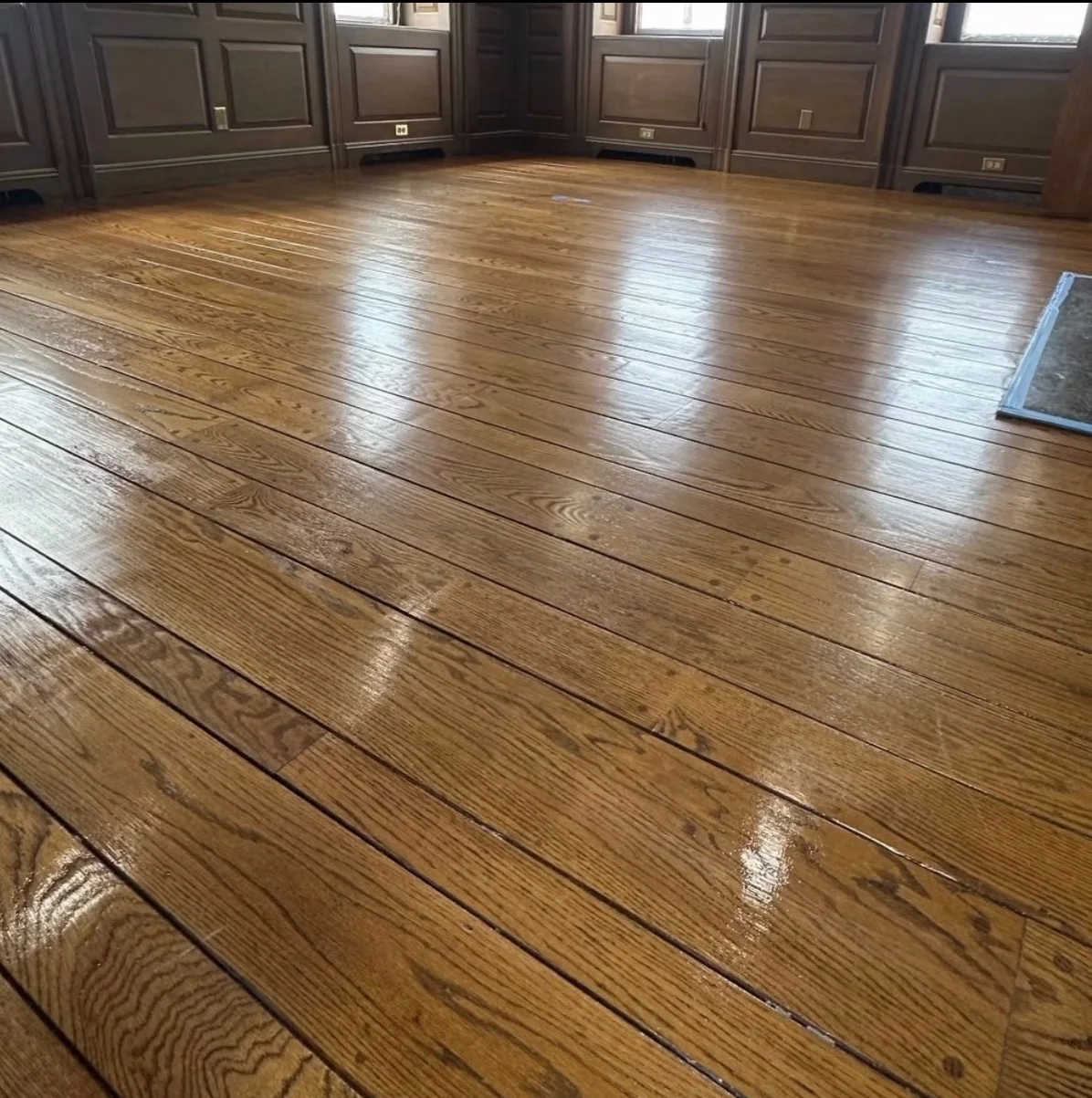
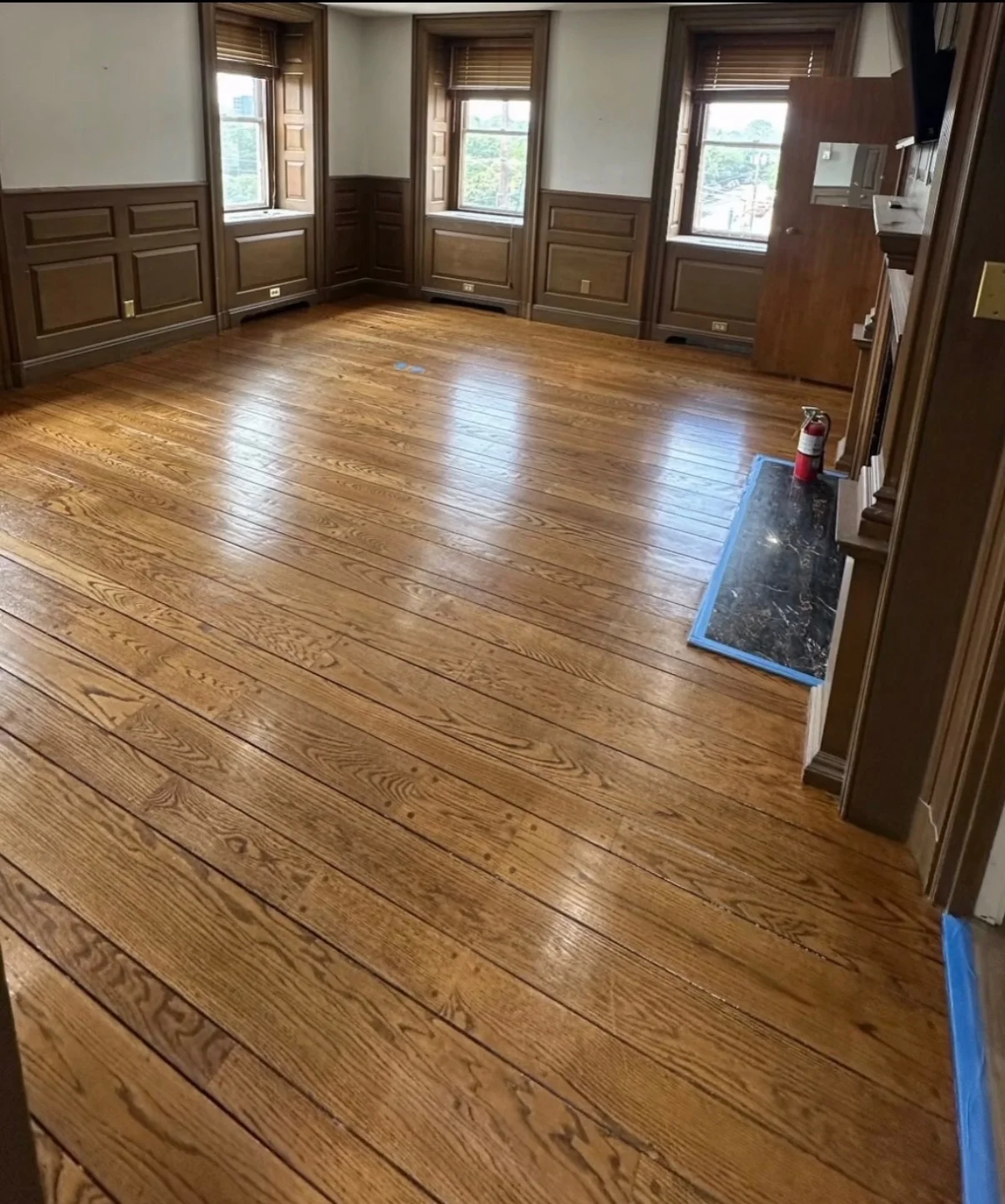
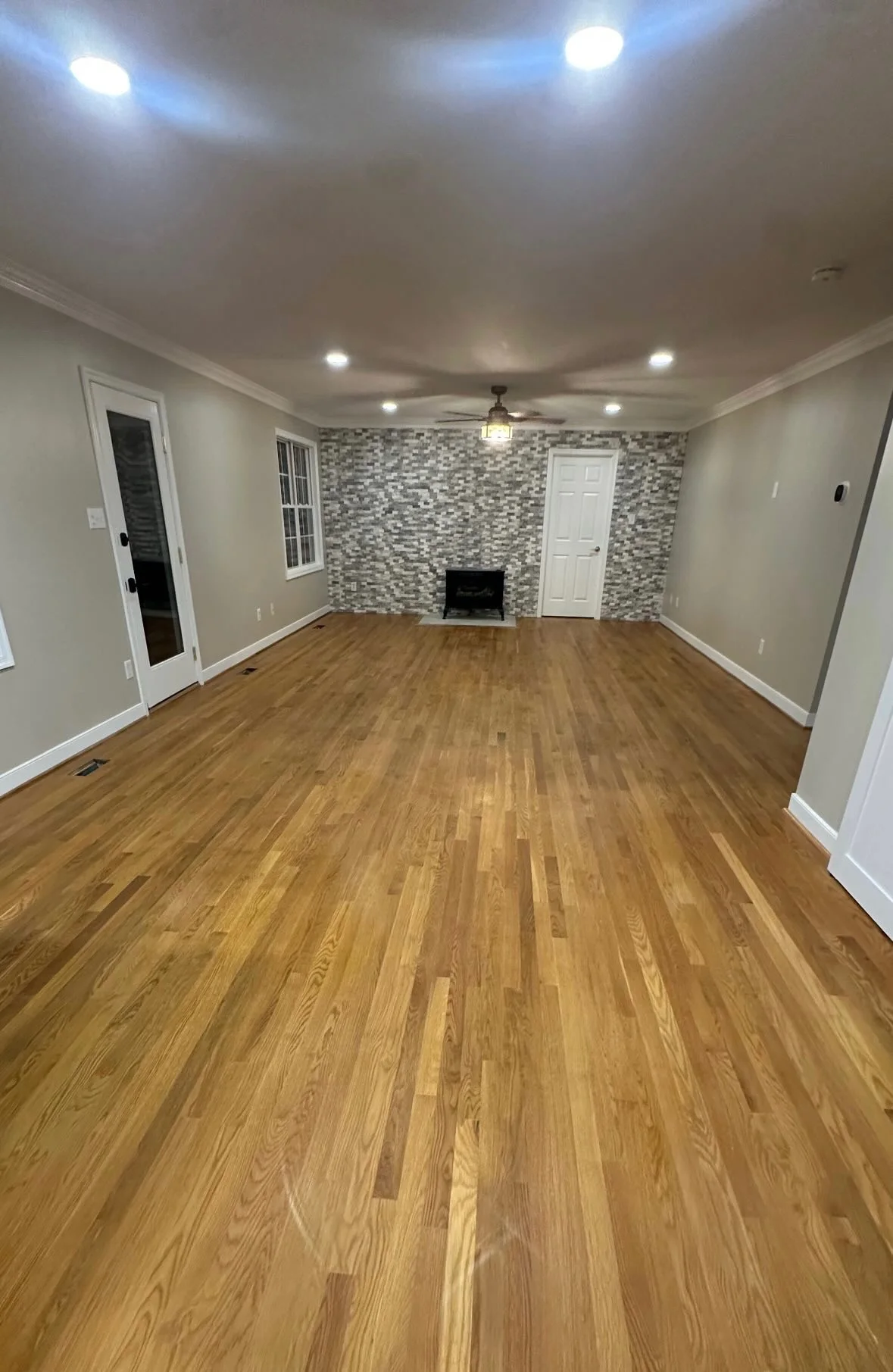
Our project photographs show actual floor-care work and finished surfaces. They are not a before-and-after demonstration of removing the scratches on your floor. We assess what can reasonably improve before recommending treatment.
Dog Scratches: Surface Wear or Deeper Damage?
Dogs can leave fine marks across the finish as well as deeper damage where they turn, accelerate or repeatedly use the same doorway. The fact that a pet caused a scratch does not tell us whether a maintenance coat will help.
Photograph the busiest path and a less-used area nearby. Include any spots where the stain looks lighter or bare fibers show. Tell us if there are also urine marks or water damage: discoloration within the wood is a separate concern from light finish scratches.
After treatment, regular removal of grit, suitable furniture protection and keeping pet nails maintained can help limit new wear. No finish makes a wood floor scratch-proof.
Chips, Dents, and Gouges: When a Recoat Is Not Enough
A chip means material is missing. A dent changes the shape of the surface, and a gouge can extend through the coating into the board. A clear maintenance coat cannot replace that material or flatten the damage. Missing or loose boards also need a repair assessment beyond surface care.
For damage that extends into the wood, our recoating vs. refinishing comparison explains why a maintenance coat may not be enough.
The National Wood Flooring Association distinguishes maintenance coating from sanding for deeper scratches and gouges (see Sources). Sanding suitability still depends on the floor's construction, remaining material and condition. Precision does not provide traditional sanding to bare wood; we will explain when a different specialist is needed.
Can One Scratched Area Be Treated Without Doing the Whole Room?
Sometimes a localized concern can be assessed separately, but a small treatment can leave a visible difference in color or sheen. Daylight across a continuous floor can make the edge of a touched-up area especially noticeable.
The decision depends on the damage, existing coating, room layout and acceptable appearance. Send a wider photo showing where the boards continue through doorways. A mark beside a threshold presents a different blending question from one in the middle of an open living room.
Before work starts, we discuss whether the proposed area makes sense and which marks may remain visible. A whole-room recoat is not a substitute for repairing a deep defect.
What to Know Before Using Scratch Pens, Fillers, or Polish
Touch-up products can change the color or reflection without correcting the underlying damage. A filler or color pen may also be a poor match for the existing stain. Check the floor manufacturer's care instructions and tell us about anything already applied before adding more.
If the mark may be a scuff or residue rather than missing finish, professional hardwood floor cleaning may be the more relevant starting point.
Keep the product label or take a photo of it. That history matters when assessing the coating and whether another finish can bond. If previous products have left a cloudy or sticky film, read about wax and polish buildup removal before adding another layer.
What Photos Help Us Assess Your Floor?
Send a full-room view, a close-up of the damage and a low-angle photo showing the reflection across the affected boards. Use ordinary daylight if possible. Include a nearby undamaged area for comparison and the labels of products used on the floor.
Tell us your city or ZIP code, the rooms affected and whether your main goal is to soften the appearance of scratches, renew protection or change the color. For Chester, Chesterfield, Midlothian and Richmond-area homes, those details let us begin with the right service conversation.
You can call first or text the photos using the contact options on this page. We may need an on-site assessment before confirming the floor's condition, suitable preparation or likely result.
Sources
- NWFA: Refinishing Your Floors — the difference between maintenance coating and sanding for deeper scratches or gouges.
- Virginia DHR: Fan Area Historic District — context for Richmond's historic townhouse development, not proof of a particular floor's age or species.
Measured steps.
A considered result.
- Share the surface
Send a full view and a close-up of the concern.
- Confirm the material
Identify what it is before choosing a method.
- Set the scope
Separate cleaning, finish work, and repair needs.
- Refine with care
Use a process compatible with the existing surface.
- Review the finish
Inspect the result and discuss ongoing care.
Talk With Us About Your Wood Floor
Tell us what looks worn, which products have been used, and what you want to improve. Photos are helpful, but you can call first.