
Restore Your Hardwood's Shine: Wood Floor Buffing Service in Chester
Precision Floor and Surface offers wood floor buffing service in Chester, restoring shine to worn hardwood. Call today to schedule your appointment.
Google Reviews
Scroll to read all 9 reviews →
“Great work and even better customer service. Very professional, easy to work with, and you can tell they take pride in what they do. Definitely recommend Precision Floor & Surface Restoration if you need your floors or countertops brought back to life.”★★★★★
“Absolutely amazing work! From start to finish, everything was handled professionally and with great attention to detail. They took the time to make sure everything was done right, and the results speak for themselves. The floors and surfaces came out looking incredible, and you can tell they genuinely take pride in their work. I couldn’t be happier with the finished product and would definitely recommend them to anyone looking for quality work and great service. Five stars all the way! ⭐⭐⭐⭐⭐”★★★★★
“Precision Floor & Surface Restoration exceeded my expectations! Professional, punctual, and detail-oriented from start to finish. My floors look amazing, and the quality of work was outstanding. Highly recommend to anyone looking for top-notch floor and surface restoration services.”★★★★★
“Removed stains that previous cleaning services could not. Made the impossible - possible!”★★★★★
“Great quality work! Very professional with communication!!”★★★★★
“Clean and very professional. Highly recommend”★★★★★
“I highly recommend his floor cleaning services! He’s reliable, professional, and does an excellent job. My floors looked amazing, and I couldn’t be happier with the results.”★★★★★ ★★★★★
Signs Your Hardwood Floors Need a Buffing Service
Most folks don't call us the day their floor loses its shine. They call weeks later, after they've noticed the same dull patches every time they walk into the room. That's the pattern we see over and over near Ecoff Avenue in older Chester homes, where hardwood floors have soaked up decades of foot traffic. Sunlight through big front windows adds to the fade.
So how do you know buffing is what you need, not a full sand-and-refinish? Look at the surface. If the finish looks scratched or cloudy but the wood underneath isn't gray or gouged, buffing usually solves it. A worn top coat is different from worn wood, and that distinction matters.
- Dull or hazy spots in high-traffic areas like hallways and in front of the kitchen sink
- Fine scratches from foot traffic, pet nails, or moving furniture without pads
- Cloudy patches after mopping with the wrong cleaner, common when someone uses an oil soap on a polyurethane finish
- Uneven sheen where one section of the room looks shinier than the rest
- A floor that looks "tired" overall but has no deep gouges, stains, or water damage
Here's the thing homeowners miss. If you can run your hand across the floor and not feel any texture change, just a visual dullness, you're almost always a buffing candidate. That's the easy call.
But if you see gray or black discoloration, or the wood grain feels raised under your fingers, that's usually moisture damage or worn-through finish. That's a different job entirely, and buffing won't fix it. We check for that difference on every visit, because putting a buffer on a floor that needs recoating just wastes everyone's time.
Buffing vs. Recoating vs. Full Refinishing
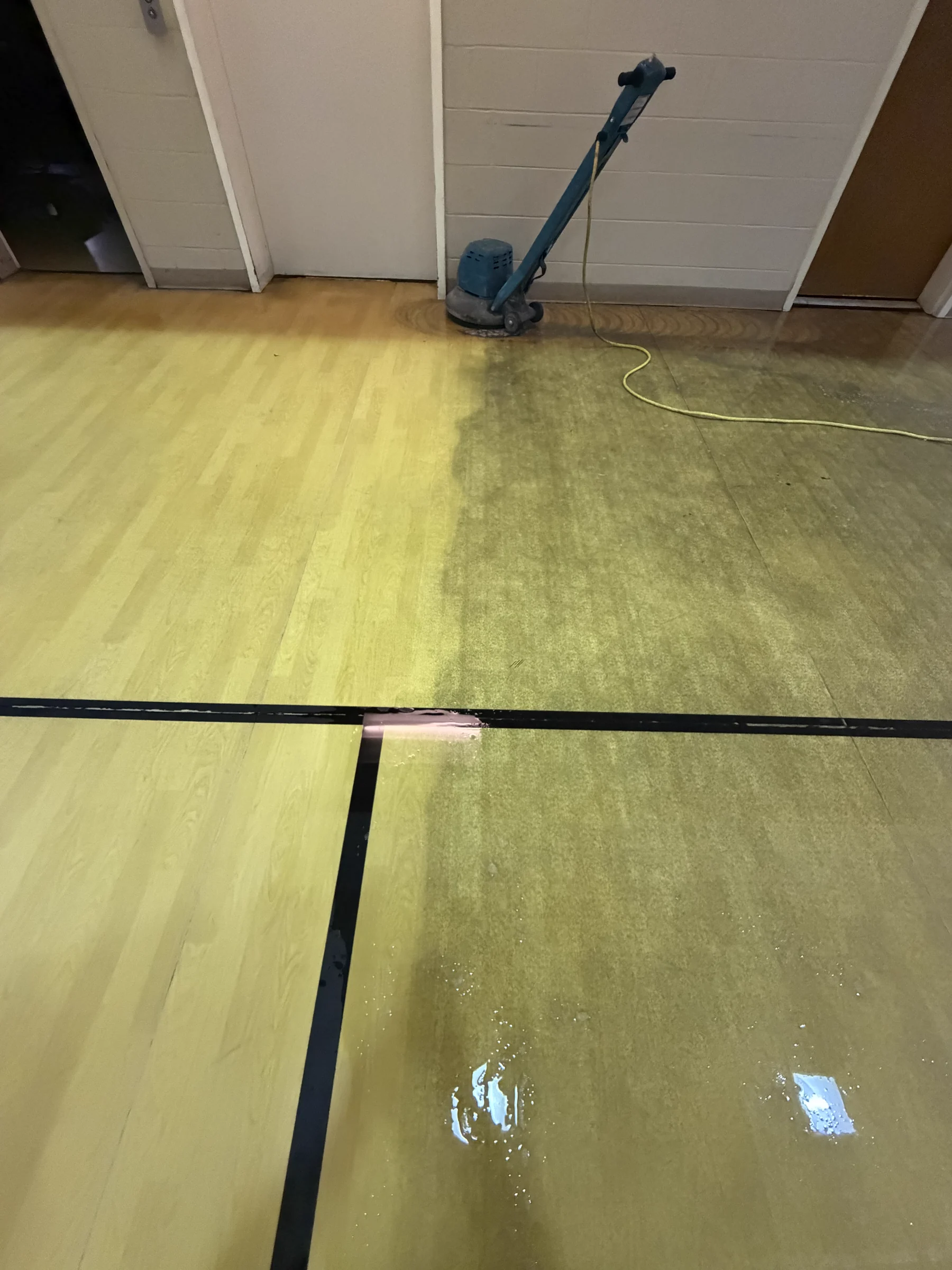
Here's the question we get on almost every call: "Do I need the whole floor sanded down, or is there a cheaper fix?" Short answer: there's a cheaper fix. Buffing, recoating, and full refinishing solve three different problems, and mixing them up wastes money.
Haze can come from residue, polish buildup, or wear in the coating. Andrew checks the existing finish and what has been used on it before deciding whether cleaning, product removal, or recoating will help. Cupping, loose boards, and damage in the wood need a different assessment; buffing does not flatten them.
Recoating steps up a level. If the finish is worn through in patches - near a back door, under a dining table, in front of a sink - but the wood underneath isn't gouged or gray, we scuff the old finish and lay down a fresh topcoat. No sanding down to bare wood. It bonds to what's already there and resets the clock on protection.
Full refinishing means sanding to bare wood. That's the move when you've got deep scratches, dark water stains, or a finish so far gone the wood itself has started to gray from UV exposure. It's more labor and more dust control.
- Buffing: dull shine, no wood damage, quick refresh
- Recoating: worn-through finish, wood still sound underneath
- Refinishing: bare wood exposed, deep scratches, or stains soaked into the grain
Send us a photo and we'll tell you straight which one your floor needs.
When Buffing Won't Fix Your Floor
Buffing brings back shine. It doesn't rebuild wood that's gone. Here's the honest split, because we'd rather tell you now than after we're standing in your living room.
Haze can come from residue, polish buildup, or wear in the coating. Andrew checks the existing finish and what has been used on it before deciding whether cleaning, product removal, or recoating will help. Cupping, loose boards, and damage in the wood need a different assessment; buffing does not flatten them.
Haze can come from residue, polish buildup, or wear in the coating. Andrew checks the existing finish and what has been used on it before deciding whether cleaning, product removal, or recoating will help. Cupping, loose boards, and damage in the wood need a different assessment; buffing does not flatten them.
Deep gouges, pet stains that soaked into the wood, or water damage that's turned boards black - none of that comes out with a buffer. Those need repair work first, sometimes board replacement, before any polishing step makes sense.
So how do you know which one you've got? Send us a photo - that's the fastest way. We can usually tell from a picture whether we're looking at a quick buff-and-shine job or something that needs recoating first. No point driving out for a bid on a floor that just needs a once-over, and no point buffing a floor that needs more than that.
What to Expect During a Professional Buffing Visit
Here's what happens when we show up. We don't just run a machine over your floor and leave. There's a process, and skipping steps is how floors get damaged instead of restored.
First we walk the room. We're checking for loose boards, deep gouges, and spots where the old finish has worn clear through to bare wood. That last part matters a lot in Chester's historic district, where older homes have original hardwood that's been recoated many times over the decades. The wear pattern ends up uneven from room to room.
- We move furniture and clear the space, or work around what stays.
- We vacuum and dry-mop to pull grit off the surface. This step alone prevents scratching during buffing.
- We run the buffer in slow, overlapping passes, checking sheen as we go.
- We wipe the floor down and inspect it under natural light, not just the work lights.
Haze can come from residue, polish buildup, or wear in the coating. Andrew checks the existing finish and what has been used on it before deciding whether cleaning, product removal, or recoating will help. Cupping, loose boards, and damage in the wood need a different assessment; buffing does not flatten them.
Most rooms take a couple hours. A full main level runs longer. It depends on square footage and how many coats of old finish we're working through.
One thing homeowners ask a lot - can you walk on it right away? Usually yes, buffing isn't like a fresh coat of polyurethane that needs days to cure. We'll tell you exactly when it's safe based on what we find that day.
We'll also flag anything beyond buffing while we're there. Sometimes a floor needs recoating instead, and we're not going to buff over a problem that needs a different fix.
How Buffing Pricing Works
Buffing pricing isn't one flat number, and anyone who quotes you a price without seeing your floor first is guessing. Cost comes down to square footage, how much the finish has broken down, and how many passes the wood needs to bring the shine back evenly.
Here's what moves the price up or down in this trade:
- Total square footage being buffed
- Condition of the existing finish, light haze versus deep scratching
- Whether furniture needs to be moved before we start
- Number of rooms or if it's one open area
- Access issues, like tight stairwells or a lot of trim work to buff around
We keep our quote process simple. Text us a few photos of the floor, or hop on a call and walk us through what you're seeing. Most of the time that's enough for us to give you a real number, no guessing involved. If the job needs an in-person look before we can commit to a price, that visit runs between $75 and $125. That fee isn't wasted money though, it gets applied straight to the cost of the service once you book with us.
A lot of companies charge a flat "trip fee" no matter what. We don't like that model.
When Buffing Needs to Become a Screen and Recoat
Buffing and recoating are not automatically the same job. If the existing polyurethane needs another protective coat, compare our hardwood screen and recoat process. We check the coating and previous product use before choosing the preparation. Buffing cannot flatten cupped boards or repair damage below the finish.
If scratches are your main concern, our hardwood floor scratch guide explains when the damage may extend below the finish.
Measured steps.
A considered result.
- Share the surface
Send a full view and a close-up of the concern.
- Confirm the material
Identify what it is before choosing a method.
- Set the scope
Separate cleaning, finish work, and repair needs.
- Refine with care
Use a process compatible with the existing surface.
- Review the finish
Inspect the result and discuss ongoing care.
Clarity before
the visit.
How long does a typical wood floor buffing appointment take?
Most single rooms take about two hours to buff. A full main level with several rooms takes longer, since we move furniture, clear grit, and check sheen under natural light as we go. We walk through your space first so you know roughly what to expect before we start. Scheduling one visit for your whole main floor is usually more efficient than booking separate rooms on different days.
What happens when you arrive to buff my floors?
We start by walking the room and checking for loose boards or spots worn through to bare wood. This step matters because a buffer on the wrong kind of damage can make things worse instead of better. After that, we clear the space, vacuum and dry-mop every bit of grit off the surface, then run the buffer in slow, overlapping passes. Dust stays minimal because we use contained equipment, so you won't be wiping haze off baseboards afterward.
Why do floors in older Chester homes lose their shine so fast?
Decades of foot traffic and sunlight are the usual culprits, especially in homes near Ecoff Avenue with big front windows. Those windows let in strong sunlight that fades finish over time, while daily traffic in hallways and kitchens wears the top coat thin. Add sand and grit tracked in from driveways, and you get dull patches faster than newer homes with less sun exposure or foot traffic ever see.
Can buffing fix floorboards that are cupping or curling at the edges?
No. Buffing cannot flatten cupped boards or correct a moisture problem. The cause needs investigating and the floor must be assessed before any surface-care work.
How do I know if my floor just needs buffing, not a full refinish?
A smooth but hazy surface may have residue, product buildup, or a worn coating. Appearance alone does not confirm which one. Andrew checks the finish and product history before recommending cleaning, removal, buffing, or a new coat.
Do I need to move my furniture before you buff my floors?
It helps, but we can also work around pieces that stay in place. Clearing the room lets us buff the full floor in one pass and check for loose boards or gouges hiding under rugs and furniture legs. If moving everything yourself isn't practical, tell us ahead of time and we'll plan the visit around what needs to stay, working section by section instead.
Talk With Us About Your Wood Floor
Tell us what looks worn, which products have been used, and what you want to improve. Photos are helpful, but you can call first.