
Countertop polishing in Richmond, VA
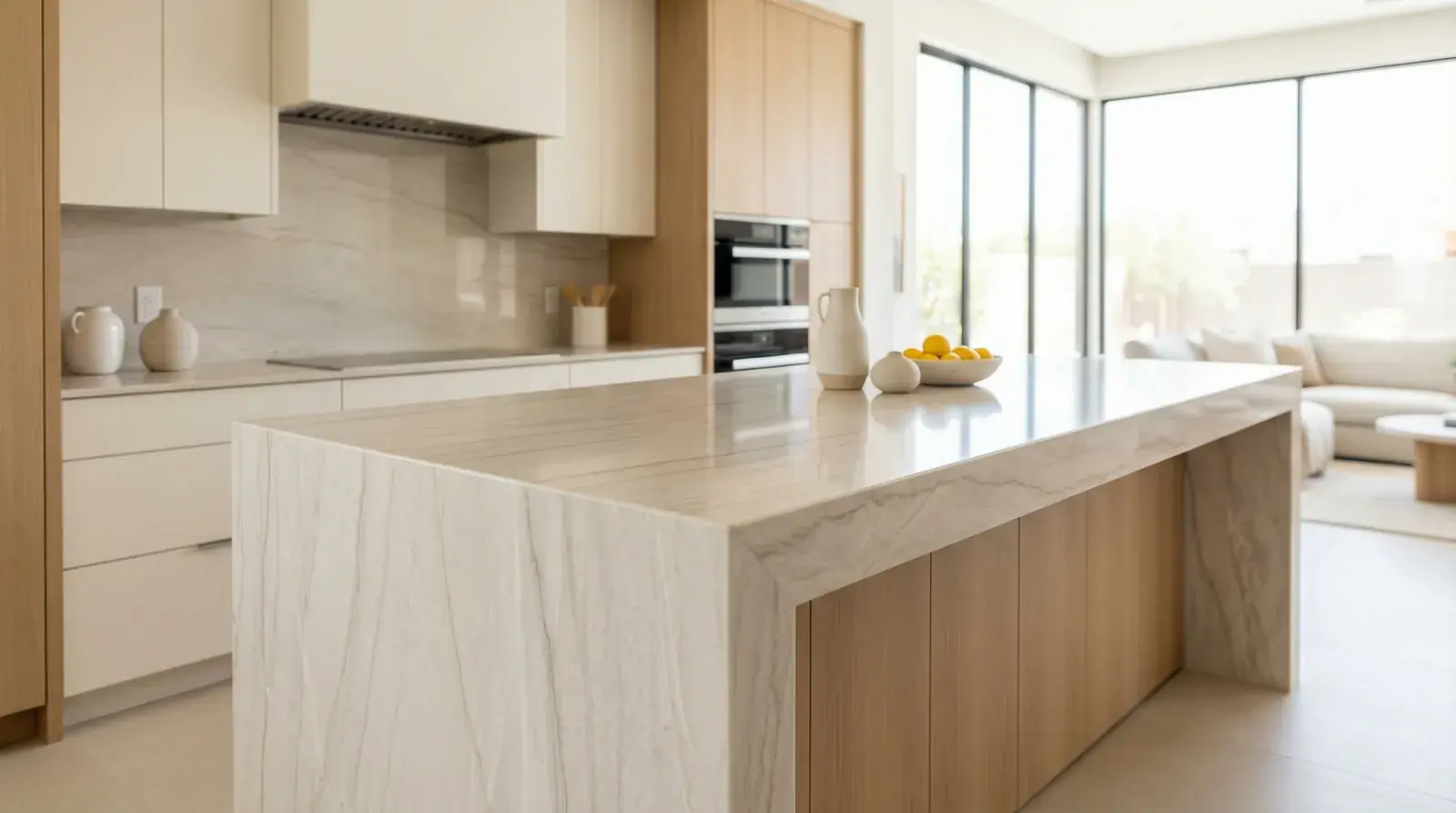
Polishing can restore an even sheen to many natural stone countertops. The first step is confirming the material and finding out whether the dull area is residue, etching, wear, or something deeper.
Google Reviews
Scroll to read all 9 reviews →
“Great work and even better customer service. Very professional, easy to work with, and you can tell they take pride in what they do. Definitely recommend Precision Floor & Surface Restoration if you need your floors or countertops brought back to life.”★★★★★
“Absolutely amazing work! From start to finish, everything was handled professionally and with great attention to detail. They took the time to make sure everything was done right, and the results speak for themselves. The floors and surfaces came out looking incredible, and you can tell they genuinely take pride in their work. I couldn’t be happier with the finished product and would definitely recommend them to anyone looking for quality work and great service. Five stars all the way! ⭐⭐⭐⭐⭐”★★★★★
“Precision Floor & Surface Restoration exceeded my expectations! Professional, punctual, and detail-oriented from start to finish. My floors look amazing, and the quality of work was outstanding. Highly recommend to anyone looking for top-notch floor and surface restoration services.”★★★★★
“Removed stains that previous cleaning services could not. Made the impossible - possible!”★★★★★
“Great quality work! Very professional with communication!!”★★★★★
“Clean and very professional. Highly recommend”★★★★★
“I highly recommend his floor cleaning services! He’s reliable, professional, and does an excellent job. My floors looked amazing, and I couldn’t be happier with the results.”★★★★★ ★★★★★
Dull and uneven.
Clear and considered.
Polishing is not about making every slab look artificial. It is about recovering an even reflection while keeping the movement and character of the stone intact.
When countertop polishing is the right service
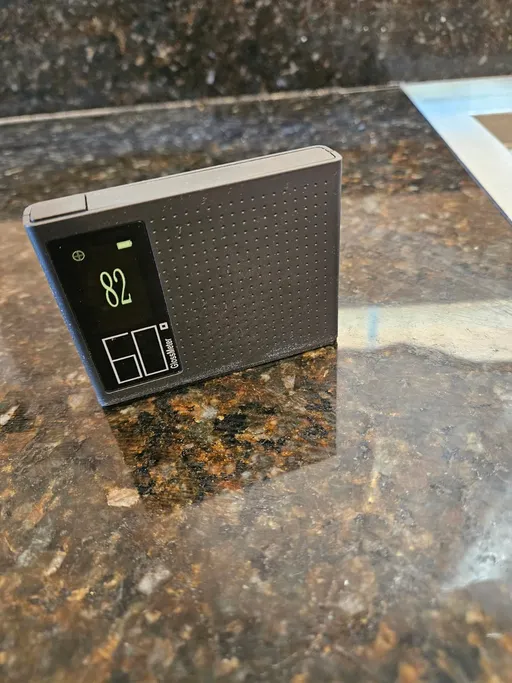
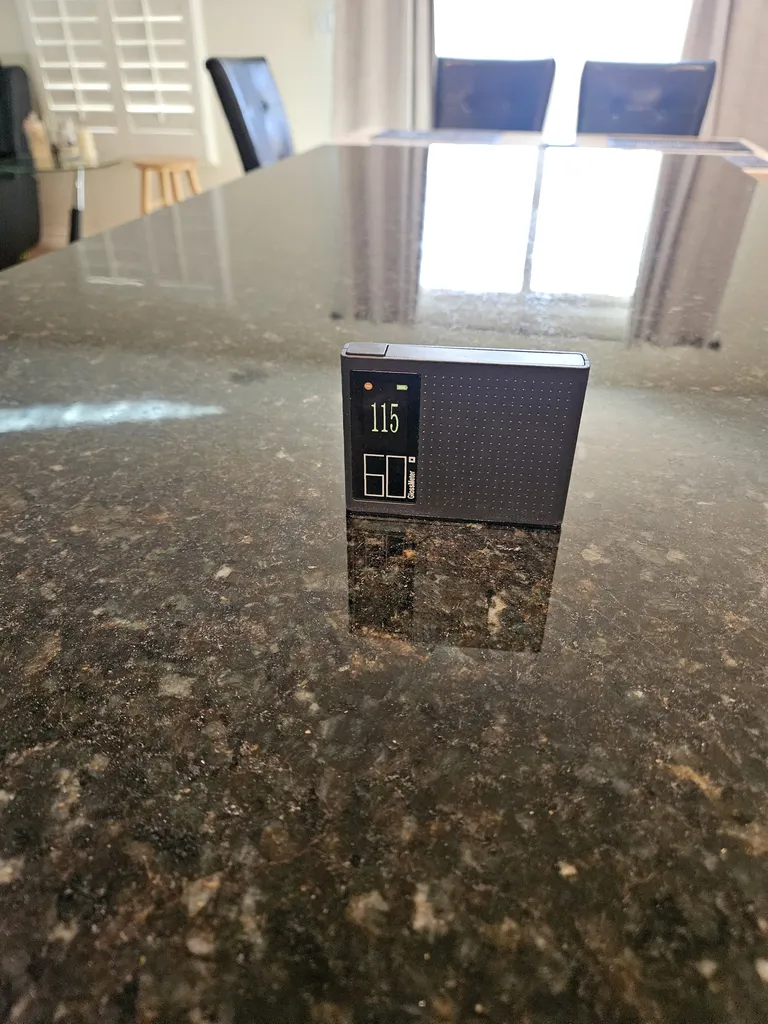
Polishing is useful when a natural stone countertop has lost clarity, picked up fine scratches, or developed an uneven sheen. It works best when the surface is sound and the concern sits within the finish rather than deep inside the stone.
Granite, marble, quartzite, and travertine can all be polished, but they do not use the same process. If you already know the material, start with the matching repair guide for granite surface problems, etched marble countertops, quartzite finish damage, or worn travertine surfaces.
A dull mark may not need polishing
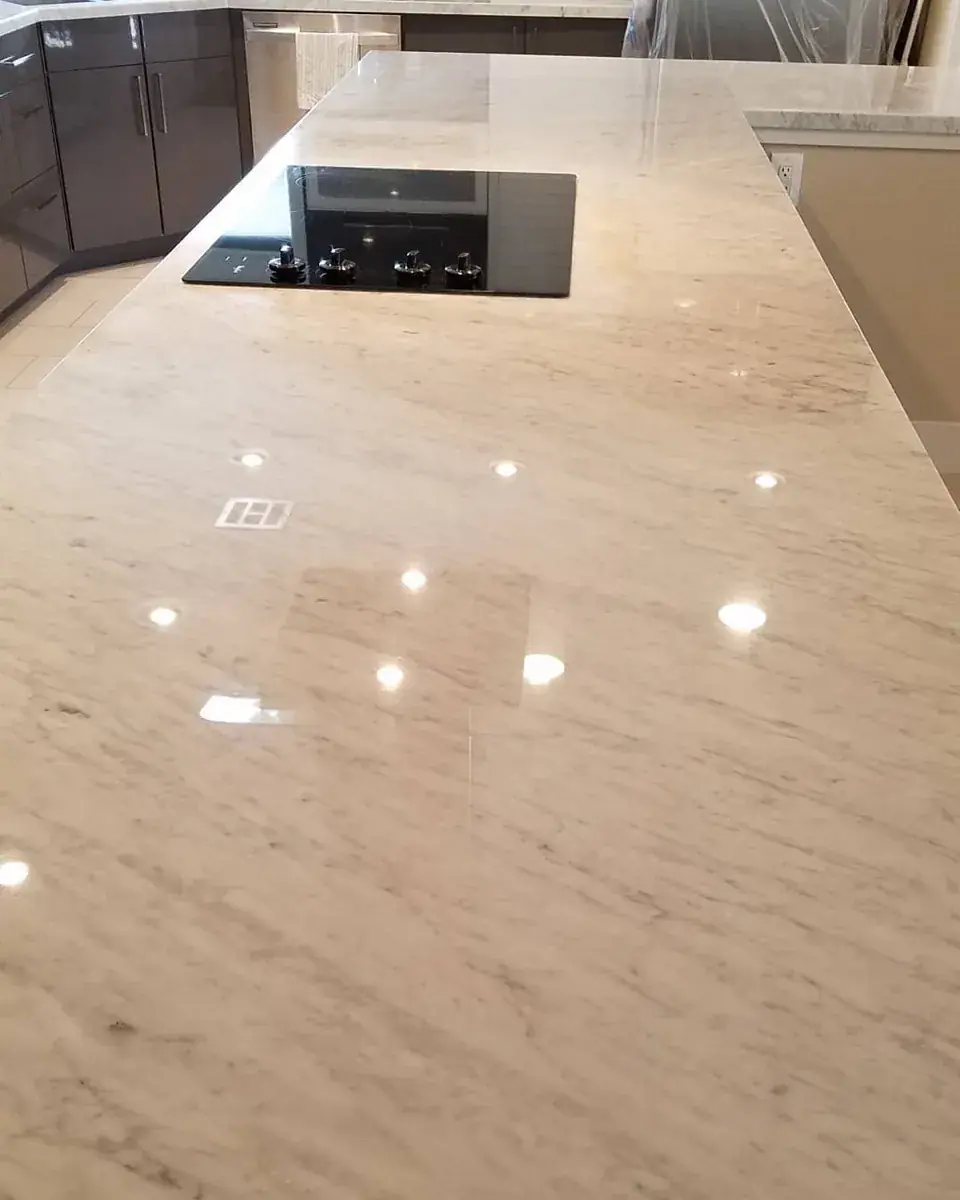
Cloudiness can come from soap film, cooking residue, dried cleaner, or sealer left on the surface. Those problems need cleaning first. A stain looks darker because something has entered the stone. An etch usually looks lighter or duller because acid changed the surface itself.
Polishing a dirty surface traps the diagnosis under more work. Trying to clean an etch with a stronger chemical can make it larger. We separate those conditions before choosing pads, compounds, or stain treatment.
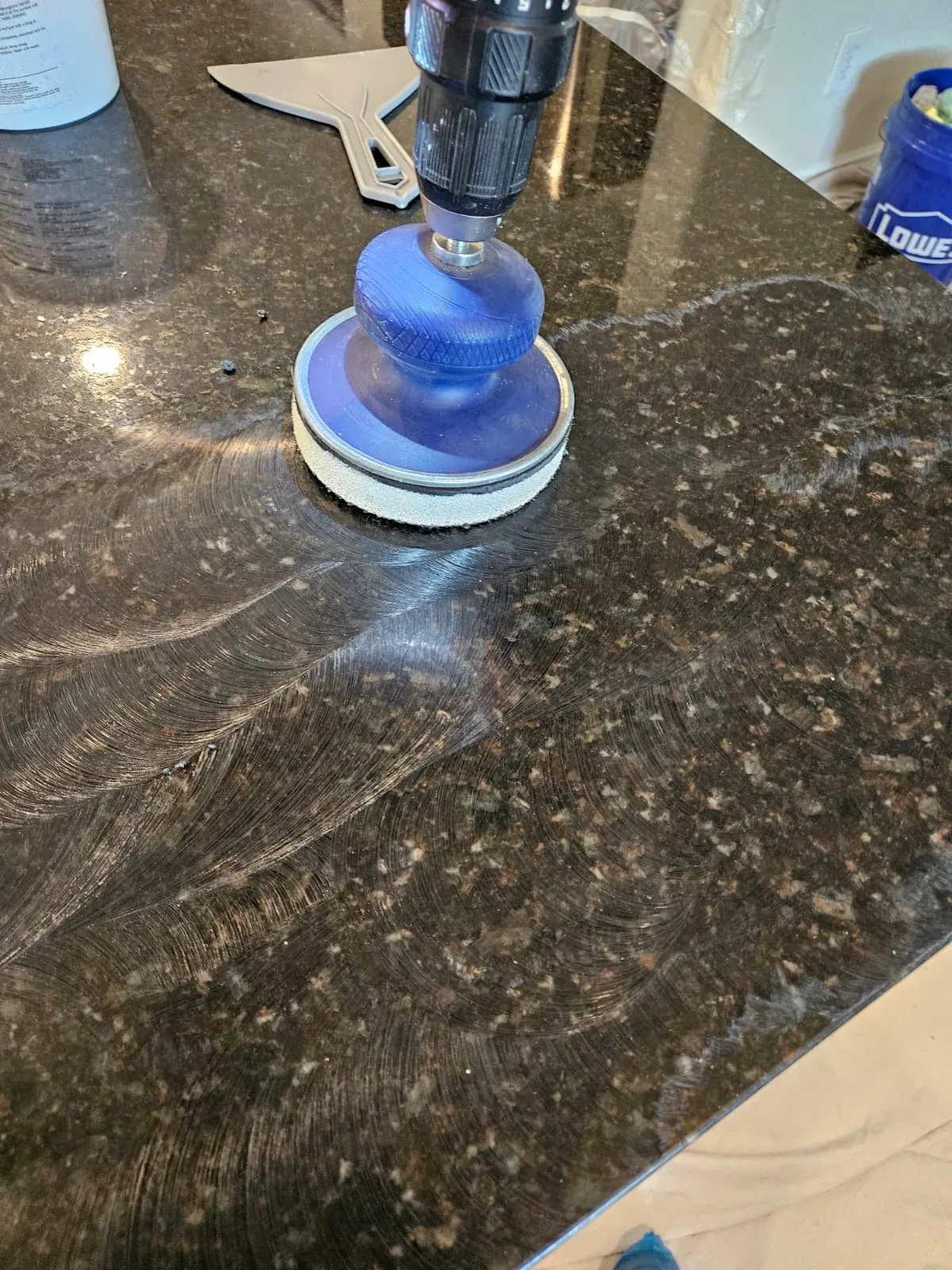
How the finish is brought back
The working sequence depends on the stone and the depth of the wear. A mildly dull granite counter may need a different starting point than marble with several etched areas. The finish is refined in stages and checked under angled light so the repaired section does not stand out from the surrounding countertop.
When acid has left a rough or pale mark on calcium-based stone, honing the damaged stone may come before polishing. Honing levels the affected surface. Polishing then brings the sheen back to the chosen finish.
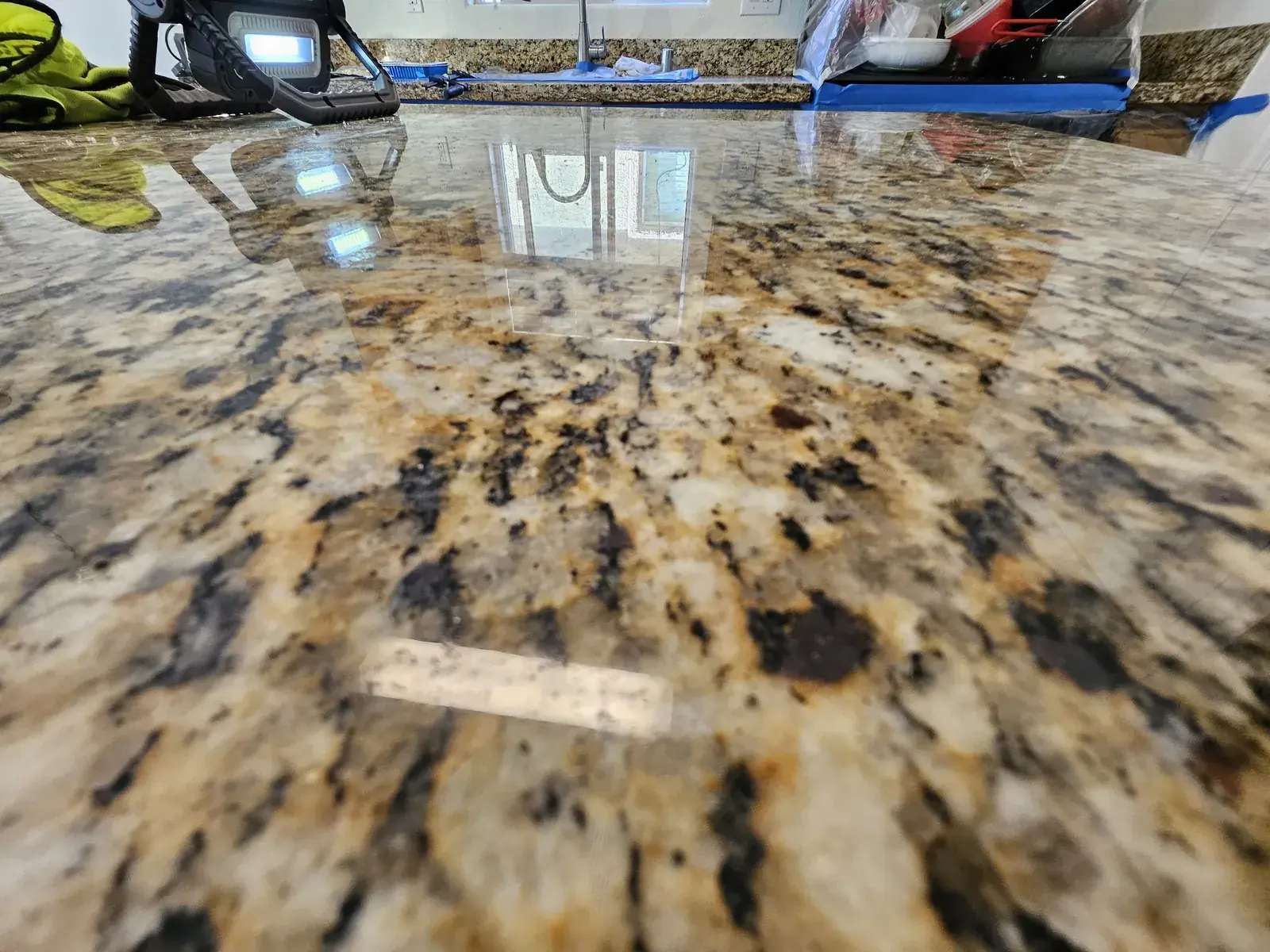
Surfaces that need a different approach
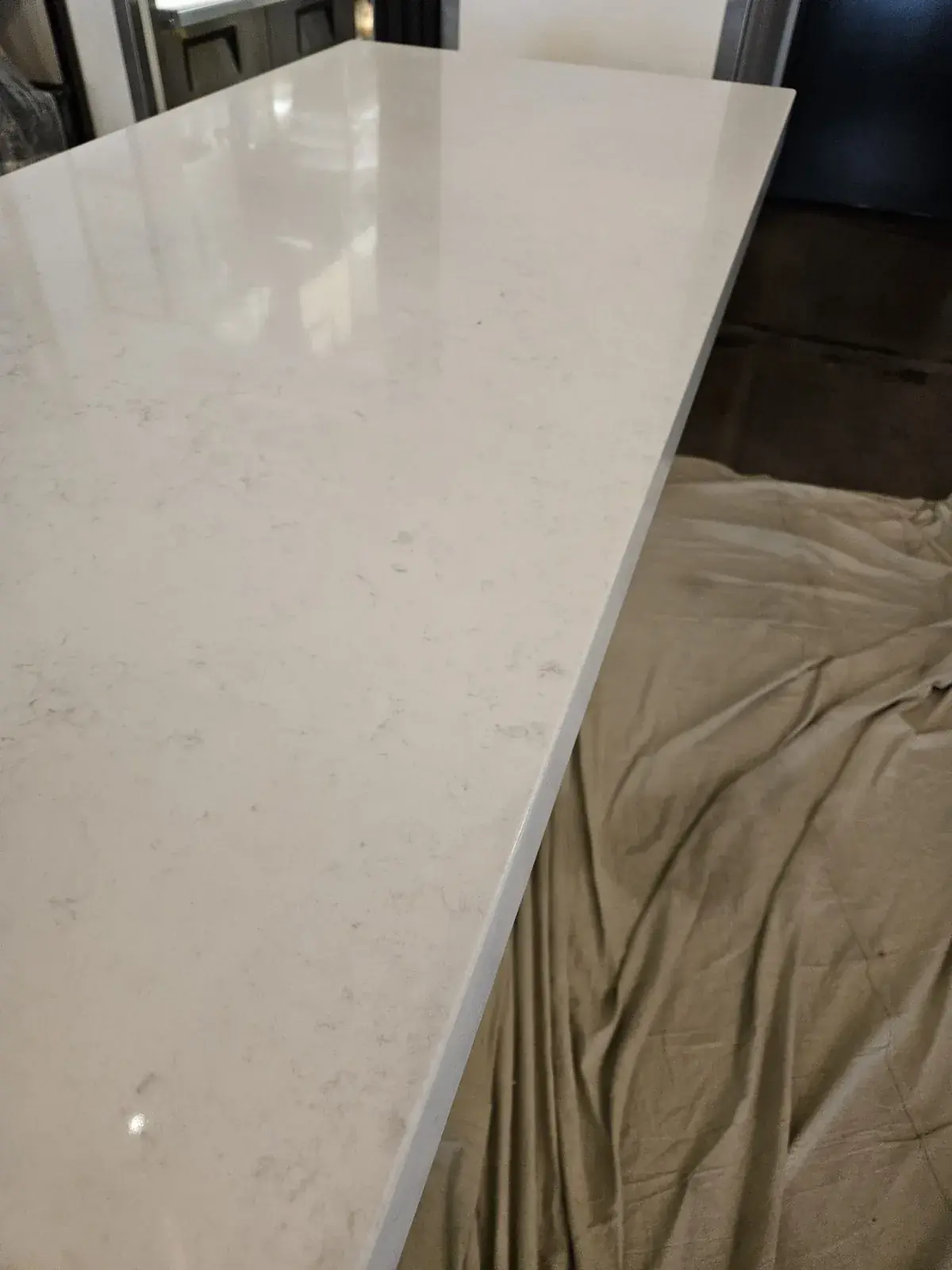
Engineered quartz, porcelain, and Corian should not be grouped with natural stone polishing. Quartz contains resin that can react badly to heat and aggressive abrasives. Porcelain may carry a printed pattern near the face. Corian is normally refinished through a solid-surface sanding sequence.
We inspect those materials separately. A method that works well on marble or granite can leave permanent changes on an engineered surface.
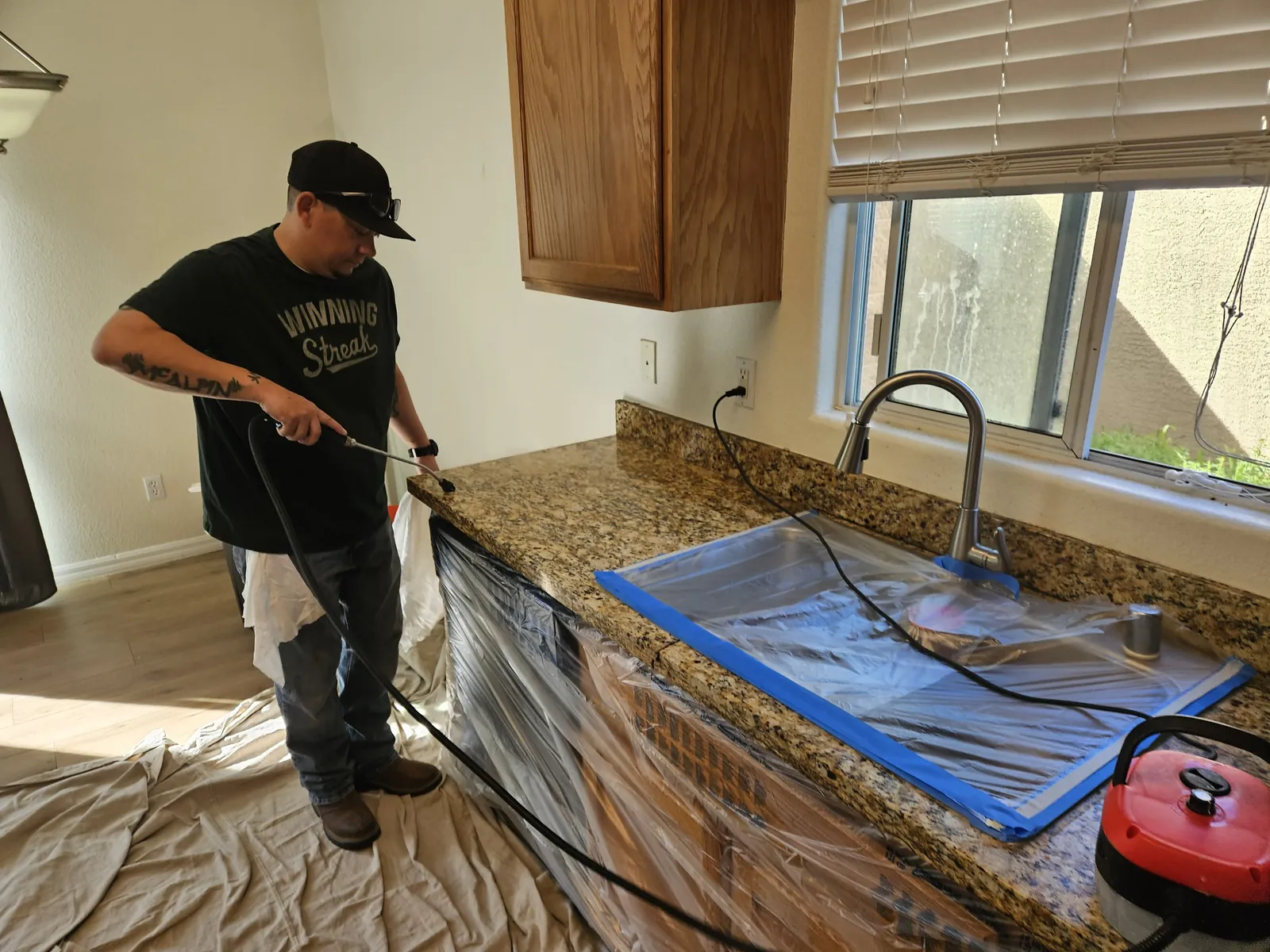
What a realistic result looks like
The goal is an even finish that belongs with the rest of the countertop. Light scratching and dullness can often be corrected well. Deep chips, moving cracks, severe edge damage, and discoloration that has traveled into the material need a repair assessment before anyone promises a polishing result.
Send one full view of the countertop and a close photo taken with light crossing the mark. Those two angles usually tell us whether polishing belongs in the conversation.
Measured steps.
A considered result.
- Share the surface
Send a full view and a close-up of the concern.
- Confirm the material
Identify what it is before choosing a method.
- Set the scope
Separate cleaning, finish work, and repair needs.
- Refine with care
Use a process compatible with the existing surface.
- Review the finish
Inspect the result and discuss ongoing care.
Clarity before
the visit.
What is the difference between cleaning and countertop polishing?
Cleaning removes material sitting on top of the countertop. Polishing refines the surface when wear, fine scratching, or etching has changed the finish itself. We normally clean first so residue does not get mistaken for damage.
Can every countertop be polished?
No. Natural stones such as granite, marble, quartzite, and travertine can often be polished. Engineered quartz, porcelain, and Corian require different methods because their binders, printed surfaces, or solid-surface composition respond differently to abrasives.
Will polishing remove a stain?
Not by itself. A stain sits inside an absorbent stone and usually needs a poultice or another stain treatment. Polishing addresses the finish. The stain should be treated before the surrounding sheen is corrected.
Can you match a honed or satin finish?
Often, yes. The target does not have to be a high gloss. We inspect the surrounding surface and stop the abrasive sequence at the finish that matches the rest of the countertop.