Wood · Countertops · Natural Stone · Tile & Grout Request an Assessment

Chester, Virginia · Precision Floor & Surface

Countertop Sealing in Chester: Protect Your Stone Before It Stains

Countertop sealing in Chester to guard stone against stains and moisture. Precision Floor and Surface brings the tools to your home. Call to schedule.

01

Signs Your Countertop Needs Resealing

Water is the first clue. Set a glass down, walk away for a few minutes, come back to a dark ring that won't wipe off right away. That's the sealer telling you it's worn thin. On a properly sealed granite or marble countertop, water beads up and sits on top like it would on a waxed car hood. Once it starts soaking in instead, the stone underneath is exposed.

We get a lot of calls in Chester after someone's had a big cookout or holiday dinner, wine spills, lemon juice from marinating chicken, olive oil left sitting overnight. Those are the moments that expose a failing seal fast.

Here's what else we look for on a visit:

  • Dull or cloudy patches near the sink and stove, where water and grease sit most
  • Rough or slightly gritty texture you can feel with your palm
  • Dark blotches around faucets or under cutting boards that don't lift with regular cleaning
  • Etching, a faint dull spot with no color change, usually from citrus or vinegar left too long

Etching is a different problem than sealing, and it's an easy mix-up. Sealer failure lets liquid soak in and stain. Etching is the acid eating the stone's surface. No amount of resealing fixes that on its own. It needs honing first. We check for both before we tell you what your counter needs.

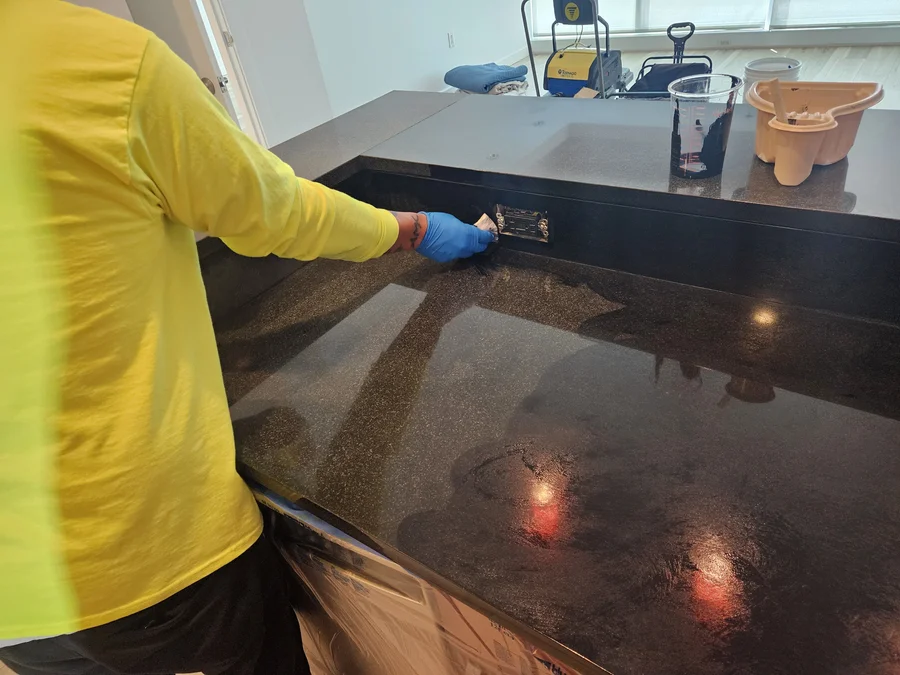
countertop sealing granite island Chester
02

Quartz vs. Natural Stone: Why Not Every Counter Needs Sealing

Here's something we tell people all the time, even though it costs us a job: if you've got quartz counters, you don't need sealing. Not now, not ever. Quartz is engineered, not natural stone. It's made from ground quartz mixed with resin, and that resin fills every pore during manufacturing. There's nothing for a sealer to soak into. So if a company shows up offering to seal your quartz, that's a red flag worth noticing.

Granite, marble, and travertine are a different story. These are natural stone, pulled from the ground with tiny pores running through them. Those pores soak up wine, oil, coffee, whatever hits the surface, and that's how staining starts. Sealing fills those pores so liquid beads up instead of sinking in.

So how do you tell what you've got? Run your hand across the surface. Natural stone usually shows slight variation in pattern, almost like each slab tells its own story. Quartz tends to look more uniform, more repeated. Not sure which one's in your kitchen? That's pretty common, especially in homes bought a few years back where nobody remembers what the builder installed.

We'll tell you straight if your counters don't need sealing.

And if they don't, we'd rather say so than sell you something you don't need. What we will usually recommend instead for quartz is a polish to bring back shine and knock down water spots, since quartz can dull over time even without needing a sealer. That's a completely different service, and a completely different problem to solve.

03

Countertop Sealing Process for Chester Kitchens

Here's what happens when we seal a countertop. It's not complicated, but skipping steps is exactly how homeowners end up with a sealer that fails in six months instead of lasting years.

First, we clean the stone completely. Not a quick wipe down, a real strip of old wax, soap film, and cooking oil residue that builds up around cooktops and sinks. Granite and marble are porous, so anything sitting in those pores has to come out before new sealer goes in. If we seal over grime, we're just trapping the problem under a fresh coat.

Next comes a dryness check. This one matters more in Chester than folks realize. Summers here get humid, and a lot of the older homes near the historic district still run on window units or older HVAC systems that don't pull moisture out of the air the way central systems do. Stone traps that humidity. Seal over a damp countertop and the sealer can't bond right, so it fails early or hazes over.

Once we confirm the surface is clean and dry, we test absorption with a small water drop. This tells us exactly how many coats the stone needs. Granite might take one, honed marble often needs two or three.

Then we apply the sealer in thin, even coats, letting each one cure before the next. We wipe off any excess before it dries on the surface, because leftover sealer creates a cloudy film that's a pain to fix later.

Last step is a final water-bead test. If water sits up and beads instead of soaking in, the seal took. That's how you know the job's done right, not just done fast.

countertop sealing water stain marble Chester
04

What Drives the Cost of Countertop Sealing

Countertop sealing pricing isn't one-size-fits-all, and anyone who quotes you a number without seeing the counter first is guessing. A few things move the price up or down. Stone type matters a lot. Granite takes sealer differently than marble. Marble takes it differently than travertine or a natural stone with lots of natural pitting. Porous stones soak up more product and need more passes to seal right.

Square footage is the obvious one, but it's not the only one. Condition counts too. A counter that's never been sealed, or one that's gone two or three years past its last sealing, often needs a deeper clean first to pull out embedded soil before sealer goes on. Skip that step and you're just sealing in the grime. We see this a lot in older Chester homes where the counters came with the house and nobody's touched them since.

Edge detail and backsplash add time too. A simple straight-edge counter seals faster than one with ogee edges, tile backsplash, or a lot of seams and cutouts around sinks and cooktops.

Here's how we keep quoting simple. Text us a few photos or give us a call and walk us through what you're looking at, that's a free quote, no drive-out needed. If we do need to come look in person, that visit runs between $75 and $125, and it gets applied straight to the service once you move forward. No surprise add-ons once we're standing in your kitchen. Ask any provider upfront how they handle site visits versus phone quotes, and whether that fee rolls into the final job. That one question tells you a lot about how a company operates.

05

Confirming the Seal Worked

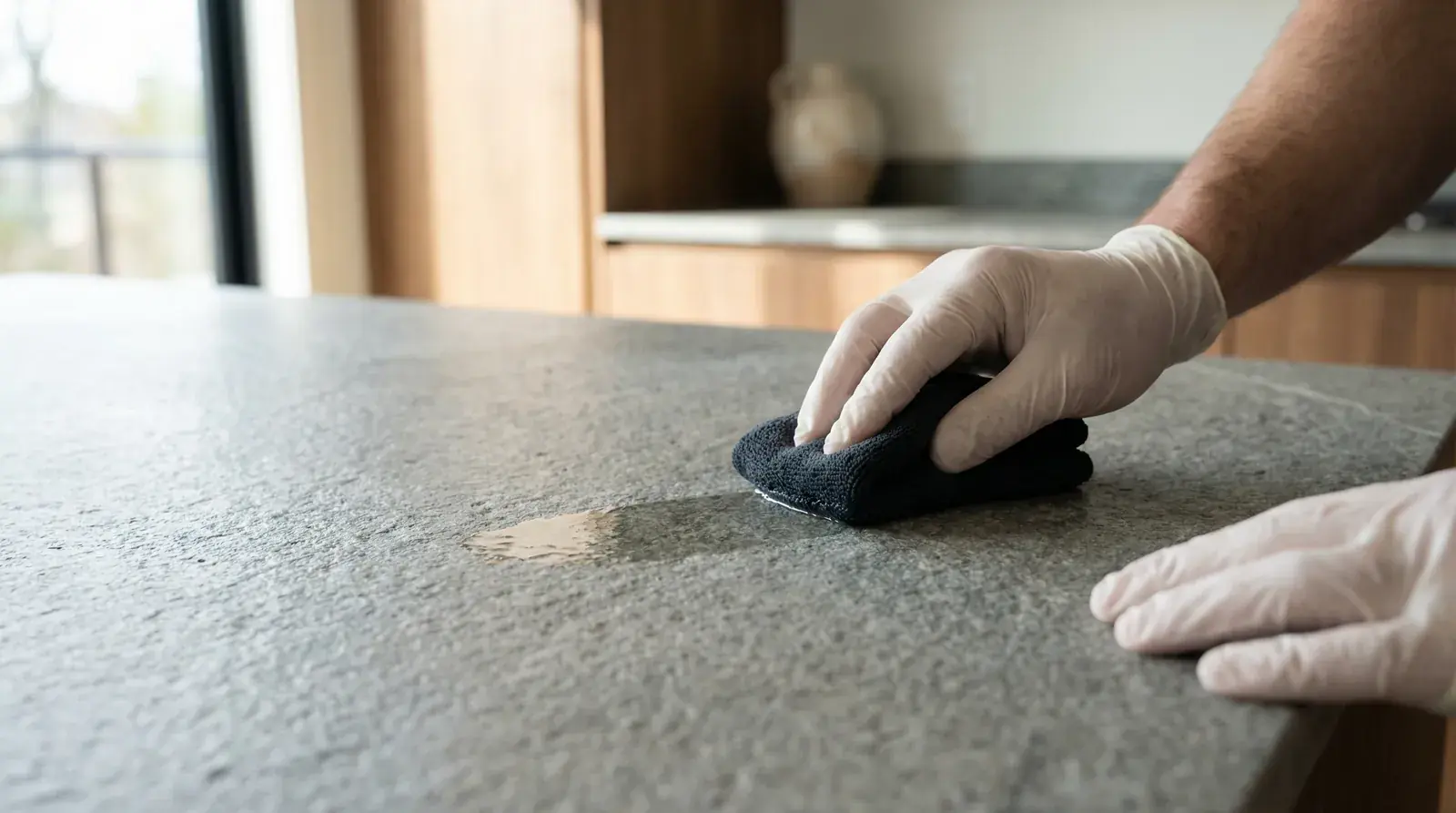
So how do you know the seal took? Water test. It's the simplest check in the business, and we do it before we ever pack up our tools. Drop a few beads of water on the stone, wait about ten minutes, then look. If the water sits up in little domes, you're sealed. If it starts soaking in and darkening the stone, that spot needs another pass.

Granite usually beads up fast. Marble and travertine, being softer and more porous, sometimes take a second coat before they hold water the way they should. That's normal, not a failure. We check multiple spots on every countertop, not just one corner, because sinks, cooktops and the edges near a coffee maker wear differently than the rest of the slab.

Chester's humid summers make this test more telling. Higher moisture in the air means a weak seal shows itself faster, sometimes within a week instead of a month. We factor that seasonal swing into how we test and when we recommend a follow-up check.

We also run a quick oil test on kitchen counters, since cooking oil penetrates faster than water and reveals weak spots water alone might miss.

Our team is IICRC certified in stone and masonry care, so we're trained to know what a properly sealed surface should look and feel like, not just guess. A good seal doesn't change the color of the stone or leave a film. If you can see a hazy coating or feel a tacky residue, that's over-application, and it needs to be buffed back. Confirming the seal isn't a formality for us - it's the last real check that stands between you and a countertop that stains at the first spill.

quartz vs natural stone countertop Chester

Common questions

Answers before the visit.

How do I know if my countertop needs resealing?

Water is the easiest test. Set a glass down, walk away a few minutes, and check for a dark ring that lingers. On a sealed granite or marble counter, water should bead up like it does on a waxed car hood. If it soaks in fast, especially near your sink or stove, the sealer has worn thin. Dull patches, a gritty feel, or dark blotches under cutting boards are other signs your stone is ready for a fresh coat.

Do quartz countertops need to be sealed?

No, quartz never needs sealing. It's engineered from ground quartz and resin, and that resin fills every pore during manufacturing. There's nothing left for a sealer to soak into. If someone offers to seal quartz counters, treat that as a red flag. What quartz can benefit from instead is a polish to bring back shine and clear up water spots, since it dulls over time even though it never needs sealing.

What happens when someone comes to seal my countertop?

We start by cleaning the stone completely, stripping off old wax, soap film, and cooking oil buildup around your sink and cooktop. Then we check for dryness, since sealing over damp stone causes early failure. A quick water-drop test tells us how many coats your counter needs, usually one for granite and two or three for honed marble. We apply thin coats, wipe off excess, and finish with a water-bead test to confirm the seal took.

How often do Chester homes need countertop resealing?

It depends on your stone and your home's humidity, but summer humidity in Chester speeds up sealer breakdown. A lot of older homes near the historic district still run window units or older HVAC systems that don't pull moisture out as well as central air. That trapped humidity keeps stone damp longer, which shortens how long a seal lasts. If you notice water soaking in faster than it used to, that's your cue to book a check.

Will sealing fix stains or dull spots on my countertop?

Sealing prevents new stains, but it won't undo etching that's already there. Etching looks like a dull spot with no color change, usually left behind by citrus or vinegar sitting too long. That's the acid eating the stone's surface, not a sealer problem, and it needs honing before anything else. We check for both stains and etching on every visit so you know exactly which fix your counter actually needs.

How do I get a quote for countertop sealing?

Text us a few photos or call and describe your counters, and we can put together a free quote with no drive-out required. If we do need to see your kitchen in person first, that visit fee gets applied straight to the job once you move forward. Ask any provider you're considering how they handle phone quotes versus in-person visits, so you know what to expect before they show up.

Start with a photo

Show us the surface. We will tell you what it needs.

(804) 532-4703