
Granite Countertop Repair in Richmond, VA
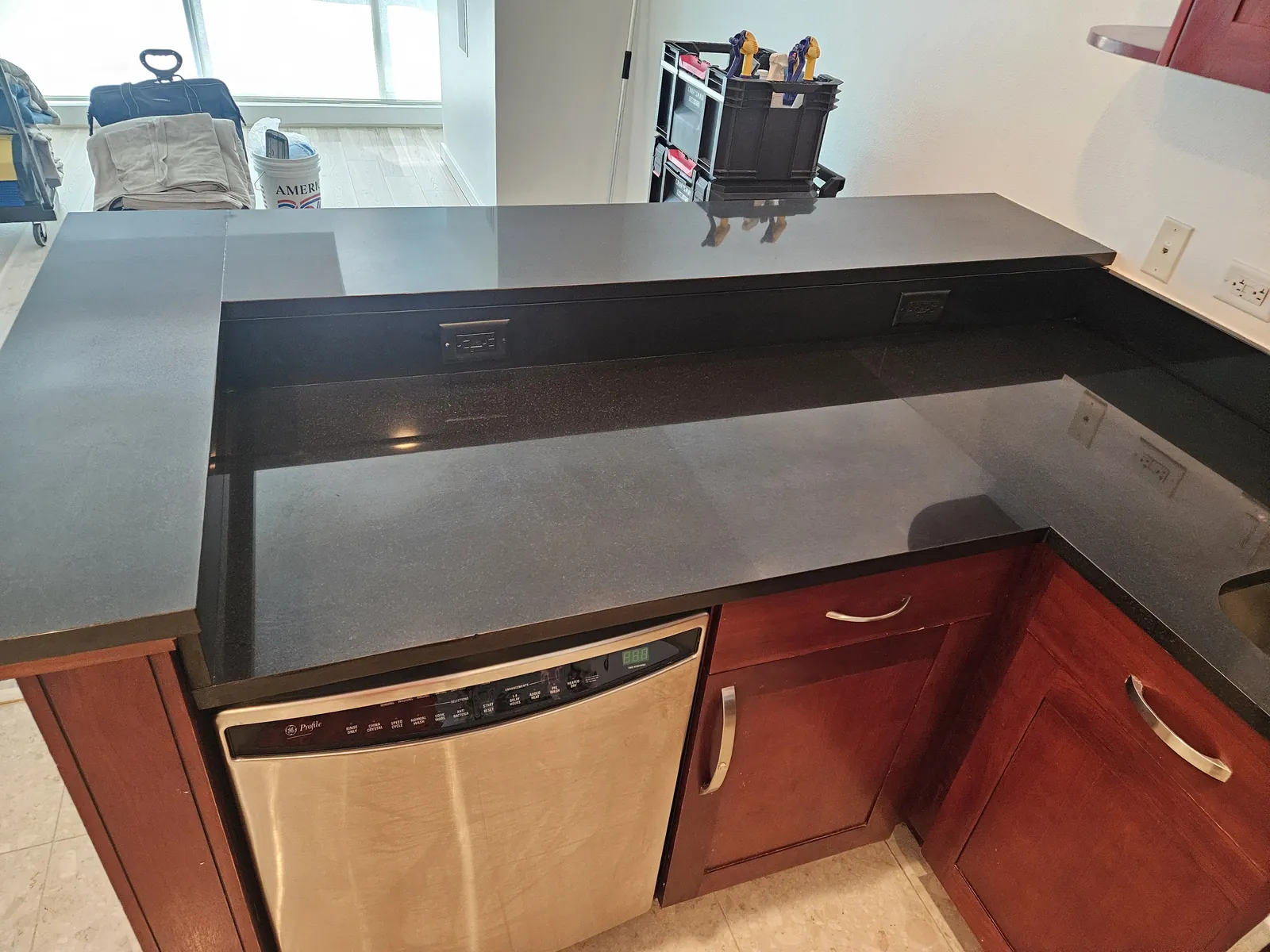
Granite countertops are one of the primary surfaces we service throughout the Richmond area. Granite countertop restoration may include deep cleaning, polishing, sealing, and bringing back a more even appearance. We also repair chips and cracks, especially along edges and around sink cutouts. Send us a photo or give us a call to start the conversation.
Google Reviews
Scroll to read all 9 reviews →
“Great work and even better customer service. Very professional, easy to work with, and you can tell they take pride in what they do. Definitely recommend Precision Floor & Surface Restoration if you need your floors or countertops brought back to life.”★★★★★
“Absolutely amazing work! From start to finish, everything was handled professionally and with great attention to detail. They took the time to make sure everything was done right, and the results speak for themselves. The floors and surfaces came out looking incredible, and you can tell they genuinely take pride in their work. I couldn’t be happier with the finished product and would definitely recommend them to anyone looking for quality work and great service. Five stars all the way! ⭐⭐⭐⭐⭐”★★★★★
“Precision Floor & Surface Restoration exceeded my expectations! Professional, punctual, and detail-oriented from start to finish. My floors look amazing, and the quality of work was outstanding. Highly recommend to anyone looking for top-notch floor and surface restoration services.”★★★★★
“Removed stains that previous cleaning services could not. Made the impossible - possible!”★★★★★
“Great quality work! Very professional with communication!!”★★★★★
“Clean and very professional. Highly recommend”★★★★★
“I highly recommend his floor cleaning services! He’s reliable, professional, and does an excellent job. My floors looked amazing, and I couldn’t be happier with the results.”★★★★★ ★★★★★
The science behind granite countertops
The problems we see on granite countertops usually fall into four categories: residue and film, stains, etching, and physical damage. Each one needs a different kind of care.
Residue or film sits on top of the granite. Cleaner buildup, soap, and cooking residue can all create a cloudy layer. The right cleaning process removes the film without changing the stone underneath.
A stain develops when oil, water, or another substance moves into the pores. The area usually looks darker while still feeling smooth. Depending on what caused it, we may use a poultice to draw the discoloration back out.
Etching is uncommon on true granite because the stone resists most kitchen acids. A pale, dull, or rough spot may mean the slab contains a different mineral, was sold under the wrong name, or has a damaged coating on top. We identify the surface before trying to correct it.
Damage includes chips, cracks, open seams, and missing filler along an edge. These problems need repair rather than cleaning. The right approach depends on the size and location of the damaged area.
What granite is made of
Granite cooled slowly out of magma far underground, which is why it looks crystalline and speckled instead of uniform. Quartz, feldspar, and mica interlock through it, with biotite or hornblende adding the darker flecks.
The detail that matters in a kitchen is the chemistry. Granite is siliceous, built on silicates, not on the calcium carbonate that makes marble so reactive. Acid does not dissolve it.
Hardness lands around Mohs 6 to 7, comfortably above a steel knife blade and near porcelain tile. Porosity is the variable one, roughly 0.1 to 1.2 percent depending on where the slab was quarried, which is exactly why two granite owners can have completely different experiences with the same material.
Two reasons granite countertops get damaged in Richmond
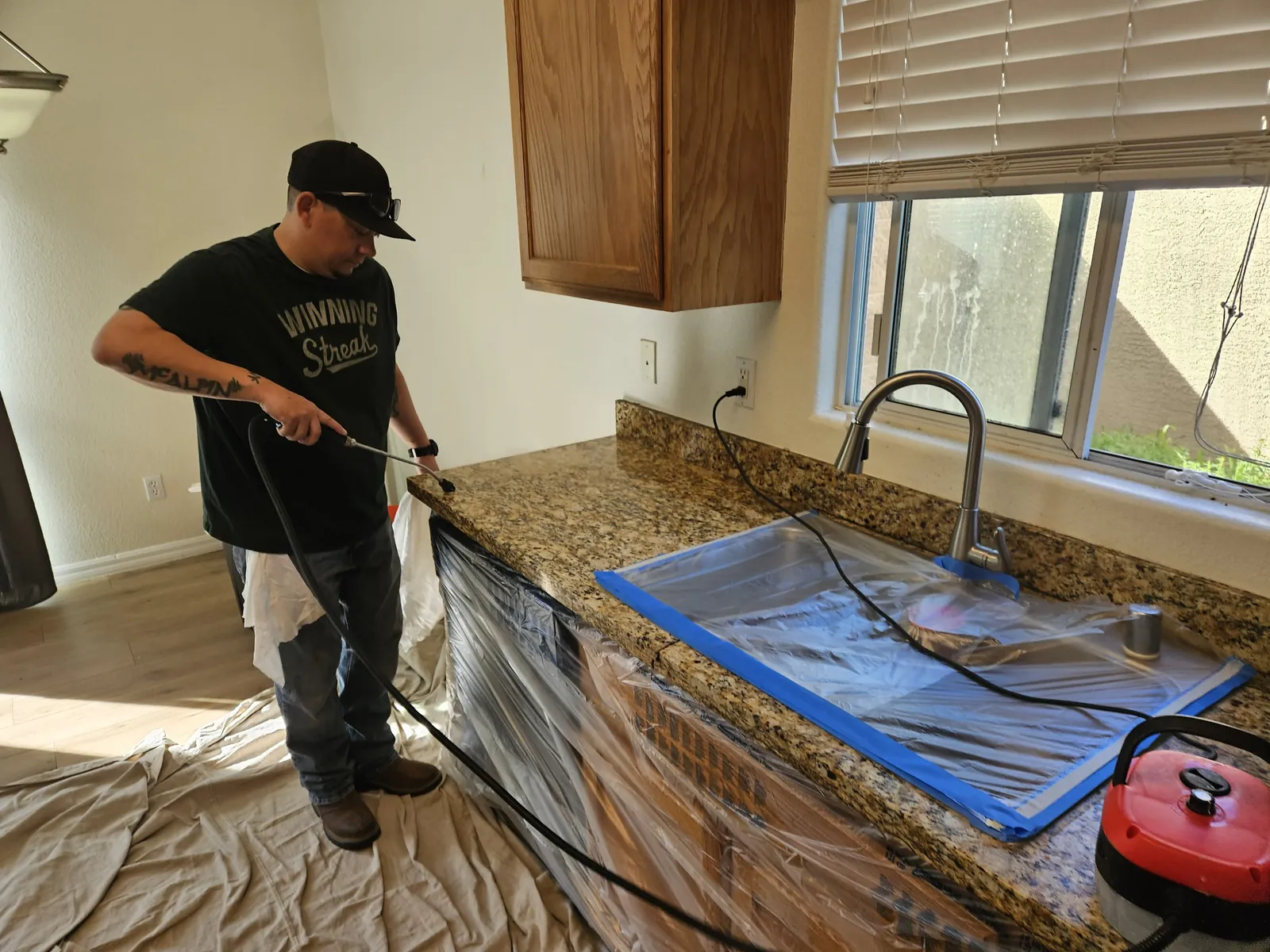
Two common causes are moisture getting into the stone and physical stress around edges, seams, and cutouts.
Moisture and oil cause gradual problems. Even dense granite has small pores, and a worn sealer gives spills more time to soak in. That is why dark areas often develop near a range, prep station, sink, or dish rack.
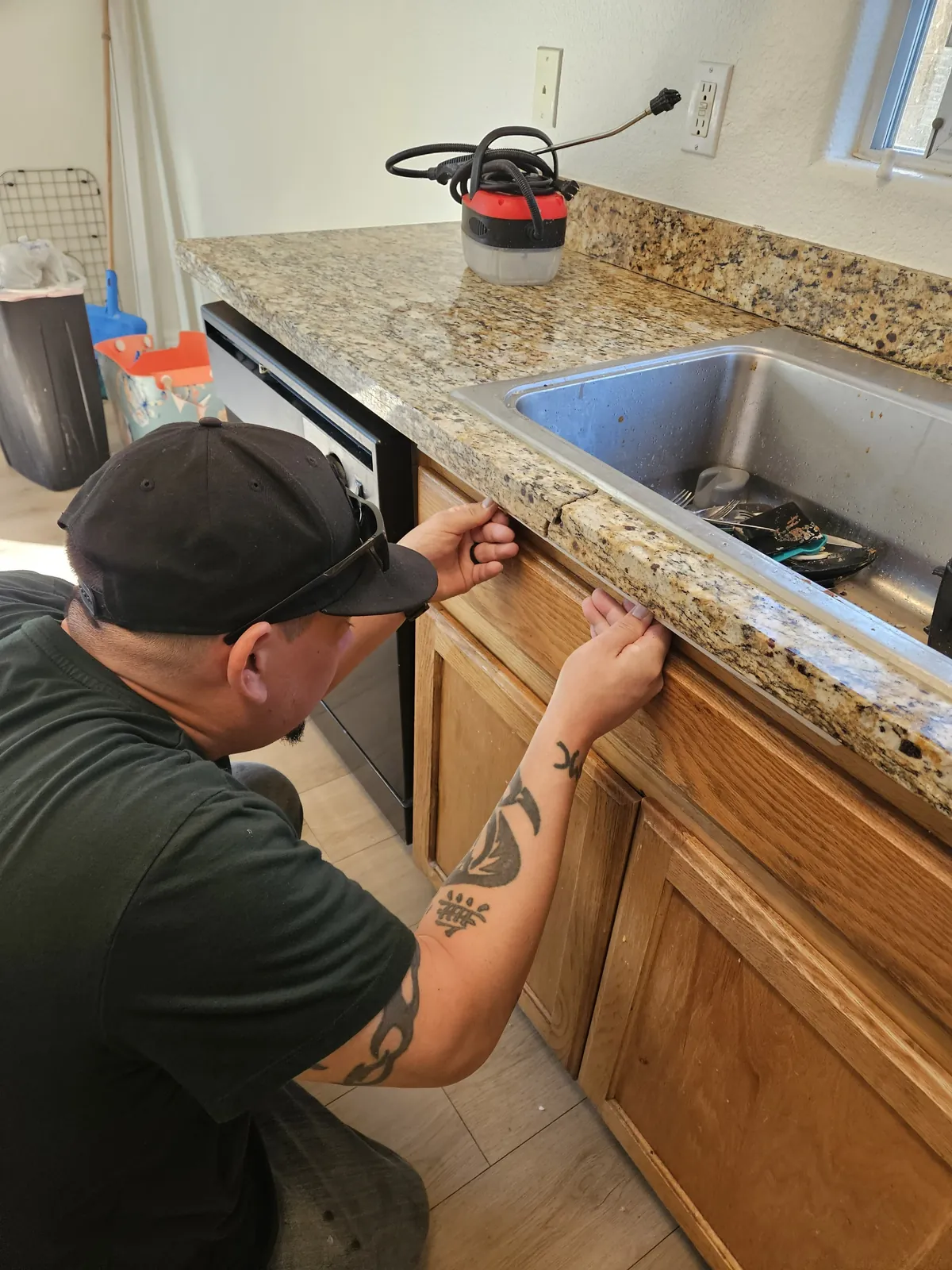
Physical damage happens more suddenly. A dropped pan can chip an edge, while pressure around an overhang, seam, or sink cutout may contribute to cracking. We inspect the location and the surrounding countertop before recommending a repair.
What we get called about most around Richmond
- Oil and grease around the range, soaked in rather than sitting on top, which is why wiping harder never works
- Chips and cracks at the stress points, sink cutouts, unsupported overhangs, corners, and anywhere the cabinets underneath are not carrying the load evenly
- Iron and rust marks, sometimes from the stone’s own iron-bearing minerals reacting with water that keeps sitting in one place, sometimes from a can or a cast-iron pan left wet
- Sealer that has quietly given up, showing as water darkening the stone faster than it used to, most often on counters under a south or west window
- Marks that turn out not to be granite’s fault, because the slab has calcite veining in it or was labeled granite and is something else entirely
How we work out what happened
Diagnosis on granite is mostly about ruling things out in the right order, cheapest and least invasive first.
- Confirm the material. Not every slab sold as granite is granite. We check that first, along with the finish, polished, honed, or leathered, and whatever sealer history you can tell us about.
- Read the mark in raking light. Low light from the side shows texture that overhead light hides. We look at whether the mark darkens when wet, whether it tracks a vein or a seam, and where it starts.
- Ask what lives there. A mark two feet from the range and a mark at the sink edge usually have different causes, and what sits on that spot day to day narrows it quickly.
- Look underneath. Anything crack-shaped means checking cabinet level, cutout support, and whether there is movement below before we discuss filling it.
- Test small and test quietly. Dry inspection, then a pH-neutral clean, then look again. Nothing stronger touches a visible area until a hidden test spot says it is safe.
What we can actually do about it
Most of what granite picks up in a Richmond kitchen has a real fix rather than a cosmetic one.
- Oil and grease come out with a poultice, clay paste plus mineral spirits or acetone, taped down over the mark and left 24 to 48 hours while it draws the oil back up. Older marks may want a second pass.
- Iron and rust take the same approach with different chemistry, ammonium oxalate or a dedicated iron reducer. Degreasers do nothing here, which is why rust marks survive so much scrubbing.
- Small chips get filled with a resin matched to the stone's color, then shaved back flush so the repair sits level rather than proud.
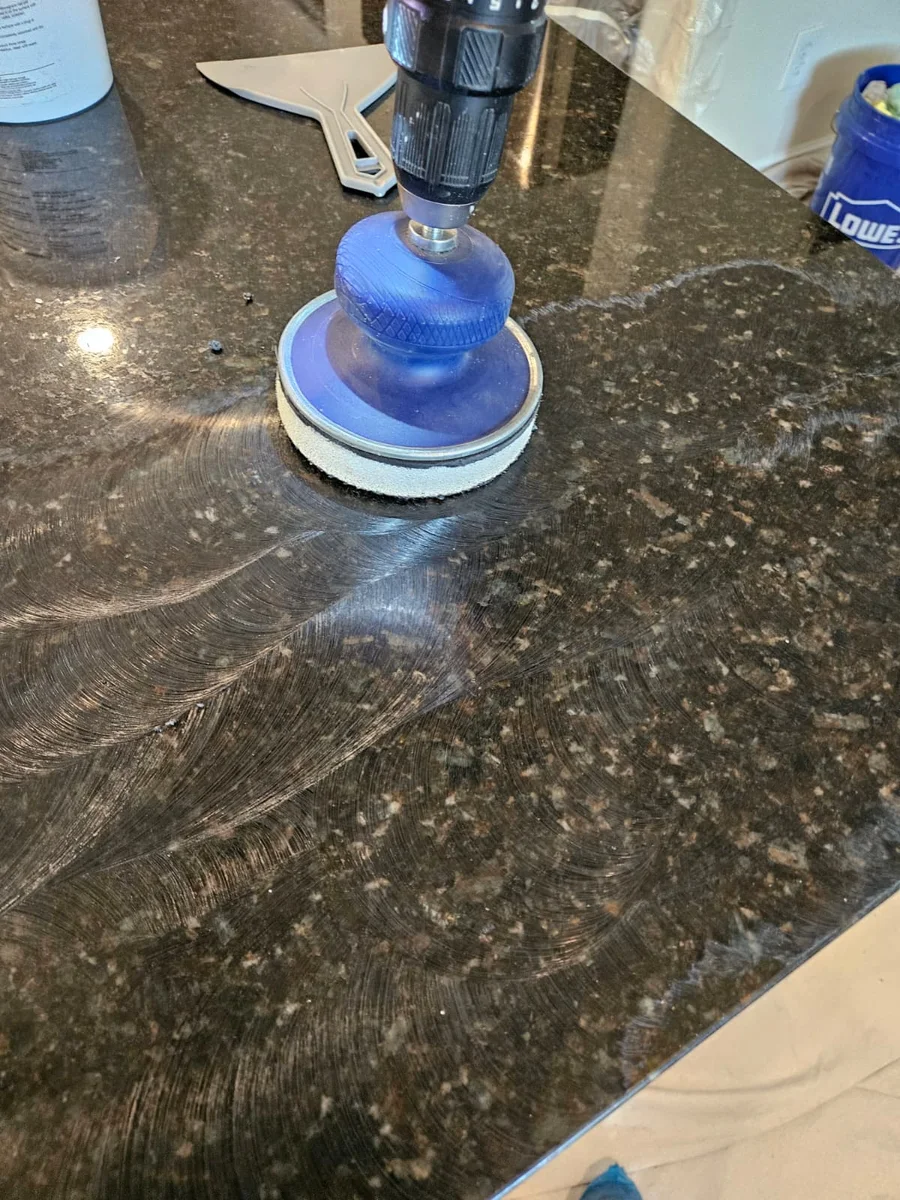
- Dull patches and light scratching may respond to a controlled granite polishing process, working the surrounding area so the corrected spot blends instead of announcing itself.
- Sealer goes back on when the water test says so, not on an anniversary. Our guide to absorption-tested countertop sealing explains what the product can and cannot do.
Where we tell you no
Some things are worth being straight about before money changes hands.
- A large or moving crack needs to be inspected before we promise a result. The size, location, and condition of the surrounding stone determine whether a repair will hold and how visible it may remain.
- A stain that has had years to saturate will usually lighten rather than vanish. Poulticing pulls a lot back out, but we would rather tell you to expect improvement than promise disappearance.
- A slab that turns out not to be granite changes the whole plan. Softer or calcareous stone under a granite label does not respond to any of the above, which is why identification is the first step and not the last.
How Richmond humidity can affect granite
Richmond’s humidity can keep water from drying quickly around sinks, seams, and dish racks. When the sealer has worn thin, that moisture can move into the pores and leave part of the granite looking darker than the rest.
Proper sealing helps the countertop resist moisture and maintain a more uniform appearance. We recommend testing how quickly the stone absorbs water and resealing when the test shows it is needed.
Sealing does not correct an active leak or remove a stain that is already in the stone. Those problems need to be handled before another sealer is applied.
Other causes of granite countertop damage
Humidity is only one factor. Granite countertops also develop problems when regular maintenance is skipped or when the surface takes a direct impact.
- Worn sealer allows water and oil to darken areas that once resisted spills.
- Oil and food spills can settle into open pores when they are left on the countertop.
- Harsh or abrasive cleaners may leave haze, residue, or an uneven appearance.
- Impacts along edges and sink cutouts can cause chips or cracks in vulnerable areas.
- Heat and direct sunlight can age some sealers and repair resins faster than the granite itself.
Routine cleaning, quick spill cleanup, and periodic sealer testing prevent many of these problems from becoming restoration jobs.
When it is worth a call
Call when a mark survives normal cleaning, when you cannot tell a fissure from a crack, or when a chip or crack shows up near a sink or cooktop cutout. Call before resealing anything that already has a mark on it, because sealer locks in whatever is there rather than fixing it.
Most of the time a photo settles it. One wide shot for context, one close-up in side light, and a sentence about what usually sits in that spot.
Common granite questions
Is my granite cracked, or is that just a natural fissure?
There is a quick way to tell. A fissure came out of the quarry with the stone, so it follows the mineral grain and runs alongside the veining rather than cutting through it. A crack happened later, which is why it tends to run straight across whatever grain is in its way. Drag a fingernail over it in low, raking light. A fissure stays flush and your nail glides. A crack catches, or you feel one side sitting slightly higher than the other. Cracks also start somewhere for a reason, usually a sink cutout, a corner, or an overhang with nothing under it, so look at where the line begins as much as the line itself.
Does granite actually stain, or is that overstated?
It does, just less often than people expect. Porosity in granite runs anywhere from about 0.1 to 1.2 percent, and that spread is per quarry lot, not per stone type. One kitchen can go fifteen years without a mark while another picks up a ring from a bottle of olive oil left out overnight. Both owners are describing their own slab accurately. Treat "granite doesn't stain" as a showroom line rather than a property of the rock.
Can I use vinegar or lemon juice to clean granite?
Not as a routine. Granite will not etch from a splash of citrus the way marble does, so a one-off is not a crisis. The problem is cumulative: acid slowly breaks down the sealer sitting in the pores, and once that thins out the stone underneath is more open to the oil stains this page is mostly about. You end up causing the harder problem while solving the easier one. A pH-neutral cleaner costs less and does not trade one issue for another.
What actually damages granite chemically?
Hydrofluoric acid, which is the one thing that attacks silicate minerals directly, including the quartz and feldspar granite is built from. It shows up in some rust removers and a few toilet-bowl cleaners, usually without much fanfare on the label. Read the ingredients before anything from the rust or lime-scale aisle goes near stone of any kind.
How do I know if my granite needs to be resealed?
Test it instead of scheduling it. Put a few drops of water on a spot you actually use, then leave it alone and check back in 10 to 15 minutes. Darkening under the drops means water is getting into the pores and the sealer has thinned. Water still sitting on top with no color change means it has not. Counters age at different rates depending on sun and use, so the same kitchen can need one section done and not another.
Can an oil stain or rust mark actually be removed from granite?
Usually, and it is a real extraction rather than a cover-up. A poultice is an absorbent clay paste carrying the right solvent for the stain, mineral spirits or acetone for oil, ammonium oxalate or an iron reducer for rust. It goes over the mark, gets covered, and sits 24 to 48 hours. As the paste dries it pulls the stain up out of the pores with it. Older marks that have had years to settle in sometimes need a second round, occasionally a third.