
Travertine Countertop Repair in Richmond, VA
Travertine brings warm color and natural texture to a countertop or bathroom vanity. Because the stone forms with open pores and small voids, it needs more regular care than denser surfaces. Old filler may loosen, acidic products can dull the finish, and moisture can darken unsealed areas. Most of these problems can be corrected through cleaning, refilling, honing, and sealing.
Google Reviews
Scroll to read all 9 reviews →
“Great work and even better customer service. Very professional, easy to work with, and you can tell they take pride in what they do. Definitely recommend Precision Floor & Surface Restoration if you need your floors or countertops brought back to life.”★★★★★
“Absolutely amazing work! From start to finish, everything was handled professionally and with great attention to detail. They took the time to make sure everything was done right, and the results speak for themselves. The floors and surfaces came out looking incredible, and you can tell they genuinely take pride in their work. I couldn’t be happier with the finished product and would definitely recommend them to anyone looking for quality work and great service. Five stars all the way! ⭐⭐⭐⭐⭐”★★★★★
“Precision Floor & Surface Restoration exceeded my expectations! Professional, punctual, and detail-oriented from start to finish. My floors look amazing, and the quality of work was outstanding. Highly recommend to anyone looking for top-notch floor and surface restoration services.”★★★★★
“Removed stains that previous cleaning services could not. Made the impossible - possible!”★★★★★
“Great quality work! Very professional with communication!!”★★★★★
“Clean and very professional. Highly recommend”★★★★★
“I highly recommend his floor cleaning services! He’s reliable, professional, and does an excellent job. My floors looked amazing, and I couldn’t be happier with the results.”★★★★★ ★★★★★
Why travertine develops pits and open holes
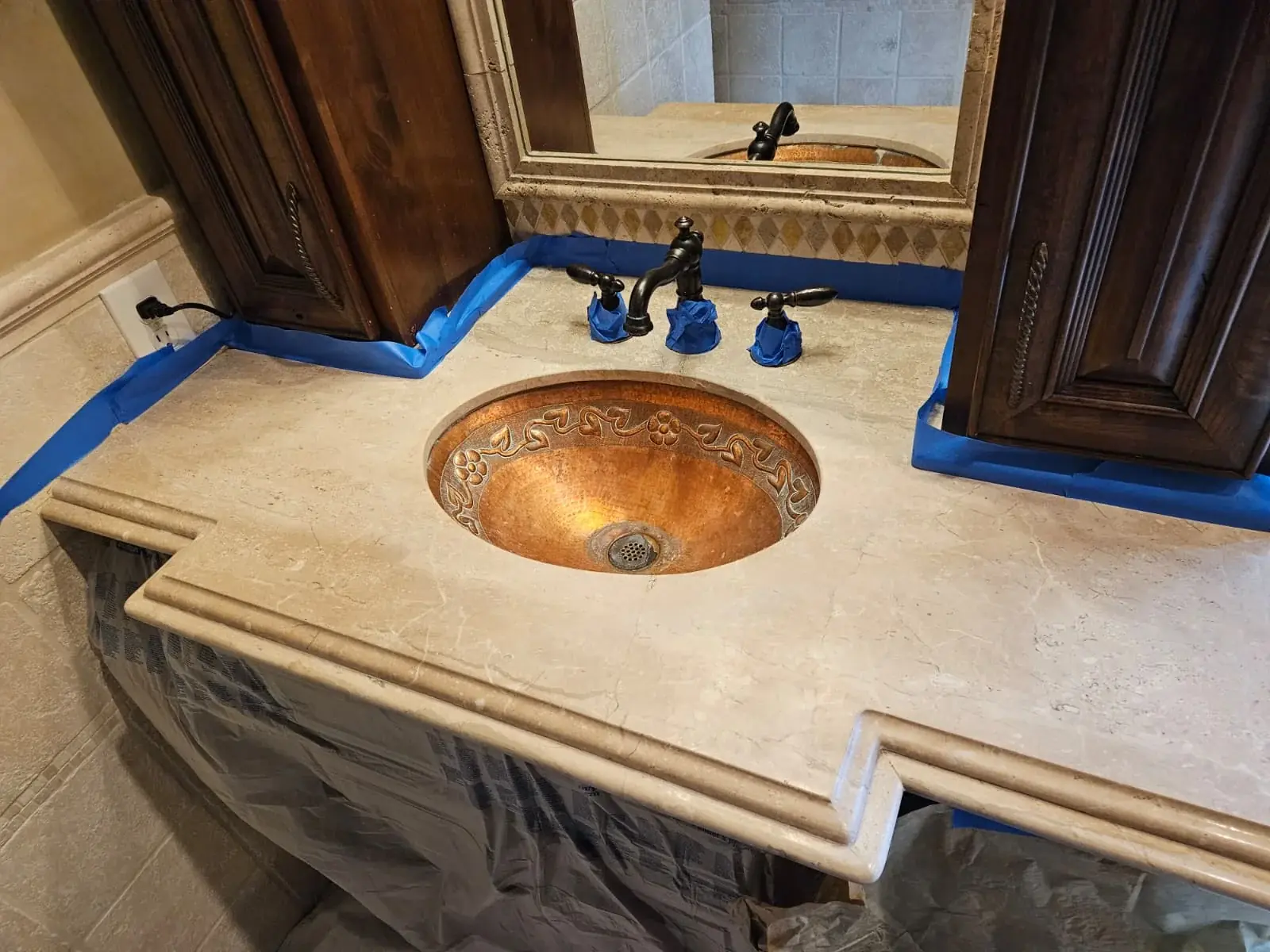
Travertine forms with natural holes and channels throughout the stone. Many countertops and vanities are filled at the factory with grout, cement, or resin, then honed until the surface feels smooth.
Over time, that filler can loosen from everyday use, vibration, cleaning, and moisture. A new pit usually means old filler has worn away or a pocket below the surface has opened.
The repair normally involves cleaning the opening, replacing the missing filler, honing it level with the surrounding stone, and sealing the area when needed.
Why travertine requires additional maintenance
Travertine is a form of limestone and reacts to acids much like marble. Lemon, wine, coffee, vinegar, and acidic bathroom cleaners can leave dull or rough etch marks.
It is also softer and more absorbent than granite or quartzite. Scratches, water darkening, stains, and uneven wear can show sooner, especially around sinks and heavily used vanity areas.
Regular cleaning with a pH-neutral product, prompt spill cleanup, and sealing based on an absorption test help protect both the stone and its filler.
What we get called about around Richmond
- Filler letting go and voids opening up, comfortably the most frequent travertine job, from wear, vibration, moisture cycling, or a pocket that was never properly packed to begin with
- Etch marks, dull, pale, faintly rough patches where acid met calcite, often from a cleaner that should never have been used on stone
- Sealer thinning early, since travertine loses protection faster than anything else here and slow-drying air gives moisture longer to get past it
- Uneven sheen and lippage across areas that have taken years of wear
- Efflorescence on outdoor travertine, a white powdery crust arriving after a wet stretch or a spring thaw
Residue, stain, etch, or damage?
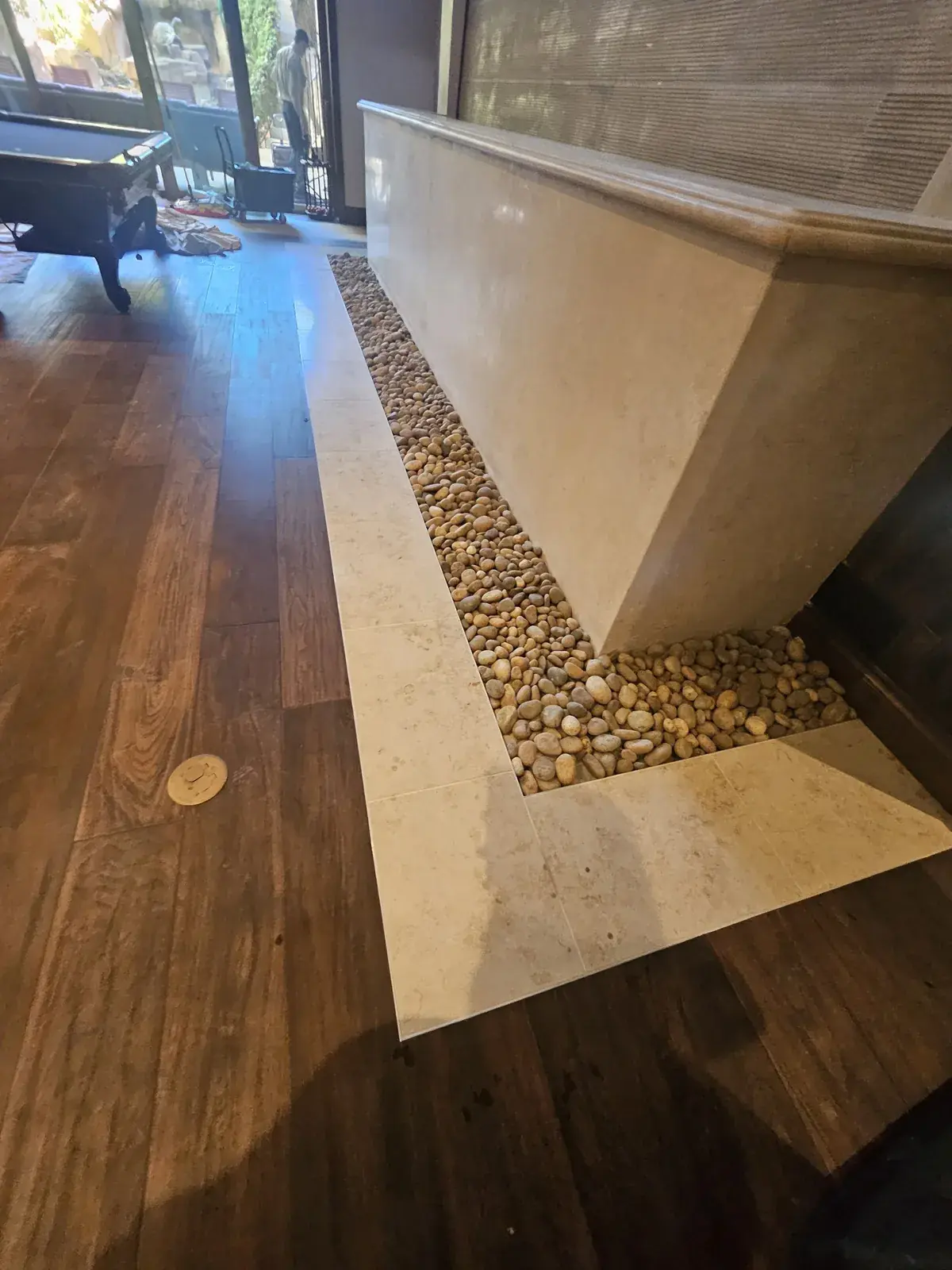
Travertine can present all four conditions at once, which is why we sort before we treat.
- Residue or film is a haze or crust on top of the stone. Around here that is usually cleaner buildup or soap film rather than heavy mineral scale, and the right method lifts it with no restoration needed.
- Stain means something soaked into the pore structure. Darker than its surroundings, smooth to the touch, and a job for identifying the stain chemistry and poulticing it back out.
- Etch means the surface itself changed. Lighter, duller, rougher, obvious under raking light, and immune to every cleaner ever sold. Only honing corrects it.
- Damage is material actually missing. A chip, a crack, an open void, filler gone. It gets refilled, and anything near a sink, seam, or edge means checking the substrate before cosmetic work.
The two-second field test: darker and smooth means stain, lighter and rough means etch.
How we approach a travertine counter
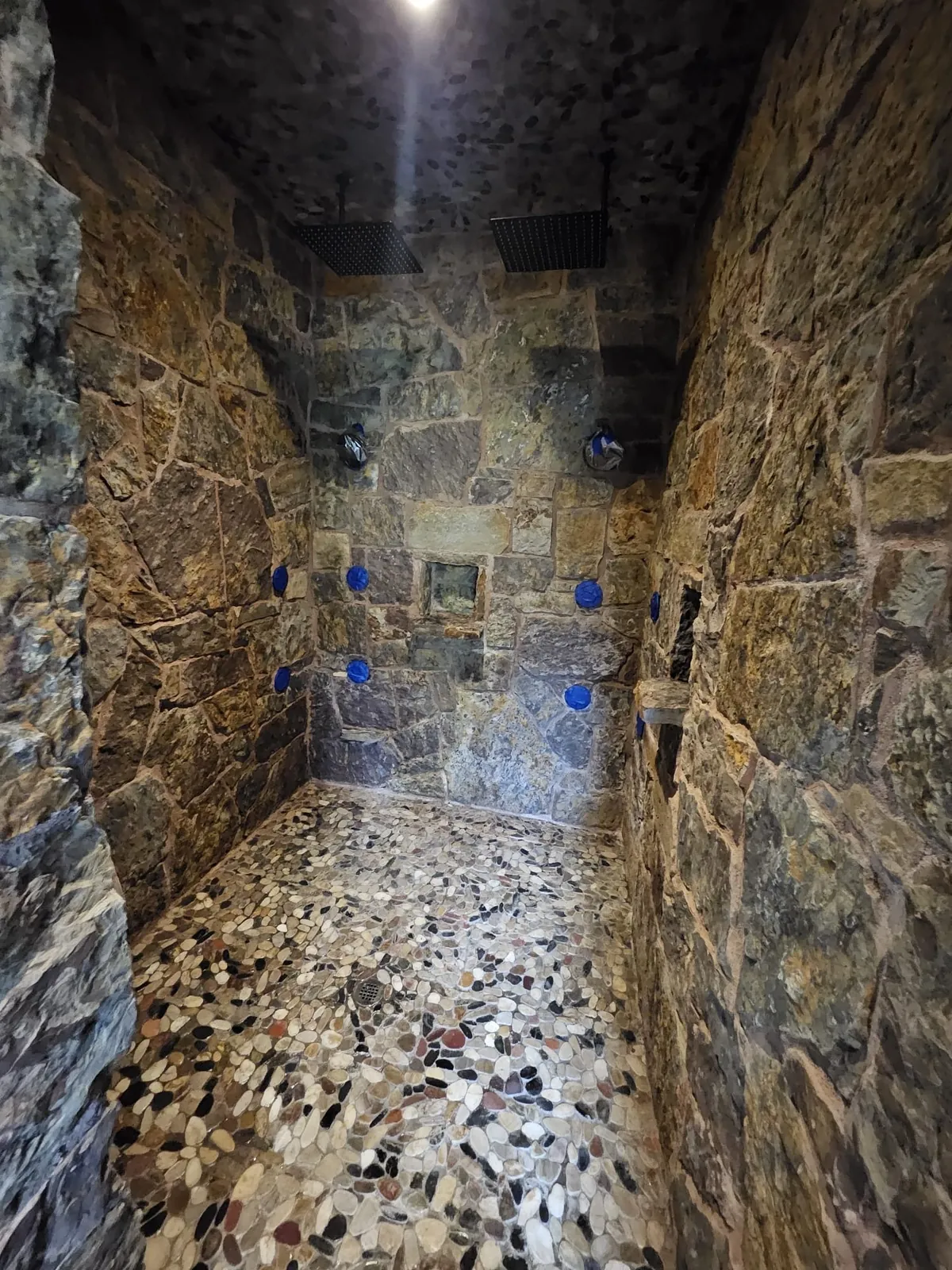
- Confirm the material and the finish. Travertine or a look-alike, polished or honed, filled or unfilled. Each combination changes the plan.
- Read the mark in raking light from a few angles. Does it darken when wet, does it follow a hole or a vein, does it start at a sink or cooktop edge?
- Look below the surface. A new hole is frequently a void opening from underneath, so filling it before the cause is understood just delays the same call.
- Escalate slowly. Dry inspection, pH-neutral clean, rinse and dry, look again under raking light, then a small hidden test before anything else.
What the work looks like
Refilling voids is travertine’s signature repair, and the order matters more than the materials do.
Loose or contaminated filler comes out first. The cavity gets cleaned and dried completely, because filling over trapped moisture guarantees a repeat.
Then it gets refilled to suit the size: unsanded grout for small holes, sanded grout for voids around an inch or larger, epoxy or polyester resin where the spot needs to take more abuse.
The fill goes in slightly proud, then gets honed flush with the surrounding surface and resealed.
Etch marks follow the marble approach. Light etching often lifts with polishing powder worked by hand. Moderate to severe etching needs honing for an etched countertop or repolishing, feathered past the damaged area so the correction does not leave a visible dip.
Where travertine restoration has limits
Deep cracks or widespread unevenness may require more than a spot repair. We inspect the size and location before deciding whether filling, resurfacing, or replacing the affected section makes sense.
If an opening sits near a moving seam or damaged support, that surrounding issue should be corrected before the surface is refinished.
Everyday situations that can damage travertine
Travertine damage often begins with ordinary routines. Water sits around a faucet, soap collects near a vanity sink, or someone uses vinegar or an acidic bathroom cleaner to remove a cloudy film.
Standing moisture can darken an unsealed area and weaken old filler. Acidic cleaners may remove the film while etching the stone underneath, replacing a cleaning problem with a dull patch that needs restoration.
Use a pH-neutral stone cleaner and blot spills instead of spreading them across the surface. If a haze or dark area remains, identify whether it is residue, a stain, or an etch before using anything stronger.
How Richmond weather affects travertine
Richmond’s humidity slows drying around sinks, seams, and outdoor installations. Because travertine is highly porous, lingering moisture can darken the stone, contribute to stains, and loosen older filler.
Outdoor travertine also needs attention during winter. Water inside an open pore or void expands when it freezes, which can enlarge pits or push filler loose.
Keep the surface dry, repair loose filler early, and test absorption rather than relying on a fixed schedule for sealing porous natural stone. A recurring white powder outdoors can signal moisture moving through the stone and should be investigated at its source.
How to care for travertine
- pH-neutral stone cleaner only, with vinegar, lemon, and natural-branded acidic products permanently off the list
- Blot spills instead of wiping them across more surface
- Dry standing water around faucets and sinks rather than letting it sit
- Trivets, cutting boards, and coasters, since Mohs 3 to 4 marks easily
- Glance at the filled holes now and then for filler starting to loosen
- Reseal on absorption-test results, roughly every 3 to 5 years indoors and sooner for sun-exposed or outdoor installations
When it is worth a call
Call when a new hole or void turns up, when a dull or rough patch appears that was not there before, when filler looks loose or crumbling, or when a white crust on outdoor travertine keeps coming back after cleaning.
Nearly all of it is correctable without replacing stone. What decides the right fix is getting the category right first, and a photo in raking light usually settles that.
Common travertine questions
Why do new holes keep appearing in my travertine?
Nothing is dissolving. Travertine formed around hot springs, where gas bubbles got trapped as the calcium carbonate hardened, so the holes were always in the stone. Slabs ship either filled or unfilled, and filled ones still carry micro-porosity beyond the visible holes. The filler, whether grout, cement, or resin, loosens over years from vibration, wear, and moisture cycling. Sometimes a pocket underneath was never fully packed and simply gets exposed. So a brand-new hole is usually an old hole finishing what it started. It is maintenance, not failure.
Will sealing stop my travertine from etching?
No, and this catches travertine owners the same way it catches marble owners. Sealer lives down in the pores and slows how quickly liquid soaks in, which genuinely helps against staining. Etching happens at the very top of the stone, where acid meets calcite and dissolves a thin layer of it. The reaction is above the sealer, not blocked by it. Freshly sealed travertine etches from lemon juice just as readily as unsealed travertine does.
Can I use vinegar or a hard-water cleaner like CLR on travertine?
No, and this is the mistake that does the most damage to travertine countertops. CLR-type removers and vinegar are acidic, and travertine is chemically marble's cousin, so acid dissolves it on contact. What happens next is genuinely unfair: the product strips the film you were fighting, so it looks like it worked, and underneath it has etched the stone permanently. You trade a haze that would have wiped off for a dull patch that needs machine work. Anything for travertine has to be pH-neutral and stone-safe.
Is a hole in my travertine the same thing as an etch mark?
Different problems, different fixes, and neither one crosses over. A hole means material is physically gone, either filler that fell out or stone that broke away, and the answer is refilling and honing flush. An etch means no material is missing at all, the surface has just been chemically dulled, and the answer is abrasive correction. Fill an etch and you have a lump. Hone a hole and you still have a hole.
Is outdoor travertine around my pool or patio safe in the Richmond climate?
It works, but it asks more of you than an indoor counter does, and winter is the reason. Water soaks into travertine's voids, and when the Richmond area drops below freezing, which it does repeatedly from December through March, that water expands inside the stone. Repeat it enough and a small void becomes a spall, or filler gets pushed out from behind. Summer thunderstorms and sun cycling add to it. A white powdery crust is efflorescence, mineral salts riding moisture up through the stone and crystallizing as it dries, and it wants a dry mop plus a fixed moisture source rather than a wet scrub.
How often does travertine need to be resealed here?
Many indoor travertine surfaces fall somewhere around three to five years between sealing, but the condition of the stone matters more than the calendar. Put a few drops of water on a clean, dry area and watch for darkening. Fast absorption means the protection has worn thin. Because travertine porosity varies widely, use the test to decide when your particular surface needs sealer.