
Real job · Chester, VA
How We Removed Wax Buildup From Hardwood Floors in Chester, VA
Removing wax buildup from hardwood floors takes three steps, and this oak floor near the Chester Village Green needed all of them. Here is what years of Mop & Glo did to it, how we took it off, and how the floor looked after a fresh coat.
Google Reviews
Scroll to read all 9 reviews →
“Great work and even better customer service. Very professional, easy to work with, and you can tell they take pride in what they do. Definitely recommend Precision Floor & Surface Restoration if you need your floors or countertops brought back to life.”★★★★★
“Absolutely amazing work! From start to finish, everything was handled professionally and with great attention to detail. They took the time to make sure everything was done right, and the results speak for themselves. The floors and surfaces came out looking incredible, and you can tell they genuinely take pride in their work. I couldn’t be happier with the finished product and would definitely recommend them to anyone looking for quality work and great service. Five stars all the way! ⭐⭐⭐⭐⭐”★★★★★
“Precision Floor & Surface Restoration exceeded my expectations! Professional, punctual, and detail-oriented from start to finish. My floors look amazing, and the quality of work was outstanding. Highly recommend to anyone looking for top-notch floor and surface restoration services.”★★★★★
“Removed stains that previous cleaning services could not. Made the impossible - possible!”★★★★★
“Great quality work! Very professional with communication!!”★★★★★
“Clean and very professional. Highly recommend”★★★★★
“I highly recommend his floor cleaning services! He’s reliable, professional, and does an excellent job. My floors looked amazing, and I couldn’t be happier with the results.”★★★★★ ★★★★★
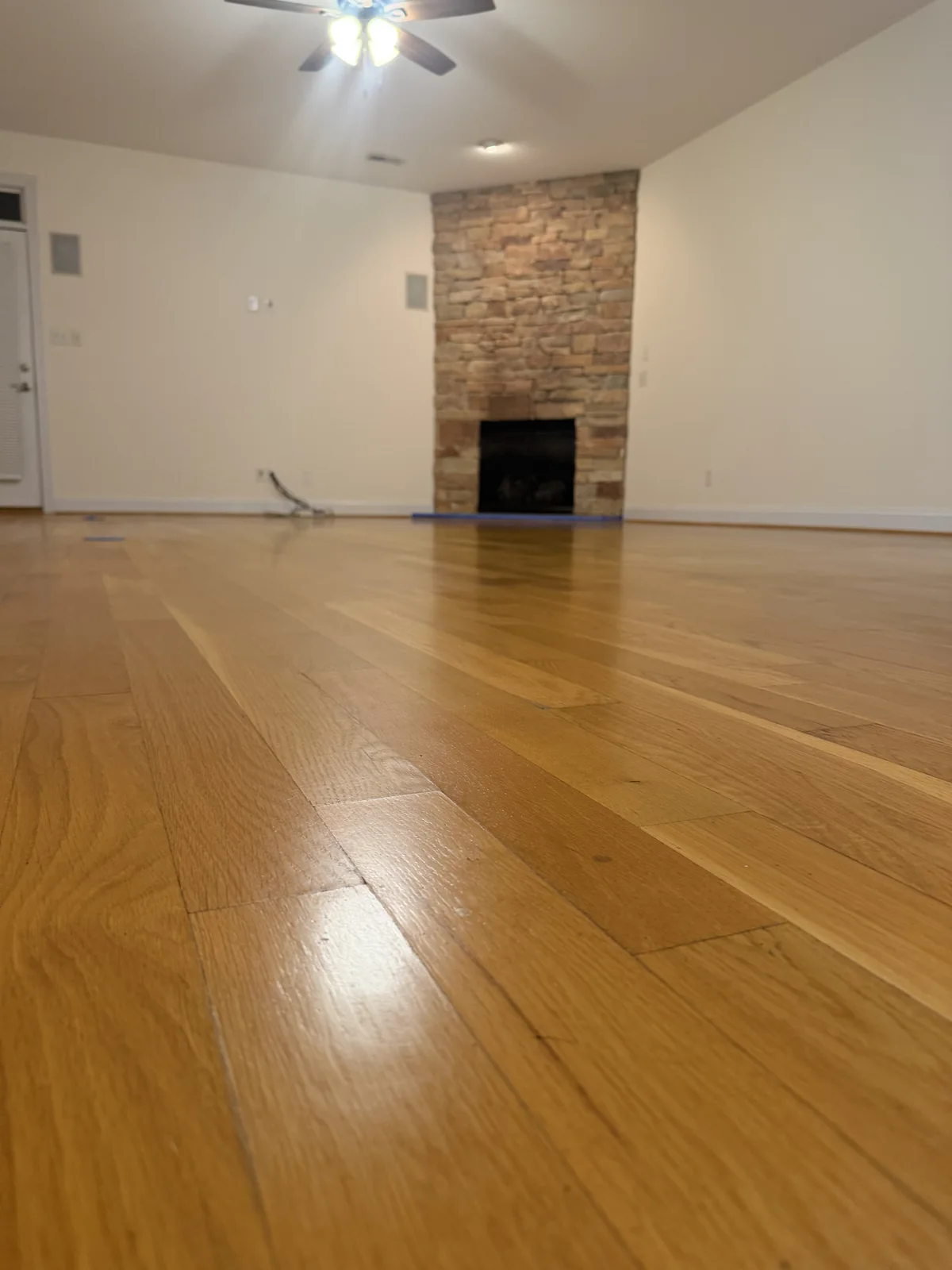
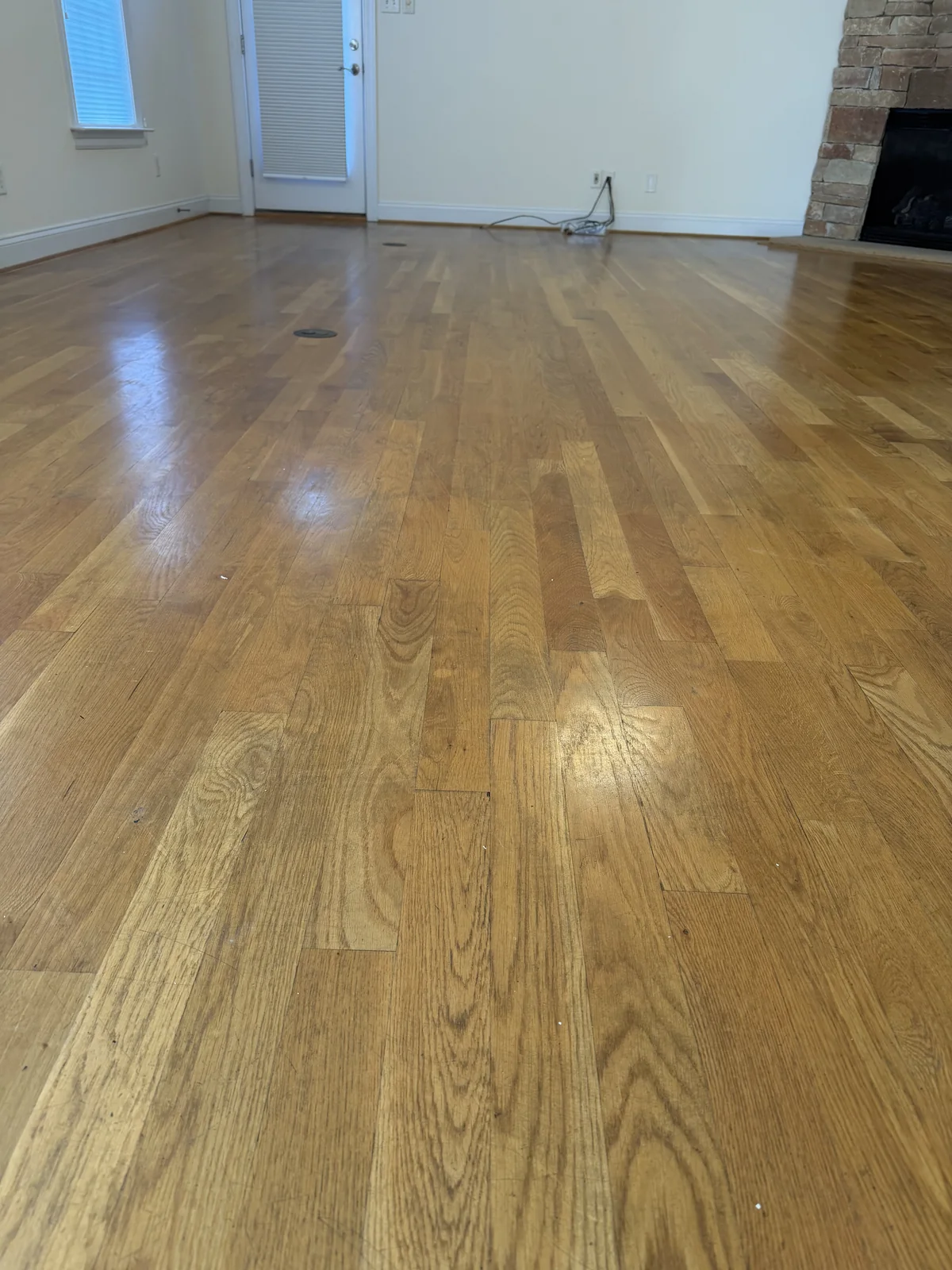
Amber and blotchy.
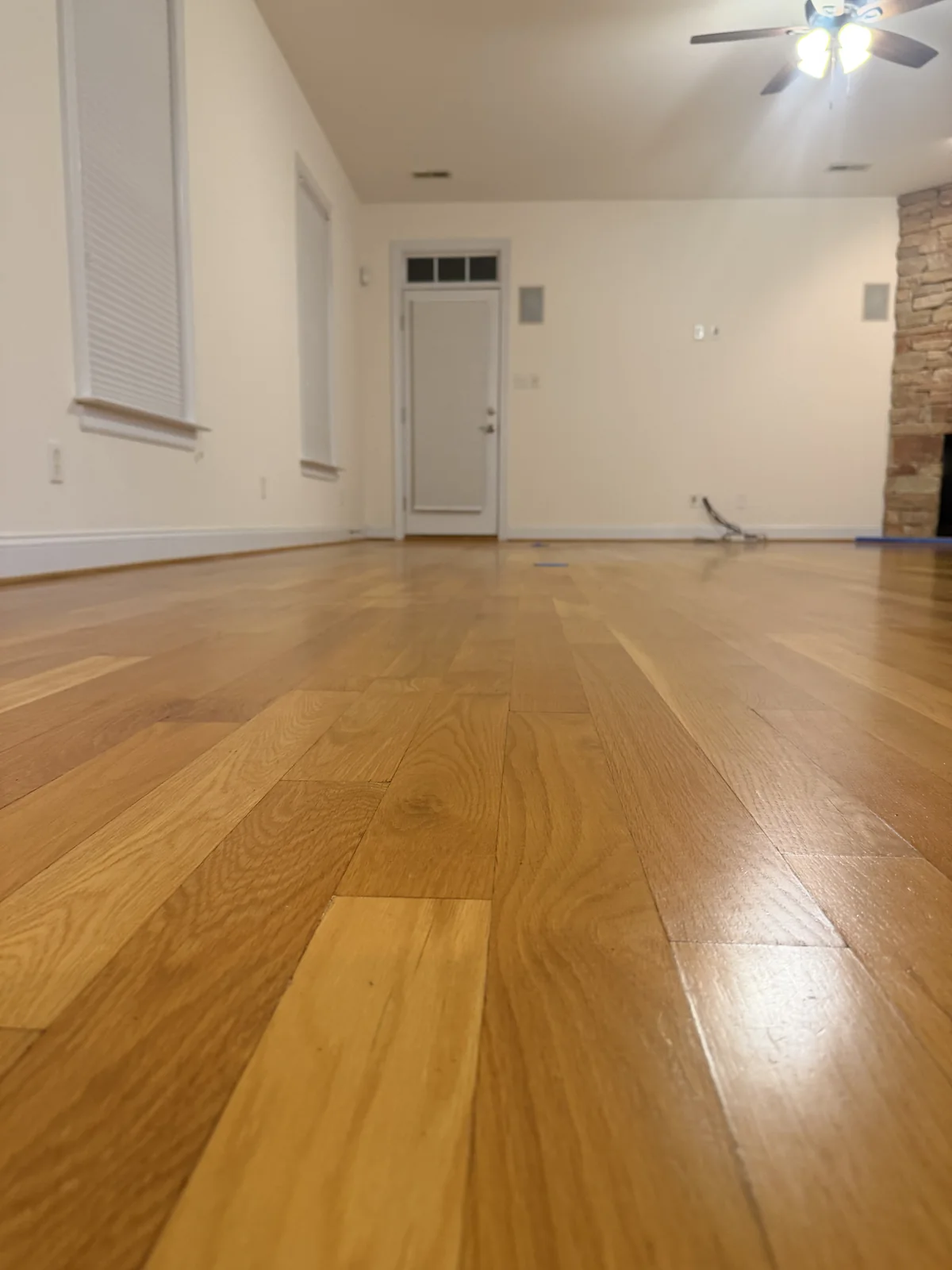
Clear and even again.
Same oak floor near the Chester Village Green. The haze was years of Mop & Glo sitting on the finish, not damage in the wood.
Wax Buildup on Hardwood Floors: What This One Looked Like
Wax buildup on hardwood floors is easy to mistake for dirt, and this job was a clear example. It was an oak strip floor in an open living room with a stone fireplace, in a home near the Chester Village Green.
The Village Green is a walkable planned community with the Chester Library on Centre Street, shops, restaurants, and a Saturday farmers market, and most homes around it date from the 2000s.
The homeowner had used Mop & Glo on the floor for years to keep the shine up. We work all over Chester, from the Route 10 and Route 144 corridors to the neighborhoods around Thomas Dale High School and the Chester Family YMCA.
Mop & Glo is a shine product that leaves a new layer every time it goes down. After enough rounds, the layers stop looking like shine and start looking like a problem.
Here is what the floor was showing in the before photos:
- An orange or amber cast across the oak, where the wood should have looked natural.
- A hazy, blotchy sheen with bright patches next to dull ones.
- Fine scratches and specks trapped in the film instead of sitting in the finish below it.
- A floor that looked dirty right after it was cleaned.
That last one is the telltale sign. If you mop and the floor still looks grimy, you are often cleaning the top of a built-up film, not the wood.
Step 1: Emulsify the Wax and Remove It From the Floor
Our first step was to emulsify the wax and take it off the floor. Nothing new goes on until the old layers are gone.
This step matters more than any other. Polyurethane will not bond to wax or polish residue, so a new coat over Mop & Glo can peel or turn cloudy. The failure shows up later, after the money is spent.
If you want the longer explanation of how wax and polish buildup gets removed, we cover it in our guide to hardwood floor wax removal.
Step 2: Screen the Hardwood So New Polyurethane Can Bond
With the wax off, the next step was light abrasion across the main floor with a rotary floor machine. The goal is to rough up the surface just enough to give the new polyurethane something to grip.
This is a screen, not a sand. We are not cutting down to bare wood. The stain and the oak stay where they are.
That difference is why a screen and recoat is a lighter job than a full refinish. If you are weighing the two, our page on screen and recoat for hardwood floors lays out when it fits and when it does not.
Detail Work Along the Edges
A floor machine can't reach tight to the wall, so the edges got their own pass, worked by hand with an orbital sander.
The new finish needs the same grip along the walls as it gets in the middle of the room. Skipping the edges would leave a border that bonds differently from the rest of the floor.
The fireplace needed care too. Blue painter's tape protected the edge of the stone hearth where it meets the oak, so the work stayed on the floor and off the stone.
Step 3: A Fresh Polyurethane Finish
Once the floor was clean and abraded, the new polyurethane finish went on with a roller. It goes down over a clean, abraded surface with no wax underneath, which is what lets it hold.
The finish is what you walk on, clean, and live with for years. A clear, even film is the whole point of the job.
After a recoat, how you clean matters just as much as how the finish was applied. Our aftercare guide for recoated hardwood floors covers the habits that keep it looking right.
The Result, and What a Recoat Can't Fix
The after photos show a brighter, clearer floor with an even sheen. The oak grain is visible again, and the amber haze is gone.
A screen and recoat has limits, and it is better to say so plainly. It does not remove deep scratches, dents, or marks that are in the wood itself. It fixes the surface layer, not damage below it.
If your floor looks cloudy and you are not sure why, our page on cloudy hardwood floors walks through the common causes. When the damage goes deeper than a recoat can reach, our hardwood floor restoration options cover what comes next.
Seeing Wax Buildup on Your Hardwood Floors?
Amber cast, uneven shine, a floor that looks dirty right after cleaning, and a history of shine products. If that sounds like your floor, it is worth a look before anyone puts a new coat over it.
Text a few photos to (804) 532-4703:
- One wide shot of the room.
- One close-up of the worst area.
- One shot taken low, across the floor toward a window, where haze and uneven shine show up best.
Tell us which products you have used on it, by name if you can. That is the most useful thing we can know.
If you're anywhere around Route 10, Chester Linear Park, or Thomas Dale High School, we're local. We work across Chester, Richmond, Henrico, and Chesterfield.
Measured steps.
A considered result.
- Share the surface
Send a full view and a close-up of the concern.
- Confirm the material
Identify what it is before choosing a method.
- Set the scope
Separate cleaning, finish work, and repair needs.
- Refine with care
Use a process compatible with the existing surface.
- Review the finish
Inspect the result and discuss ongoing care.
Clarity before
the visit.
How do you remove wax buildup from hardwood floors?
Emulsify the wax and lift it off the floor, lightly screen the surface so a new finish can grip, then apply fresh polyurethane. Skipping the first step is the common mistake, because new finish will not bond over wax.
Can you put polyurethane over Mop & Glo?
Not directly. Polyurethane will not bond to wax or polish residue, so the buildup has to come off first. Coating over it risks peeling or a cloudy finish.
How do I know if my floor has Mop & Glo buildup?
Common signs are an amber or orange cast, a hazy and blotchy sheen, bright and dull patches, specks trapped in the film, and a floor that looks dirty right after cleaning. If you have used a shine product for years, buildup is likely.
Is this the same as sanding and refinishing?
No. A screen and recoat removes the buildup, lightly abrades the surface so a new finish can bond, then applies fresh polyurethane. It does not sand down to bare wood, so the stain stays, but it also cannot remove deep scratches or dents.
What should I clean with after a recoat?
Use a cleaner made for polyurethane-finished wood, and skip shine products entirely. Our aftercare guide for recoated hardwood floors covers the full routine.
Talk With Us About Your Wood Floor
Tell us what looks worn, which products have been used, and what you want to improve. Photos are helpful, but you can call first.