
Practical surface guide
How to Care for Hardwood Floors After a Screen and Recoat
At Precision Floor & Surface Restoration, we recommend keeping aftercare simple: allow the finish to cure, remove grit regularly, and clean with a compatible product that leaves no added polish behind. Here is how we advise caring for your recoated floor.
Google Reviews
Scroll to read all 9 reviews →
“Great work and even better customer service. Very professional, easy to work with, and you can tell they take pride in what they do. Definitely recommend Precision Floor & Surface Restoration if you need your floors or countertops brought back to life.”★★★★★
“Absolutely amazing work! From start to finish, everything was handled professionally and with great attention to detail. They took the time to make sure everything was done right, and the results speak for themselves. The floors and surfaces came out looking incredible, and you can tell they genuinely take pride in their work. I couldn’t be happier with the finished product and would definitely recommend them to anyone looking for quality work and great service. Five stars all the way! ⭐⭐⭐⭐⭐”★★★★★
“Precision Floor & Surface Restoration exceeded my expectations! Professional, punctual, and detail-oriented from start to finish. My floors look amazing, and the quality of work was outstanding. Highly recommend to anyone looking for top-notch floor and surface restoration services.”★★★★★
“Removed stains that previous cleaning services could not. Made the impossible - possible!”★★★★★
“Great quality work! Very professional with communication!!”★★★★★
“Clean and very professional. Highly recommend”★★★★★
“I highly recommend his floor cleaning services! He’s reliable, professional, and does an excellent job. My floors looked amazing, and I couldn’t be happier with the results.”★★★★★ ★★★★★
Follow the Instructions for Your New Finish
Our first recommendation is to follow the return-to-use schedule for the finish applied to your floor. A coating can feel dry before it has developed its full resistance. Moving furniture back or covering the floor too early can mark the result you have just invested in.
Confirm these four milestones with Precision before you start using the room:
- Light foot traffic: when you can cross the floor and which footwear is appropriate.
- Furniture: when the coating can accept furniture without being damaged.
- Rugs and mats: when the finish can be covered.
- Damp cleaning: when you can begin using the recommended cleaning solution.
Temperature, humidity and application conditions affect drying, so use your project’s instructions instead of another homeowner’s timeline. Contact us if any part of the schedule is unclear. Our screen and recoat timing guide explains why work time and return-to-use milestones differ.
Protect the Floor When Furniture, Rugs, and Pets Return
We recommend lifting furniture into place once the finish is ready. Dragging a chair or sofa across the floor can scratch the new coating, especially when grit is trapped underneath a foot or protector.
Clean or replace felt pads before furniture returns, and check them regularly afterward. Heavy pieces need enough help to move without sliding. For rolling furniture, discuss suitable floor protection with us rather than assuming small wheels will be harmless.
Wait until the confirmed date to replace rugs and mats. Use a pad compatible with the finish, and keep adhesive tape off the coated surface. Pay particular attention to dining chairs, entrances and pet feeding areas: these are places where debris, movement and spills can put repeated stress on the floor.
Keep pets away from the work area until access is permitted. Once they return, keep grit out of their usual paths and wipe up spills around feeding areas promptly. A new finish is not scratch-proof.
Which Cleaner Should You Use After Recoating?
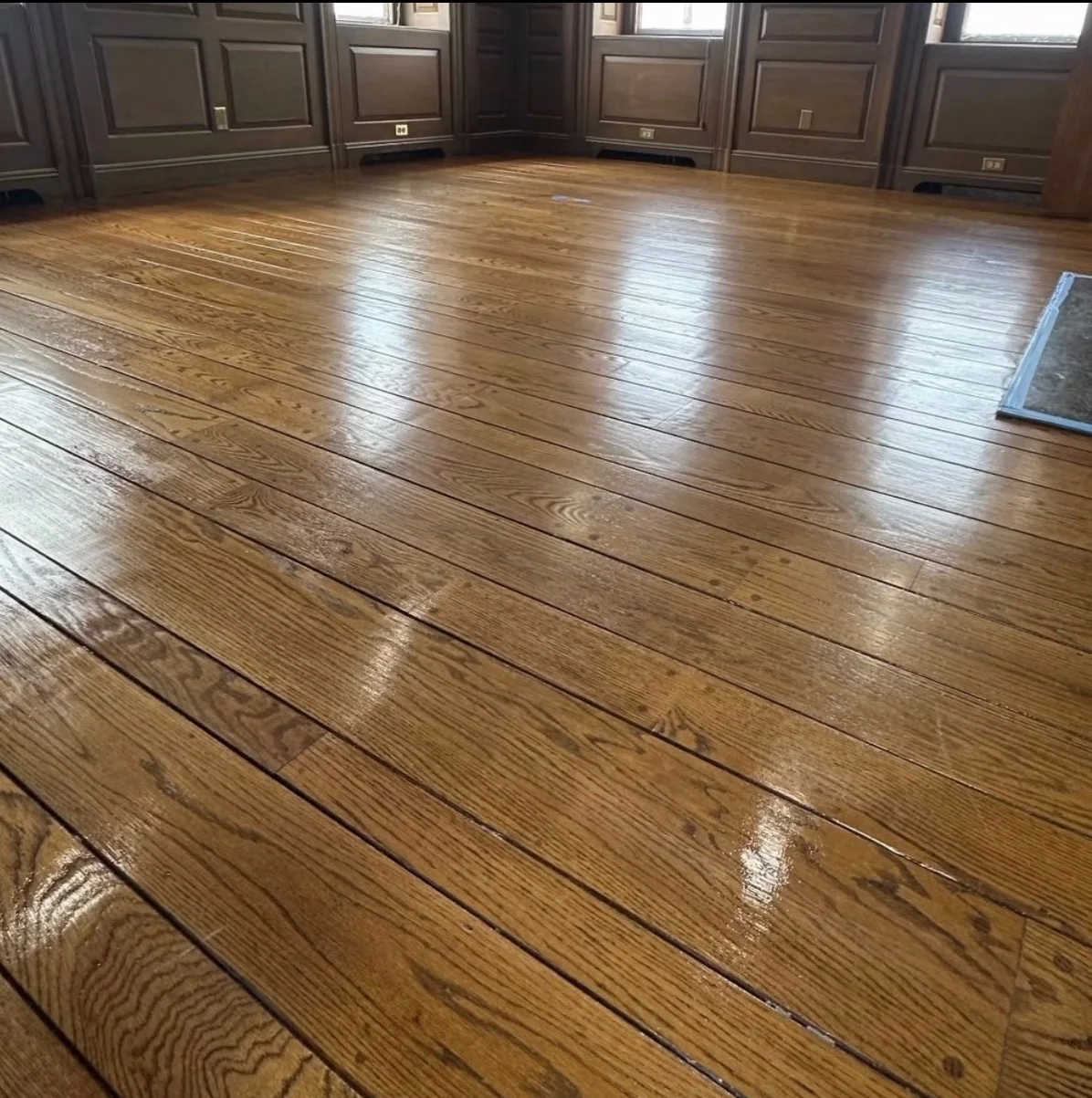
Use the cleaner recommended for the finish applied to your floor, and begin damp cleaning only when the coating permits it. The finish name and care instructions are more useful than choosing a product because the label promises shine.
Andrew has recommended Squeaky in his floor-care discussions. Confirm the exact bottle and formulation with Precision: concentrate and ready-to-use products have different instructions. Basic Coatings’ Squeaky Concentrate technical sheet (see Sources) explains its intended surfaces and use directions; the current container instructions should control your mixture.
Our explanation of two-component hardwood floor finishes provides context for the coating and why its instructions matter.
Cleaning removes soil. It does not fill scratches, replace missing stain or renew a worn protective coat.
How to Clean Without Leaving Grit or Residue Behind
Once damp cleaning is permitted, a consistent, gentle routine is the best starting point. We recommend these steps:
- Remove grit first. Use a soft broom, dry microfiber mop or a vacuum attachment intended for hardwood. Keep a rotating beater bar off the floor.
- Prepare the right solution. Use the cleaner and dilution recommended for your finish. An extra-strong mixture does not give the coating more protection.
- Clean with a lightly damp microfiber pad. Work in manageable areas, avoid puddles and keep excess liquid out of board joints.
- Change a dirty pad. A pad carrying soil can redistribute it across the floor. Start each cleaning with a clean pad and replace it as needed.
- Check the dry result. Persistent haze or stickiness needs investigation. Stop adding product and contact us if the cause is unclear.
Remove loose grit regularly and deal with spills promptly using your finish’s care instructions. We advise against wet mopping and steam cleaning; excess moisture can affect both the coating and the wood. The NWFA’s wood-floor care recommendations (see Sources) support this approach.
If normal care no longer removes soil, professional hardwood floor cleaning may be worth discussing before applying another product.
What to Know Before Adding Wax or Shine Products
We advise against adding household wax or shine-restoring polish to the polyurethane floors we recoat. A separate film can change the appearance and complicate preparation for a later maintenance coat. The floor may need that film removed before its underlying finish can be assessed.
If a surface has become cloudy or sticky after repeated applications, our wax and polish removal service explains the separate buildup-removal step.
Tell us which products have been used, including Mop & Glo or other shine restorers. Do not experiment with stripping mixtures or abrasive pads. A cloudy floor may have buildup, ordinary soil or finish wear, and those conditions need different treatment.
When Dullness or New Wear Needs Another Assessment
We recommend watching the areas you use most: doorways, kitchen paths and the floor around dining chairs. Compare them with less-used areas in similar lighting. Changes in sheen, fine scratches or pale patches are reasons to look more closely.
Cleaning can remove soil and residue, but it cannot replace a worn protective coating. If a traffic lane changes appearance or you see exposed wood, contact Precision before trying another product.
Send a full-room photograph, a close-up of the concern and the names of the cleaning products used. We can discuss whether a maintenance screen and recoat is appropriate while the existing finish is still suitable for renewal.

Sources
- NWFA wood-floor maintenance guidance — removing grit, cleaning spills, avoiding wet or steam mops and choosing a finish-compatible cleaner.
- Basic Coatings Squeaky Concentrate technical sheet — concentrate use and surface compatibility; follow the current product label.
Measured steps.
A considered result.
- Share the surface
Send a full view and a close-up of the concern.
- Confirm the material
Identify what it is before choosing a method.
- Set the scope
Separate cleaning, finish work, and repair needs.
- Refine with care
Use a process compatible with the existing surface.
- Review the finish
Inspect the result and discuss ongoing care.
Talk With Us About Your Wood Floor
Tell us what looks worn, which products have been used, and what you want to improve. Photos are helpful, but you can call first.