
Hardwood Floor Maintenance in Chester: Restore the Shine Without a Full Refinish
Hardwood floor maintenance in Chester that restores shine without a full refinish. Careful, experienced care. Call to schedule your service today.
Google Reviews
Scroll to read all 9 reviews →
“Great work and even better customer service. Very professional, easy to work with, and you can tell they take pride in what they do. Definitely recommend Precision Floor & Surface Restoration if you need your floors or countertops brought back to life.”★★★★★
“Absolutely amazing work! From start to finish, everything was handled professionally and with great attention to detail. They took the time to make sure everything was done right, and the results speak for themselves. The floors and surfaces came out looking incredible, and you can tell they genuinely take pride in their work. I couldn’t be happier with the finished product and would definitely recommend them to anyone looking for quality work and great service. Five stars all the way! ⭐⭐⭐⭐⭐”★★★★★
“Precision Floor & Surface Restoration exceeded my expectations! Professional, punctual, and detail-oriented from start to finish. My floors look amazing, and the quality of work was outstanding. Highly recommend to anyone looking for top-notch floor and surface restoration services.”★★★★★
“Removed stains that previous cleaning services could not. Made the impossible - possible!”★★★★★
“Great quality work! Very professional with communication!!”★★★★★
“Clean and very professional. Highly recommend”★★★★★
“I highly recommend his floor cleaning services! He’s reliable, professional, and does an excellent job. My floors looked amazing, and I couldn’t be happier with the results.”★★★★★ ★★★★★
Dull or Scratched Floors Usually Point to Finish Wear, Not Wood Damage
Here's what most homeowners get wrong. You see scratches, dull patches, maybe some gray discoloring near the back door, and you assume the wood itself is ruined. It's not. What you're looking at is the finish layer breaking down, not the wood underneath.
That finish is a clear coat sitting on top of the actual hardwood. It takes the abuse so the wood doesn't have to. Foot traffic, grit tracked in from outside, dog nails, moved furniture, all of it wears down that top layer first. Once it thins out, light stops bouncing off evenly. That's why you get dull spots that look worse under a lamp or near a window.
Chester has a lot of homes built through the 90s and 2000s subdivisions, and most came with a builder-grade polyurethane finish. That finish was never meant to last the life of the house. Twenty, twenty-five years later, it's thin in the hallways and by the kitchen entry, exactly where you'd expect.
So how do you tell finish wear from actual wood damage? Look closely at a dull area. If the scratches feel smooth when you run a fingernail over them, and the wood color still looks even underneath the haze, that's finish wear. If you see raised grain, dark black stains, or soft spongy spots, that's moisture damage, a different problem entirely.
We get calls almost every week from folks convinced they need new floors, when really they need the finish brought back. It's a hard habit to break, assuming worn means ruined.
Catching this early matters. Once bare wood is exposed to foot traffic and spills, damage moves fast.
Recoating Restores Shine Without Sanding the Wood Down
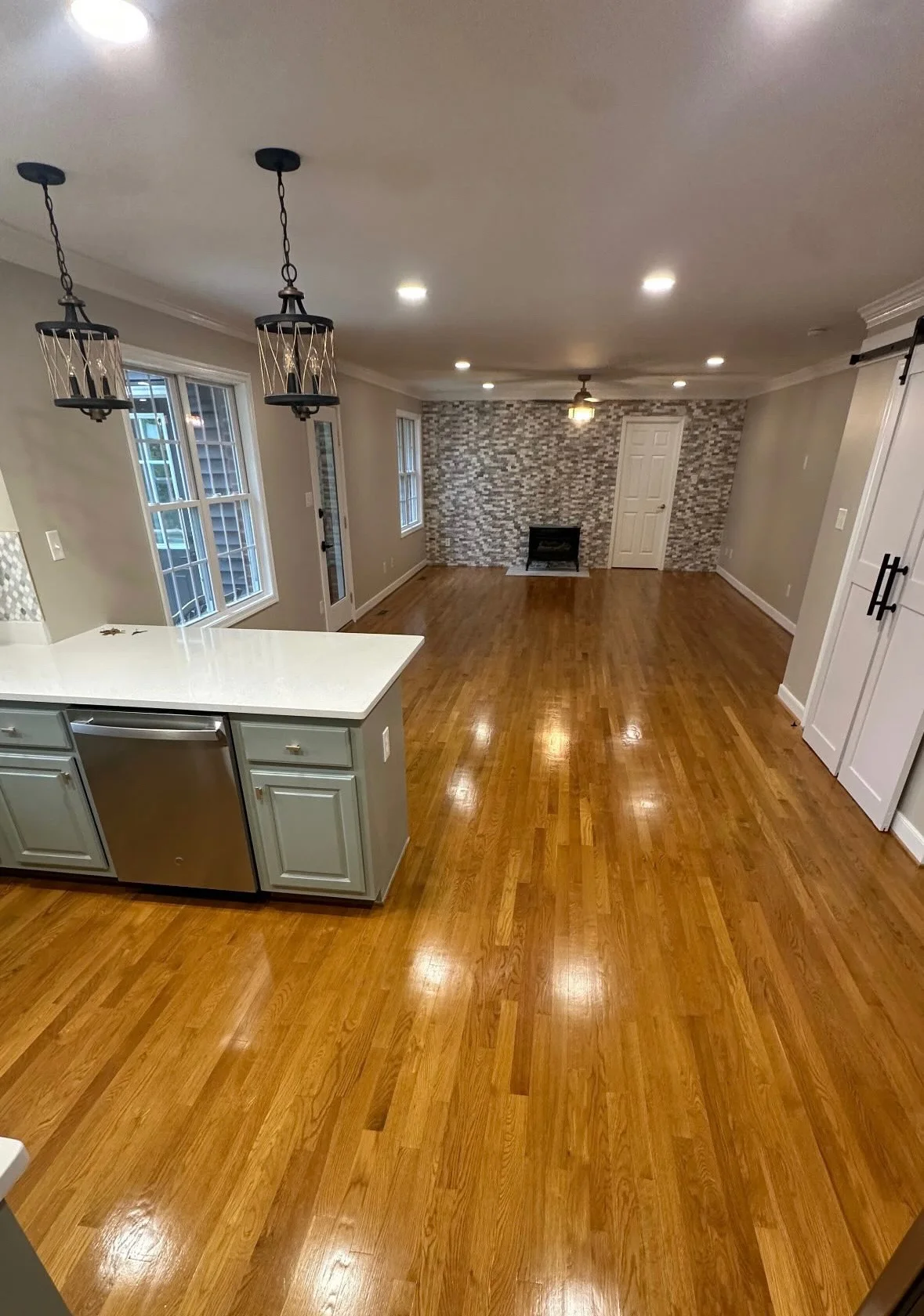
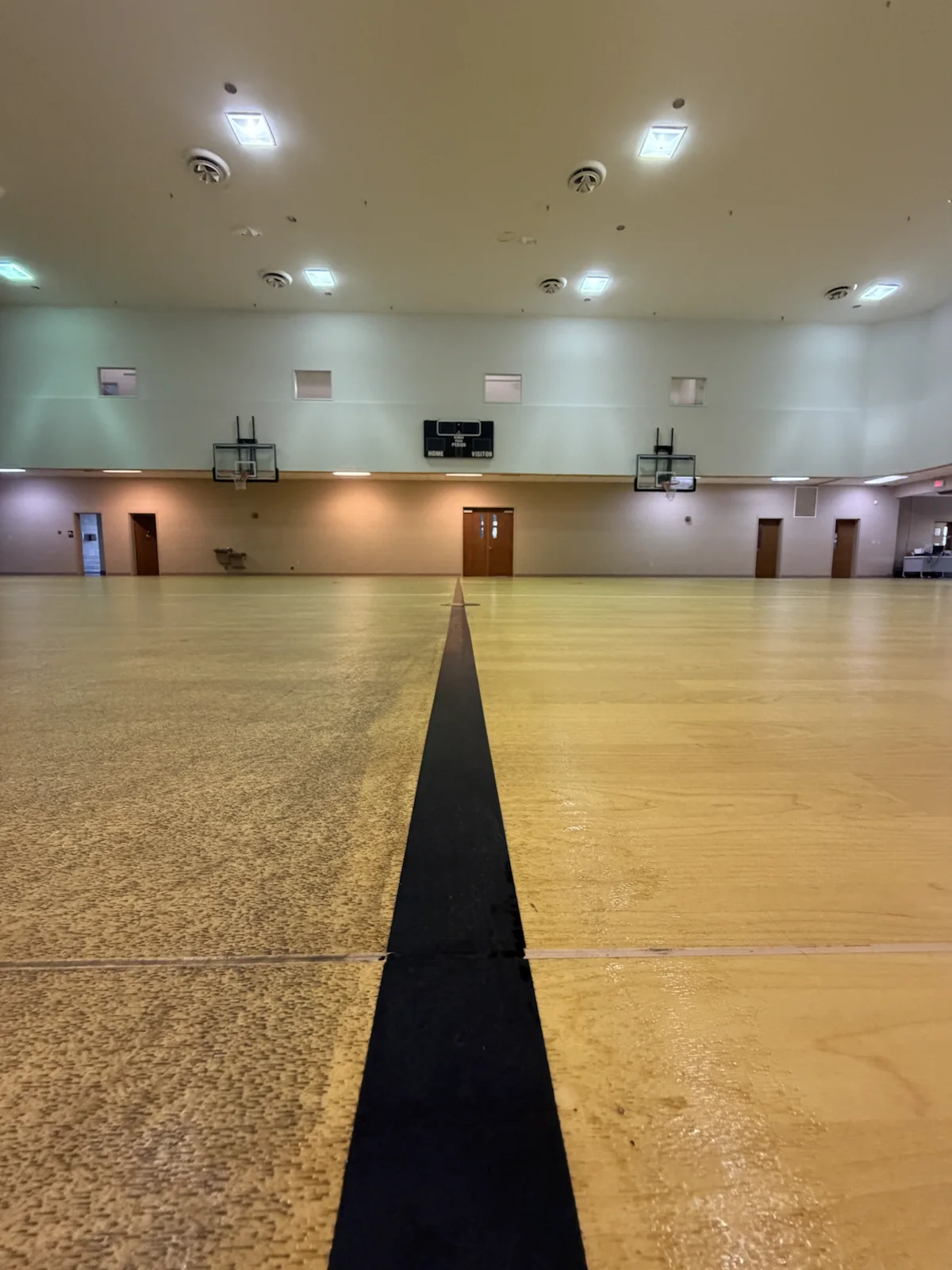
Here's something most homeowners don't know until we tell them. Your hardwood floor doesn't need a full sand-down every time it looks dull. Most of the time, it just needs a fresh top coat. That's what Wood Floor Recoating does. We clean the surface, scuff up the old finish so the new layer bonds right, then apply a new protective coat. No dust, no sanding down to bare wood, no ripping out baseboards.
So when does this work? If your floor has surface scratches, some cloudiness, or wear patterns near doorways and hallways, but the wood underneath is still solid, you're a good candidate. We check for that before we ever recommend it. If the finish has worn all the way through and the wood is exposed and graying, recoating won't fix it. We'll tell you that straight, no point pretending otherwise.
Chester homes built in the last couple decades often have engineered hardwood with a thinner wear layer than older solid wood floors. That matters. Sanding those floors too many times over the years thins them out fast, and eventually there's nothing left to sand. No-Sanding Wood Floor Restoration protects that wear layer instead of eating into it.
Folks call us thinking they need a full refinish job. They don't.
A quick text with a couple photos of your floor tells us a lot. We can usually spot the difference between surface wear and deep damage right from your phone screen. And if we do need to come look in person, that visit gets applied toward whatever work you decide on. Recoating costs less than sanding, takes less time, and gets your floor looking like new without the mess a full refinish leaves behind.
Cupped, Buckled, or Deeply Gouged Floors Need More Than Maintenance
Let's be straight with you. Not every hardwood floor problem is a maintenance problem. If your boards are cupping (edges higher than the center), that's usually moisture getting under the wood. Central Virginia's humidity swings hard between summer and winter, and older Chester homes without a vapor barrier under the crawl space take the brunt of it. Polishing won't fix that. Neither will a fresh coat.
Buckling is worse. That's when boards lift off the subfloor, sometimes an inch or more. We see this after a pipe leak or a sump pump failure that went unnoticed for a few days. At that point you're not looking at a maintenance service, you're looking at sanding, drying out the subfloor, and possibly replacing individual boards. No amount of buffing changes what's happening underneath.
Deep gouges are a different animal entirely. A light scratch from moving furniture, we can usually blend that into a recoat. But a gouge that goes through the finish and into the wood grain, especially if it's from a dog's claws or a dropped tool, needs wood filler and sanding before any topcoat goes on. Our no-sanding approach works great for wear patterns, dullness, and surface-level scuffing. It's not built to fix structural damage.
So how do you tell the difference? Press a coin into the mark. If it barely dents the surface finish, you're probably fine. If it catches your fingernail down in the wood itself, that's past what recoating handles.
Here's the honest version: if your floor is buckling from water damage or gouged down to bare wood, call a flooring contractor who does sanding and board replacement first. Get that structural work done. Once the floor's flat and sound again, that's when maintenance and recoating keep it looking right for years. We'd rather tell you that now than have you pay for a service that won't hold.
What Happens During a Hardwood Floor Maintenance Visit
Here's what you can expect once we're in your home. First, we walk the floor. We're checking for high traffic wear patterns, dull spots near entryways, and any spots where water may have sat too long. Chester homes near the James River corridor with more humidity swings than folks realize, and that moisture shows up as slight cupping or a hazy finish long before anyone notices actual damage.
After the walkthrough, we test the finish. This tells us whether your floor needs a simple buff, a full deep clean, or a recoat. Not every dull floor needs the same fix - that's the biggest mistake homeowners make before calling someone.
Then we get to work. A typical visit looks like this:
- Dry sweep and vacuum to pull up grit that scratches during buffing
- Deep clean with a pH-neutral solution made for hardwood, not generic store cleaner
- Buff the surface to even out the sheen and pull out light scuffing
- Recoat if the finish is worn through in traffic lanes
- Final inspection walking the whole floor again in good light
We don't sand unless there's no other option. Our no-sanding approach handles most maintenance visits, which keeps dust and downtime out of your house.
Most jobs wrap up same day. You'll get a clear look at drying time before we leave, since walking on a fresh coat too soon undoes the work. And if something looks off once it's dry, we'll come back and look at it. Being IICRC certified means how these finishes cure, not just how they look wet.
Central Virginia Humidity Swings Wear Down Floors Faster in Older Chester Homes
Wood moves. That's just what it does. It pulls in moisture during our thick Virginia summers and lets it go when the furnace kicks on in January. Chester sees some of the biggest humidity swings in the region, and older homes near the historic district with original hardwood take the brunt of it.
Here's the problem nobody tells you about. Every time that wood expands and contracts, the finish on top gets stressed a tiny bit more. Over a few years, that stress shows up as fine cracking, dull patches, or boards that feel slightly cupped at the edges. You might not notice it happening. You'll just notice one day that your floor looks tired, even though you swear you just cleaned it.
We see this every week in homes built before central air was standard, the kind with original oak or heart pine floors that have been through forty summers and forty winters. The finish wears unevenly, thin in high-traffic paths and near exterior doors where humidity swings hit hardest.
So what helps? A stable indoor humidity level matters more than people think, somewhere in the 35 to 55 percent range keeps wood movement to a minimum. But you can't control the weather, and you shouldn't have to babysit a hygrometer all year just to protect your floors.
This is exactly why routine maintenance matters more here than in drier climates. A floor that gets buffed and recoated on a regular schedule can handle those seasonal swings without the finish breaking down. Skip that upkeep for a few years, and the damage compounds. Dry cracks let moisture into the wood itself, and suddenly you're looking at sanding instead of a simple recoat. Catching it early is the whole game.
Recoat Before Traffic Reaches the Wood
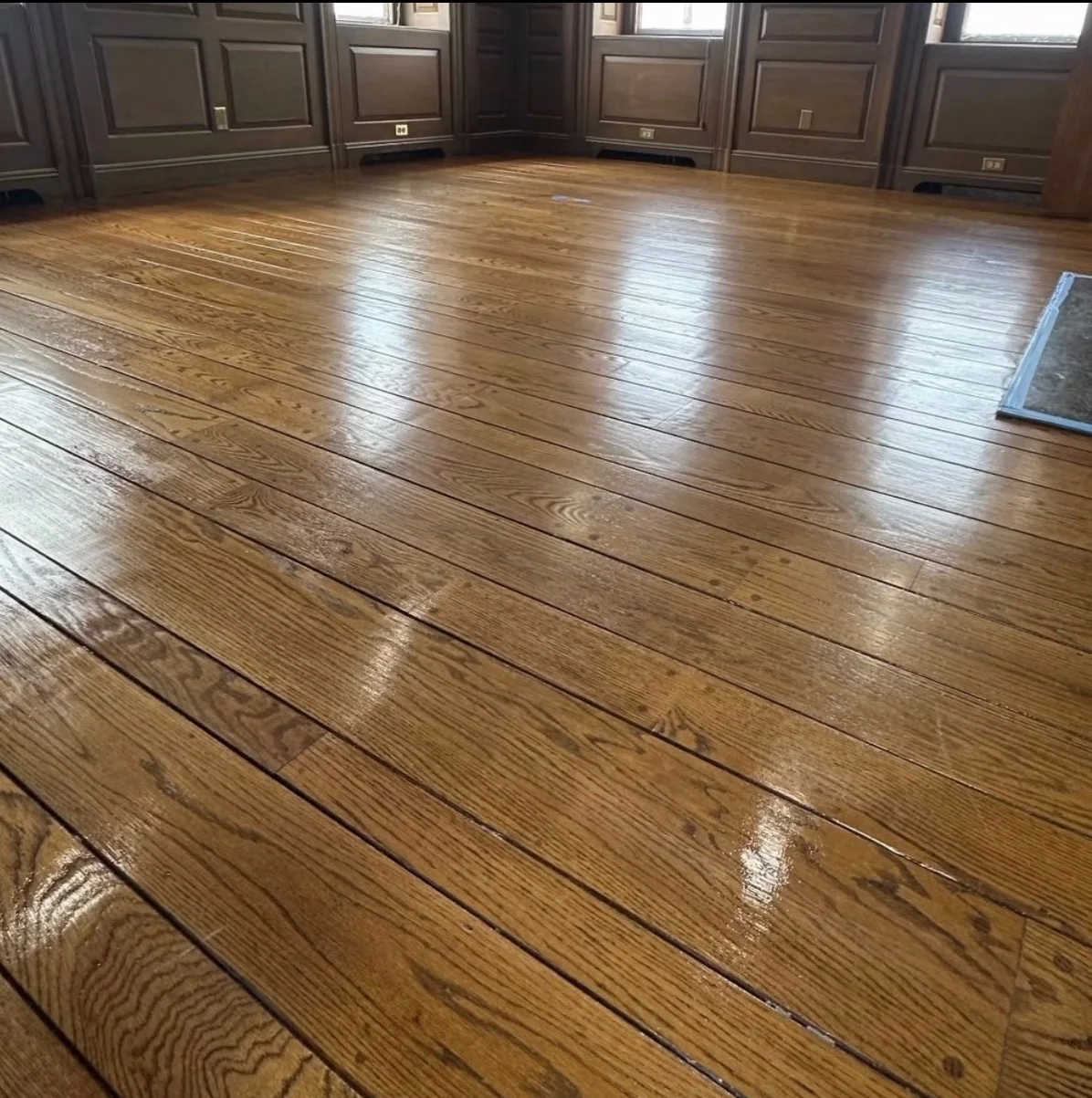
When the coating becomes thin in busy walkways, routine cleaning cannot replace it. A maintenance recoat for hardwood floors may preserve the existing stain. The existing finish needs assessment before a treatment is chosen.
After a maintenance coat, follow our hardwood floor care after recoating guide alongside the instructions for the finish applied to your floor.
Measured steps.
A considered result.
- Share the surface
Send a full view and a close-up of the concern.
- Confirm the material
Identify what it is before choosing a method.
- Set the scope
Separate cleaning, finish work, and repair needs.
- Refine with care
Use a process compatible with the existing surface.
- Review the finish
Inspect the result and discuss ongoing care.
Clarity before
the visit.
How often should hardwood floors get professional maintenance in Chester?
Most Chester homes need a maintenance visit every two to three years, but it depends on foot traffic and finish age. Homes built in the 90s and 2000s often have builder-grade polyurethane that thins out faster near entryways and hallways. If you notice dull patches or light scratches that feel smooth to the touch, that's a sign the finish is wearing down and it's time to schedule a check. Catching it early means a simple recoat instead of a full sanding job later.
What happens during a hardwood floor maintenance visit?
We start by walking your floor to check high-traffic areas, entryways, and any spots where moisture might have sat too long. Then we test the finish to see if you need a simple buff, a deep clean, or a full recoat. Not every dull floor needs the same fix, so this step matters. After that, we clean and scuff the surface before applying a new protective coat, with no dust or sanding involved.
Why do hardwood floors near the James River in Chester show more wear?
Homes near the James River corridor deal with bigger humidity swings between seasons than folks expect. That moisture movement causes slight cupping or a hazy finish long before you'd notice real damage. If your home sits in one of these areas, keeping an eye on finish condition twice a year helps catch changes early. A quick photo sent to us can usually tell if it's normal humidity wear or something more serious.
Can I tell if my floor needs recoating instead of full refinishing?
Yes, and it usually comes down to a simple test. If scratches feel smooth under your fingernail and the wood color looks even beneath the dullness, that's finish wear and recoating will fix it. If you see raised grain, dark stains, or soft spots, that's moisture damage needing more than maintenance. Pressing a coin into a mark works too. If it barely dents the finish, you're likely fine for a recoat.
How do I get a floor maintenance estimate without a home visit first?
A quick text with a couple of clear photos of your floor usually tells us what's going on. We can often spot the difference between surface wear and deeper damage right from your phone screen. If we do need to come see it in person, that visit puts toward whatever work you end up choosing. This saves you time and gets you a straight answer before committing to anything.
Do engineered hardwood floors in newer Chester homes need different care?
Yes, engineered hardwood common in newer Chester subdivisions has a thinner wear layer than older solid wood floors. Sanding it too many times eventually leaves nothing left to work with. That's why a no-sanding recoat approach protects that wear layer instead of eating into it. If your home was built in the last couple decades, ask about your floor type before agreeing to any sanding-based service.
Talk With Us About Your Wood Floor
Tell us what looks worn, which products have been used, and what you want to improve. Photos are helpful, but you can call first.