
Worn Patches or Uneven Color in Your Hardwood Floor?
Hardwood floor color correction in Richmond, VA. Andrew checks whether localized wear can be color matched and protected with a new finish, without sanding the whole floor to bare wood.
Google Reviews
Scroll to read all 9 reviews →
“Great work and even better customer service. Very professional, easy to work with, and you can tell they take pride in what they do. Definitely recommend Precision Floor & Surface Restoration if you need your floors or countertops brought back to life.”★★★★★
“Absolutely amazing work! From start to finish, everything was handled professionally and with great attention to detail. They took the time to make sure everything was done right, and the results speak for themselves. The floors and surfaces came out looking incredible, and you can tell they genuinely take pride in their work. I couldn’t be happier with the finished product and would definitely recommend them to anyone looking for quality work and great service. Five stars all the way! ⭐⭐⭐⭐⭐”★★★★★
“Precision Floor & Surface Restoration exceeded my expectations! Professional, punctual, and detail-oriented from start to finish. My floors look amazing, and the quality of work was outstanding. Highly recommend to anyone looking for top-notch floor and surface restoration services.”★★★★★
“Removed stains that previous cleaning services could not. Made the impossible - possible!”★★★★★
“Great quality work! Very professional with communication!!”★★★★★
“Clean and very professional. Highly recommend”★★★★★
“I highly recommend his floor cleaning services! He’s reliable, professional, and does an excellent job. My floors looked amazing, and I couldn’t be happier with the results.”★★★★★ ★★★★★
Can the Worn Area Be Blended With the Rest of the Floor?
A pale walkway or patch where the color has worn away can stand out even after the floor is clean. Adding shine alone will not put missing color back. The first question is whether the affected area can be corrected while preserving the surrounding floor.
Andrew assesses the size and extent of the wear before recommending color matching. On suitable floors, he corrects localized color loss and follows with screening and a new polyurethane finish. If the damage is too extensive for that approach, he explains the limits before you commit to the work.
Andrew Looks Beyond the Color You See on the Surface
The existing stain, protective finish, and cleaning history all matter. Andrew regularly encounters red and white oak floors, but a stained surface can make identification difficult. Where an accessible floor vent allows it, he may inspect the side profile and grain of a board to help identify the flooring.
What Has Been Used on the Floor?
He asks about cleaners, waxes, and products used to bring back shine. Layers of product can change the appearance of the floor and conceal the condition beneath them.
How Much Color Has Been Lost?
The size of the worn area and the condition of the surrounding floor help determine whether localized correction is a reasonable option. A small patch and widespread wear are different jobs.
What Result Do You Want?
Blending a worn area into the existing color is different from changing the color of an entire room. Explain whether you want to preserve the current appearance or discuss a broader stain change.
Our Court Work Shows Why Diagnosis Comes First
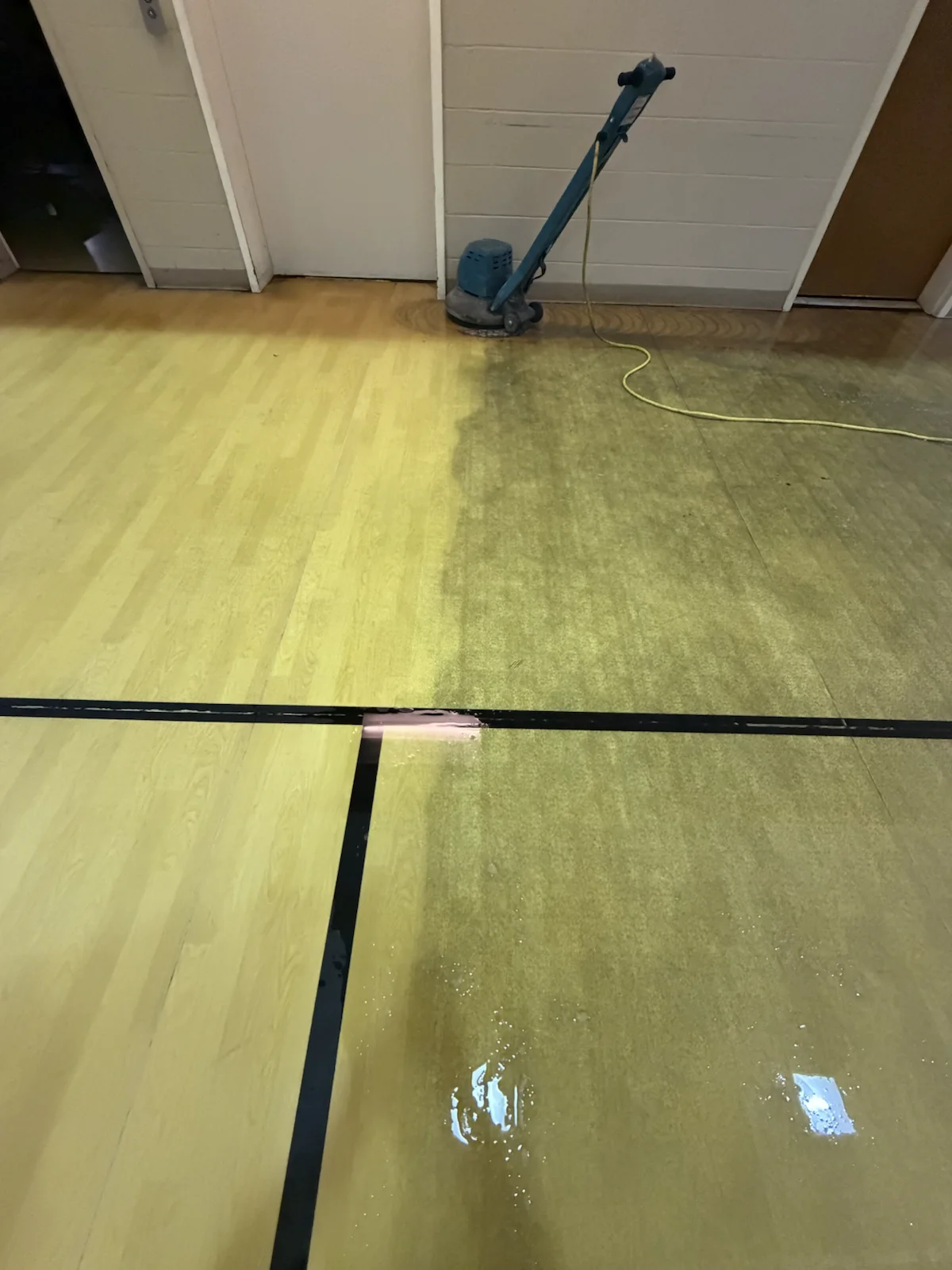
This photograph from our hardwood court work shows treated and untreated sections during surface cleaning. The visible difference is a useful reminder: a floor that looks discolored may have something sitting on its surface.
That is different from replacing color that has worn away. Andrew checks for buildup before deciding whether your floor needs cleaning, product removal, or color correction. When old shine products are the problem, hardwood floor wax and product buildup removal addresses that layer first.
Correct the Color, Then Renew the Protection
Preparation depends on what Andrew finds during the assessment. Product buildup must be dealt with before finish work. If localized correction is suitable, he matches the affected area toward the surrounding color and prepares the floor for a new protective finish.
Screening lightly abrades the existing finish rather than sanding the floor down to bare wood. A new polyurethane finish follows on a qualifying floor. Our screen and recoat service explains that preparation and protective coating in more detail.
The accompanying footage shows hardwood floor buffing in progress, one part of surface preparation. The color work is assessed separately; a clear coat by itself does not replace missing stain.
A Better Blend, With Realistic Expectations
Localized Wear
Some worn areas can be improved without stripping the whole floor. Andrew judges suitability from the amount of wear and the surrounding color, rather than promising that every patch will disappear.
Dark Marks and Deep Damage
Removing a stain is not the same as adding missing color. Dark marks, deep gouges, cupping, and widespread damage need their own assessment. Color correction cannot replace damaged boards or solve a structural problem.
A Whole-Room Color Change
If you want a different overall color, say so when you contact us. Andrew assesses stain changes separately from localized correction and clear recoating. Precision does not provide traditional sanding to bare wood.
Choose the Finished Appearance You Want to Live With
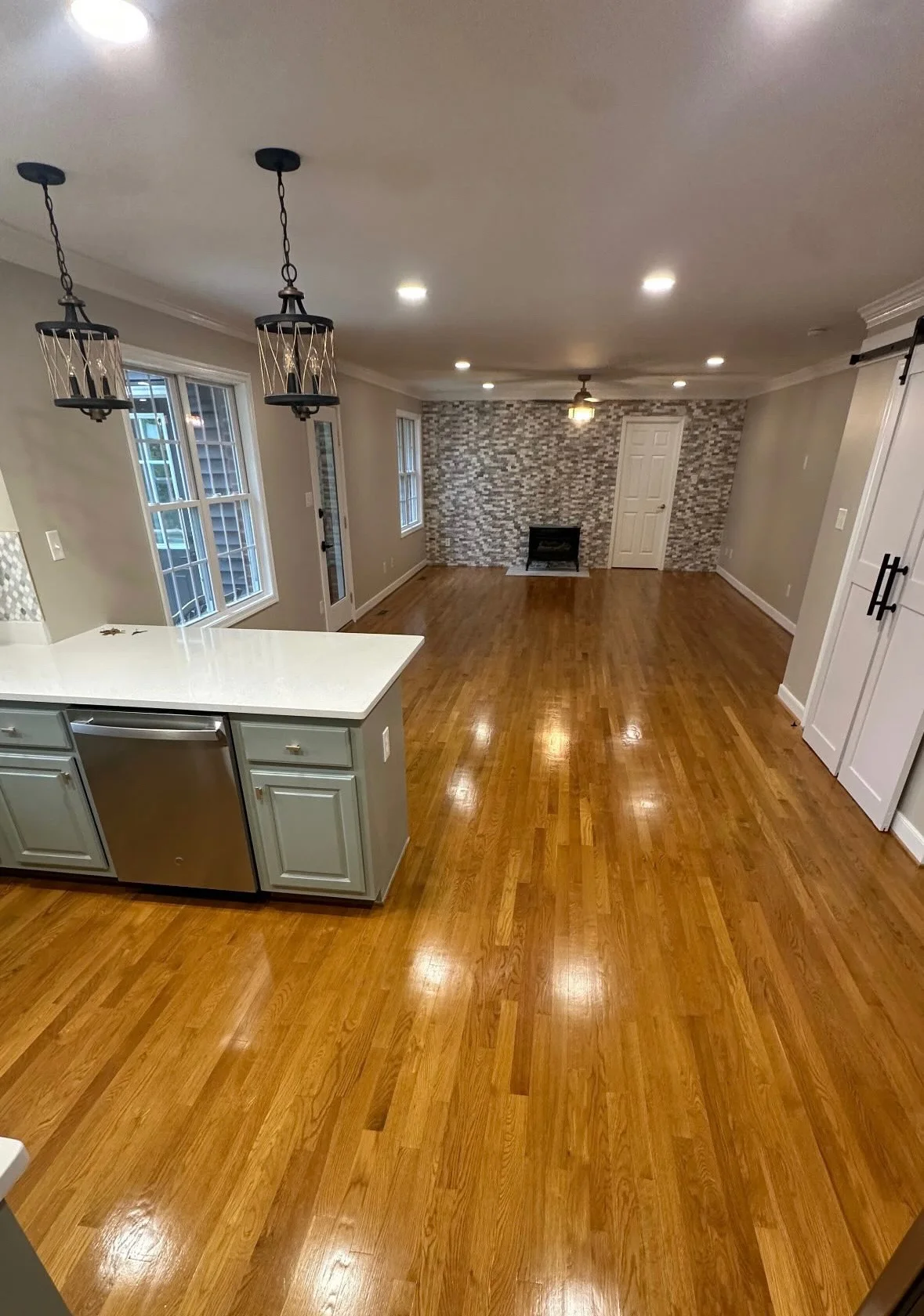
The residential floor pictured here is another example of our floor-care work. Along with color, the finished sheen affects how a room looks. Matte and satin are the choices Andrew's customers most often request.
Andrew also uses two-component polyurethane systems, which combine the finish with a separate hardener. Two components does not mean two coats. The selected system and the floor's condition determine the application and return-to-use instructions.
Before scheduling, discuss when you can walk on the floor, move furniture back, and replace rugs. Those are separate milestones, so the advice needs to match the finish used on your project.
Send Us the Worn Area and the Surrounding Floor
Send a full-room photograph, a close-up of the affected area, and a view showing where it meets the surrounding color. Tell us which products have been used and whether the change followed wear, a spill, or another event. Photos start the conversation; an on-site assessment may still be needed.
The quote depends on the size and condition of the area, any buildup removal, the color work, and the finishing scope. Call to discuss your Richmond-area property and the result you want. If you are unsure which treatment fits, compare our wood floor restoration and finish-care services.
Measured steps.
A considered result.
- Share the surface
Send a full view and a close-up of the concern.
- Confirm the material
Identify what it is before choosing a method.
- Set the scope
Separate cleaning, finish work, and repair needs.
- Refine with care
Use a process compatible with the existing surface.
- Review the finish
Inspect the result and discuss ongoing care.
Clarity before
the visit.
Can you match a worn patch to my existing hardwood floor?
Sometimes. Andrew assesses the size and extent of the wear and the surrounding color before recommending localized color matching. The aim is an improved blend, not a guaranteed invisible repair.
Does color correction require sanding the entire floor?
The localized correction Andrew describes is followed by screening and recoating on suitable floors, without sanding the whole floor to bare wood. Floors with extensive damage may need a different service that Precision does not provide.
Will a clear polyurethane coat restore missing stain color?
A clear maintenance coat does not replace missing stain. Color correction and protective recoating serve different purposes and must be assessed together when both are needed.
Is hardwood color correction the same as stain removal?
No. Color correction addresses missing or uneven color. Stain removal addresses unwanted discoloration. Product buildup can also change the appearance, so the cause needs to be identified before treatment.
Can you change the color of the whole floor?
Andrew also assesses broader stain changes on suitable floors. That is a separate scope from blending localized wear. Tell us the current color and the result you want so we can discuss what is feasible.
How much does hardwood floor color correction cost?
The price depends on the affected area, existing finish, preparation, color matching, and recoating scope. Send room and close-up photos to start the assessment; a site visit may be needed for a quote.
Talk With Us About Your Wood Floor
Tell us what looks worn, which products have been used, and what you want to improve. Photos are helpful, but you can call first.