
Granite polishing in Richmond, VA
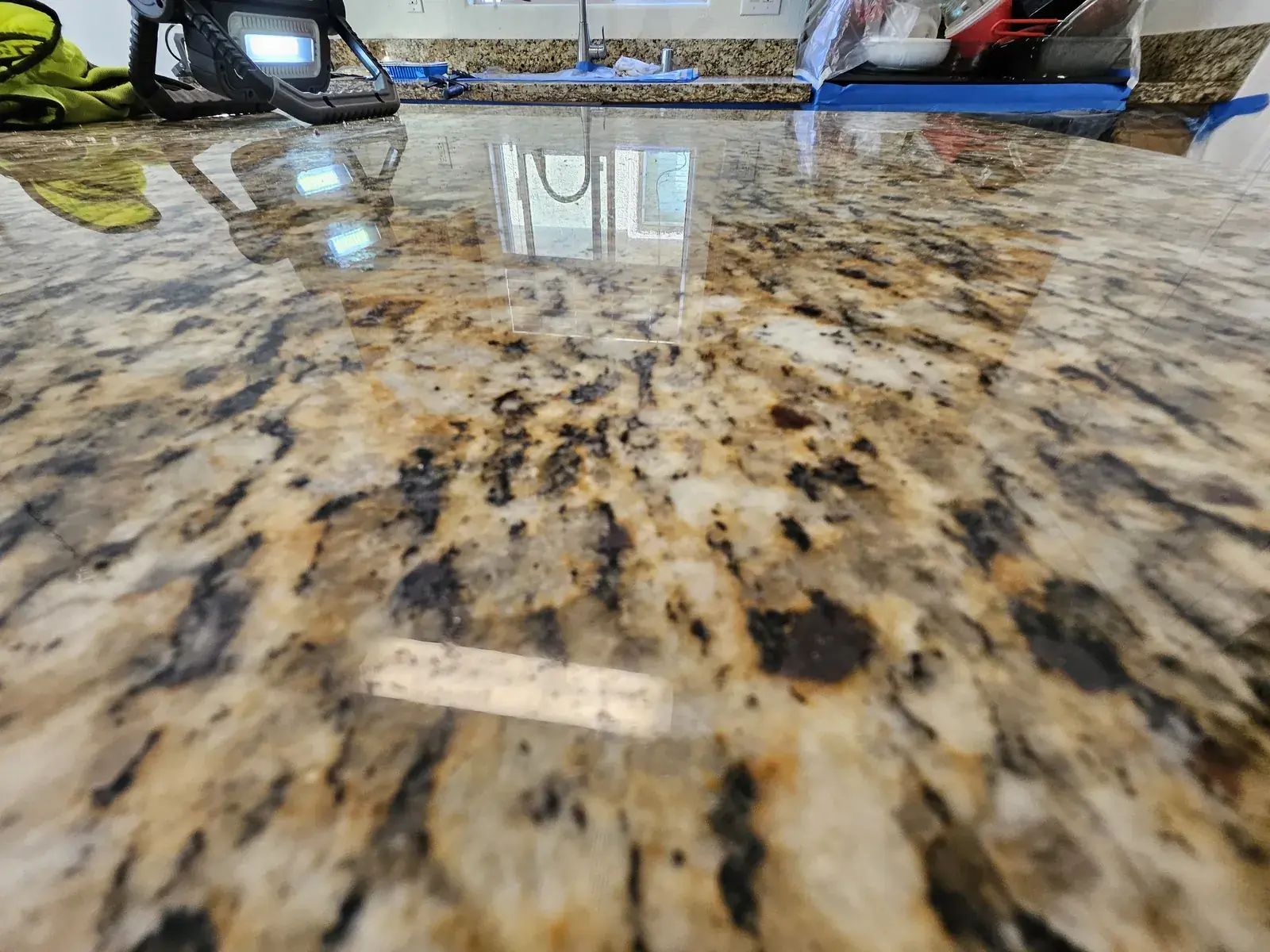
Granite rarely loses its shine on its own. A dull counter is usually film, mineral scale, old sealer left on top, or fine wear in the busiest spots. We find out which one before any machine touches the stone.
Google Reviews
Scroll to read all 9 reviews →
“Great work and even better customer service. Very professional, easy to work with, and you can tell they take pride in what they do. Definitely recommend Precision Floor & Surface Restoration if you need your floors or countertops brought back to life.”★★★★★
“Absolutely amazing work! From start to finish, everything was handled professionally and with great attention to detail. They took the time to make sure everything was done right, and the results speak for themselves. The floors and surfaces came out looking incredible, and you can tell they genuinely take pride in their work. I couldn’t be happier with the finished product and would definitely recommend them to anyone looking for quality work and great service. Five stars all the way! ⭐⭐⭐⭐⭐”★★★★★
“Precision Floor & Surface Restoration exceeded my expectations! Professional, punctual, and detail-oriented from start to finish. My floors look amazing, and the quality of work was outstanding. Highly recommend to anyone looking for top-notch floor and surface restoration services.”★★★★★
“Removed stains that previous cleaning services could not. Made the impossible - possible!”★★★★★
“Great quality work! Very professional with communication!!”★★★★★
“Clean and very professional. Highly recommend”★★★★★
“I highly recommend his floor cleaning services! He’s reliable, professional, and does an excellent job. My floors looked amazing, and I couldn’t be happier with the results.”★★★★★ ★★★★★
Why granite goes dull
Granite is hard, so a dull patch nearly always has a cause you can name. There are four common ones, and each needs a different fix.
- Film. Dish soap, all-purpose sprays and shine products dry on the surface and cloud it.
- Sealer left on top. Sealer that was not wiped off dries as a haze or a tacky streak.
- Mineral scale. Hard water leaves a pale crust around the faucet and soap dish.
- Wear. Years of pots, grit and scrubbing leave fine scratches beside the sink and prep area.
The first three sit on the stone. Only the last one is in it. Our guide to cleaning granite countertops safely covers the film you can remove yourself.
What granite polishing involves
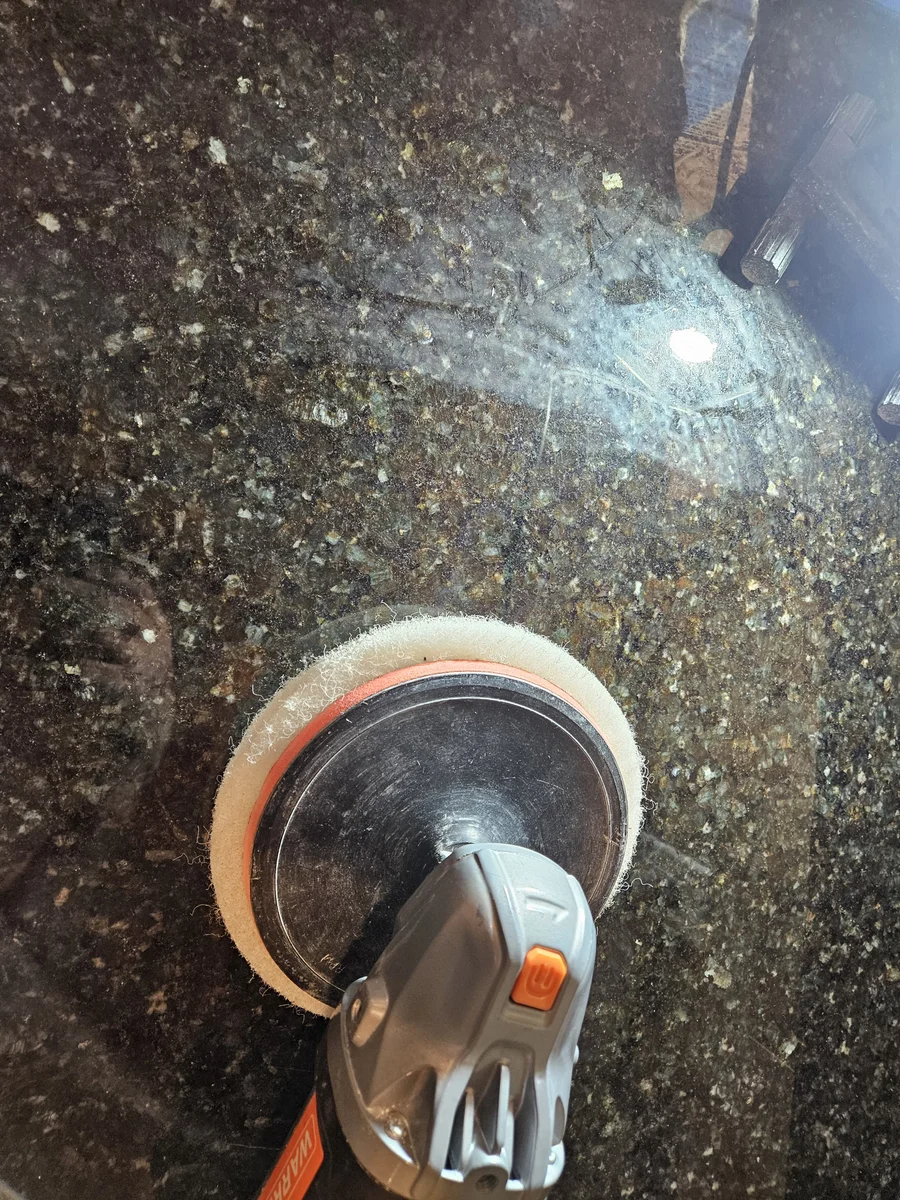
We start by removing whatever is sitting on the surface. On many counters the shine comes back at that stage, because the stone underneath was never damaged.
When the stone itself is worn, we polish it with diamond abrasives in stages, each one finer than the last. A polishing compound brings up the final reflection.
We work past the edge of the dull area so the repair blends in. Cabinets, sinks, walls and appliances are masked before we start.
Can you polish granite countertops yourself?
You can remove film yourself, and that is often all a counter needs. Polishing the stone is a different job.
Spray polishes add a short-lived shine and can build up into a new film. Powders and compounds made for marble do very little on granite, which sits around 6 to 7 on the Mohs hardness scale.
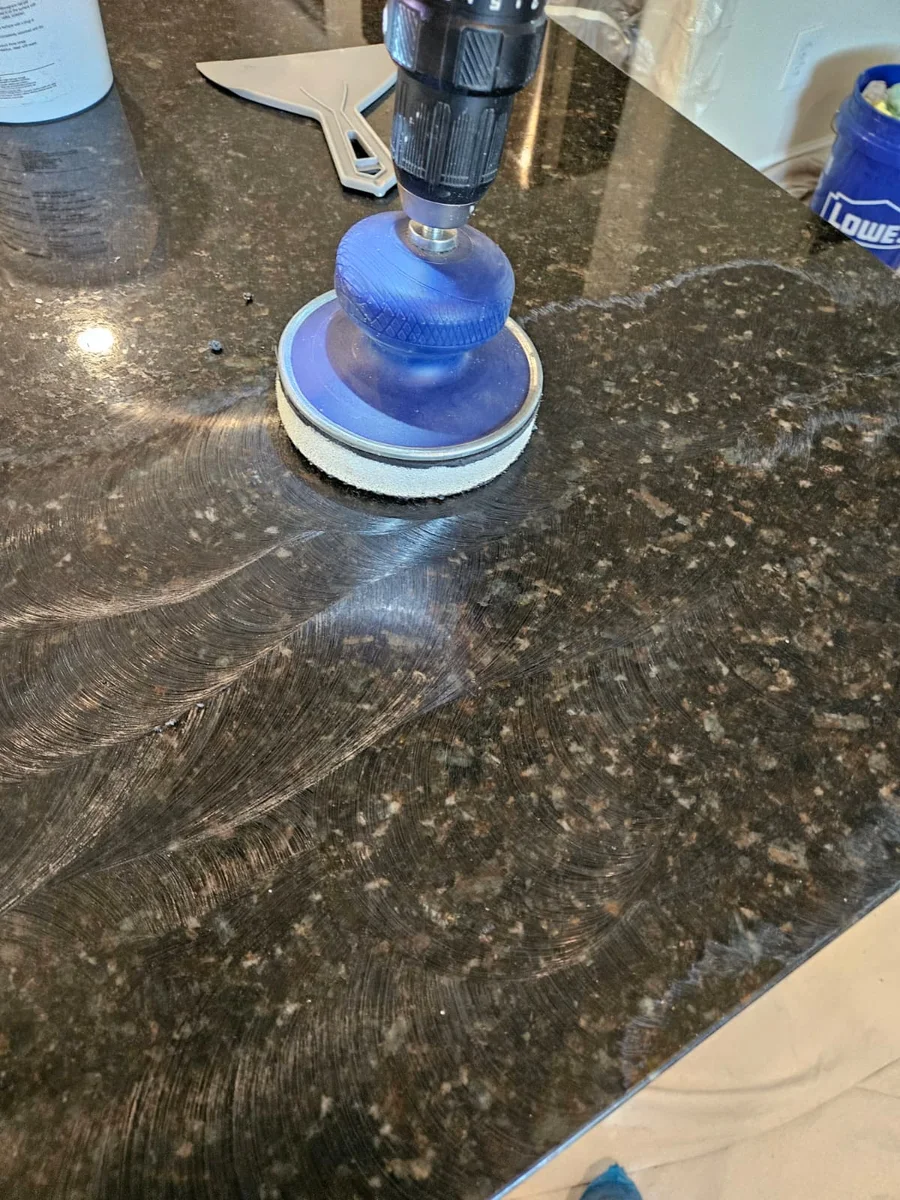
A power tool can cut granite, but it can also leave swirl marks or one patch shinier than the rest. That is harder to correct than the original dullness.
Clean the counter properly first. If the shine does not return once it is dry, the cause is residue or wear, and a photo will usually tell us which.
Honed, leathered and dark granite
A high gloss only belongs on granite that was polished to begin with. Honed and leathered finishes are meant to be matte or textured, so we match the finish the slab already has.
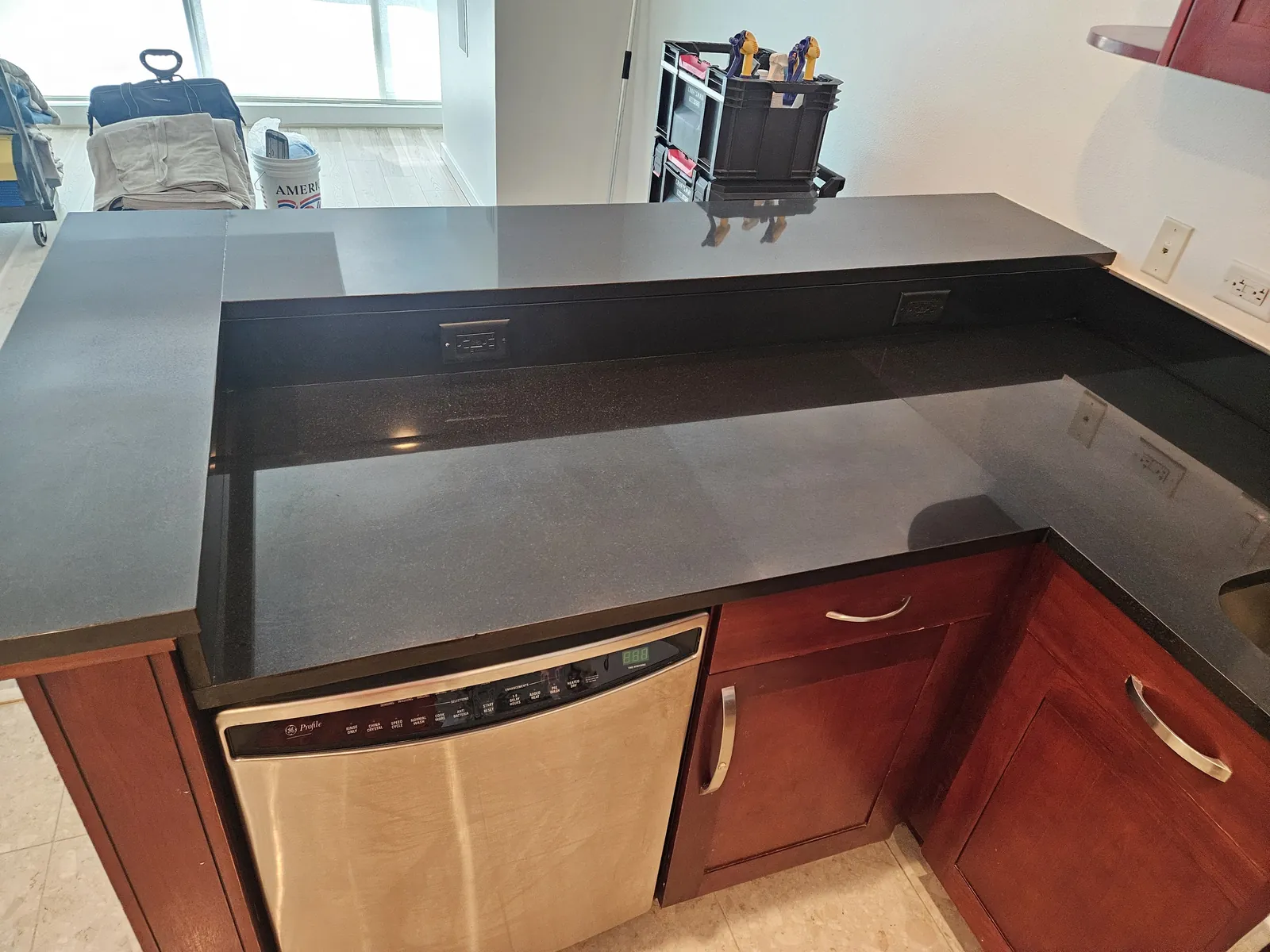
Dark granite shows haze and pale patches more than light stone. A pale area can be residue, abrasion, or a change in a color treatment the slab was given at the factory.
We ask about the counter's history and test a small area before working on a visible one.
Polishing, sealing and repair are separate jobs
Polishing restores the reflection. It does not fill a chip, close a crack or lift a stain that has soaked in.
- Chips, cracks and seams are covered under granite chip and crack repair.
- Dark spots that stay after cleaning are covered in our guide to removing stains from granite.
- Sealer protects against staining and adds no shine. See how granite sealing works.
We are based in Chester, VA and polish granite across Richmond, Henrico, Chesterfield and Midlothian. Text a wide photo and a close-up taken with light skimming across the counter, and we will tell you what we see.
Measured steps.
A considered result.
- Share the surface
Send a full view and a close-up of the concern.
- Confirm the material
Identify what it is before choosing a method.
- Set the scope
Separate cleaning, finish work, and repair needs.
- Refine with care
Use a process compatible with the existing surface.
- Review the finish
Inspect the result and discuss ongoing care.
Clarity before
the visit.
Can dull granite be made shiny again?
Usually, yes. If the dullness is film, scale or leftover sealer, removing it brings the shine back. If the stone is worn, polishing with diamond abrasives rebuilds the reflection.
Will polishing remove scratches from granite?
Fine surface scratches often polish out. A scratch you can catch with a fingernail is deeper and may only soften. We tell you what to expect after seeing a photo.
How long does granite polishing take?
A vanity or one section of counter is often finished in a single visit. A full kitchen takes longer. We give you a realistic timeline once we have seen the stone.
Does granite need sealing after it is polished?
Only if it absorbs. We check how the stone takes up water once the work is done and dry, and we seal it when that test shows a need.
Can you polish honed or leathered granite?
We can clean and refresh those finishes, but we do not turn them glossy unless you ask for a change of finish. The aim is to match what the slab already has.