
Practical surface guide
How to Remove Stains From Granite Countertops
A true stain is color that has soaked into the stone. Plenty of marks on granite are something else: water that will dry out, minerals sitting on top, or a film. Work out which one you have before you treat it.

Google Reviews
Scroll to read all 9 reviews →
“Great work and even better customer service. Very professional, easy to work with, and you can tell they take pride in what they do. Definitely recommend Precision Floor & Surface Restoration if you need your floors or countertops brought back to life.”★★★★★
“Absolutely amazing work! From start to finish, everything was handled professionally and with great attention to detail. They took the time to make sure everything was done right, and the results speak for themselves. The floors and surfaces came out looking incredible, and you can tell they genuinely take pride in their work. I couldn’t be happier with the finished product and would definitely recommend them to anyone looking for quality work and great service. Five stars all the way! ⭐⭐⭐⭐⭐”★★★★★
“Precision Floor & Surface Restoration exceeded my expectations! Professional, punctual, and detail-oriented from start to finish. My floors look amazing, and the quality of work was outstanding. Highly recommend to anyone looking for top-notch floor and surface restoration services.”★★★★★
“Removed stains that previous cleaning services could not. Made the impossible - possible!”★★★★★
“Great quality work! Very professional with communication!!”★★★★★
“Clean and very professional. Highly recommend”★★★★★
“I highly recommend his floor cleaning services! He’s reliable, professional, and does an excellent job. My floors looked amazing, and I couldn’t be happier with the results.”★★★★★ ★★★★★
Is It a Stain? Five Quick Checks
- Dark and smooth, near the range or a bottle of oil? Oil has soaked in. This is the classic granite stain.
- Dark around the sink, fading as it dries? That is moisture. It also means the stone is absorbing.
- White and crusty, and you can feel it? Minerals from hard water are sitting on top.
- Cloudy or streaky across a wide area? That is film from cleaners or sealer.
- Orange or brown? Rust, either from metal left on the counter or from iron in the stone.
One mark can be two things. A spill can leave color in the pores and a dull spot on the surface, and each needs its own fix.
Start With the Gentle Steps
Clean the area with a pH-neutral stone cleaner, rinse with clean water and dry it. Then leave it for a day.
Water marks fade as the stone dries out. Film comes off with the rinse and a dry buff. Our guide to cleaning film and water marks off granite covers both.
If the mark is still there once the stone is fully dry, it has soaked in.
How a Poultice Removes a Soaked-In Stain
A poultice is an absorbent paste that holds a cleaning agent against the stone. As it dries, the stain moves out of the pores and into the paste.
Use a stone poultice made for your stain type, oil or food and drink, and check that its label lists granite. Test a hidden spot first.
The Natural Stone Institute describes the method this way:
- Spread the poultice 1/4 to 1/2 inch thick, about an inch past the edge of the stain.
- Cover it with plastic and leave it for about 24 hours.
- Remove the plastic and let the paste dry completely, usually 24 to 48 hours in total.
- Lift it off with a plastic or wooden scraper, rinse and dry.
Judge the result only when the stone is dry, because damp granite looks darker. Older stains can take several rounds, and some only lighten.
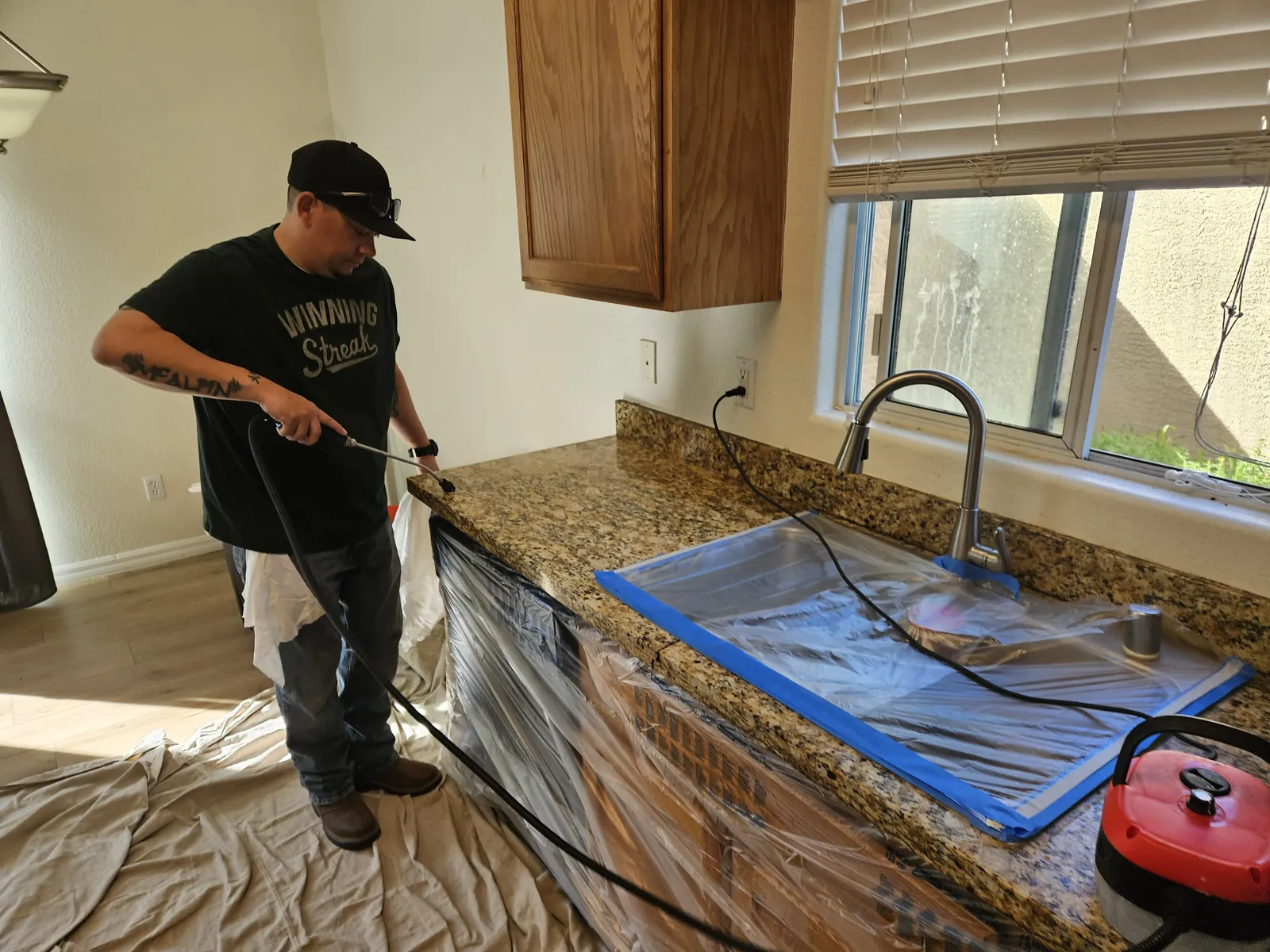
Stains to Leave to a Professional
- Rust. Most rust removers are acids, and the ones that contain hydrofluoric acid damage granite.
- Large or old oil stains that have had years to spread.
- Dark areas at a seam or sink edge that keep returning. Moisture is still feeding them.
- Any mark on stone you cannot identify. Not every slab sold as granite is granite.
Stop if the mark gets worse or the finish changes. The page on our granite repair process explains how we diagnose and treat these.
After the Stain Is Out
A stain got in because the stone was open to it. Once the area is clean and dry, check how fast it absorbs water. If it darkens quickly, sealing the granite will slow the next spill.
Do not seal over a stain that is still there. Sealer will not remove it and can make it harder to treat.
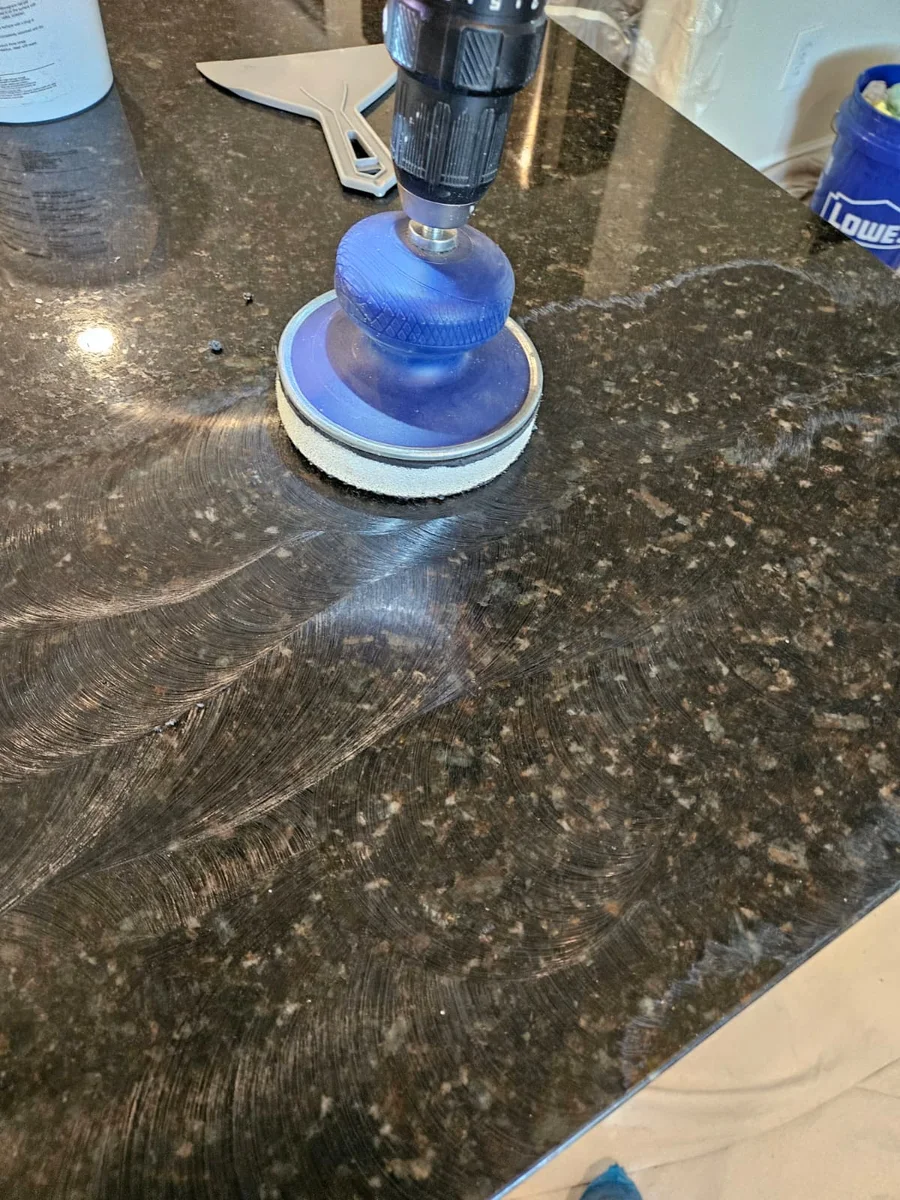
If the color is gone but a dull ring remains, the surface needs granite countertop polishing, not another poultice. Text a photo and we will tell you which stage you are at.
Measured steps.
A considered result.
- Share the surface
Send a full view and a close-up of the concern.
- Confirm the material
Identify what it is before choosing a method.
- Set the scope
Separate cleaning, finish work, and repair needs.
- Refine with care
Use a process compatible with the existing surface.
- Review the finish
Inspect the result and discuss ongoing care.
Clarity before
the visit.
Are water stains on granite permanent?
Usually not. A dark patch that fades as the stone dries was only moisture. A white crust is mineral scale sitting on top. Both are different from color that has soaked into the stone.
Does baking soda remove stains from granite?
A baking soda and water paste is a mild home poultice that sometimes lightens a fresh oil spot. Test a hidden area first and do not scrub with it, because the powder is a fine abrasive.
Why does granite stain near the stove?
Cooking oil is thin when warm and soaks into open pores. If the sealer in that area has worn away, the oil has more time to get in before it is wiped up.
Can an old oil stain be removed from granite?
Often it can be lightened a great deal, and sometimes removed. Old stains may need several poultice rounds. We tell you what is realistic after seeing a photo.