
Practical surface guide
How to Seal Granite Countertops Without Leaving a Haze
Sealing granite is simple when you follow three rules: confirm the stone needs it, follow the label on the exact product, and wipe off everything the stone does not absorb. Skipping the last one is what leaves a haze.
Google Reviews
Scroll to read all 9 reviews →
“Great work and even better customer service. Very professional, easy to work with, and you can tell they take pride in what they do. Definitely recommend Precision Floor & Surface Restoration if you need your floors or countertops brought back to life.”★★★★★
“Absolutely amazing work! From start to finish, everything was handled professionally and with great attention to detail. They took the time to make sure everything was done right, and the results speak for themselves. The floors and surfaces came out looking incredible, and you can tell they genuinely take pride in their work. I couldn’t be happier with the finished product and would definitely recommend them to anyone looking for quality work and great service. Five stars all the way! ⭐⭐⭐⭐⭐”★★★★★
“Precision Floor & Surface Restoration exceeded my expectations! Professional, punctual, and detail-oriented from start to finish. My floors look amazing, and the quality of work was outstanding. Highly recommend to anyone looking for top-notch floor and surface restoration services.”★★★★★
“Removed stains that previous cleaning services could not. Made the impossible - possible!”★★★★★
“Great quality work! Very professional with communication!!”★★★★★
“Clean and very professional. Highly recommend”★★★★★
“I highly recommend his floor cleaning services! He’s reliable, professional, and does an excellent job. My floors looked amazing, and I couldn’t be happier with the results.”★★★★★ ★★★★★
First, Check Whether Your Granite Needs Sealing
Not every granite counter needs sealer. Stone sold as granite ranges from very dense to quite absorbent, and color does not tell you which you have.
- Clean a spot you use often and let it dry fully.
- Put a few drops of water on it.
- Look again after 10 to 15 minutes.
If the stone has darkened under the drops, water is getting in and sealer may help. If the drops sit on top with no color change, another coat is likely to leave residue.
The check only tells you about water. It does not show how the counter handles oil.
Before You Open the Bottle
- Choose a penetrating sealer, also called an impregnator, that lists granite countertops on its label.
- Read the label. Wet time, number of coats and cure time are different for every product.
- Clean off soap film and grease so the sealer can reach the stone.
- Deal with stains first. Sealer does not remove them, so start by lifting stains out of granite first.
- Let the stone dry for as long as the label asks.
- Test a hidden spot and open a window.
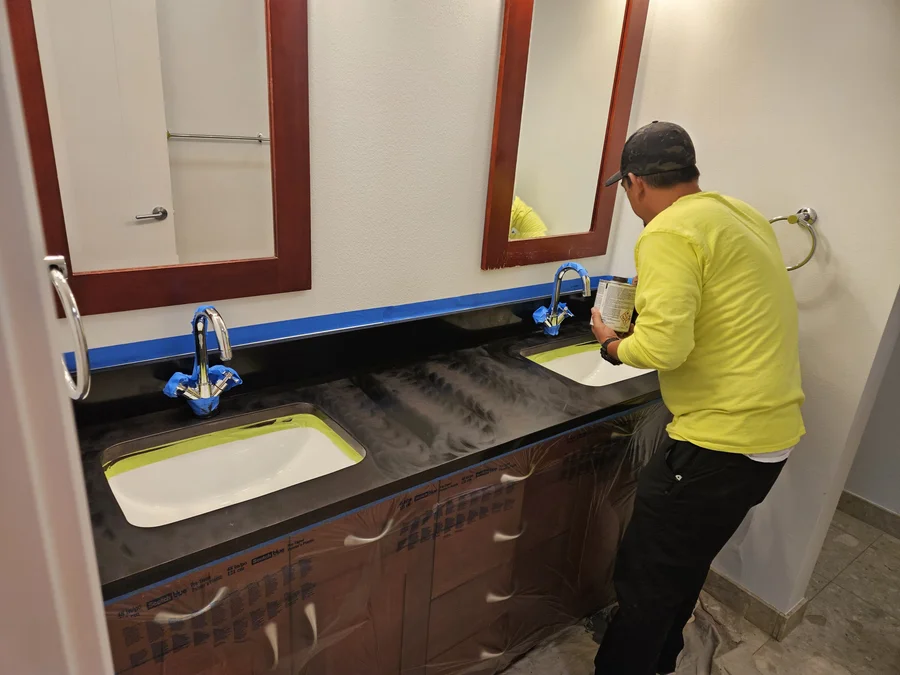
How to Apply Granite Sealer
- Work in a section small enough to control, about an arm's reach.
- Apply the sealer evenly with the cloth or applicator the label names.
- Keep the surface wet for the time on the label. Some products ask for a few minutes and others for much longer.
- Do not let it dry on the stone.
- Wipe off all the excess with a clean cloth, then buff the area dry.
- Add a second coat only if the label calls for one.
- Keep the counter dry and clear for the cure time on the label.
Light use and full cure are two different times. A counter can be dry to the touch hours before it is ready for a spill.
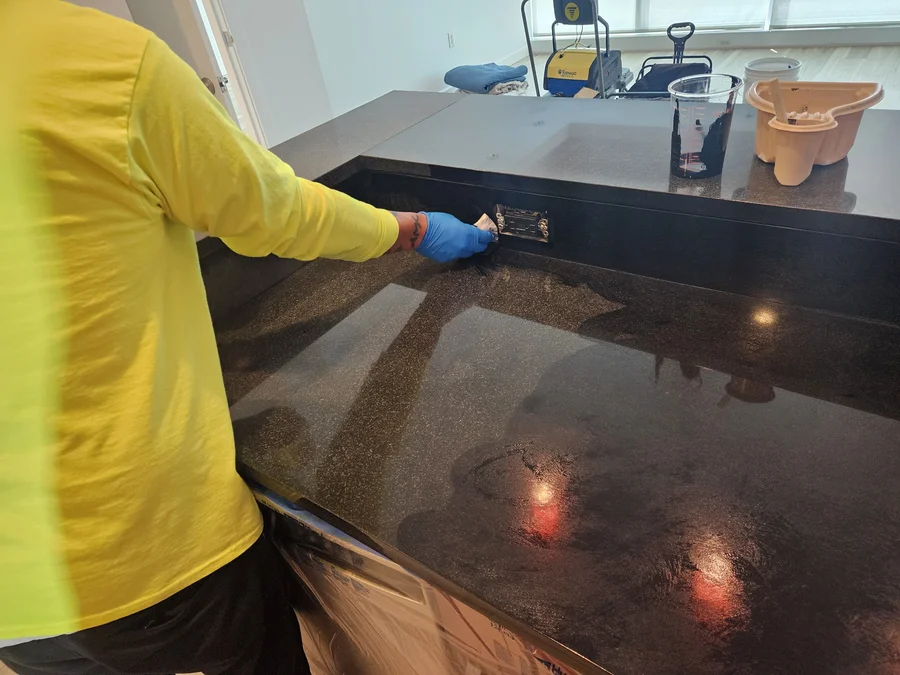
The Mistake That Leaves a Haze
Leaving a generous coat to soak in overnight feels like extra protection. It is the main cause of cloudy, streaky or tacky granite.
If the residue is fresh, check the label for its removal step. If it has cured, do not move on to abrasive pads or strong solvents, which can change the finish.
Our professional granite sealing service includes removing sealer haze and checking that the sheen matches afterwards.
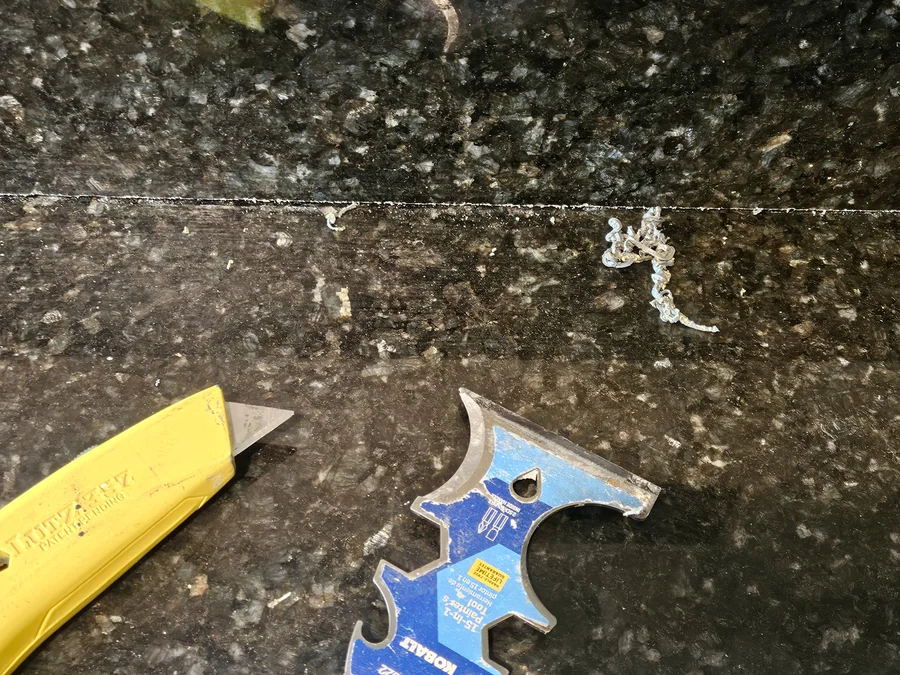
How Often to Seal Granite Countertops
There is no schedule that suits every counter. Repeat the water check about once a year, and sooner if the stone by the sink starts to darken quickly.
Reseal only the areas that absorb. For day-to-day care between coats, see our daily granite cleaning routine. For stains, chips and cracks, start with granite stain and damage repair.
Measured steps.
A considered result.
- Share the surface
Send a full view and a close-up of the concern.
- Confirm the material
Identify what it is before choosing a method.
- Set the scope
Separate cleaning, finish work, and repair needs.
- Refine with care
Use a process compatible with the existing surface.
- Review the finish
Inspect the result and discuss ongoing care.
Clarity before
the visit.
Does granite need to be sealed?
Only if it absorbs. Some dense granite takes in so little that sealer just sits on top. Put a few drops of water on a clean, dry spot and see whether the stone darkens within 10 to 15 minutes.
How often should you seal granite countertops?
When the stone starts absorbing water again. Check about once a year. Fixed schedules based on the color of the granite are not reliable.
How long does granite sealer take to dry?
It depends on the product. The label gives one time for light use and a longer one for full cure. Follow the label on the sealer you bought.
Can you seal over a stain?
It is better not to. Sealer does not remove the stain, and a fresh coat can make it harder to treat later. Remove the stain, let the stone dry, then seal.
Why is my granite cloudy after sealing?
Extra sealer was left to dry on the surface. Check the label for its removal step, and avoid adding more sealer or scrubbing with abrasives.