
Practical surface guide
Before You Sand Your Hardwood Floors, Check These Restoration Options
A tired-looking floor may have a cleaning problem, layers of old polish, or a worn protective coat. Before you commit to sanding, find out what can be preserved and what actually needs correcting.
Google Reviews
Scroll to read all 9 reviews →
“Great work and even better customer service. Very professional, easy to work with, and you can tell they take pride in what they do. Definitely recommend Precision Floor & Surface Restoration if you need your floors or countertops brought back to life.”★★★★★
“Absolutely amazing work! From start to finish, everything was handled professionally and with great attention to detail. They took the time to make sure everything was done right, and the results speak for themselves. The floors and surfaces came out looking incredible, and you can tell they genuinely take pride in their work. I couldn’t be happier with the finished product and would definitely recommend them to anyone looking for quality work and great service. Five stars all the way! ⭐⭐⭐⭐⭐”★★★★★
“Precision Floor & Surface Restoration exceeded my expectations! Professional, punctual, and detail-oriented from start to finish. My floors look amazing, and the quality of work was outstanding. Highly recommend to anyone looking for top-notch floor and surface restoration services.”★★★★★
“Removed stains that previous cleaning services could not. Made the impossible - possible!”★★★★★
“Great quality work! Very professional with communication!!”★★★★★
“Clean and very professional. Highly recommend”★★★★★
“I highly recommend his floor cleaning services! He’s reliable, professional, and does an excellent job. My floors looked amazing, and I couldn’t be happier with the results.”★★★★★ ★★★★★
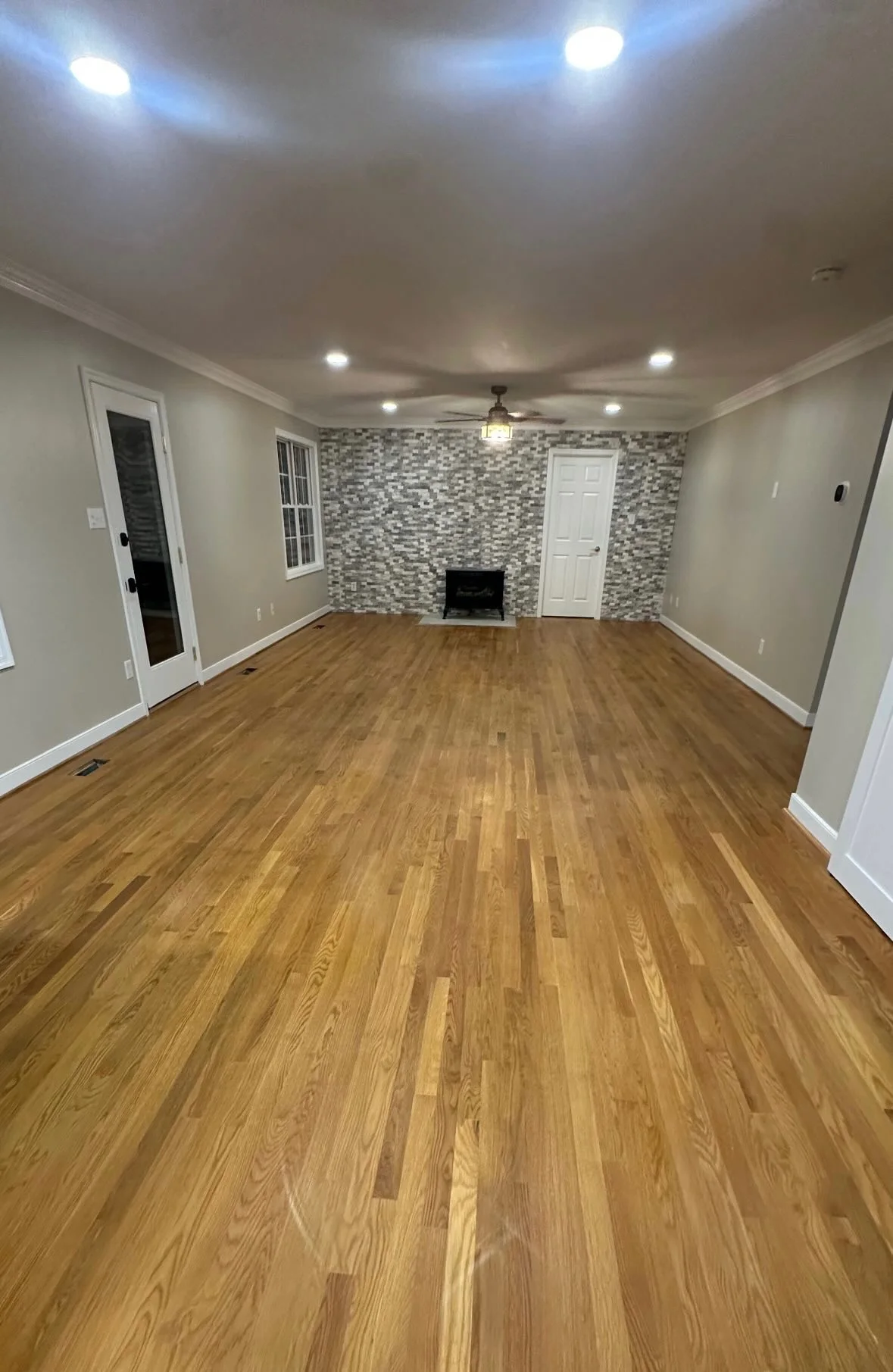
See Our Wood-Floor Work
See the floor machine at work and the finished appearance in a residential room. Andrew assesses your floor separately to determine the preparation, color work, and coating it needs.
Full Sanding Is Not the First Answer for Every Worn Floor
Before choosing a treatment, Andrew wants to know what has been used on the floor and where the problem shows up. Is it sticky after mopping? Cloudy near the kitchen? Scratched in the walkway but clear under a rug? Those details help separate buildup from worn protection.
Full sanding can be necessary when damage is in the wood. But removing a serviceable finish is a bigger step than cleaning away soil or renewing the topcoat. Start by finding out which part of the floor needs attention.
The Right No-Sand Solution Depends on What Is Actually Wrong
Dirty or Embedded Soil May Only Need Professional Cleaning
A finish covered by soil can look older than it is. Hardwood cleaning before finish work may restore clarity when the coating beneath the contamination remains healthy.
Cloudy Product Layers May Need Buildup Removal
Wax, polish, and repeated shine products can form a cloudy or sticky layer on top of the original finish. That points toward wax and product buildup removal, not sanding.
Worn Protection May Need a Screen and Recoat
If the stain still looks acceptable but the protective finish is dull or lightly scratched, screening and recoating the hardwood floor may renew protection without removing the color.
Small Areas of Color Loss May Allow Limited Correction
Localized wear may sometimes accept careful color matching before a recoat. The feasibility depends on the size, position, age, and surrounding stain.
Deep Damage May Still Require Traditional Refinishing
No-sand restoration is not a substitute for full refinishing when damage extends through the finish and stain into the wood.
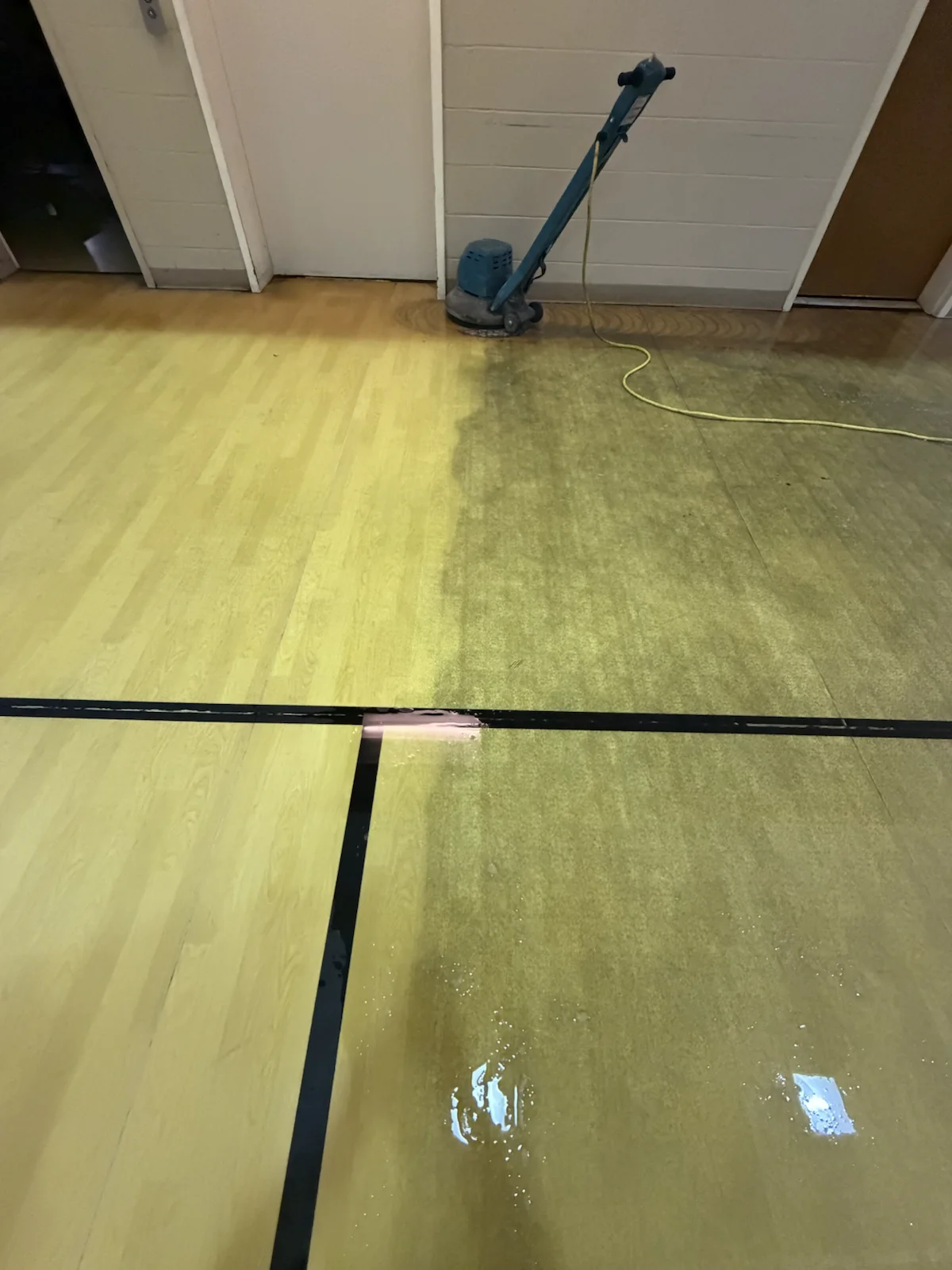
Professional Cleaning Can Restore Appearance When the Finish Is Still Healthy
Embedded soil, residue, and tracked-in grit change how light moves across a coated floor. Once the contamination is removed, the finish may look more even without any abrasive work.
Gather the names of cleaners and shine products used on the floor, even if a previous owner applied them. Avoid adding another product while the cause is uncertain. What is sitting on the coating can look very similar to wear in the coating itself.
A Screen and Recoat Can Renew Protection Without Removing the Stain
When the current color is worth preserving, the existing polyurethane can sometimes be cleaned, lightly abraded, and covered with a compatible new coat. This maintenance process is often described as sandless hardwood floor refinishing, but it does not produce the same scope as sanding to bare wood.
The floor must be free of incompatible wax or polish, and the coating must still provide a suitable base for another coat.
Can You Change or Correct the Color Without Sanding?
When a smaller area has lost color but the homeowner wants to keep the overall stain, Andrew may be able to color match that area before recoating. Matching aged stain is skilled corrective work: the surrounding color, grain, wear, and light all affect how the repair reads.
Andrew also offers stain changes on suitable floors. That is a separate scope from applying clear polyurethane. Tell him whether you want to blend a worn area or change the overall appearance so he can assess the existing finish and the desired result. A sample area helps establish what the color will look like before proceeding.
Not every color change is possible without removing the old finish, and an aged repair cannot always be made invisible. Ask Andrew to assess the existing finish and requested color before planning the work.
Some Hardwood Floors Cannot Be Restored Without Sanding
The Finish Has Worn Through to Raw Wood
A maintenance coat cannot reverse widespread exposed-wood damage or restore protection that is already missing below the stain.
Deep Scratches or Gouges Cut Below the Finish
Another topcoat follows the existing surface; it does not level cuts that extend into the boards.
The Desired Color Cannot Be Achieved Over the Existing Finish
A clear recoat does not change the stain. Color work needs a separate assessment; some requested changes require removal of the existing finish and fall outside our no-sanding process.
The Floor Has Structural or Board-Level Damage
Broken, loose, cupped, missing, or severely water-damaged boards are not corrected by surface maintenance.
Stained Oak Floors Require Careful Diagnosis Before Treatment
Red oak and white oak make up most of the local floors Andrew encounters. Once stained, however, the surface color can hide the identifying grain. When species confirmation matters, he may inspect an unfinished side profile at a floor vent rather than guess from the top.
The stain, existing polyurethane, floor construction, and product history all matter more to the service decision than a quick visual assumption.
Richmond Homeowners Should Diagnose the Floor Before Choosing a Service
Across Richmond, Chesterfield, and Midlothian, the correct question is not simply whether the floor can be restored without sanding. It is which parts of the existing system (coating, stain, and wood) can still be preserved.
Our screen and recoat vs. full refinishing guide gives the direct boundary when the floor sits between those two paths.
Find Out Whether Your Floor Can Be Saved Without Full Sanding
Text a full-room photo and close-ups of the most worn areas. We will help determine whether the floor points toward cleaning, product removal, a screen and recoat, limited color correction, or traditional refinishing.
Measured steps.
A considered result.
- Share the surface
Send a full view and a close-up of the concern.
- Confirm the material
Identify what it is before choosing a method.
- Set the scope
Separate cleaning, finish work, and repair needs.
- Refine with care
Use a process compatible with the existing surface.
- Review the finish
Inspect the result and discuss ongoing care.
Clarity before
the visit.
Can you refinish hardwood floors without sanding?
Some floors can be renewed without full sanding when the existing stain and wood remain serviceable. Cleaning, buildup removal, limited color correction, or a screen and recoat may fit, depending on the condition.
Can you restain hardwood floors without sanding?
Andrew offers color correction and stain changes on suitable floors. The existing finish, condition and requested color determine what can be achieved. This needs a separate assessment and sample; a clear screen and recoat alone does not replace the stain.
What damage rules out no-sand restoration?
Widespread raw wood, deep gouges, severe stain loss, cupped or loose boards, and major water damage usually move the project beyond surface maintenance.
Talk With Us About Your Wood Floor
Tell us what looks worn, which products have been used, and what you want to improve. Photos are helpful, but you can call first.