
Practical surface guide
How Much Does It Cost to Polish a Wooden Floor in 2026? A Chester Homeowner's Guide
Wondering what it costs to polish a wooden floor in Chesterfield in 2026? Learn key price factors and get an accurate quote. Text us a photo to start.
Google Reviews
Scroll to read all 9 reviews →
“Great work and even better customer service. Very professional, easy to work with, and you can tell they take pride in what they do. Definitely recommend Precision Floor & Surface Restoration if you need your floors or countertops brought back to life.”★★★★★
“Absolutely amazing work! From start to finish, everything was handled professionally and with great attention to detail. They took the time to make sure everything was done right, and the results speak for themselves. The floors and surfaces came out looking incredible, and you can tell they genuinely take pride in their work. I couldn’t be happier with the finished product and would definitely recommend them to anyone looking for quality work and great service. Five stars all the way! ⭐⭐⭐⭐⭐”★★★★★
“Precision Floor & Surface Restoration exceeded my expectations! Professional, punctual, and detail-oriented from start to finish. My floors look amazing, and the quality of work was outstanding. Highly recommend to anyone looking for top-notch floor and surface restoration services.”★★★★★
“Removed stains that previous cleaning services could not. Made the impossible - possible!”★★★★★
“Great quality work! Very professional with communication!!”★★★★★
“Clean and very professional. Highly recommend”★★★★★
“I highly recommend his floor cleaning services! He’s reliable, professional, and does an excellent job. My floors looked amazing, and I couldn’t be happier with the results.”★★★★★ ★★★★★
Polishing vs. Refinishing: Why This Difference Drives Your Price
Most homeowners in Chester use "polishing" and "refinishing" like they mean the same thing. They don't. Polishing stays on top. Refinishing goes down to raw wood. That gap is why one job costs a fraction of the other.
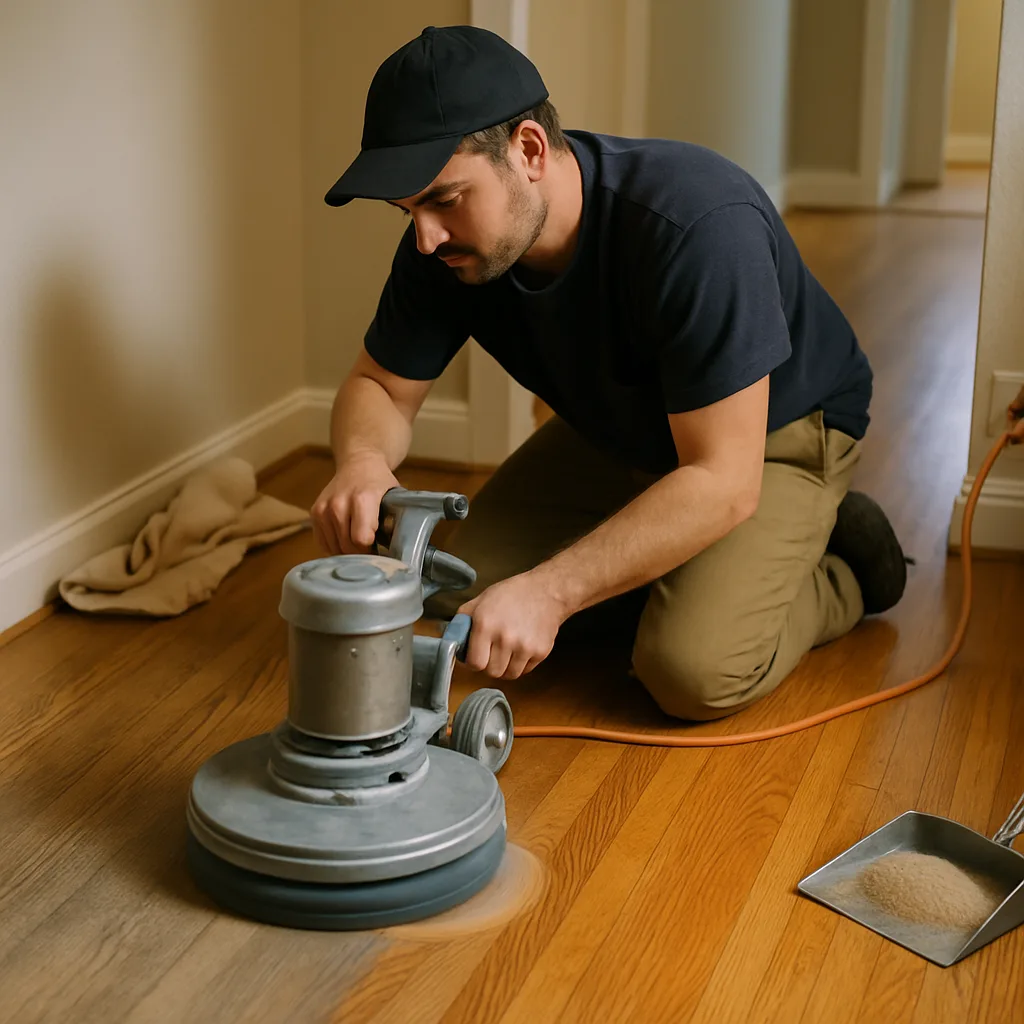
Polishing means buffing the finish you already have, pulling out embedded soil, and laying down a fresh topcoat. No sanding. No dust cloud. No waiting around for the smell to fade. We call this Hardwood Floor Polishing Service or Wood Floor Buffing Service, depending on how worn the floor looks. Refinishing is a full strip job. Sanders take off the wood surface itself, then a new finish gets applied from scratch. It's slower and messier, and it costs more because you're rebuilding, not restoring.
Here's what a lot of owners in older Chester homes miss: floors laid decades ago often still have good wood left. That's what makes No-Sanding Wood Floor Restoration possible. If the wear layer is still there, we can bring back the shine without touching the grain underneath. And that keeps the job faster and easier on the house.
So how do you know which one your floor needs? Ask yourself these questions first:
- Are there deep gouges or bare wood patches showing through the finish?
- Does the floor look dull and scratched but still feel smooth to the touch?
- Has the floor been sanded more than two or three times before?
- Is there water damage, cupping, or dark staining in the boards?
If you're mostly dealing with dullness and light scratching, polishing usually does the job. If boards are cupped, stained deep, or worn past the finish layer, refinishing is probably the only real fix. We see this mix-up all the time. Folks call asking for a "polish" when what they need is a full sand and refinish. A quick photo text to us usually clears it up in minutes.
The cost difference isn't random. Refinishing takes more labor hours, more equipment, and more cleanup. Polishing skips most of that. So a floor in decent shape can often get restored for a lot less than folks expect, simply because the wood underneath is still solid. That's good news if you've been putting off calling someone because you figured a full refinish was the only path.
Here's a real scenario we run into a lot around Chester: a family calls in about a living room floor that looks tired and gray. They're bracing for a refinish quote. But once we look at photos, it's clear the wood itself is fine, it's just buried under years of wax buildup and foot traffic grime. Wood Floor Buffing Service brings the shine right back, no sanding needed.
Not sure which category your floor falls into? Text us a few photos and we'll tell you straight, no guessing involved.
What Affects Wood Floor Polishing Price
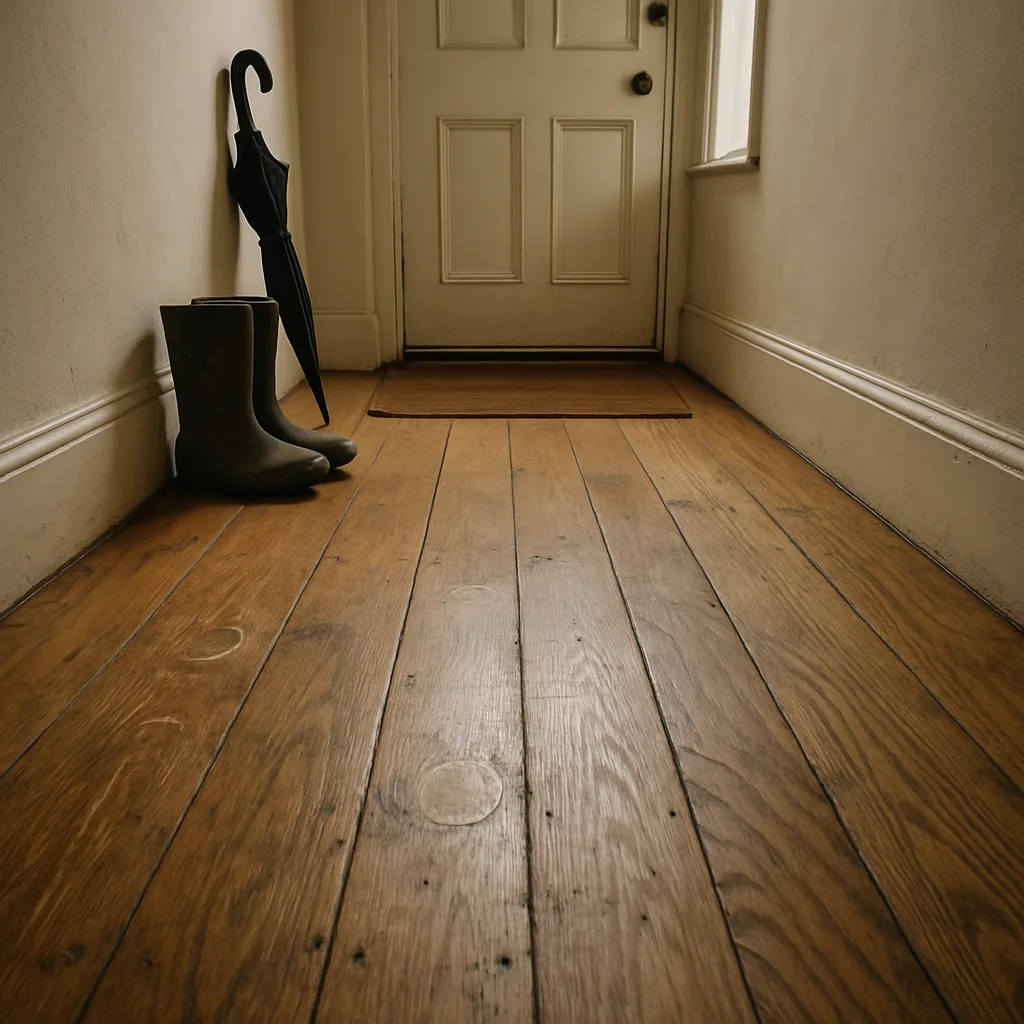
No two wood floors cost the same to polish. We've walked into Chester homes with the exact same square footage and quoted totally different jobs. Why? Because price isn't really about size. It's about condition, wood type, and what the floor's been through.
Square footage matters, sure. But it's just the starting point.
The Big Cost Drivers
- Current condition of the wood, a floor with deep scratches or dark stains needs more prep work than one that's just dull
- Type of finish already on the floor, oil-based finishes and water-based finishes react differently during polishing
- Number of coats needed, some floors look great with one pass, others need two or three
- Room layout and obstacles, cutting around cabinets, stairs, and tight corners takes longer than open rooms
- Furniture moving, some homeowners clear the room themselves, others need help
That last point trips people up. We had a client near Chester whose living room looked simple on the phone. Turned out it had a baby grand piano parked right in the middle. That changes the job.
Wood species plays a role too. Oak, maple, and pine all take finish a little differently, so a polishing job on old pine floors in an older Chester home won't run the same as a newer maple floor across town. Older homes also tend to have more wear near doorways and high-traffic paths, and that uneven wear can mean extra buffing time in specific spots rather than one uniform pass across the room.
Humidity matters more than most homeowners realize. Wood floors expand and contract with moisture in the air, and Chester's seasonal swings between damp summers and dry winters can leave gaps or slight cupping in the boards. That's not something we fix by just polishing over it. It usually needs to be addressed first, or the finish won't sit right.
Here's a scenario we see a lot. A homeowner calls about "polishing" a floor, but the real problem is embedded soil packed into the grain from years of foot traffic. Polishing alone won't pull that out. That floor needs a deep clean step first, then polishing on top. Skip the cleaning step, and you're sealing dirt under a shiny coat, it looks fine for a few weeks then dulls fast.
Accessibility affects the quote too. A ground-floor room with a clear path in is a straightforward job. A third-floor unit with a narrow staircase and no elevator? That takes more time to move equipment, and time is part of any quote.
We always tell people the same thing: don't guess at your cost from a general chart online. Every floor tells its own story once we look at it. That's why we keep our quote process simple. Text us a few photos or give us a call and walk us through what you're seeing. No driving out, no waiting around. If we do need to come look in person, that visit gets credited toward whatever service you end up booking.
Is Your Floor a Polish Job or a Refinish Job? A Quick Scenario Check
Here's the question we get texted a dozen times a week: "Can you just polish this, or do I need something bigger?" It's a fair question. Wood floor polishing costs a lot less than a full refinish, so nobody wants to pay for sanding if they don't need it. The truth is you can often tell the difference yourself, standing in your own living room.
Grab a flashlight and get down low, almost eye-level with the floor. Look at the finish under the light, not the wood color. A polish job fixes the surface layer. A refinish job fixes the wood underneath. Those are two different problems, and mixing them up wastes money either way.
Run through these signs before you call anyone:
- Dull, cloudy patches near the kitchen sink or front door, but no color change in the wood itself
- Fine surface scratches you can feel with a fingernail but can't see the wood grain through
- Light traffic wear in hallways and high-use rooms, with the finish still intact everywhere else
- Old wax buildup or a hazy film that won't buff out with regular cleaning
If that list sounds like your floor, you're probably looking at Hardwood Floor Polishing Service or Wood Floor Buffing Service. Both work on the finish, not the wood. Fast, less disruptive, and a lot easier on your wallet than tearing everything down.
Now here's the other side. And this is the part homeowners in Chester often miss until they've already booked the wrong job.
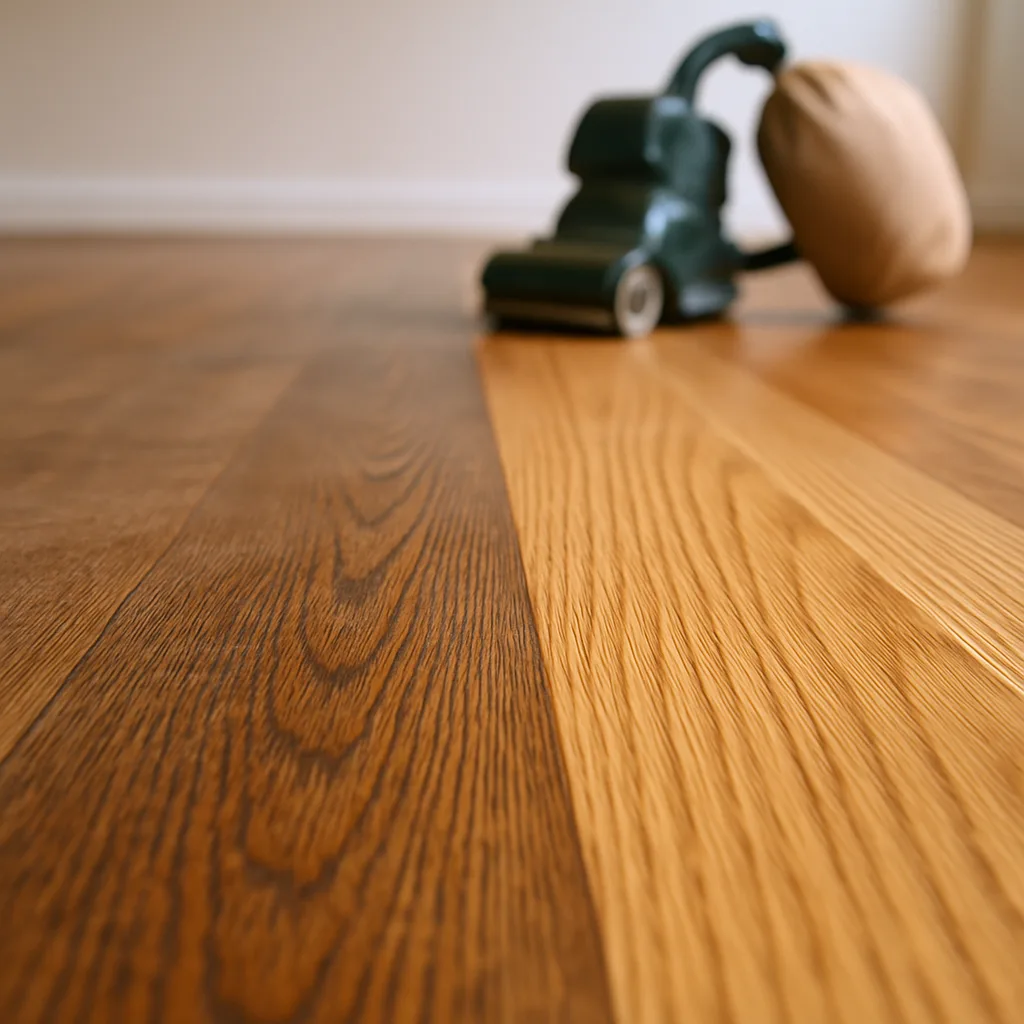
If you see gray or black water stains soaked into the wood, deep gouges you can catch a coin edge in, or boards that are cupping and warping near a window or door, no amount of polishing fixes that. That damage lives in the wood fiber, not the surface. We had a call last spring from a homeowner near the Chester waterfront, older Victorian with original heart pine floors. Sun exposure through bay windows had bleached one section almost white while the rest stayed honey-brown. Polishing would've just made the mismatch shinier.
A quick scenario to test yourself with: put a few drops of water on the floor. Does it bead up and sit on top? Good, your finish is doing its job, and a polish or buff likely solves your dullness. Does the water soak in within a minute or leave a dark ring? That's bare or damaged wood underneath, and no surface treatment covers that up for long.
We text-quote this stuff constantly, because a couple photos and a video of the water-drop test tell us almost everything we need to know. Send us a picture of the worst spot in the room, then one of the spot. That contrast alone usually settles which category you're in.
Not sure which side of the line your floor falls on? That's the most common message we get, and it's a quick one to answer with a few photos texted over.
Measured steps.
A considered result.
- Share the surface
Send a full view and a close-up of the concern.
- Confirm the material
Identify what it is before choosing a method.
- Set the scope
Separate cleaning, finish work, and repair needs.
- Refine with care
Use a process compatible with the existing surface.
- Review the finish
Inspect the result and discuss ongoing care.
Clarity before
the visit.
Can I polish my own wood floors, or is this a job for a professional?
You can polish a wood floor yourself if it only has light dullness and no deep damage. Store-bought products work fine for simple upkeep between professional visits. But if you spot embedded grime, uneven wear, or old wax buildup, a DIY polish can trap dirt under the new shine. That often looks fine for a few weeks, then dulls fast. A trained eye can tell in seconds whether your floor is a simple polish job or needs deeper attention first.
What's the biggest misconception homeowners have about wood floor polishing?
The biggest misconception is that polishing fixes every dull or worn floor. Polishing only refreshes the top layer of finish. It won't remove deep scratches, bare wood patches, or stains that have soaked into the grain. Many Chester homeowners call asking for a polish when their floor actually needs sanding first. That's why checking your floor's condition matters before choosing a service, so you don't pay for the wrong fix.
Does Chester's weather affect how often wood floors need polishing?
Yes, Chester's seasonal humidity swings can speed up wear on wood floors. Damp summers and dry winters cause boards to expand and contract, which can loosen finish faster than in a stable climate. Homes with older wood floors near entryways or windows often show extra wear from this shift. Keeping an eye on moisture changes helps you catch dulling early, before it turns into a bigger repair.
What's the difference between wood floor polishing and wood floor buffing?
Wood floor buffing is a lighter version of polishing, mainly used to smooth out minor scuffs and restore shine on floors that aren't badly worn. Polishing usually involves a fresh topcoat along with the buffing step, giving deeper protection. Both skip sanding entirely. If you're unsure which one fits your floor, our Hardwood Floor Polishing Service page walks through how we decide between the two based on the floor's actual condition.
How often should wood floors in Chester homes be polished?
Most wood floors do well with polishing every one to two years, depending on foot traffic and sunlight exposure. High-traffic hallways and entryways in Chester homes often need attention sooner than quieter rooms. Watch for early dullness, light scratching, or a hazy look near doorways. Catching wear early usually means a simpler polish job instead of waiting until deeper damage sets in.
Can old hardwood floors in older Chester homes still be polished instead of refinished?
Yes, many older Chester homes still have solid wood under years of wax and grime. If the wear layer is intact, polishing can bring back the shine without sanding down to raw wood. This is common in homes with original pine or oak flooring that's been cared for over time. A quick photo check usually tells us whether your older floor still qualifies for a no-sanding approach.
Talk With Us About Your Wood Floor
Tell us what looks worn, which products have been used, and what you want to improve. Photos are helpful, but you can call first.