
Chester, Virginia · Precision Floor & Surface
Give Worn Wood Floors New Life: Wood Floor Recoating in Chester
Wood floor recoating in Chester that renews worn, dull hardwood without a full refinish. Local pros bring the tools to you. Call to schedule today.
Signs Your Floor Is Ready for Recoating
Here's the question we get all the time: does my floor need a full sand-down, or just a fresh coat? Most of the time, it's just a coat. If your hardwood looks dull, gray, or scuffed but the wood itself hasn't been gouged or worn through to bare wood, you're probably a good candidate for Wood Floor Recoating instead of a full refinish.
Look for these signs before you call anyone:
- The floor looks cloudy or hazy under bright light, even right after cleaning
- Traffic patterns show up near doorways, hallways, and in front of the sink
- Light surface scratches from shoes, pet nails, or moved furniture
- The finish feels rough or sticky instead of smooth
- Water drops bead up in some spots and soak in dark in others
That last one matters a lot. If water sits on top and beads, your finish is still doing its job in that spot. If it soaks straight into the wood and leaves a dark ring, that's bare wood underneath, and no topcoat is going to fix it. That's when you're looking at sanding, not recoating.
We see this in older Chester homes near the Route 10 corridor, where original hardwood floors from decades back have been recoated once or twice already but never sanded. The wood's still solid. It just needs the top layer refreshed.
Recoating vs. Full Refinishing: Know the Difference
Here's the confusion we run into almost every week. Someone calls asking for "refinishing" when what their floor needs is a recoat. They're not the same job, and mixing them up can cost you a lot more than it should.
Full refinishing means sanding the wood down to bare material, then staining and sealing it again. It's loud, it's dusty, and it takes the floor out of use for days. Recoating skips the sanding entirely. We clean the floor, lightly abrade the existing finish so the new coat bonds, then apply a fresh topcoat. No dust everywhere, no bare wood, no waiting on stain to cure just right.
So how do you know which one you need? Look at the wear pattern. If the finish is dull, scratched, or graying in high-traffic paths but you can't see raw wood anywhere, recoating usually solves it. If you see actual wood color changes, deep gouges, or water damage that's penetrated the boards, that's a refinishing job or worse.
Chester's older subdivisions, especially homes built before the mid-1990s, often have solid hardwood that's been refinished once or twice already. Each sanding removes a layer of wood, and there's only so many times a floor can take it before the boards get too thin for the tongue-and-groove joints to hold. Recoating doesn't remove any wood at all, which is a big reason we push people toward it whenever the floor qualifies.
We check for finish type too. Polyurethane recoats fine over polyurethane. But older wax-based finishes need special handling, or the new coat won't stick at all. It's a straightforward call once we see photos - other times we need to look closer before we can say for sure.
When Recoating Won't Solve the Problem
Let's be straight about this. Recoating only works when the original finish is still doing its job in most spots, just dull, scratched, or worn thin in the high-traffic paths. If you can see raw wood, gray patches, or the boards have gone almost silver in color, that's bare wood. The finish is gone there, not just worn. Screening a new coat over bare wood won't bond right. It can peel or flake within months, and we've seen it happen when homeowners try this on their own first.
Water damage is another one we can't fix with a fresh coat. Cupped boards, dark black stains from a leaky dishwasher or pet accidents, soft spots near a bathroom doorway - none of that gets solved by buffing and recoating. The wood itself has taken on moisture and changed shape or color at the fiber level. That needs sanding, sometimes board replacement, before any finish goes down.
Here's one folks don't expect. If someone's been cleaning the floor with oil soap, wax-based products, or certain "restore" sprays from the hardware store, that residue sits on top of the wood and blocks the new coat from grabbing hold. We test for this before we ever start. A quick tape adhesion check tells us right away whether recoating will hold or whether we're wasting your time and money.
And if deep scratches or gouges go all the way through the topcoat and into the wood grain itself, a light screening won't hide them, only a full sand will.
So if any of this sounds like your floor, tell us upfront. We'd rather give you the honest answer on a text-a-photo estimate than sell you a service that won't last.
What Happens During a Recoating Visit
Here's what happens when we show up to recoat your floor. First, we walk the space with you and check for the stuff that can ruin a finish, deep gouges, pet stains that soaked into the wood, or spots where the old coat has worn straight through to bare wood. That inspection tells us if recoating will work, or if a section needs more attention first.
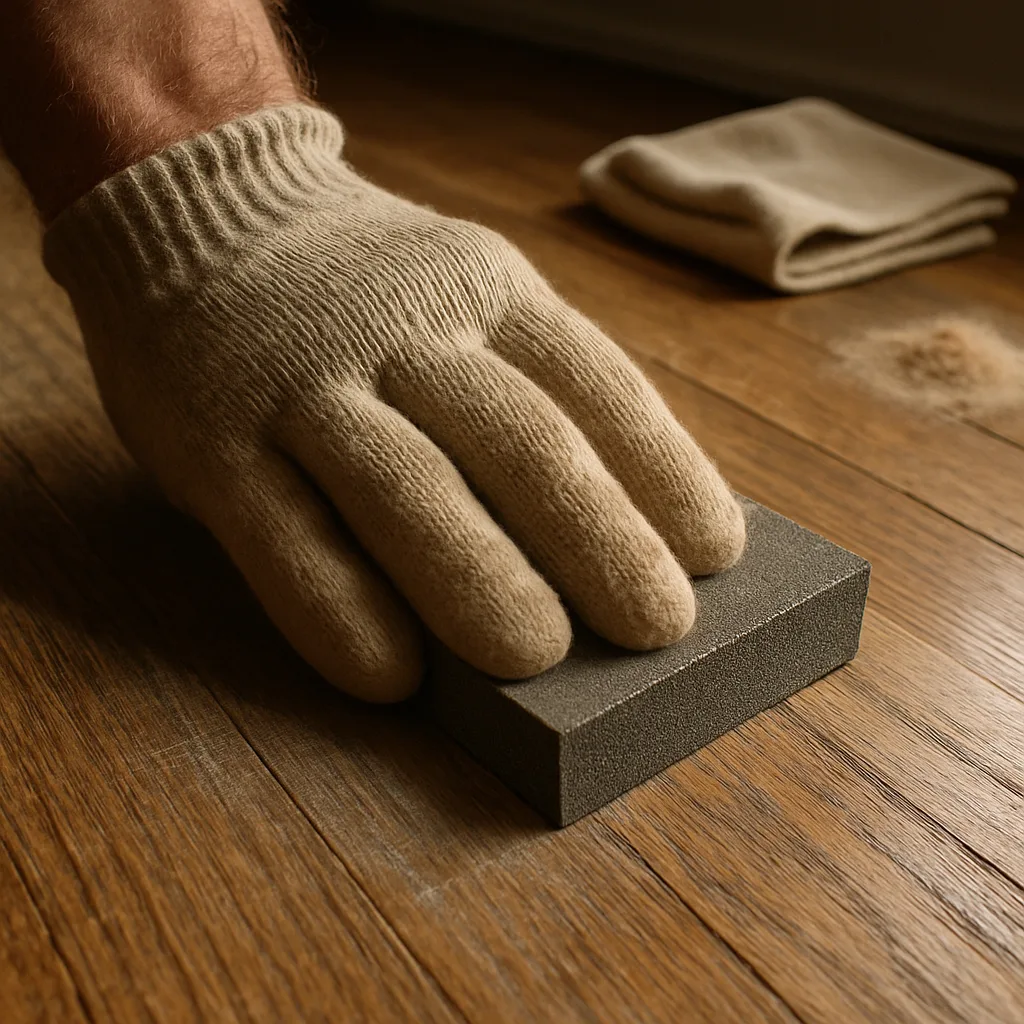
Once the floor's a good candidate, we start with a thorough screening. This isn't sanding down to raw wood. We're scuffing up the existing finish just enough so the new coat has something to grip onto. Skip this step and the new finish just sits on top, peels, and you're back where you started in a year.
After screening, we clean everything. And we mean everything, every bit of dust in the grain, along the baseboards, in the corners. Any debris left behind gets sealed under the new coat and shows up as a rough patch later. We've seen plenty of DIY jobs go wrong right here, someone skips the fine cleaning and wonders why their "new" floor still feels gritty.
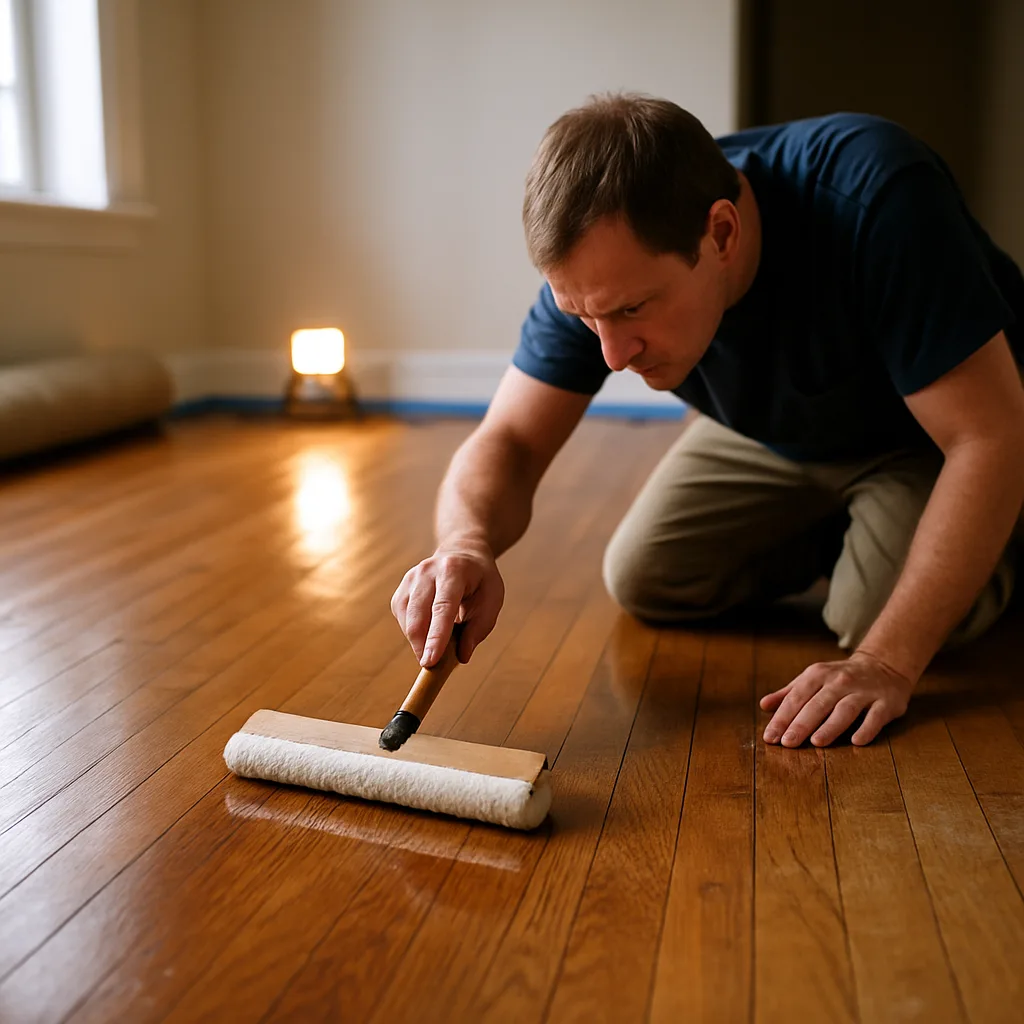
Then comes the finish coat itself. We apply it evenly across the whole room, working in sections so nothing dries unevenly or shows lap marks. This step matters a lot in homes around Chester, where humidity swings between seasons can affect how a finish cures if it's rushed.
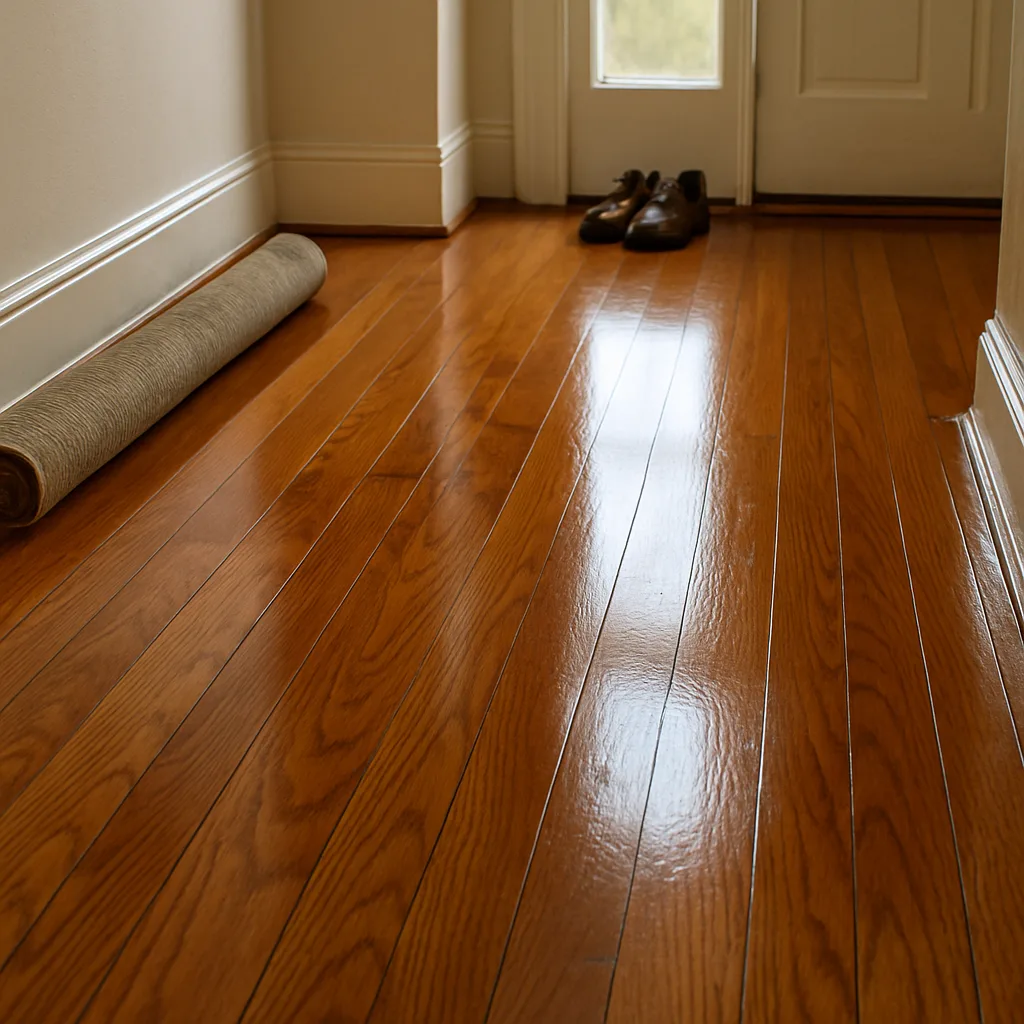
Drying time depends on the product and the weather that week, so we'll tell you a realistic window before we start, not a guess. Furniture and rugs stay off the floor until it's fully cured. We're IICRC certified, so we match the right finish to your wood species and existing coat instead of guessing. Most jobs wrap up in a single visit, and you're left with a floor that looks new without the cost or mess of a full refinish.
Protecting Stone and Tile While Restoring Wood Floors
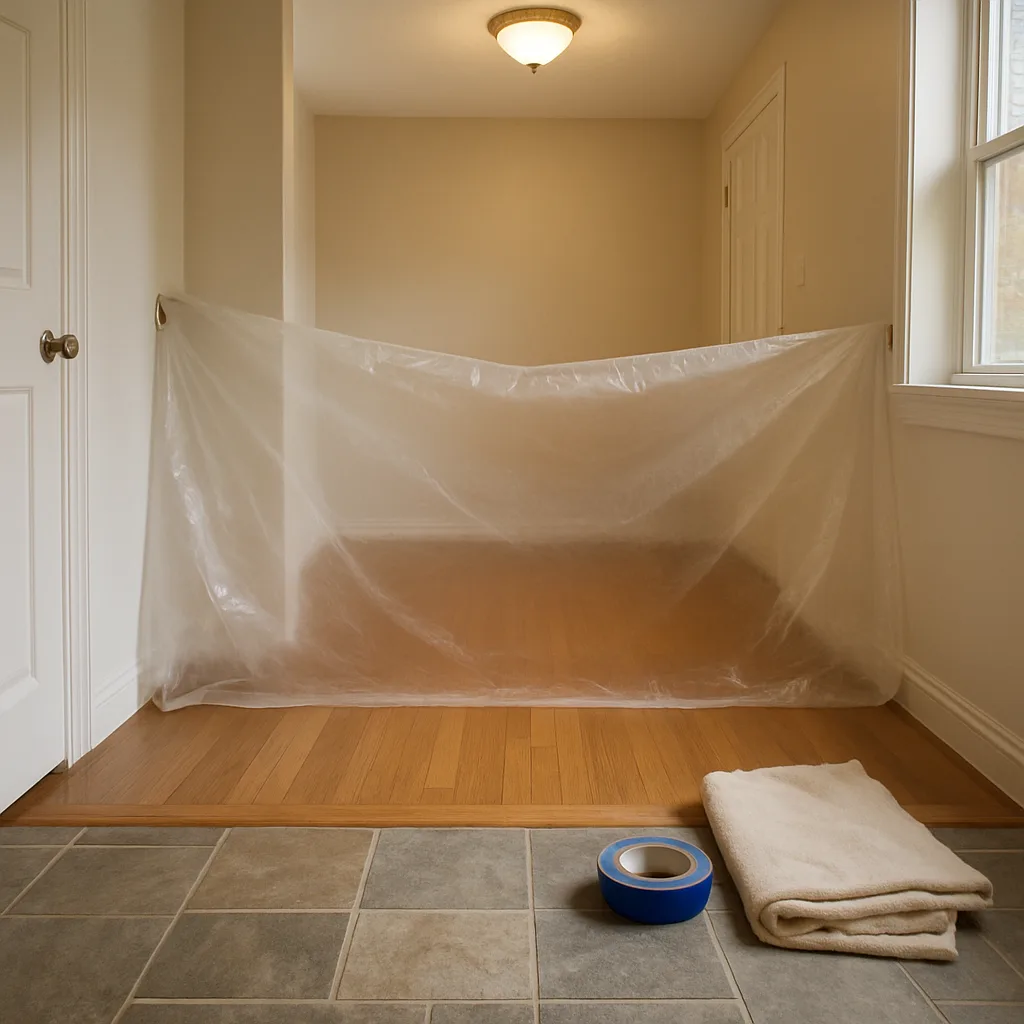
Here's something most homeowners don't think about until it's a problem. A lot of Chester homes, especially the older ones near the historic district, have marble or slate thresholds where hardwood meets an entryway or a bathroom. Recoat that wood floor without covering those transitions first, and you can end up with sealer or finish haze on stone that never should've touched it.
We treat that boundary line like it matters, because it does. Before any recoating work starts, we tape off and shield adjacent stone, tile, and grout lines. Marble and travertine are soft, porous materials. Finish products meant for wood can etch or dull them if they sit there too long. And grout, especially older grout that's already worn thin, soaks up whatever touches it.
This is where our background matters. Our team is IICRC certified in stone, masonry, and ceramic tile care, so we're not guessing about what's safe to expose to what. The difference between how a wood floor finish behaves on oak versus how it reacts sitting on limestone tile for even a few minutes matters.
Some homes make this trickier than others. Open-concept kitchens with hardwood butting straight into a tile floor, mudrooms with slate, powder rooms with marble tile flush against a hallway floor - these all need careful masking before we touch a single coat.
Skip this step and you're not just risking the wood floor looking good. You're risking damage to a stone or tile surface that's expensive and sometimes impossible to fully undo.
Common questions
Answers before the visit.
How long does a wood floor recoating take?
Most recoating jobs finish within one day for an average-sized room. We clean the floor, screen the old finish, then apply a fresh topcoat in even sections. Drying time adds extra hours before you can walk on it again. Bigger spaces or homes with several rooms may need a bit more time. We'll walk your space first and give you a clear timeline before we start any work.
What should I expect when you arrive to recoat my floors?
We start by walking through your space and checking for gouges, water stains, or spots worn down to bare wood. This tells us right away if recoating will hold or if something needs extra attention first. Next, we screen the existing finish so the new coat can grip. Then we clean every bit of dust from the grain and corners before applying the fresh topcoat evenly across the room.
Why do older Chester homes near the Route 10 corridor often need recoating?
Many homes in that area have original hardwood that's been recoated once or twice but never fully sanded. The wood underneath is still solid, so a fresh topcoat brings it back without removing any material. Full sanding wears down the boards each time it's done. Since these floors haven't hit that limit yet, recoating is usually the smarter, less invasive fix for this part of Chester.
How do I know if my floor needs recoating instead of a full refinish?
Check for raw wood or dark water rings first. If water beads on top instead of soaking in, your floor likely just needs recoating. Dull, scratched, or hazy finish in high-traffic paths without visible bare wood is a good sign too. But if you see gray or silver patches, deep gouges, or cupped boards, that points to refinishing instead. A quick photo can help us tell you which one applies.
Can I recoat my floor myself with a store-bought kit?
You can try, but skipping proper screening or cleaning often causes the new coat to peel within months. Dust left in the grain or old wax residue on the wood can block the finish from bonding right. We run a quick adhesion test before every job to catch these issues early. That step is easy to miss without the right tools, and it's usually why DIY recoats don't last.
Does Chester's humidity affect how the new finish cures?
Yes, seasonal humidity swings can affect drying and curing time if a coat is applied too fast. Rushing the finish in a room with shifting moisture levels can lead to uneven curing or a tacky surface. We apply coats in sections and give each one proper time to set before moving on. This matters most during humid stretches, when floors need extra patience to cure evenly.
Start with a photo