

Chester, Virginia · Precision Floor & Surface
Stone Countertop Polishing in Chester: Bring Back the Shine Without Replacing the Slab
Stone countertop polishing in Chester restores shine without a full slab replacement. Precision Floor and Surface comes to you. Call to schedule.
Dull, Etched, or Damaged: Diagnosing What's Really Wrong
Most calls start the same way. Someone spots a cloudy ring where a wine glass sat overnight, or a dull patch by the sink where lemon juice splashed. They think it's a stain. Usually it's not.
Etching happens when something acidic touches calcium-based stone, marble, travertine, some limestone counters, and eats a tiny bit of the polished surface off. It's not dirt sitting on top. It's a chemical burn in the stone itself, so scrubbing harder just makes it worse. Granite is tougher and resists etching, but it can still lose its shine from years of everyday wear, hard water spots, or the wrong cleaner stripping the sealer.
So how do you tell the difference? Run your hand over the spot. If it feels smooth but looks foggy or has a slightly different sheen than the rest of the counter, that's etching. If it feels rough, gritty, or has actual pitting you can catch a fingernail on, you're looking at deeper damage, maybe from an old repair or a chip that got worse over time.
We get calls from folks in older Chester homes near the Ecoff Avenue area where original marble vanity tops and kitchen counters have been in place since the house was built, and decades of everyday acid exposure, tomatoes, coffee, vinegar, has left the surface dull everywhere, not just in spots.
Here's the thing worth knowing before you call anyone: a real diagnosis needs a look, not a guess over the phone. That's exactly why we ask for photos first. A close-up shot in good light tells us more than a five-minute phone description ever could.
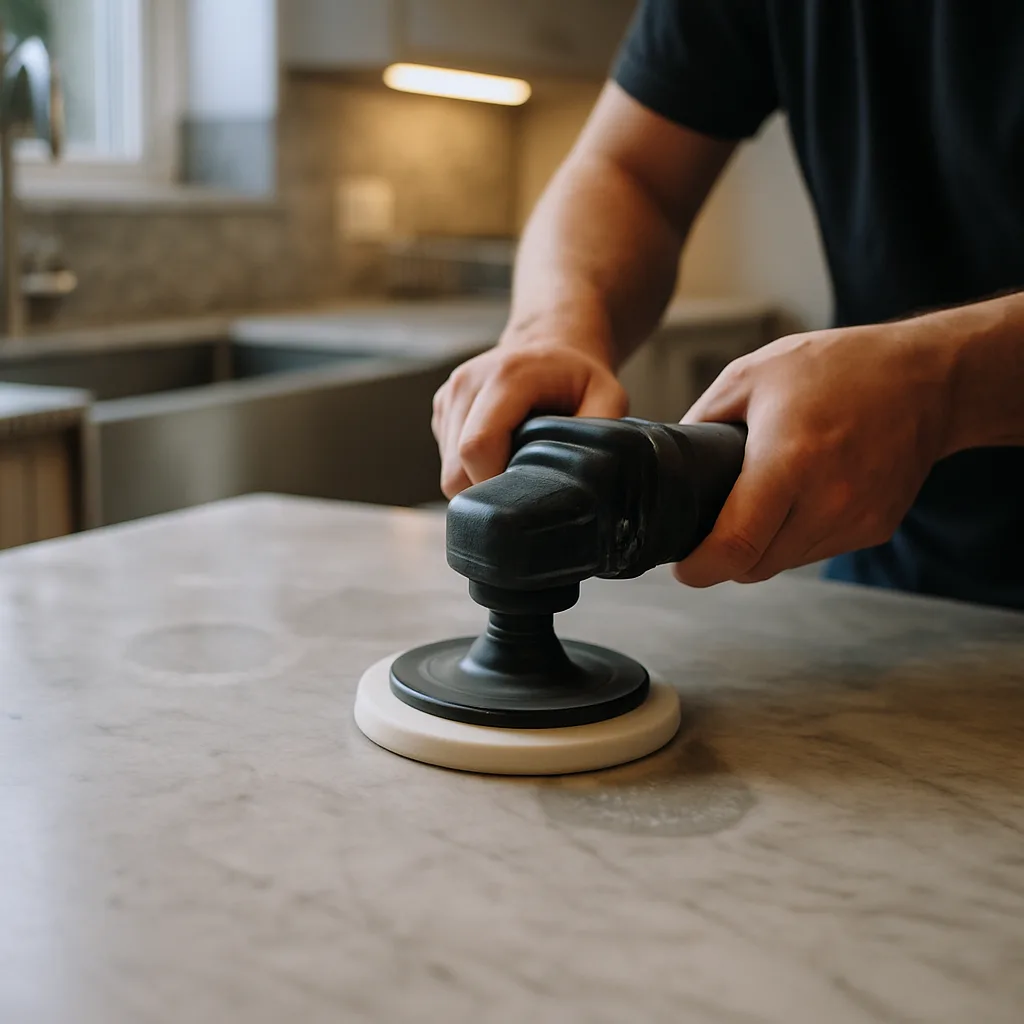
Polishing, Honing, and Sealing Are Three Different Steps
People call us and ask for "polishing" when what they really need is honing, sealing, or all three. These are not the same job, and doing the wrong one can waste your money.
Polishing is the shine step. We use diamond abrasive pads and buffing equipment to bring back the glossy reflection your granite or marble had on day one. It works on countertops that are scratched, dulled, or covered in a haze from years of cleaning products stripping the surface.
Honing comes before polishing, and sometimes it's the only step you need. If your marble has deep etching from lemon juice or vinegar, or your granite has scratches you can feel with a fingernail, honing levels the stone down past the damage. Then we polish on top of that. Skip honing and try to polish over etch marks, and you'll just get a shinier version of the same flaw.
Sealing is different again. It's not about shine at all - it's about protection. Granite and marble are porous. Without a sealer, wine, oil, and coffee soak in and stain the stone permanently. We recommend resealing on a regular schedule, especially in kitchens that see daily cooking. A lot of the newer construction we see around Chester has granite islands installed straight from the builder with a basic factory seal that wears thin within a couple years.
So which do you need? Most countertops need some combination of all three. That's exactly why we ask for a photo first. Send us a picture, tell us what's bothering you about the counter, and we'll tell you straight whether it's a quick polish or a full honing job.
When a Store-Bought Polish Won't Fix It (And When It's Fine to Wait)
Let's be honest for a second. Not every dull countertop needs a professional call.
If your granite just looks a little flat after months of daily wiping, a good quality granite sealer and a soft cloth might bring some shine back. That's a fair fix for light surface dust. Same goes for a quartz counter with water spots from the coffee maker, a damp cloth and some patience usually clears that right up. We'd rather tell you that now than have you pay for a service you didn't need.
But here's where store-bought stuff stops working, and it stops fast. Etching is not a stain. It's actual damage to the stone's surface, caused by acid, lemon juice, vinegar, tomato sauce, even some cleaning sprays eating into calcium-based stone like marble or travertine. No amount of rubbing with a polish pad fixes that. The chemical reaction has already changed the surface texture. You're not cleaning it anymore, you're trying to regrow stone that's been etched away.
So how do you tell the difference? Run your fingernail across the dull spot. If it feels smooth but looks cloudy, that's probably just buildup or haze, a cleaner might help. If you feel a slight dip or rough patch, that's etching, and it needs actual grinding and re-polishing work with diamond abrasives to level the surface back out.
Chester's humid summers make this worse on marble especially. Moisture holds acidic spills on the surface longer before they get wiped up. We see kitchens where a bottle of wine sat for twenty minutes and left a permanent ring nobody could scrub out. That's not a product problem. That's a stone problem, and it needs a trained hand, not a bottle from the store shelf.
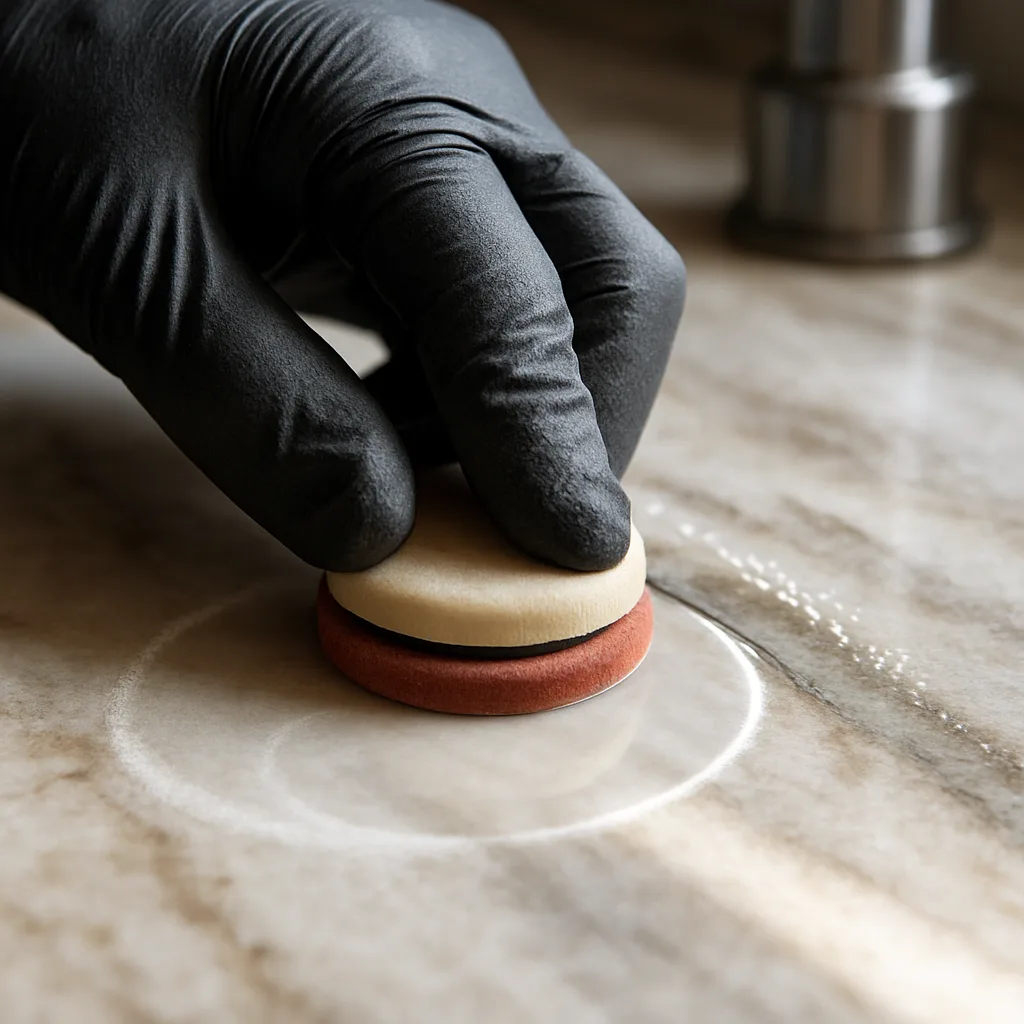
What Happens During a Professional Polishing Visit
Most homeowners picture polishing like waxing a car. It's not that. Stone countertop polishing is a controlled process that has to match the exact material sitting in your kitchen, granite, marble, or another natural stone, because each one reacts differently to the abrasives and compounds we use.
Here's how a typical visit runs:
- We inspect the surface first. Etching, dull spots, and scratch depth all get checked before any tool touches the stone.
- We test a small section. This confirms the right grit and compound for your specific countertop.
- We work the polishing pads across the surface in sections, checking sheen as we go.
- We clean off residue and dust completely.
- We apply a sealer if the stone calls for it. This helps protect against future etching from acidic spills.
That last step matters more than people think. A lot of etching we see in Chester kitchens comes from lemon juice, wine, or vinegar sitting on unsealed marble overnight. Once the shine is restored, sealing helps the surface resist the next spill.
How long does it take? Depends on the countertop size and how much damage we're correcting. A single kitchen island might take a couple hours. A full kitchen with heavy etching takes longer.
We don't rush this. Move too fast with the wrong grit and you can dull the stone further or leave uneven sheen, something an untrained DIY attempt almost always causes. That's part of why our owner is IICRC certified in stone care. It's not just about making things shiny, it's about knowing which compound belongs on which stone. Our team walks through each step with you before we start, so there are no surprises about what's happening to your countertop.
How Countertop Polishing Pricing Works
Countertop polishing pricing isn't one flat number. It depends on the stone, the damage, and how much surface area needs work. A granite counter with light etching costs less to fix than a marble counter with deep scratches and dull spots spread across three sections. Most companies in this trade price by square footage, then adjust for stone type and condition.
Marble and travertine usually cost more to polish than granite. Why? They're softer stones. Softer stone etches easier, and etching often means more passes with finer polishing compounds to bring back the shine. Granite tends to need fewer steps for the same result.
A few things drive the price up or down on any given job:
- How deep the etching or scratching goes into the stone
- Whether sealing is needed after polishing, since unsealed stone soaks up stains fast
- How many linear feet of counter you're working with, and how many corners or backsplashes cut into that
- Whether the stone has old wax or topical coatings that need stripping first
Before you hire anyone, ask what's included. Does the quote cover sealing? Is there a callback if a spot gets missed? What happens if they find damage under the surface once they start?
Here's how we keep it simple. Text us a few photos of your countertop and we'll give you a free quote right over the phone, no visit needed. It's the fastest way to get a real number instead of a guess.
If the job needs an in-person look before we can bid it, that visit runs between $75 and $125. That fee isn't wasted money, though. It gets applied straight to the service once you book. So you're never paying twice.
Photos are enough for us to price the job accurately the first time.
Common questions
Answers before the visit.
How soon can you come look at my countertop in Chester?
We ask for photos first, then schedule a visit based on what we see. A clear picture in good light often tells us more than a phone call ever could. Once we know if you're dealing with etching, dullness, or scratches, we can give you a real timeline instead of a guess. Homeowners near Ecoff Avenue with original marble often reach out during summer, when humidity makes spill damage show up faster on older counters.
What actually happens when someone comes to polish my counters?
We inspect the surface first, then test a small section before touching the whole counter. This confirms the right grit and compound for your granite or marble. We work in sections, checking the shine as we go, then clean off all the dust and residue. If your stone needs it, we finish with a sealer to help protect against future etching from spills.
Why do marble counters in older Chester homes look dull everywhere, not just in spots?
This usually means years of acidic spills, coffee, tomatoes, vinegar, have etched the whole surface slowly over time. We see this a lot in older Chester homes with original marble vanity tops and kitchen counters that have never been honed. Chester's humid summers make it worse, since moisture keeps acidic spills sitting on the surface longer before anyone wipes them up. A full honing and polishing job usually brings back an even shine.
How do I know if I need polishing, honing, or sealing?
Most counters need some combination of all three, and the right mix depends on what's actually wrong. Polishing brings back shine on scratched or dulled stone. Honing levels out deeper etching or scratches before polishing can work. Sealing protects porous granite and marble from future stains. Send us a photo and tell us what's bothering you, and we'll tell you straight which steps your counter actually needs.
Can I fix an etched countertop myself before calling a professional?
You can try, but store-bought polish won't fix real etching. Etching is a chemical burn in the stone, not a stain sitting on top, so scrubbing or polish pads just don't reach it. A dull haze from cleaning products might respond to a good sealer and a soft cloth. But if you feel a dip or rough patch with your fingernail, that's actual damage that needs diamond abrasive grinding to level back out.
Will granite countertops from newer Chester builds need this kind of work too?
Yes, newer granite islands often come with only a basic factory seal that wears thin within a couple years. Once that seal fades, everyday wear, hard water spots, and cleaning products can strip the shine faster than homeowners expect. Granite resists etching better than marble, but it still loses its glow over time. Regular resealing on a set schedule keeps kitchen counters looking closer to their day-one shine.
Start with a photo