
Porcelain Countertop Repair in Richmond, VA
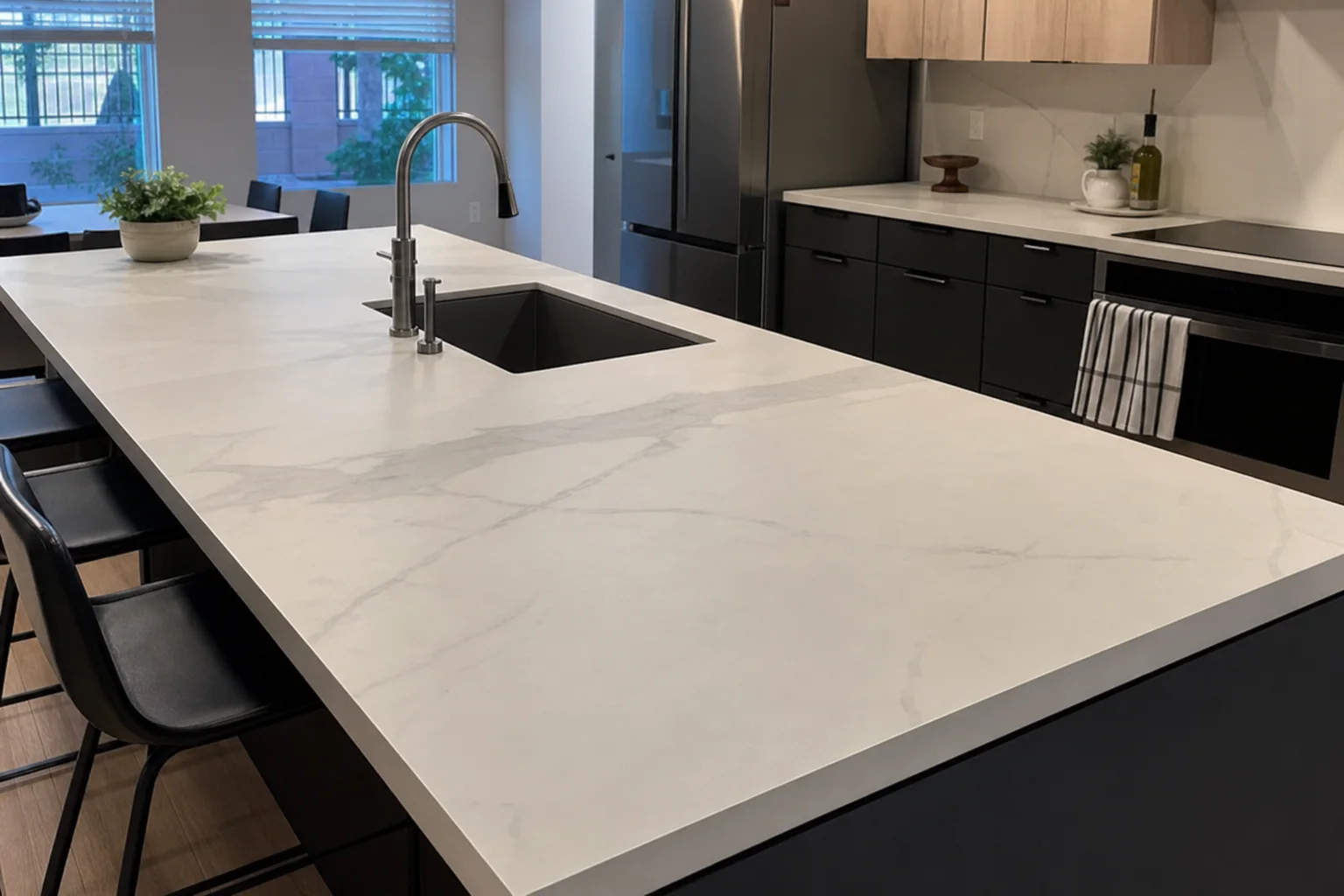
Porcelain is a clean, versatile countertop surface that works well in kitchens, bathrooms, and covered outdoor spaces. It absorbs very little water, resists household acids, and never needs sealing. Most repair calls involve a chipped edge, damaged corner, or crack near a seam or cutout. We inspect the location and pattern before explaining what can be repaired and how closely it may blend.
Google Reviews
Scroll to read all 9 reviews →
“Great work and even better customer service. Very professional, easy to work with, and you can tell they take pride in what they do. Definitely recommend Precision Floor & Surface Restoration if you need your floors or countertops brought back to life.”★★★★★
“Absolutely amazing work! From start to finish, everything was handled professionally and with great attention to detail. They took the time to make sure everything was done right, and the results speak for themselves. The floors and surfaces came out looking incredible, and you can tell they genuinely take pride in their work. I couldn’t be happier with the finished product and would definitely recommend them to anyone looking for quality work and great service. Five stars all the way! ⭐⭐⭐⭐⭐”★★★★★
“Precision Floor & Surface Restoration exceeded my expectations! Professional, punctual, and detail-oriented from start to finish. My floors look amazing, and the quality of work was outstanding. Highly recommend to anyone looking for top-notch floor and surface restoration services.”★★★★★
“Removed stains that previous cleaning services could not. Made the impossible - possible!”★★★★★
“Great quality work! Very professional with communication!!”★★★★★
“Clean and very professional. Highly recommend”★★★★★
“I highly recommend his floor cleaning services! He’s reliable, professional, and does an excellent job. My floors looked amazing, and I couldn’t be happier with the results.”★★★★★ ★★★★★
Why porcelain edges need extra care
Porcelain is made from clay, quartz, and feldspar fired into a dense slab. Its broad face is hard and resistant to scratching, staining, and everyday cleaning products.
The edges behave differently. Fabrication often creates thin mitered corners, and those areas concentrate the force of a dropped pan or heavy object.
That is why a countertop that looks almost untouched across the middle may still develop a clean chip along an edge. These smaller chips can often be rebuilt with a color-matched repair material.
Why porcelain is low maintenance
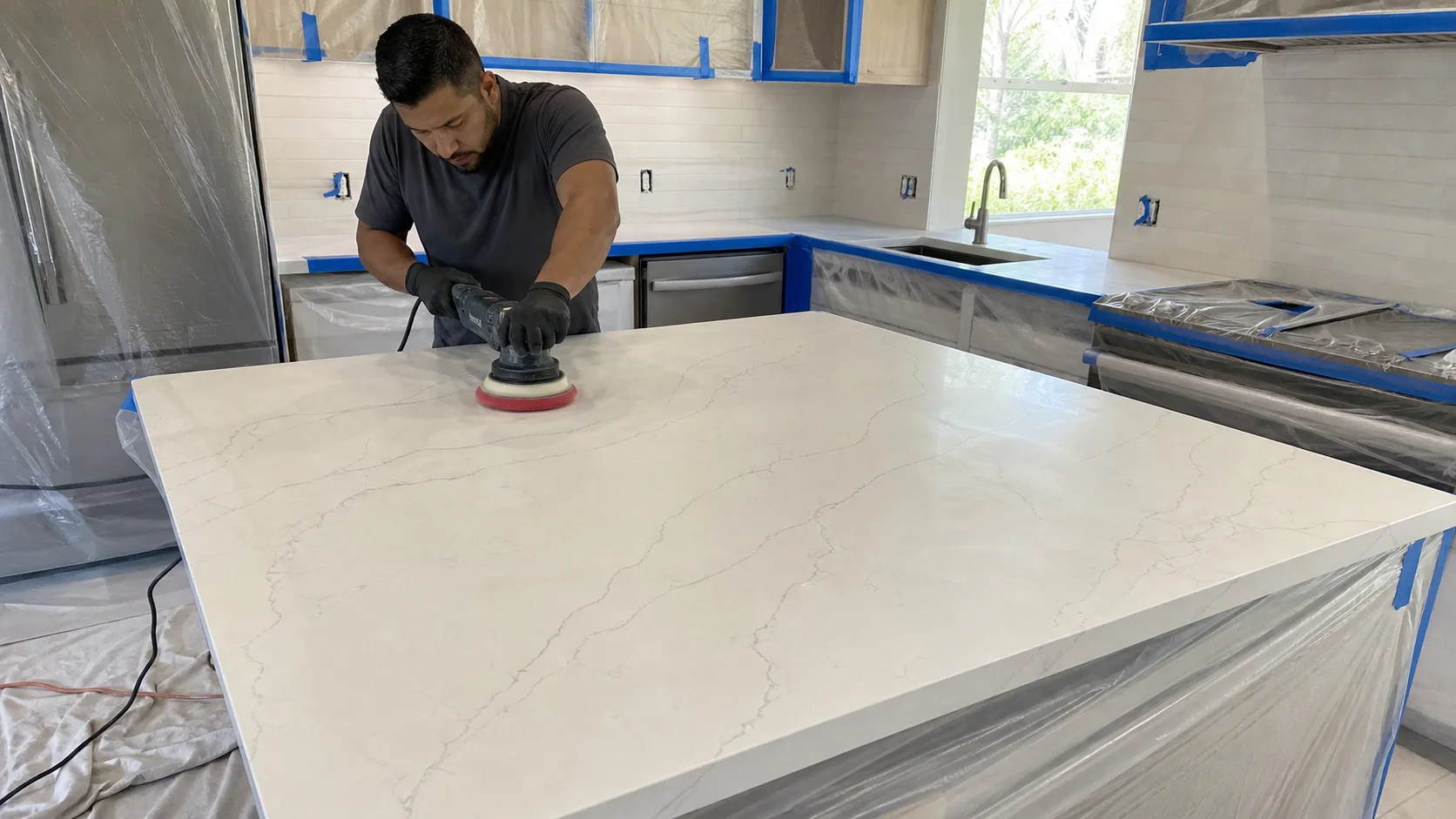
Porcelain absorbs very little moisture, so most spills stay on the surface and clean away easily. It also resists common kitchen acids and does not need a penetrating sealer.
Most lasting problems are physical rather than chemical. Edge chips, corner damage, and cracks near seams or cutouts deserve more attention than ordinary spills.
What we get called about around Richmond
- Chipped edges and corners, comfortably the most common, from a pan or hard object catching a mitered edge with fairly ordinary force
- Printed pattern breached, where a deep chip goes through a surface-printed veining layer and exposes the plain base body underneath
- Cracking around cutouts, concentrating where support under a sink or cooktop was never adequate at install
- Thermal shock cracks, uncommon but real, usually a very hot pan meeting a cold slab near a seam
Residue, stain, etch, or damage?
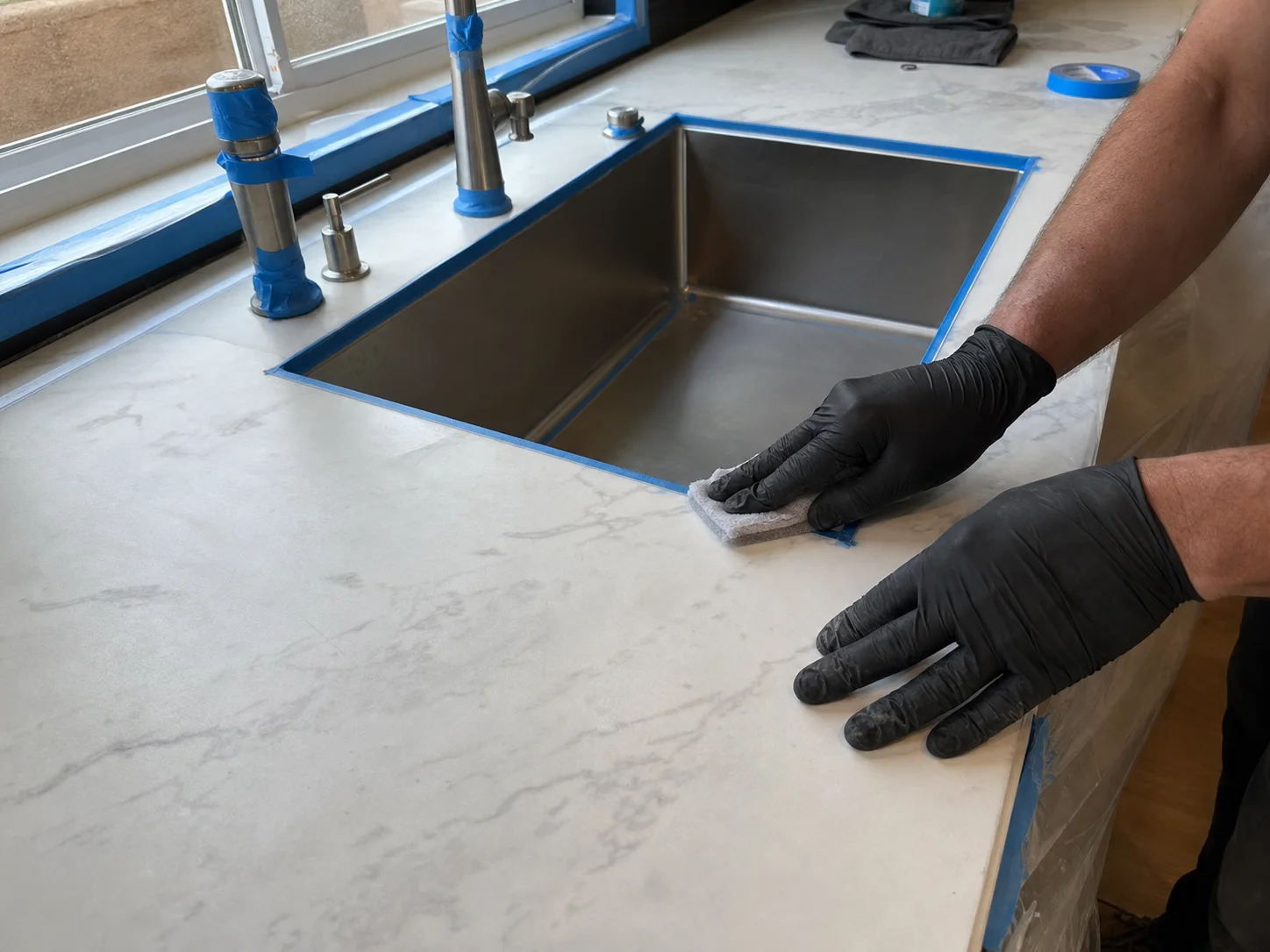
Porcelain collapses this framework, because two of the four categories barely exist for it.
- Residue or film is where nearly all porcelain complaints land. Cleaning residue or light mineral spotting sitting entirely on the surface, since nothing can soak in. Routine cleaning removes it.
- Stain is genuinely rare. Absorption at or below 0.5 percent means a substance would need the surface already damaged to get any purchase.
- Etch does not apply at all. No calcium carbonate, no acid reaction, no mechanism.
- Damage is the category that matters, and effectively the only one. Chips, cracks, and edge fractures are mechanical, and this is where honest talk about repairability belongs.
How we approach a porcelain counter
- Find out how the pattern was applied. Full-body or surface print. This single fact predicts more about whether a repair will disappear than anything else we could check, so it comes first.
- Locate the damage precisely. Edge, corner, seam, or field. Porcelain damage is strongly positional, and where it sits tells us what caused it.
- Ask what happened. Impact and thermal events leave different signatures, and people usually remember the pan.
- Check the support under cutouts. Cracks that trace to inadequate support will come back if only the visible damage gets fixed.
- Be certain before committing. Porcelain gives no second attempt. Stone can be honed again if a repair goes wrong. Porcelain cannot, so we confirm the extent of the damage before anything is filled.
What we can actually do
Edge and corner chips are porcelain’s most repairable damage. A color-matched epoxy fill rebuilds the shape, and on textured or lightly patterned surfaces it blends convincingly.
On printed slabs, a hand-painted touch-up over the epoxy can carry the pattern lines across the repair. Worth being clear about what that is: a cosmetic match by a person with a brush, not a restoration of the printed layer.
Hairline seam issues sometimes resolve by resealing and properly re-supporting the joint, provided the crack has not run into the body of the slab.
Where porcelain restoration has limits
A crack through the body of the slab cannot be made invisible. There is no polish layer to restore and no honing sequence to feather into, which is exactly what makes stone forgiving and porcelain not.
Damage crossing a printed vein is the other hard case. Grinding into a printed surface removes the pattern permanently rather than revealing more of it underneath, so the more you work at it the worse it reads.
In both situations, replacing the section is the honest recommendation. A cosmetic repair that draws the eye is worse than the damage it was meant to hide.
Everyday situations that can damage porcelain
Porcelain usually handles meals and cleanup without trouble. Damage is more likely when a heavy pan strikes a thin edge, someone leans weight onto an unsupported overhang, or a hot item is placed near a cold seam.
A film near the sink is normally residue sitting on top, not a stain inside the slab. Start with mild soap and water. If a mark does not clean away, look closely for a small chip, fine crack, or damage through the printed finish.
Protecting edges and sending us a clear photo early gives the best chance of making a small repair blend before the damaged area grows.
How Richmond homes can affect porcelain
Porcelain handles sunlight and humidity well, which makes it a practical option for covered outdoor kitchens and screened porches. There is no resin or sealer on the face that needs regular renewal.
The surrounding installation still matters. Moisture around a sink cutout or seam can reach cabinetry and support materials underneath, while a very hot pan placed on a cold outdoor slab may create stress near a joint.
Keep seams dry, use a trivet for hot cookware, and inspect outdoor edges and cutouts periodically. These steps protect the installation even when the porcelain surface itself remains unchanged.
How to care for porcelain
- Mild soap and water, and never a sealer, which does nothing but leave a film
- A cutting board, not because the face will scratch easily but because there is no upside to finding out
- Protect edges and corners from impact, and set heavy cookware down away from an edge
- Confirm the support under sink and cooktop cutouts, since that is where cracking concentrates
- A hot pad for cookware straight off the burner, particularly near a seam
When it is worth a call
Call for any chip at an edge or corner, a crack near a seam or cutout, or damage that has exposed the base material under a printed pattern.
Porcelain’s repair options are genuinely narrower than Corian’s or natural stone’s, so an early honest read, repairable cosmetic fix versus section replacement, saves you paying for an attempt that will not hold or will not blend.
Common porcelain questions
Is the white buildup on my porcelain countertop mineral film or damage?
Porcelain absorbs very little moisture, so white buildup usually sits on top as soap, cleaner residue, or mineral film. Start with mild soap and water and dry the area thoroughly. If the mark remains, inspect it in side light for a fine crack, chip, or damage to the printed surface before using a stronger product.
Is porcelain a good choice for an outdoor kitchen or a screened porch here?
It is one of the better ones. Porcelain is UV stable, so it will not fade, chalk, or yellow the way resin-based surfaces eventually do under sustained sun, and there is no sealer to break down. What needs attention outdoors is not the material but the build. Edges want protecting from impact, and cutouts around a grill or sink need proper support underneath. Virginia winters also widen the temperature gap a hot pan creates against a cold slab, so a trivet earns its keep on an unheated install.
Why did my porcelain chip when it is supposed to be harder than granite?
Hardness and impact resistance are different properties. The broad porcelain face resists scratching very well, but mitered edges and corners are thinner and concentrate the force of an impact. A dropped pan may leave the middle untouched while taking a clean chip from an exposed corner.
My chip exposed a different color underneath. What happened?
Your slab has a printed pattern rather than a full-body one, and the chip went through it. Many porcelain slabs carry their veining as a surface layer over a plain base body, so a deep chip exposes that base, which typically looks nothing like the finish around it. Full-body slabs carry the pattern through the thickness and hide chips far better. This is the single biggest factor in whether a repair can be made to disappear, so it is the first thing we check.
Can a cracked porcelain slab be repaired?
It depends entirely on whether the crack is at the surface or through the body. A hairline issue at a seam that has not propagated into the slab can sometimes be addressed by resealing and properly re-supporting the joint. A crack running through the body of the slab cannot be made invisible, because porcelain has no polish layer to restore and no honing sequence to blend into. At that point we will tell you section replacement is the honest answer rather than sell you a fill that looks worse than the crack.
Does porcelain ever need sealing?
No, and a sealer applied to it accomplishes nothing except leaving a film on top. Sealing works by occupying pore space, and at 0.5 percent absorption or lower there is effectively no pore space to occupy. Anyone recommending sealer for a porcelain countertop is either confusing it with natural stone or selling a service you do not need.