
Chester, Virginia · Precision Floor & Surface
No-Sanding Wood Floor Restoration in Chester: Restore the Shine, Skip the Dust
Precision Floor and Surface brings no-sanding wood floor restoration to Chester homes, restoring shine without dust or downtime. Call to schedule your visit.
Signs Your Floor Qualifies for No-Sand Recoating
Not every worn floor needs sanding. Most don't. The trick is knowing what you're looking at before you assume the worst.
Here's what we check for when someone in Chester texts us a photo asking if their floor can be saved without sanding:
- Surface scratches and light scuffs that don't dig into the wood itself, just the finish sitting on top
- Dull, cloudy patches near entryways or under rugs where foot traffic wore the topcoat thin
- Faint water rings or minor humidity haze, common in older Chester homes near the Appomattox River where seasonal moisture swings are rougher on original hardwood
- Color that's uneven room to room but the wood grain still looks tight and solid underneath
- No deep gouges you can catch a fingernail on, and no soft or spongy spots when you press down
If your floor matches most of that list, you're likely a good candidate. We see this every week, homeowners convinced their whole floor is ruined when really it's just the finish that's tired, not the wood.
Here's a quick test. Run your hand across the floor near a doorway. Feel any texture change, any grit or roughness? That's usually finish wear, not structural damage. Now check for actual cupping or dark staining that goes into the wood grain. That's a different conversation.
One more thing worth mentioning: pet scratches on the surface only, not through to bare wood, almost always qualify too. So does the classic Chester story we hear a lot, a rental or resale home where the floors look tired from years of cleaning products stripping the shine but the boards themselves are still in good shape underneath - that's the kind of job recoating was made for.
When Your Floor Still Needs Full Sanding
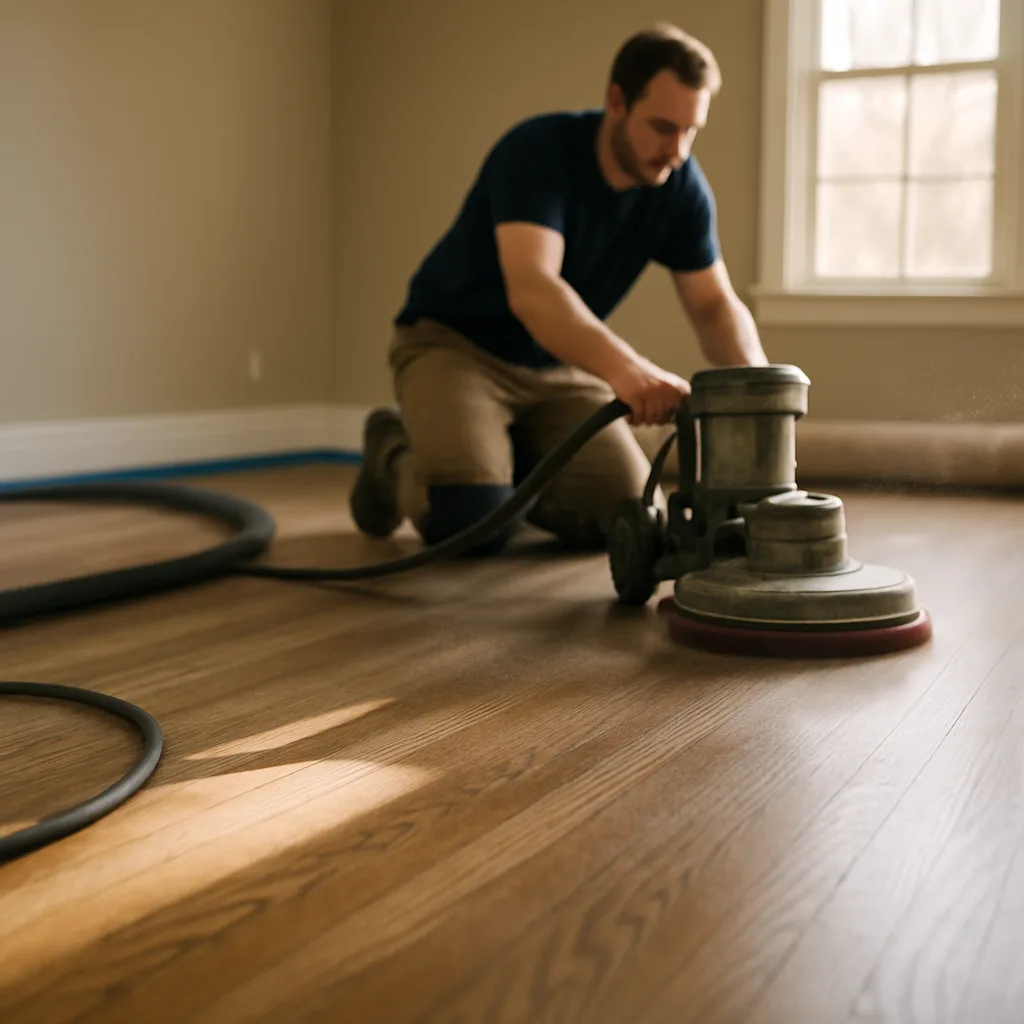
Let's be honest with you here. No-sanding restoration works on a lot of floors, but not every floor. Some jobs need a drum sander, plain and simple.
Here's how you know. If you can see raw wood fibers standing up, or if the finish is worn clean through to bare wood in high-traffic paths, buffing and recoating won't fix that. Deep gouges from moving furniture, pet claw marks that cut into the grain, or water stains that have soaked down into the boards themselves, these all sit below the surface. Our polishing and recoating process cleans and restores the top layer. It can't pull a stain out from three millimeters down.
We see this a lot in older Chester homes near the historic district, where original heart pine or oak floors have gone through decades of humidity swings. Virginia summers push moisture into wood, winters dry it back out. Over enough years that cycle cups and crowns the boards. Once a floor's physically warped like that, no amount of buffing flattens it back out.
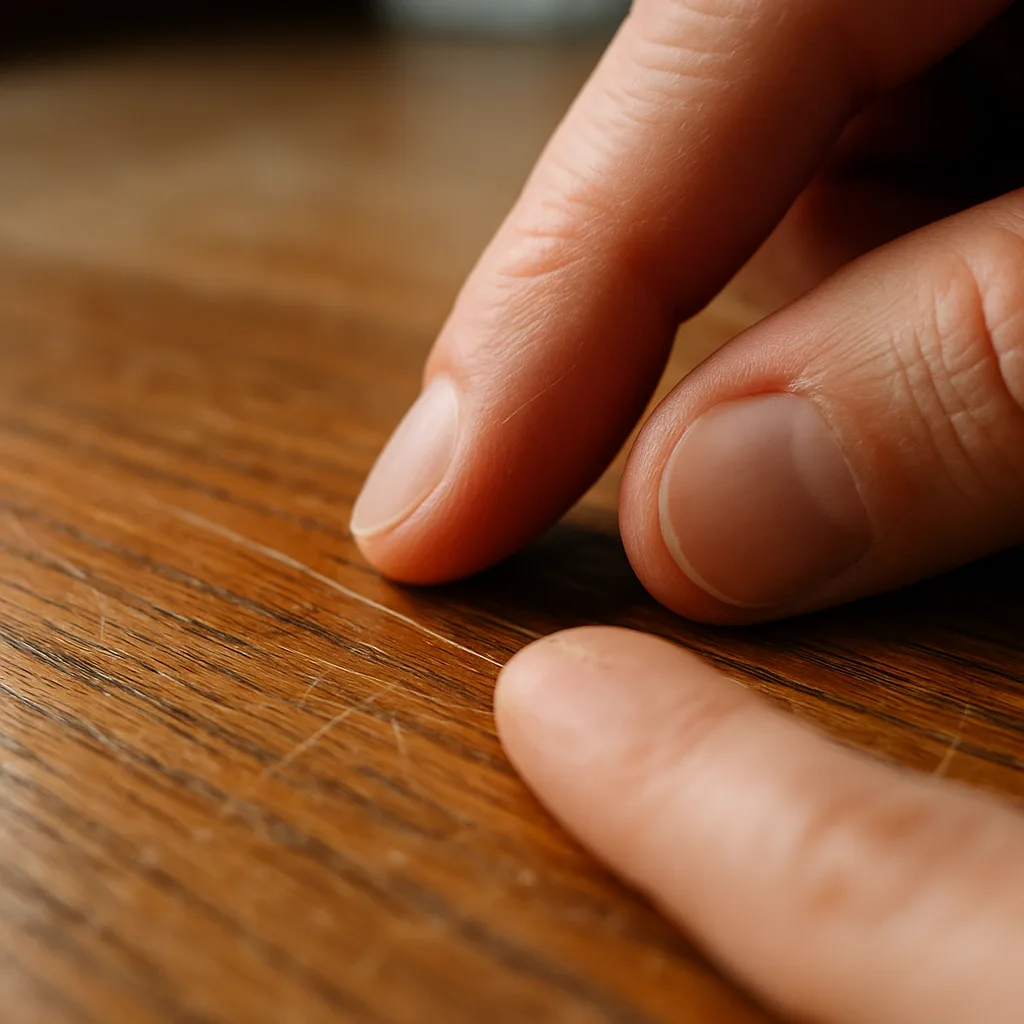
So what's the real test? Try this: run your fingernail across the worst section. If it catches on raw wood, or if you can feel the grain texture instead of a smooth finish, you're past the point where recoating helps. Same goes for floors that have been sanded down too many times already. Eventually there's not enough wood thickness left to work with.
We'd rather tell you that upfront than take a job that won't hold up. If your floor falls into this category, a full sanding and refinish is the honest answer, even though it's not what we specialize in here. Better you know now than after you've paid for something that won't last.
How Screen-and-Recoat Restoration Works
Sanding rips off layers of good wood just to get to the finish problem. Screen-and-recoat skips that step. We're only working on the finish, not the wood itself, so there's no dust storm and no weeks of waiting for bare wood to get sealed back up.
Here's the actual process we run on most jobs:
- We deep clean the floor first. Old wax, grime, and pet oil trapped in the finish will wreck a new coat if it's not pulled out first.
- Next comes the screening. This is a mechanical abrading step, think of it like scuffing up glass so paint sticks. We're roughing up the existing finish, not the wood underneath.
- We vacuum and tack the whole surface. Any dust left behind shows up as little bumps under the new coat, so this step matters more than people think.
- Then we apply a fresh topcoat. Depending on the floor and the wear pattern, we'll do a single coat or build up two.
- Cure time. Foot traffic can usually resume same day, furniture waits a bit longer.
Chester has a lot of homes built in the 90s and early 2000s with original oak flooring, and that finish typically hits the failure point somewhere between year eight and year twelve depending on humidity swings through the seasons here. That's usually when the polyurethane starts going cloudy or thin, not when the wood itself is damaged.
That's exactly what we find under a dull floor. Worn finish, not worn wood.
We test adhesion and check for wax buildup before we ever screen a floor. Skip that check and the new coat can peel right back off in sheets within a few months. That's a callback nobody wants, us included.
What Drives the Cost of No-Sand Floor Restoration
Every floor tells us something different. So the honest answer to "what will this cost" is always: it depends on what's under your feet. No two jobs price out the same way.
Square footage matters, sure. But condition matters more. A floor with light traffic wear and a few dull spots takes less work than one with deep embedded soil ground into the grain, or years of wax buildup from old cleaning products. We see this every week. Two rooms can look almost identical from across the house, then one turns out to need three passes of buffing and the other needs one.
Coat count changes things too. Some floors just need a fresh top coat to bring back the shine. Others need the old finish stripped back before a new coat will even bond right. Humidity plays a role here in Chester, especially in older homes near the James River where seasonal moisture swings can leave finish cloudy or slightly lifted at the seams.
Room layout affects labor time. Open floor plans move faster than homes with lots of doorways, transitions, and furniture to work around. Wood species matters, too. Oak and pine behave differently under a buffer than engineered hardwood does.
Here's what we'd ask any provider before hiring: how do they assess condition before quoting, do they test a small area first, and what's included in the price once work starts?
We keep our own process low pressure. Text us a few photos and we'll usually give you a free estimate right there. If we need to come out and look in person, that visit gets applied toward whatever service you end up booking.
Restoring Original Hardwood Near Bermuda Hundred
Bermuda Hundred sits right on the water, and that changes what happens to wood floors out there. Homes near the Appomattox River with humidity swings that inland Chester properties just don't see as bad. We show up to a lot of houses out there with original oak or heart pine floors that have cupped a little at the edges, gray patches where moisture crept in near exterior doors, and a dull, tired look across the whole room.
Here's the thing about original hardwood in that area, it's usually thicker and better made than what gets installed today. That's good news for you. Thick, solid wood can take a light screening and recoat without losing its life. Sanding it down removes wood you can't get back, and on older floors near the river, you don't have a lot of extra material to spare.
So what do we do? We clean out the embedded grit and old wax buildup, buff the surface, then apply a fresh coat that seals it against the humidity swings coming off the river. No dust, no ripping up boards, no waiting a week for the house to air out.
Homeowners near Bermuda Hundred think their floor is done for. It's usually not. It's just tired, humid, and overdue for the right kind of attention. And if the wood's cupped bad enough that it's structural, we'll tell you straight, that's a different job. But for the average worn floor out there, restoration gets it looking right again without touching the original character of the house.
Common questions
Answers before the visit.
How do I know if my floor needs sanding or just recoating?
Run your hand across the floor near a doorway and check for rough patches or grit. If you feel texture changes but no raw wood or soft spots, you're likely a good candidate for no-sand restoration. Deep gouges, water stains soaked into the boards, or floors sanded too many times before usually mean full sanding is the better route. We check both signs before we ever recommend one option over the other.
What should I expect when you come to look at my floor in Chester?
We start by testing adhesion and checking for wax buildup before recommending anything. This step matters because skipping it can cause a new coat to peel within months. We'll walk the floor with you, point out where finish wear versus wood damage shows up, and explain which sections qualify for screen-and-recoat. Many Chester homes near the historic district have older heart pine or oak, so we look closely at humidity-related cupping too.
How long does screen-and-recoat restoration take?
Most jobs finish the same day, with foot traffic allowed again shortly after the final coat cures. Furniture placement usually needs to wait a bit longer so the topcoat sets fully. The process includes deep cleaning, screening the old finish, vacuuming away dust, then applying one or two coats depending on wear. There's no weeks-long wait like full sanding requires, since we're never exposing bare wood.
Why do so many Chester homes need floor recoating around the same age?
Homes built in the 90s and early 2000s with original oak flooring often hit finish failure between year eight and year twelve. Chester's humidity swings through the seasons speed this up, making the polyurethane go cloudy or thin well before the wood itself is damaged. That's why a floor can look ruined but actually just needs its topcoat refreshed, not a full sand-down.
Can pet scratches or water rings be fixed without sanding?
Surface-level pet scratches and light water rings usually qualify for no-sand restoration, as long as they haven't cut into the wood grain. We see this a lot in older Chester homes near the Appomattox River, where seasonal moisture leaves a faint haze on the finish. If you press down and feel no soft or spongy spot, and a fingernail doesn't catch on raw wood, recoating can usually restore the shine.
What if my floor has been recoated or sanded before?
A floor can usually handle recoating again as long as there's enough finish and wood thickness left to work with. Floors sanded down too many times over the years eventually run out of material to buff safely. We'd rather tell you upfront if a floor has hit that point than take on a job that won't hold up long term.
Start with a photo