
Chester, Virginia · Precision Floor & Surface
Bring Back the Shine: Marble Countertop Polishing in Chester
Marble countertop polishing in Chester that restores lasting shine and smooths etch marks. We come to your home. Call to schedule your service today.
Diagnosing Marble Countertop Damage in Chester Homes
Marble looks tough. It's not. It's a soft stone, and most of the damage we see on Chester countertops comes down to acid, not age. Lemon juice, tomato sauce, wine, even a fizzy soda left too long. These eat into the surface and leave a dull gray ring. That's called etching, and it's chemical, not a scratch. You can't buff it out with a rag.
So how do you tell the difference between etching and a scratch? Run your finger over the spot. If it feels smooth but looks cloudy, that's etching. If you can feel a groove, that's mechanical wear, usually from a knife or a rough sponge. We check both when we look at a countertop because they need different fixes.
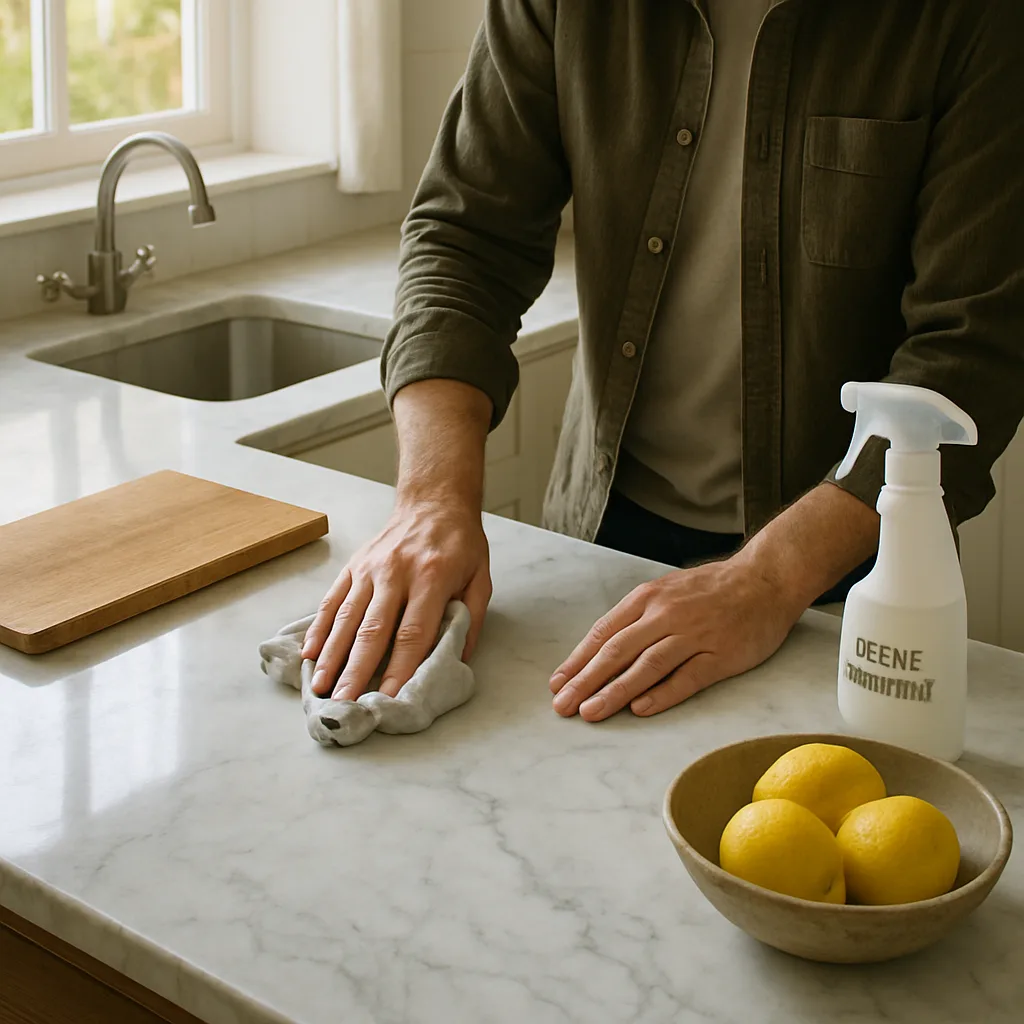
Then there's the dull, tired look that builds up over years. Not one spill, hundreds of small ones, plus daily wiping with the wrong cleaner. Homes along Route 10 through Chester tend to have kitchens with a lot of natural light, and that light shows every dull patch and water spot. Homeowners call us because the counter used to shine and now it just looks flat.
Staining is a different animal entirely. Oil-based stains soak in and darken the stone from below the surface. Wiping won't touch it. That's a job for poultice work, not polishing alone.
Here's the thing - not every mark means your marble is ruined. Most of what we see is treatable. But knowing which problem you've got, etching, scratching, staining, or just years of buildup, changes how we approach the whole job.
Polishing vs. Honing vs. Sealing: Picking the Right Fix
Here's where a lot of homeowners get stuck. You look at your marble counter and think "it needs polishing" because that's the word everyone uses. But polishing isn't always the right call, and using the wrong process can waste your money or leave the problem untouched.
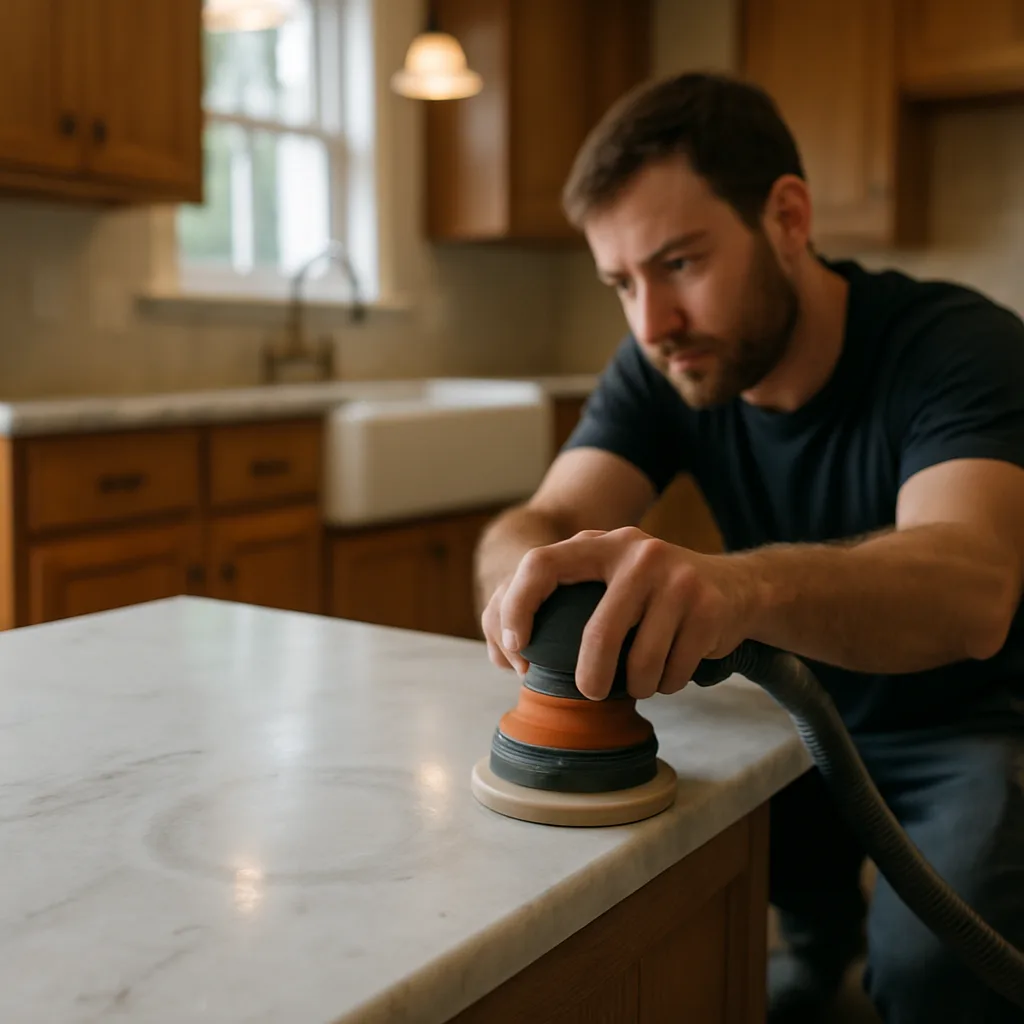
Polishing brings back shine on marble that's dull but not deeply damaged. It works the surface with fine abrasives until light reflects evenly again. Honing is a different job entirely. Honing removes a thin layer of stone to erase etch marks, scratches, and stains that sit below the surface. If your counter has cloudy rings from wine glasses or citrus, that's etching, and no amount of polishing fixes it. You need honing first, then polishing to restore the finish level you want, whether that's a soft matte look or a brighter shine.
Sealing is the maintenance step, not a fix. A sealer doesn't restore anything. It just slows down how fast the stone absorbs future spills.
So how do you know which one you need? Ask yourself these questions before calling anyone:
- Does the dullness wipe off with a good cleaning, or is it baked into the stone?
- Can you feel a rough spot or dip where a spill sat too long?
- Was the counter ever sealed, and do you know when?
- Is the damage isolated to one spot near the sink or stove, or spread across the whole slab?
We get calls every week from folks who paid someone to "polish" a counter that really needed honing first. It didn't hold. Text us a photo and we'll tell you straight which process your marble needs, no guessing involved.
When Polishing Won't Fix Your Marble
Polishing works wonders on dull, scratched, or lightly etched marble. But it's not magic, and we'll tell you straight when it's not the right move.
If your marble countertop has deep cracks running through the stone, polishing won't close them. Cracks like that usually mean the stone took a hard hit, or there's movement happening underneath from a cabinet or subfloor issue. Grinding and buffing the surface just smooths the edges of a problem that's still there. Same goes for chips where a corner or edge has broken off completely. We can polish around a chip and make the surrounding area shine, but we can't regrow missing stone. Deep staining is another one. Marble is porous, so oil, wine, or coffee that's sat too long can soak in past the surface layer. Light staining often lifts with the right honing and polishing process. Set-in stains that have penetrated deep into the stone sometimes need a poultice treatment first, and even then, some staining is permanent - the color's just part of the stone now. And here's the honest one: if your countertop has been etched, scratched, and re-etched so many times over the years that there's almost no original polished surface left, you're looking at heavy material removal, not a quick shine job. That's still doable in most cases. It just takes more time and more aggressive honing steps than a routine polish. Not sure which category you're in? That's really common. Most homeowners can't tell etching from staining from actual stone damage just by looking at it. We're IICRC certified in stone care, so when you text us a photo, we're not guessing. We're looking at the pattern of damage and telling you what's realistic before you spend a dime.
What Happens During Professional Marble Polishing
So what happens when we show up to polish your marble countertop? It's not just a quick buff and out the door. Marble is a soft stone, calcium carbonate mostly, and it reacts to acid. That's why lemon juice, wine, even tomato sauce left too long can leave a dull gray ring called etching. Etching isn't a stain sitting on top. It's actual damage to the stone's surface, and that distinction changes the whole approach.
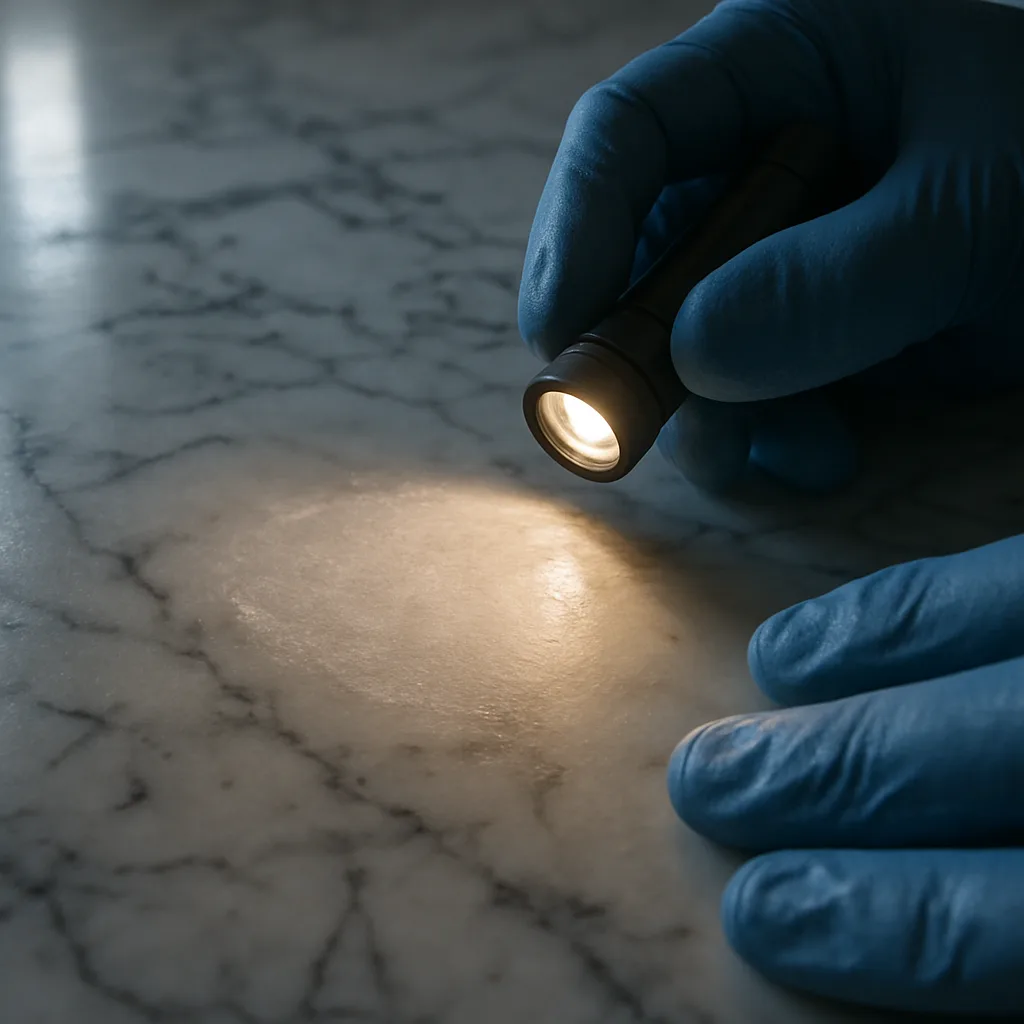
First we inspect the surface up close, checking for etch marks, scratches, and dull spots versus deeper chips or cracks that might need repair work first. We're IICRC certified in stone care, and that training matters here because using the wrong grit or the wrong compound on marble can make etching worse instead of better.
- We clean the countertop fully to strip away soap film, grease, and grit that would just scratch the stone during polishing.
- We test a small hidden area to check the marble's hardness and how it responds before working the whole surface.
- We work through progressively finer diamond abrasive pads, honing out etches and scratches step by step.
- We apply a marble-specific polishing compound to bring back the natural shine, working it in by hand or machine depending on the counter's shape and edges.
- We buff the surface to a consistent, even finish so there's no cloudy patch where the old etch used to be.
- We seal the countertop to help protect against future etching from everyday spills.
That last step matters more than people think. A fresh polish on an unsealed counter is like painting over rust. It looks good for a minute. Sealing doesn't make marble bulletproof. Nothing does, but it slows down how fast the next spill soaks in and causes trouble.
Most kitchen counters take a few hours from start to finish. Bathroom vanities go faster. And if there's a deep chip or crack alongside the dull spots, we'll flag that before we start so there are no surprises once the polishing begins.
Keeping Marble Countertops Looking New Year-Round
Marble is soft. That's the truth nobody at the stone counter tells you when you fall in love with the veining. It's calcium carbonate, basically limestone under pressure, and anything acidic eats into it. Lemon juice, vinegar, tomato sauce, even some wines - they'll etch a dull mark into polished marble in seconds. You won't always notice it happening. Then one day you wipe the counter and catch a cloudy ring where a glass sat overnight.
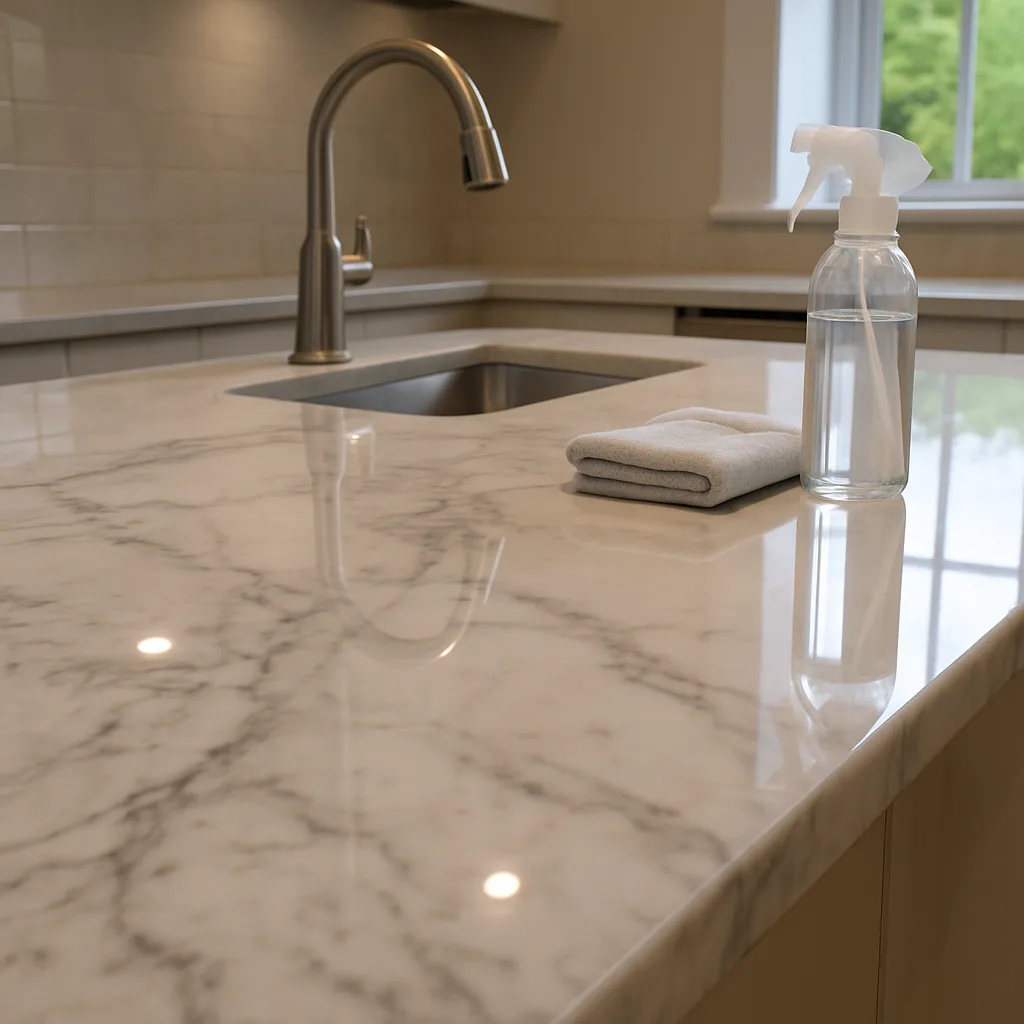
So what protects the shine between polishing visits? A good sealer helps, but it's not armor. Sealer keeps liquids from soaking into the stone's pores. It does nothing to stop etching on the surface itself. That's why we offer countertop sealing alongside polishing. The two jobs work together, not as substitutes for each other.
Day to day care is simpler than people expect.
- Wipe spills fast, especially citrus, coffee, and wine
- Use a pH-neutral stone cleaner, never anything labeled "cleaning vinegar"
- Set a trivet under hot pans, thermal shock can stress the surface
- Use cutting boards, don't chop directly on the stone
- Blot, don't scrub, when something spills near the sink
Chester homes near the James River corridor with humidity swings can dry out sealer faster than you'd think. If your counters get direct sun through a kitchen window, that's another factor pushing resealing sooner rather than later.
Common questions
Answers before the visit.
What's the difference between marble etching and a scratch?
Etching feels smooth but looks cloudy, while a scratch has a groove you can feel with your finger. Etching comes from acid, like lemon juice, wine, or tomato sauce sitting on the stone too long. A scratch comes from a knife or rough sponge. We see both often in kitchens along Route 10 in Chester, where big windows let in strong light that shows every dull spot. Each one needs a different fix, so we check for both before we start any work.
Do I need to book an appointment, or can you tell me what's wrong from a photo?
You can text us a photo first, and we'll tell you honestly what your marble needs before you schedule anything. Etching, staining, and scratches often look similar to homeowners but need different treatments. Sending a clear picture in good light helps us spot the pattern of damage right away. If we need a closer look, we'll set up a visit. This saves you from paying for the wrong process.
What happens when you come out to polish my marble countertop?
We start by inspecting the surface closely for etching, scratches, and deeper chips or cracks that might need repair first. Then we clean the whole countertop to strip away soap film and grease that could scratch the stone during polishing. We test a hidden spot to check how the marble responds before touching the visible area. From there, we work through diamond abrasive pads in progressively finer grits until the shine comes back evenly.
Can polishing fix deep stains or cracks in my marble?
No, polishing won't fix deep cracks, chips, or set-in stains. Cracks usually mean the stone took a hit or there's movement below it, and buffing just smooths the edges without solving the real problem. Deep stains that have soaked past the surface often need poultice treatment first, and some staining becomes permanent. We'll tell you straight if your counter needs more than a polish, so you're not paying for a fix that won't hold.
Why does my Chester kitchen countertop look dull even though I clean it regularly?
Dullness usually builds up from hundreds of small spills and years of wiping with the wrong cleaner, not one big mistake. Chester kitchens along Route 10 often get a lot of natural light, and that light makes every dull patch and water spot stand out more. Regular cleaning can't reverse this kind of wear because it's changed the stone's surface. Polishing restores an even shine so the light reflects the way it used to.
Start with a photo