
Practical surface guide
Can Wooden Flooring Be Polished? What You Need to Know in Chester
Can wooden flooring be polished? Discover how it works and what results to expect, based on hands-on floor sanding experience in Chester. Get in touch today!

Google Reviews
Scroll to read all 9 reviews →
“Great work and even better customer service. Very professional, easy to work with, and you can tell they take pride in what they do. Definitely recommend Precision Floor & Surface Restoration if you need your floors or countertops brought back to life.”★★★★★
“Absolutely amazing work! From start to finish, everything was handled professionally and with great attention to detail. They took the time to make sure everything was done right, and the results speak for themselves. The floors and surfaces came out looking incredible, and you can tell they genuinely take pride in their work. I couldn’t be happier with the finished product and would definitely recommend them to anyone looking for quality work and great service. Five stars all the way! ⭐⭐⭐⭐⭐”★★★★★
“Precision Floor & Surface Restoration exceeded my expectations! Professional, punctual, and detail-oriented from start to finish. My floors look amazing, and the quality of work was outstanding. Highly recommend to anyone looking for top-notch floor and surface restoration services.”★★★★★
“Removed stains that previous cleaning services could not. Made the impossible - possible!”★★★★★
“Great quality work! Very professional with communication!!”★★★★★
“Clean and very professional. Highly recommend”★★★★★
“I highly recommend his floor cleaning services! He’s reliable, professional, and does an excellent job. My floors looked amazing, and I couldn’t be happier with the results.”★★★★★ ★★★★★
Why Polishing Only Works on an Intact Finish
Most homeowners miss this part. Polishing does not fix wood. It works on the finish sitting on top of the wood. That is a big difference. If the clear coat is worn through, cracked, or peeling, polishing just buffs a broken surface. You get a shinier version of the same problem.
Think of the finish like a windshield. Wax makes a clean windshield look better. It does nothing for one that's cracked. Wood floors work the same way. Before we even talk about polishing your floors in Chester, we check whether the finish is still intact.
We look for a few specific signs during an inspection:
- Bare wood patches near doorways or high-traffic paths
- Gray or black staining where water sat too long
- Deep scratches that catch a fingernail when you drag it across
- Cloudy or hazy spots that won't buff out with a cloth
- Finish that flakes or peels at the edges of boards
If you see any of these, polishing alone won't solve it. And that's not us trying to upsell you. It's just how the chemistry works.
What Happens If You Polish Over Damage Anyway
We've walked into Chester homes where a well-meaning owner tried a store-bought polish on a floor that had bare spots near the kitchen sink. The polish soaked straight into the exposed wood grain. It left a blotchy, dull ring around every worn area. Removing that buildup took more work than if they'd called us first. We see that more than you'd think.
Bare wood is thirsty. It drinks up polish unevenly. Once that happens, the fix usually means stripping the whole section back down. So skipping the inspection step almost always costs more time in the end.
This is why our process starts with a look at the finish, not the shine. A floor with an intact topcoat is a good candidate for buffing or polishing. A floor with worn-through spots usually needs recoating first. Some floors, especially older homes near downtown Chester with decades of built-up wax, need deeper attention before any polish goes near them.
Run your hand across the floor in a few spots. Smooth and even? Polishing will likely bring back the shine. Rough, dry, or sticky in patches? That's damaged finish talking, not dirt.
Not sure which one you're dealing with? Send us a few photos by text. No need to guess on your own. We'll tell you whether polishing will do the job or if a step like recoating needs to happen first. That one conversation saves people from wasting money on the wrong fix.
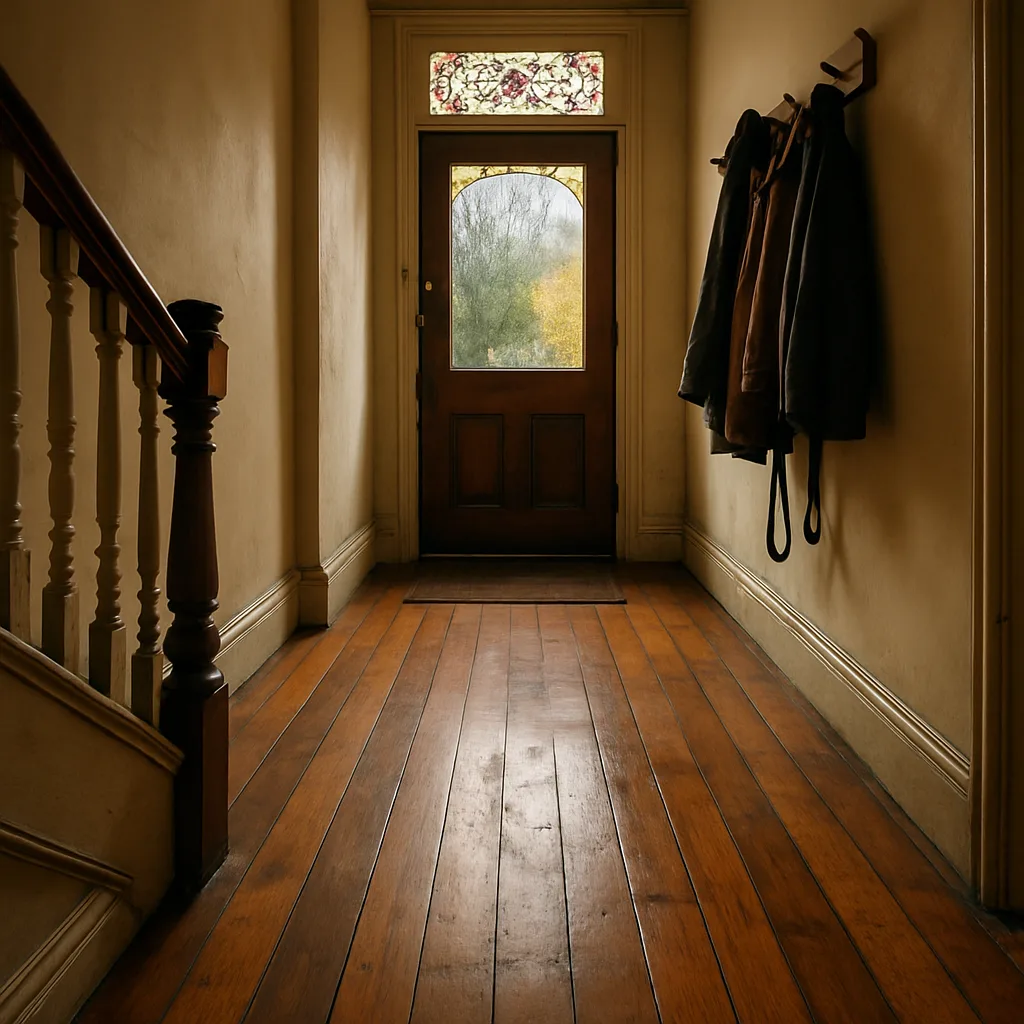
Polishing vs. Refinishing: Two Different Repairs
Here's where a lot of Chester homeowners get mixed up. Polishing and refinishing sound like the same job. They're not. Mixing them up can cost you money on work you didn't need, or leave you with a floor that still looks tired.
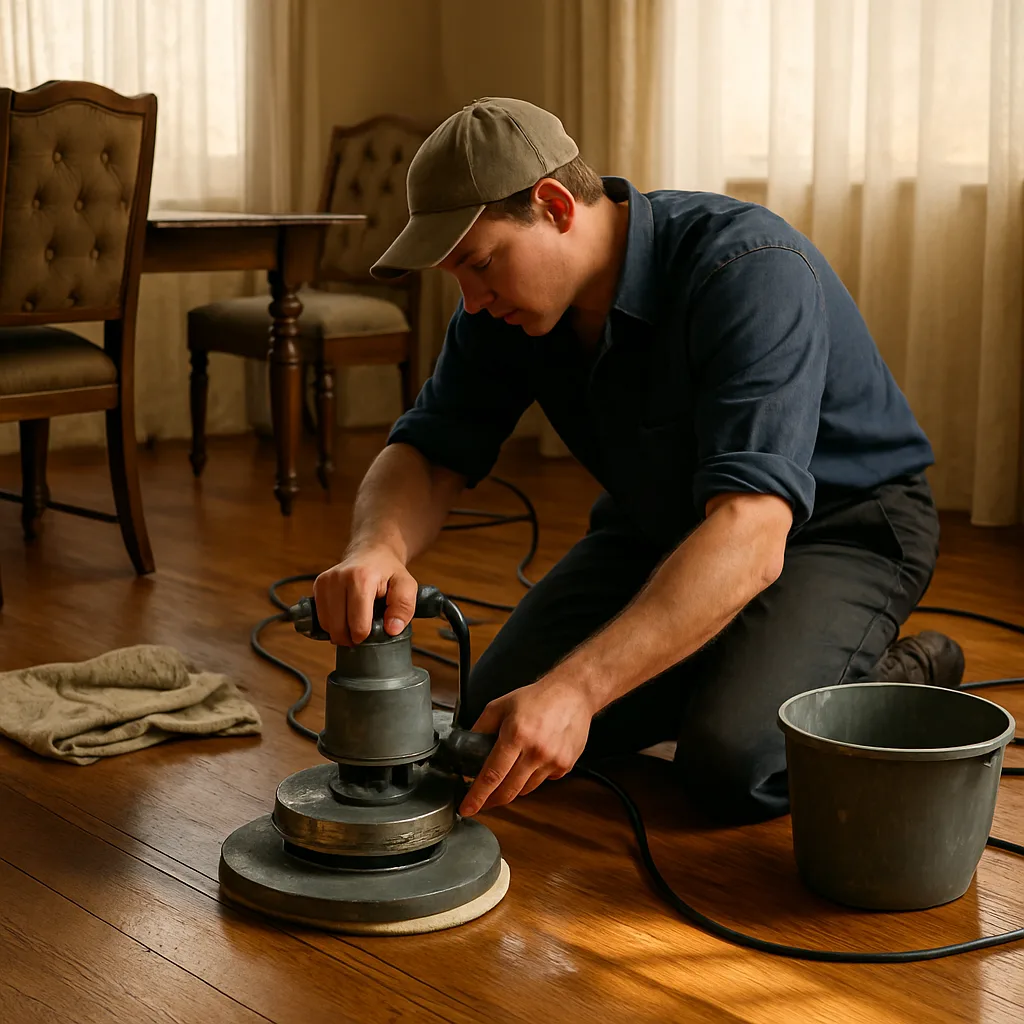
Hardwood floor polishing service works on the surface finish. It buffs out light scratches, brings back shine, and cleans out grime sitting in the wood grain. Think of it as a deep clean with a shine boost. It doesn't touch the wood itself. A wood floor buffing service uses a machine with a soft pad to smooth the top coat and pull the luster back out. We do this a lot on older homes near Chester's downtown, where original hardwood is common but the finish has gone dull from decades of foot traffic.
Refinishing is a bigger job. Sanding removes the top layer of wood entirely, taking the old finish and any deep gouges with it. Then a new coat gets applied from scratch. That's the key difference.
When Polishing Is Enough
Most floors we see don't need sanding. They need attention. Here's what usually points to polishing being the right call:
- Surface scratches you can feel but not deep grooves you can catch a fingernail in
- Dull, cloudy patches instead of dark stains soaked into the wood
- A finish that's worn thin in high-traffic spots but not gone completely
- No water damage, cupping, or warping in the boards
If your floor fits that list, a wood floor deep cleaning paired with polishing or a recoat can bring it right back. We use no-sanding wood floor restoration for exactly this situation, and it saves homeowners the mess and downtime that full sanding requires. No dust everywhere. No week of fumes. Just a floor that looks new again in a fraction of the time.
When You Need Refinishing
But some damage goes past what polishing can fix. Deep gouges, dark water stains soaked into the grain, or boards that have cupped from humidity need sanding to correct. Polishing a floor with that kind of damage is like putting a fresh coat of paint over a cracked wall. It looks okay for a minute, then the problem shows right back through.
So how do you know which one your floor needs? Run your hand across it. Scratches you can feel with your fingertip but can't catch your nail on usually mean the damage is shallow. Stains that look gray or black and go beneath the surface usually mean water got into the wood, and that's a refinishing problem, not a polishing one.
We get calls all the time from people who assumed they needed a full refinish, only to find out a wood floor recoating would've solved it for a fraction of the disruption. That's why we ask for photos before we quote anything. Text us a few pictures of the problem spots, or call and describe what you're seeing. We can usually tell you over the phone whether you're looking at a polishing job or something bigger. If we do need to come out and look in person, that visit runs $75 to $125, and it gets applied straight to whatever service you end up booking.
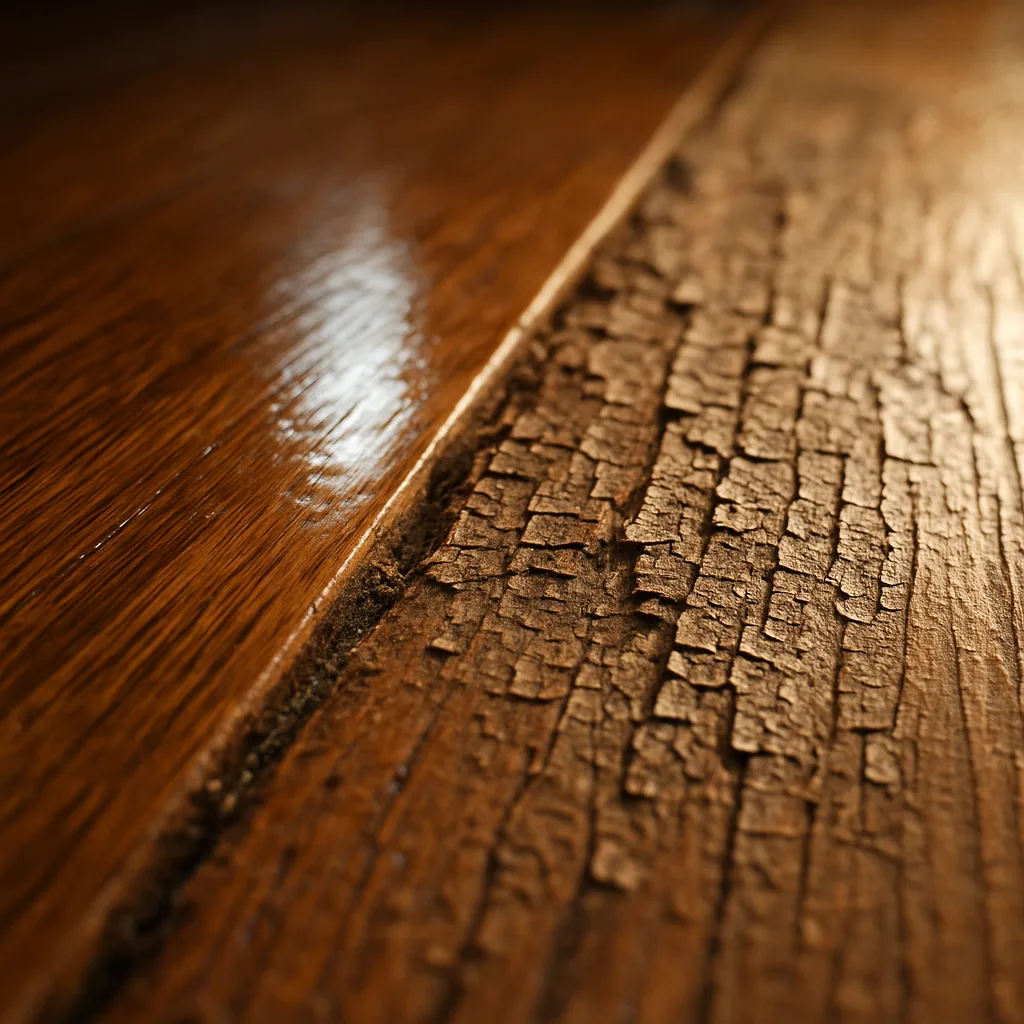
Is Your Floor Ready for Polishing? Three Common Scenarios
Not every dull floor needs the same fix. We walk into a lot of Chester homes, and the floors almost always fall into one of three buckets. Figuring out which bucket yours is in tells you what kind of work makes sense.
Scenario one: the floor is dull but the wood underneath is solid. This is the easiest call. Maybe the finish has gone cloudy. Maybe you're seeing light scuffs from years of foot traffic and furniture legs. The wood itself hasn't been damaged. It's just tired looking. This is what a hardwood floor polishing service and buffing are built for. We clean the surface, buff out the haze, and the natural shine comes right back. No sanding, no dust, no three days out of your living room.
Older homes near downtown Chester often fall here. Original hardwood that's been walked on for decades but never abused. Once we deep clean and buff it, homeowners are usually surprised how much life was hiding under that dull layer.
Scenario two: there's real wear, but it's still within the finish. Think water rings from a plant pot, a few deeper scratches from a moved couch, or a slightly worn path near the front door. This is where a recoat comes in. We're not stripping the floor down to bare wood. We're prepping the existing finish and laying a fresh protective coat on top. It's a step up from polishing but still far less invasive than a full refinish.
So how do you know if you're in scenario one or two? Run your fingernail lightly across the scratch. If it catches on raw wood, you're past a surface polish and into recoat territory. If it just glides over a dull spot, polishing alone will probably do it.
Scenario three: the wood itself is damaged. This means the finish is worn all the way through, there's gray or black staining from moisture, or boards are cupping and separating. This one is harder to fix without sanding, and it's worth being honest about that upfront. We'd rather tell you the truth on a text message than show up, buff it, and have the problem reappear in two months.
Here's the thing about scenario three. It usually didn't happen overnight.
A few signs that tell us which bucket you're likely in:
- Dull, hazy finish with no fingernail catch anywhere on the floor
- Light scratches or a worn traffic path, but no exposed bare wood
- Dark stains, cupped boards, or wood you can feel through the finish
- Finish that's worn through completely in high-traffic spots like hallways or entryways
Most Chester homeowners land in the first two categories. And that's good news, because it means restoration beats a full replacement almost every time. If you're not sure which scenario fits your floor, snap a few photos and text them over. We can usually tell what's going on before we even step in the door.
Measured steps.
A considered result.
- Share the surface
Send a full view and a close-up of the concern.
- Confirm the material
Identify what it is before choosing a method.
- Set the scope
Separate cleaning, finish work, and repair needs.
- Refine with care
Use a process compatible with the existing surface.
- Review the finish
Inspect the result and discuss ongoing care.
Clarity before
the visit.
How do I know if my wood floor just needs polishing or something more?
Run your hand across the floor in a few spots. If it feels smooth and even, polishing will likely bring the shine back. If you feel rough patches, sticky spots, or catch your fingernail on a scratch, the finish is damaged and polishing alone won't fix it. Bare wood patches, gray staining, or peeling edges are all signs you need more than a buff. If you're unsure, our guide on hardwood floor polishing walks through each sign so you can check your own floor before calling anyone.
Can I polish my floor myself, or should I call a professional in Chester?
You can polish it yourself if the finish is fully intact with no bare wood or deep scratches. Store-bought polish soaks unevenly into any exposed grain, leaving blotchy rings that are harder to fix than the original problem. If your Chester home has bare spots near doorways or the kitchen sink, skip the DIY route. Send us a few photos by text instead. We'll tell you honestly whether it's a polish job or something that needs professional attention first.
What's the biggest mistake homeowners make with floor polishing?
The biggest mistake is polishing over damaged finish instead of checking it first. Polish only works on the topcoat, not the wood itself, so a cracked or worn finish just ends up shinier and still broken underneath. We see this often in older Chester homes where owners try a quick fix on bare patches. It usually means more work later, since the whole section has to be stripped back down before it can be redone correctly.
Do older homes near downtown Chester need different care before polishing?
Yes, older homes near downtown Chester often have decades of built-up wax layered under the finish. That buildup needs to come off before polishing will do any good, or the new shine won't hold. We check for this during every inspection since it's common in original hardwood floors around the area. Skipping this step usually means the polish job looks fine for a week, then fades or turns cloudy again fast.
What's the real difference between polishing and refinishing a wood floor?
Polishing cleans and buffs the existing finish, while refinishing sands the wood down and applies a brand new coat. Polishing works when scratches are shallow and the finish is still mostly intact. Refinishing is needed when there's deep gouging, water stains soaked into the grain, or boards that have cupped from moisture. Most floors we see in Chester only need polishing or a light recoat, not a full sand-down.
Does Chester's weather affect how often floors need polishing?
Yes, humidity swings in Chester can dry out or swell wood floors over a season, which speeds up wear on the finish. Homes near older parts of town with less climate control often see finish wear faster in high-traffic spots. Regular polishing helps protect the top coat between seasons, but it won't fix boards that have already cupped or warped from moisture. If you notice warping, that points to a bigger repair, not just a shine refresh.
Talk With Us About Your Wood Floor
Tell us what looks worn, which products have been used, and what you want to improve. Photos are helpful, but you can call first.